
South Hebron Hills, Wed 23.10.13, Morning
The purpose of the visit was to discuss with Huda the plans for the coming year. After almost three years of activities, we wanted to find a way to have her take greater responsibility for the activities. She was receptive to our suggestion that she continue the topic of each activity and expand on it during the two weeks between our visits. As she becomes more proficient in leading the activities, she should eventually be able share her knowledge and experience with the other preschool teachers in the area. We also told her we would be pleased if for some our sessions, she would initiate creative activities that she thought would be of particular interest to the children in her preschool. We continued to stress the importance of reading to the children and of encouraging them to act out the stories, something we tried last year with mixed success. As we have done in the past, we will provide the supplies necessary for the activities.
Hamed brought up the issue of continued funding and the importance of showing the funders how our sessions with Huda have been incorporated into the daily workings of the preschool. Evidence of the continuation of activities when we are not present and her initiation of new activities would be useful in the recruitment of further funding. Hamed is going to provide Huda with a camera so she can photograph some of her continued activities in the preschool which can then be used on our funding requests.
South Hebron Hills
See all reports for this place-
South Hebron Hills
South Hebron Hills is a large area in the West Bank's southern part.
Yatta is a major city in this area: right in the border zone between the fertile region of Hebron and its surroundings and the desert of the Hebron Hills. Yatta has about 64,000 inhabitants.
The surrounding villages are called Masafer Yatta (Yatta's daughter villages). Their inhabitants subsist on livestock and agriculture. Agriculture is possible only in small plots, especially near streams. Most of the area consists of rocky terraces.Since the beginning of the 1980s, many settlements have been established on the agricultural land cultivated by the Palestinians in the South Hebron Hills region: Carmel, Maon, Susia, Masadot Yehuda, Othniel, and more. Since the settlements were established and Palestinians cultivation areas have been reduced; the residents of the South Hebron Hills have been suffering from harassment by the settlers. Attempts to evict and demolish houses have continued, along with withholding water and electricity. The military and police usually refrain from intervening in violent incidents between settlers and Palestinians do not enforce the law when it comes to the investigation of extensive violent Jewish settlers. The harassment in the South Hebron Hills includes attacking and attempting to burn residential tents, harassing dogs, harming herds, and preventing access to pastures.
There are several checkpoints in the South Hebron Hills, on Routes 317 and 60. In most of them, no military presence is apparent, but rather an array of pillboxes monitor the villages. Roadblocks are frequently set up according to the settlers and the army's needs. These are located at the Zif Junction, the Dura-al Fawwar crossing, and the Sheep Junction at the southern entrance to Hebron.
Updated April 2022
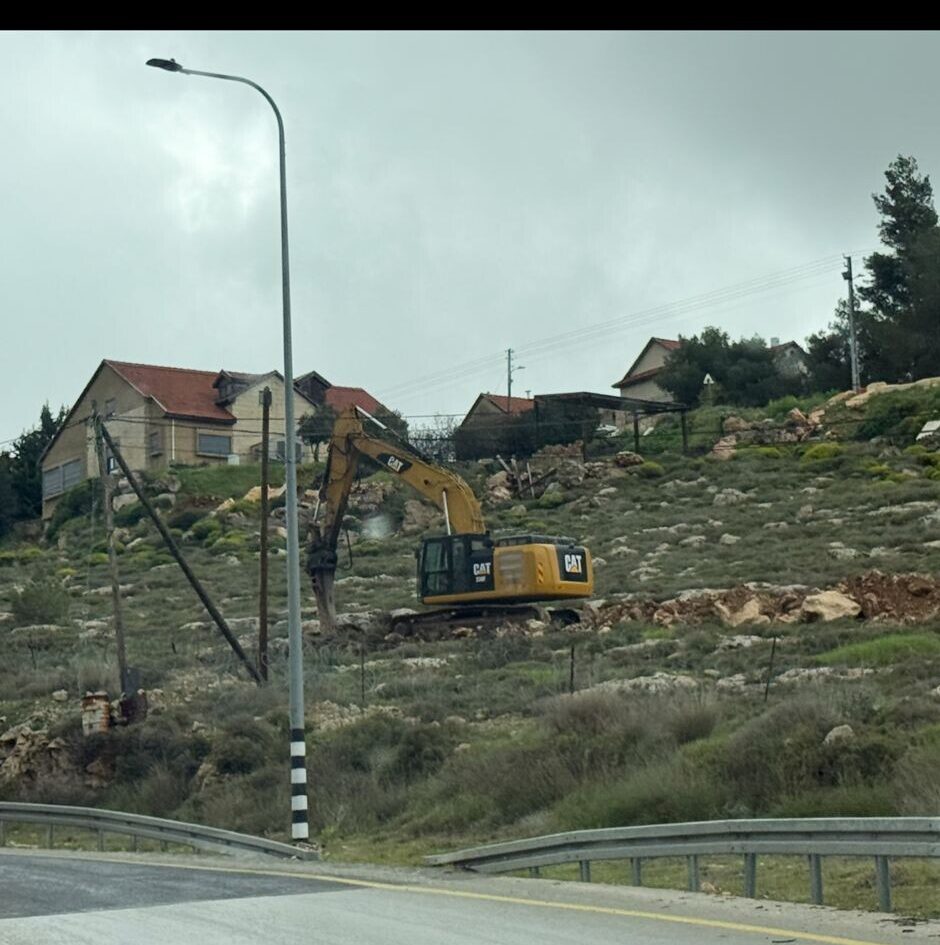 MuhammadFeb-24-2026South Hebron Hill, Beit Hagai: Paving an internal security road
-