
South Mount Hebron: Palestinians are not allowed to move on the roads to buy food and medicine

We passed through Tarqumiyah checkpoint — no cars, no people.
We drove down Route 35 towards Hebron. On the way we saw a man standing on the roadside and stopped to talk to him. A man from the Rajabi family explained to us the meaning of “we don’t have a life.” He told us that today there’s a general strike and a day of mourning. Everything’s closed because of the killing of Salah al-Arouri in Lebanon and the war in Gaza is continuing .We bid him farewell and turned right towards Kiryat Arba. Soldiers are watching over every intersection along the road.
The Jabber family is planting winter vegetables. There’s no work and no income. Things feel bad and the situation is getting worse.
At the junction we saw a solar water heater being dragged from one side of the road to the other because all the entrances are blocked.
Raniya from Fuksis (close to Negohot) on route 3265 calls and reports that their family got organized and sold gold in order to buy a car. They need a car so they can buy food, medicines and basic items.
The problem, Ranya says, is that soldiers stop them on the way and send them back home without letting them get to their destination. They are forced to try again two hours after their first attempt. Sometimes they manage to buy what they need. Sometimes they don’t.
South Hebron Hills
See all reports for this place-
South Hebron Hills
South Hebron Hills is a large area in the West Bank's southern part.
Yatta is a major city in this area: right in the border zone between the fertile region of Hebron and its surroundings and the desert of the Hebron Hills. Yatta has about 64,000 inhabitants.
The surrounding villages are called Masafer Yatta (Yatta's daughter villages). Their inhabitants subsist on livestock and agriculture. Agriculture is possible only in small plots, especially near streams. Most of the area consists of rocky terraces.Since the beginning of the 1980s, many settlements have been established on the agricultural land cultivated by the Palestinians in the South Hebron Hills region: Carmel, Maon, Susia, Masadot Yehuda, Othniel, and more. Since the settlements were established and Palestinians cultivation areas have been reduced; the residents of the South Hebron Hills have been suffering from harassment by the settlers. Attempts to evict and demolish houses have continued, along with withholding water and electricity. The military and police usually refrain from intervening in violent incidents between settlers and Palestinians do not enforce the law when it comes to the investigation of extensive violent Jewish settlers. The harassment in the South Hebron Hills includes attacking and attempting to burn residential tents, harassing dogs, harming herds, and preventing access to pastures.
There are several checkpoints in the South Hebron Hills, on Routes 317 and 60. In most of them, no military presence is apparent, but rather an array of pillboxes monitor the villages. Roadblocks are frequently set up according to the settlers and the army's needs. These are located at the Zif Junction, the Dura-al Fawwar crossing, and the Sheep Junction at the southern entrance to Hebron.
Updated April 2022
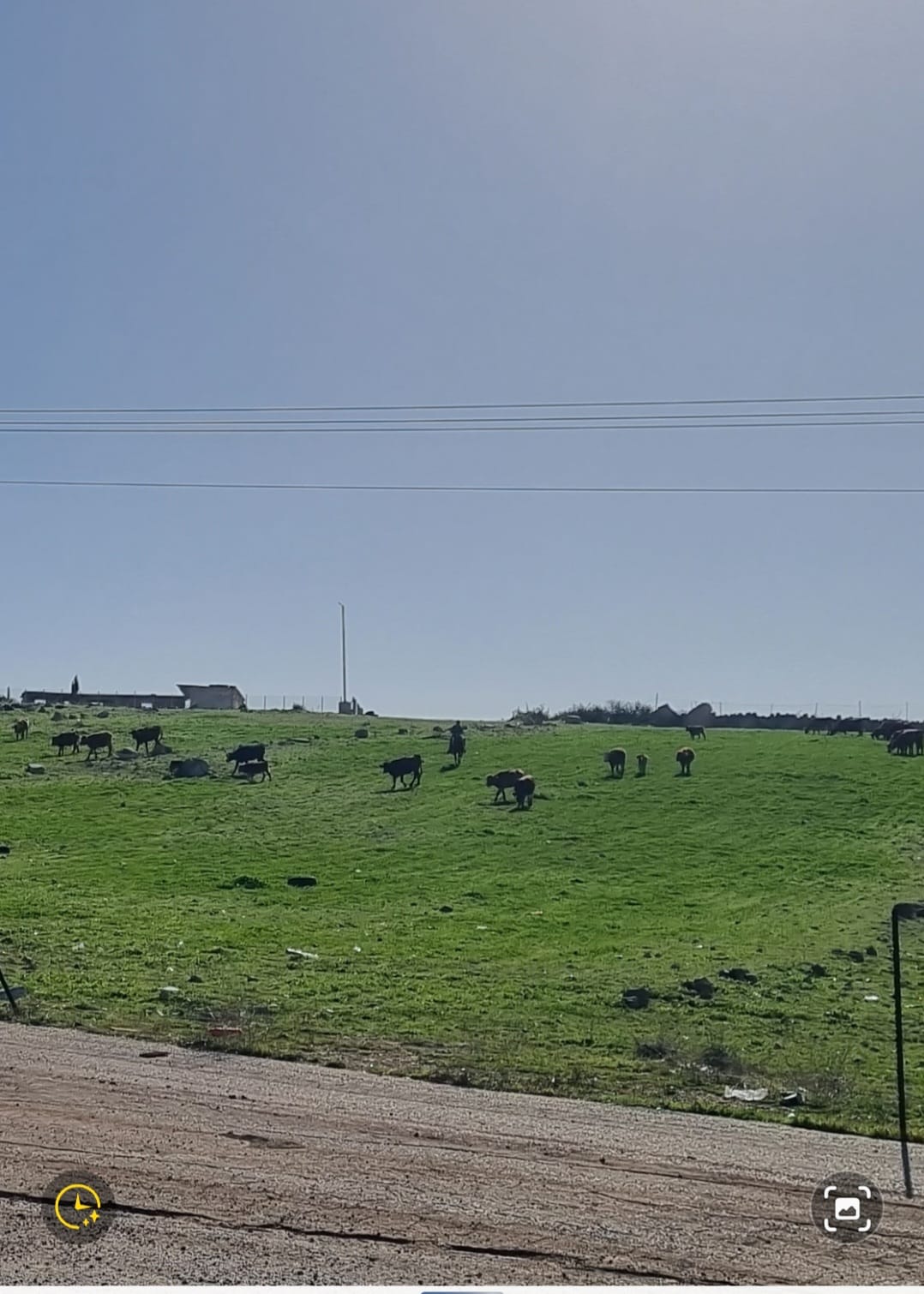 Smadar BeckerJan-12-2026A herd of cows in the area of Zanuta, from which its residents were expelled, accompanied by a settler on horseback
-