
Southern Hebron Hills – In every place from which Palestinians have been expelled, Israeli flags are planted
- The entire Meitar checkpoint reeks. M. says the sewage treatment plant (the facility responsible for treating Hebron Stream’s wastewater) is creating a kind of “lake” there, unclear why.
- We drive along Route 60, then turn right onto Route 317. At the curve, there’s the regional council building. One of my grandsons works there, as does his wife—they live in the Adorim settlement, meaning “Beit Dror.” My grandson spends a lot of time on reserve duty (four kids), and it pays well. Now there’s a crowdfunding campaign for his unit; for example, donations were used to buy drones. Long live the war.
- On the left, the back entrance to the Palestinian town of Samu‘a is blocked; two army jeeps are holding up Palestinians for inspection.
- After the Asael settlement, there’s the “Mitzpe Kadesh – Visitors Center.” M. says it’s dangerous to approach it.
- And everywhere that Palestinians have been “cleansed” from, Israeli flags are stuck into the ground.
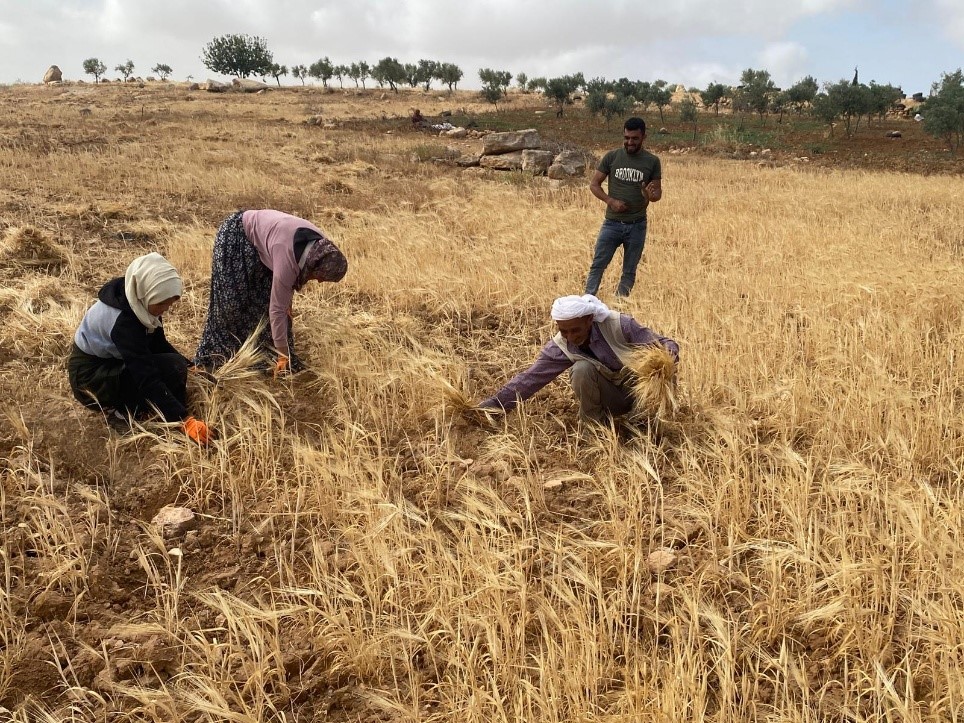
- We arranged to meet Fadel al-Khaldeh and his family from Umm Fakara. Settlers have taken over their lands (in his words, “they ate up all the land”) and now graze their sheep right next to his house, while his own sheep are shut inside their pen. So Fadel rented land from someone in Yatta to grow barley for his flock, to the left of the road between Susiya and Avigail. At the entrance to the area there’s a gate; when it’s closed and there’s an army presence, it’s impossible to pass. We check if the road is clear of soldiers and hurry into the dirt track, following the family’s car. The car is not a “mishtuf” — a term for a car that’s been taken off the road and sold for parts. Neither Israel nor the Palestinian Authority allow such cars to drive on the road. Incidentally, I have a family connection here too—one of my sons-in-law, a settler from Gush Etzion with a multi-branch business in the Gush Etzion industrial zone, among other things buys such cars and sells them to Palestinians for their parts.
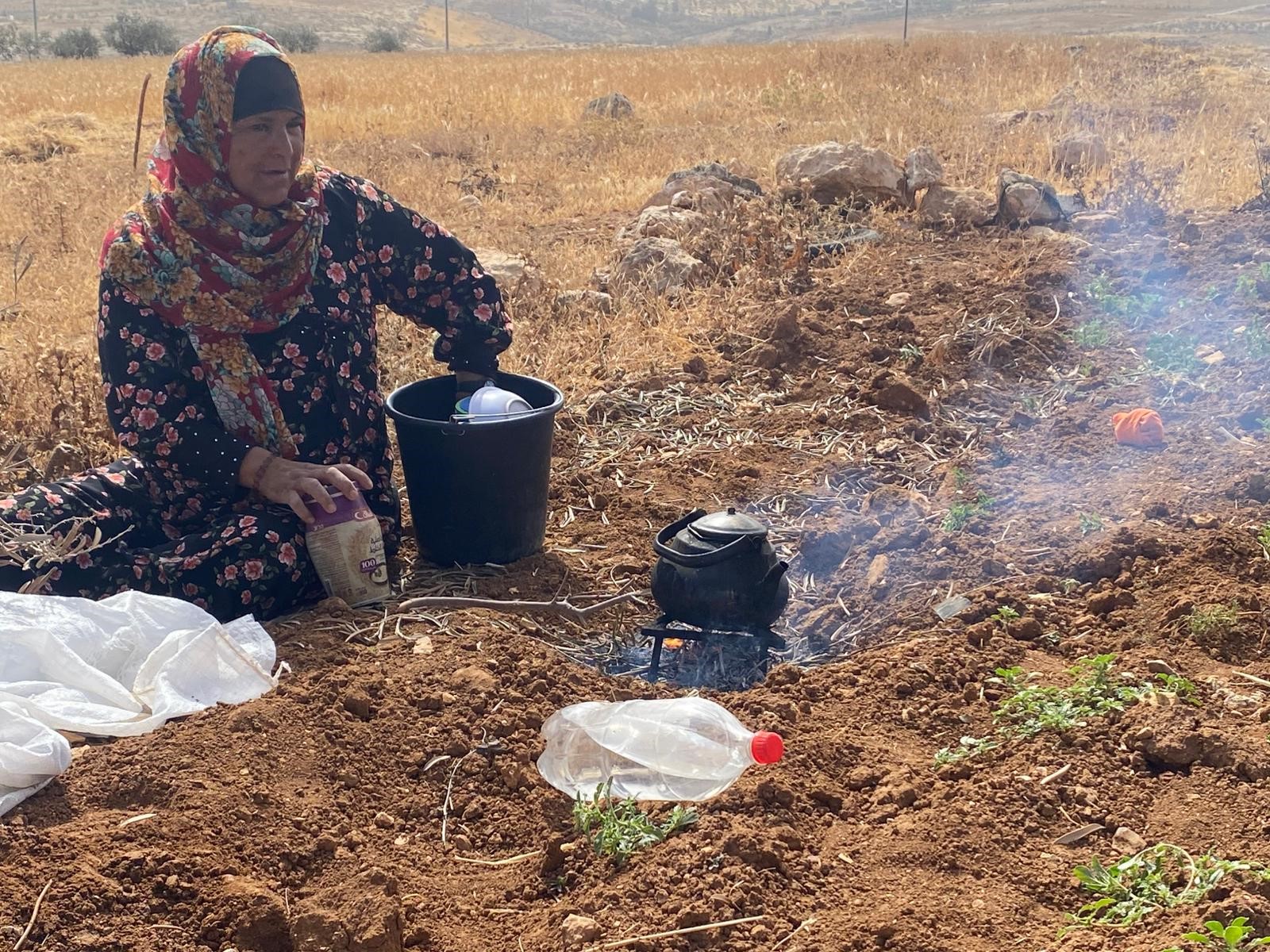
- The family (three men and three women) arrives around six in the morning on foggy days, which allow them to slip onto the land until about 11:00 a.m. The work looks like a scene from the Book of Ruth, since Israel keeps Palestinians in this ancient state without modern equipment for agricultural work. The son holds a sickle; most of the work is plucking the stalks by hand and tying them into bundles; on the pile of bundles they place a stone so the stalks won’t blow away in the wind. At the end of the harvest, Fadel will bring a threshing machine to separate the grain from the straw (the straw will go to the sheep). In front of us on the hill is the village of Ma‘in, and around us are the lands of the farmer renting the field to Fadel—an olive grove, a zucchini field, the soil brown and fertile.
- We sit for tea, brewed in a kettle over embers. I recognize Khadra, Fadel’s wife, from whom I bought an embroidered dress that I wore at the Faith-Based Left conference in New York, where I spoke about her and the troubles of Masafer Yatta. The men roll cigarettes from paper and loose tobacco.
- We drive with the family to the entrance to Tuwani, from where they continue on their own. On the way, Fadel points to new construction at the entrance to Avigail—light poles all along the access road to the settlement. He says Smotrich bought the settlers many ATVs to make it easier for them to harass Palestinians on a daily basis.
- At the bus stop at the entrance to Carmel, in addition to the Israeli flag, a flag reading “And they shall make Me a sanctuary” with a picture of the Temple is flying. Such flags have multiplied among the religious right since the Gaza war; soldiers reported finding pictures of Al-Aqsa in homes there as “proof” of the antisemitic extremism of all Gazans—certainly not, heaven forbid, proof of their faith in the same God we believe in. On the way back along Route 60, we also see such a flag opposite the entrance to Beit Hagai.
- We shop at Nabil’s grocery in Zif, opposite the large mosque. His sons run the now-expanded store. The area is quiet.
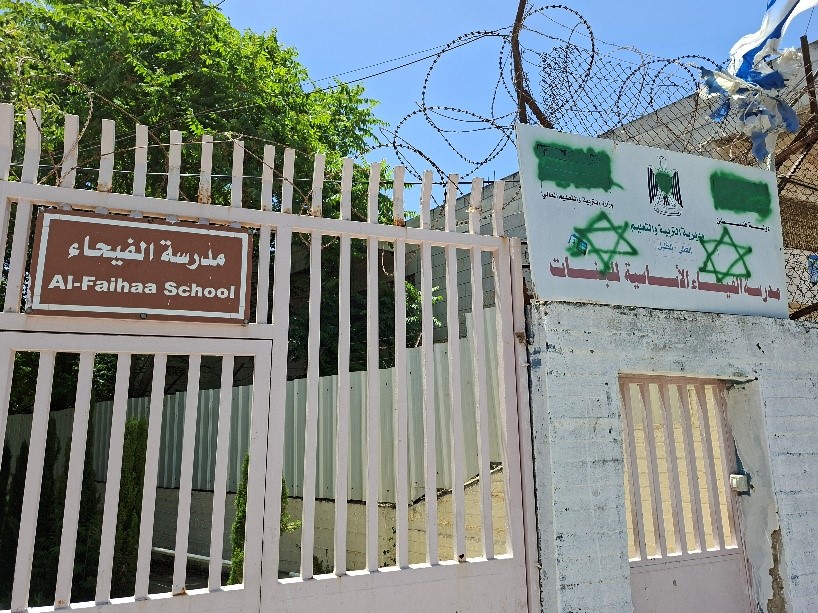
- Hebron: An army vehicle bears a large sign reading “Our strength is in our unity.” In my humble opinion, it’s forbidden to place civilian-group slogans on IDF property. Kindergarten teachers return from the Cave of the Patriarchs with crowds of small children riding toy bikes toward the Avraham Avinu neighborhood. To protect the children speeding along from traffic hazards, they run while holding a rope. On Shuhada Street opposite the army base, many teenage boys from “Ma‘ayan Avraham” disembark, some with towels over their shoulders—it’s a visit by the Kiryat Arba religious high school yeshiva. I didn’t manage to photograph all of this, and made do with a photo of the Girls’ School sign vandalized by settlers.
- I met with the pre-military academy of Tze’elim (part of the Negev Academy) and also arranged for them to meet Palestinians from the nonviolent “Youth Against Settlements” organization at the home of Issa Amro, which they reached via Avraham’s Spring.
- On the way back, Route 60: Dura al-Fawwar is blocked. Samu‘a is open.
Location Description
South Hebron Hills
See all reports for this place-
South Hebron Hills
South Hebron Hills is a large area in the West Bank's southern part.
Yatta is a major city in this area: right in the border zone between the fertile region of Hebron and its surroundings and the desert of the Hebron Hills. Yatta has about 64,000 inhabitants.
The surrounding villages are called Masafer Yatta (Yatta's daughter villages). Their inhabitants subsist on livestock and agriculture. Agriculture is possible only in small plots, especially near streams. Most of the area consists of rocky terraces.Since the beginning of the 1980s, many settlements have been established on the agricultural land cultivated by the Palestinians in the South Hebron Hills region: Carmel, Maon, Susia, Masadot Yehuda, Othniel, and more. Since the settlements were established and Palestinians cultivation areas have been reduced; the residents of the South Hebron Hills have been suffering from harassment by the settlers. Attempts to evict and demolish houses have continued, along with withholding water and electricity. The military and police usually refrain from intervening in violent incidents between settlers and Palestinians do not enforce the law when it comes to the investigation of extensive violent Jewish settlers. The harassment in the South Hebron Hills includes attacking and attempting to burn residential tents, harassing dogs, harming herds, and preventing access to pastures.
There are several checkpoints in the South Hebron Hills, on Routes 317 and 60. In most of them, no military presence is apparent, but rather an array of pillboxes monitor the villages. Roadblocks are frequently set up according to the settlers and the army's needs. These are located at the Zif Junction, the Dura-al Fawwar crossing, and the Sheep Junction at the southern entrance to Hebron.
Updated April 2022
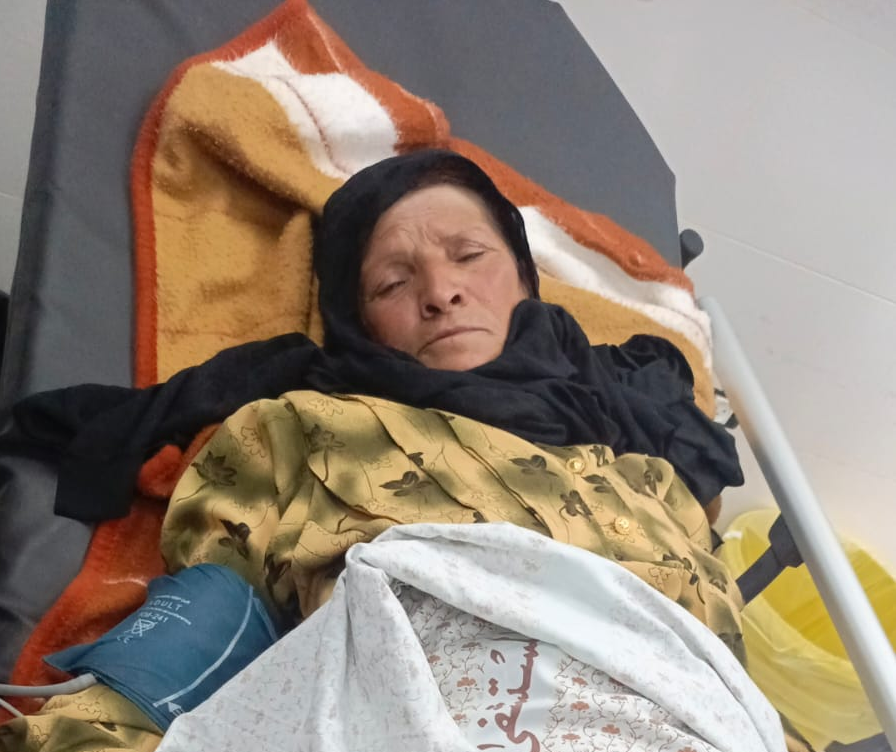 Muhammad D.Jan-6-2026Sha,ab al-Butum - Sabha after the attack
-