
Southern Hebron Mountains: nothing new under the wintery sky.


The Palestinian parking lots are totally full. The landlords of the checkpoint collect 5 shekels a day to park. Today an order was put into effect that large trucks from the quarries cannot pass through during peak hours, and in response, drivers prepare a demonstration to complain that the order harms their livelihood.
Aside from that, the breach in the separation fence is still active and many people pass through it.
Six kilometers north of the checkpoint, west of the highway, heavy tractors are working, apparently preparing a new area or a road that will connect Tene Omarim to highway 60. We will continue to monitor this.
At last, an entrance to Hebron from the village of Clarice is open. The road continues until the District Command on the Palestinian side. In all my years in Machsom Watch, that had been the passage point for transporting goods from a truck-to-truck in a method called “back-to-back.” We spoke to people there who are also very happy about this new entrance.
In the photo below: Soldiers lined the whole length of the road on the top of the large cement blocks that a generally empty, and guard the road, perhaps after the attack in Jerusalem yesterday.
There is nothing new under the wintery sky.
South Hebron Hills
See all reports for this place-
South Hebron Hills
South Hebron Hills is a large area in the West Bank's southern part.
Yatta is a major city in this area: right in the border zone between the fertile region of Hebron and its surroundings and the desert of the Hebron Hills. Yatta has about 64,000 inhabitants.
The surrounding villages are called Masafer Yatta (Yatta's daughter villages). Their inhabitants subsist on livestock and agriculture. Agriculture is possible only in small plots, especially near streams. Most of the area consists of rocky terraces.Since the beginning of the 1980s, many settlements have been established on the agricultural land cultivated by the Palestinians in the South Hebron Hills region: Carmel, Maon, Susia, Masadot Yehuda, Othniel, and more. Since the settlements were established and Palestinians cultivation areas have been reduced; the residents of the South Hebron Hills have been suffering from harassment by the settlers. Attempts to evict and demolish houses have continued, along with withholding water and electricity. The military and police usually refrain from intervening in violent incidents between settlers and Palestinians do not enforce the law when it comes to the investigation of extensive violent Jewish settlers. The harassment in the South Hebron Hills includes attacking and attempting to burn residential tents, harassing dogs, harming herds, and preventing access to pastures.
There are several checkpoints in the South Hebron Hills, on Routes 317 and 60. In most of them, no military presence is apparent, but rather an array of pillboxes monitor the villages. Roadblocks are frequently set up according to the settlers and the army's needs. These are located at the Zif Junction, the Dura-al Fawwar crossing, and the Sheep Junction at the southern entrance to Hebron.
Updated April 2022
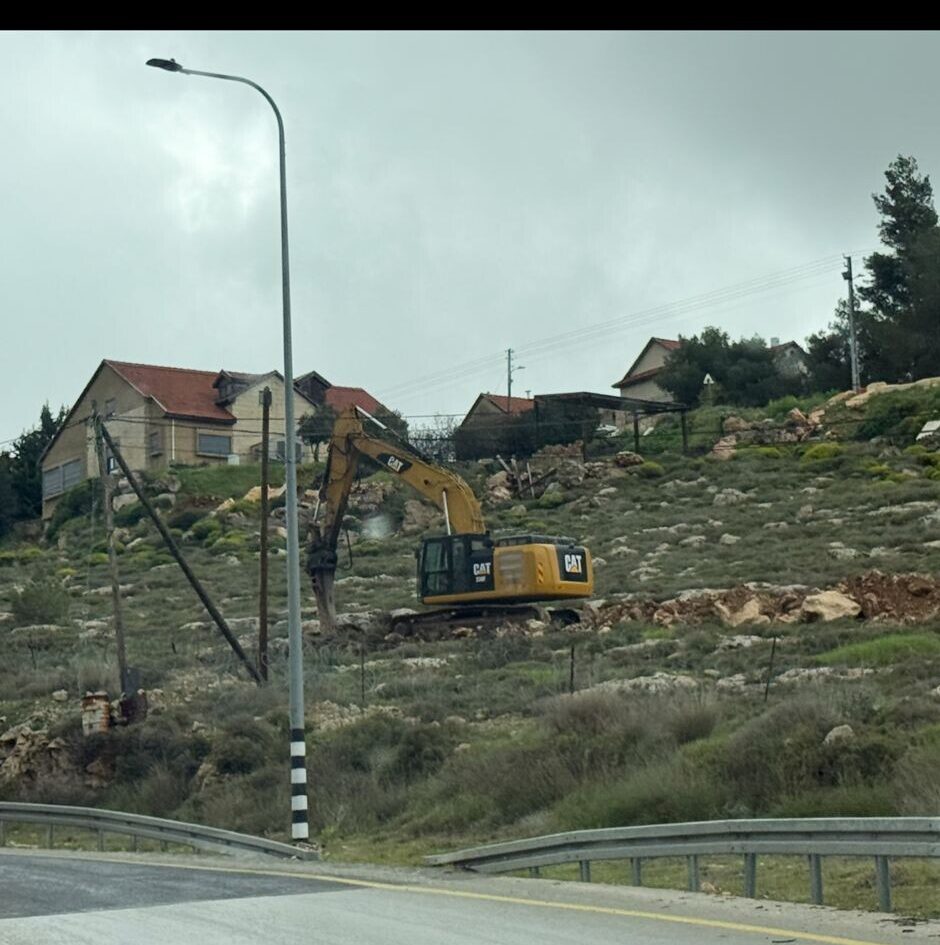 MuhammadFeb-24-2026South Hebron Hill, Beit Hagai: Paving an internal security road
-