
Talfit: Settler Confrontations and Harassment
This time, we decided to travel to the village of Talfit in central Samaria (so named to distinguish it from another village of the same name in the Jenin area), after Fathiya received reports of clashes there involving settlers and soldiers.
On our way via Route 5, near the Gitai Junction, we saw a military vehicle parked behind the guardrail. Nearby, soldiers were detaining two young Palestinian men; their hands were zip-tied behind their backs and they were blindfolded. We were unable to ascertain the reason for their detention.

The village of Talfit is located between Yatma and Qusra. We drove through Yatma, repeatedly asking residents for an open route leading to Talfit. At the local council, we met with the council secretary, Y., and several residents.
According to them, the entire village area is designated as Area B. To its north lie mountain ridges belonging to the villagers. One of these, Ein Ayana, was seized about a month ago by settlers who erected two tents as an outpost.
According to the residents, Last week, when landowners went out to plow their fields in the mountain area, settlers summoned reinforcements from nearby outposts (Esh Kodesh, Shvut Rachel, and Shiloh). They arrived armed with clubs and knives. During the confrontation, a Palestinian tractor driver was stabbed in the leg. As residents retreated, they were pelted with stones, and one person was injured by a stone strike.
Later, more settlers arrived on ATVs, some of them armed. They split into three groups and entered homes within the village. Residents described scenes of violence, threats, and intimidation.
On Friday, February 13, another group of settlers arrived, some dressed in military uniform, and opened fire toward houses. A young Palestinian man was wounded in the shoulder. The army arrived and utilized tear gas and live fire. Many residents suffered from gas inhalation. According to the residents, it was the soldiers present who fired the tear gas.
One resident who had built a house on his land, near the tents of the outpost, and was about to move into it, told us that the settlers entered the house and took possession of it.
From there, we traveled to Duma. We met an acquaintance from a previous visit who took us to his family home. The family reported that on Thursday, February 12, in the middle of the night, three military vehicles and a Shin Bet (ISA) vehicle arrived at A.’s house. The soldiers jumped over the gate. The front door and windows are made of cast iron; the owner stated that the soldiers did not knock but rather blew the door open to enter.
The family, including small children, woke up to shouting and panic. The soldiers overturned beds and emptied closets, threw clothes on the floor and broke household objects. Slashed the sofas in the living room with knives. They searched everywhere in the house and yard but found nothing. The forces left two hours later.
The women told us that cash and gold jewelry had been taken. However, when we began looking into helping them file a formal complaint, the man of the house intervened and insisted that nothing was stolen. He strongly resisted any attempt to clarify details, claiming emphatically that they took nothing. They “only” broke, ripped, cut, and caused extensive damage to the furniture and the door. The windows remained intact only because they were protected by iron grates.
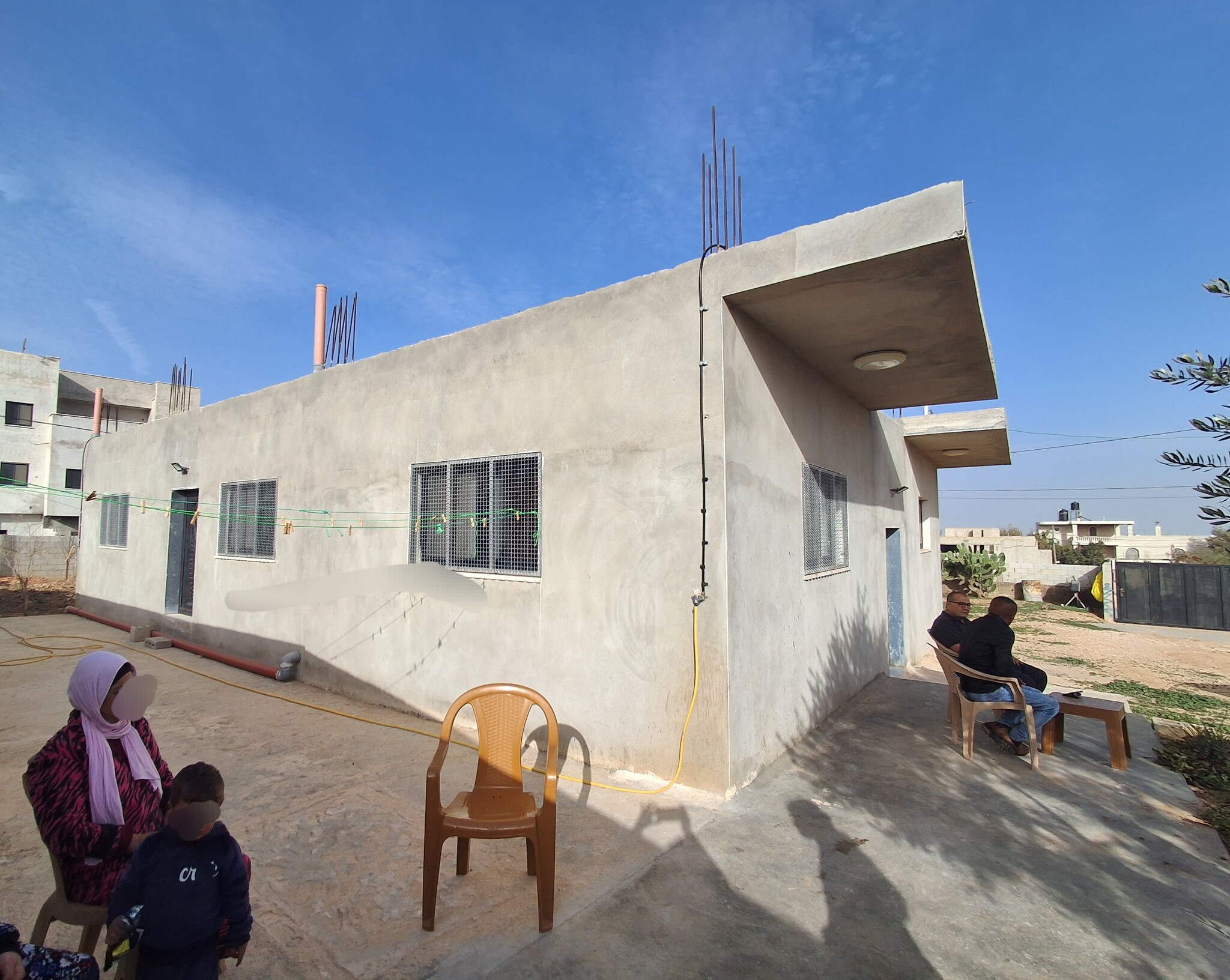
Thus ended our shift in the South Nablus area: recurring incidents of settler violence, physical harm to residents, and nightly military activity causing property damage and traumatizing families.
We concluded with a visit to our friend Doha in Burin. We parted with wishes of Ramadan Kareem and will return after Eid al-Fitr.
Location Description
Duma
See all reports for this place-
Duma
A village in the Nablus governorate, with 3,000 residents. They owned some 18,000 dunams, 500 dunams of which the village itself was built. However, after the settlement of Migdaleim annexed a large part of their land, their area was reduced to only 2,000 dunams.On July 31, 2015, two houses in the town were torched with petrol bombs. Sa'ad and Riham Dawabsha, and their infant, Ali Sa'ad Dawabsha, were burned to death. Another son was seriously injured. "Revenge" and "King Messiah" were spray painted on the walls of the house. The trial of the arsonist, the settler Amiram Ben Uliel, is still underway (2019), and a plea bargain was signed in May 2018 with the minor who participated in the planning of the arson.
The closure imposed by the army, the poor roads that they are forced use due to the lack of paving permits from the Civil Administration, along with the lack of public transportation, all these difficulties cut off the village from nearby Nablus and Ramallah.
-