
Tarkumiya CP - dirt and neglect

We passed through the Tarkumiya checkpoint in the early hours of the morning. The checkpoint looks like a city made up of dirty and polluted cars.
It’s a shame they don’t try to clean up the dirt and add trash cans. Instead, the neglect continues to be ignored.
We continued towards Highway 60, towards Gush Etzion.
After the Halhul–Hebron intersection, we went on the new road bypassing Beit Ummar and Al-Arrub, which shortens travel times for passengers to the north, and prevents passage through Palestinian settlements. We continued north to Rachel’s Tomb. We reached the walls of Rachel’s tomb, on the north side of Bethlehem.
The picture of the wall and the pillbox at the top describes what is happening there.
We heard from a number of locals that there are not many tourists, there is no way of making a living. There are only religious people make a pilgrimage to Rachel’s Tomb.
Beit Ummar
See all reports for this place-
Beit Ummar
The Gush Etzion-Hebron road - which is the main axis of the southern Hebron Mountains - passes through the boundaries of the village. Many incidents of stone throwing occurred on this section of road. There is a checkpoint at the entrance to the village.
In March 2006, a 25-dunam land seizure order was issued around the settlement for the purpose of establishing a "special security area" (SHBM) and a warning fence around the nearby settlement, Carmei Tzur. In April 2019, 401 dunams of the land of the villages of Beit Omer and Halhul were expropriated for the purpose of paving a road that bypasses the house of Omer to the east. Demonstrations are held by the villagers against the seizure of land with the participation of Palestinian, Israeli and international activists.
-
Bethlehem (300)
See all reports for this place-
Located adjacent to the Separation Wall ("Jerusalem Wrap") at the north entrance to Bethlehem, this checkpoint cuts off Bethlehem and the entire West Bank from East Jerusalem, with all the serious implications for health services, trade, education, work and the fabric of life. The checkpoint is manned by the Border police and private security companies. It is an extensive infrastructure barrier and is designated as a border terminal, open 24 hours a day for foreign tourists. Israeli passport holders are not allowed to pass to Bethlehem, and Palestinian residents are not allowed to enter Jerusalem, except those with entry permits to Israel and East Jerusalem residents. Israeli buses are allowed to travel to Bethlehem only through this checkpoint.The checkpoint, which demonstrated harsh conditions of crowding and extreme passage delays for years, started employing advanced electronic identification posts and has upgraded its gates' system as of the middle of 2019 - and conditions improved.Adjacent to the checkpoint, in an enclosure between high walls and another passage, is the historic Rachel's Tomb, which is now embedded within a concrete fortified building. It contains prayer and study complexes for Jews only, as well as a residential complex. updated November 2019 .
-
Halhul-Hebron Bridge
See all reports for this place-
Generally allows free flowing traffic, except for sudden checks by soldiers stationed permanently in the pillbox, on Route 35 in the southern West Bank.
-
South Hebron Hills
See all reports for this place-
South Hebron Hills
South Hebron Hills is a large area in the West Bank's southern part.
Yatta is a major city in this area: right in the border zone between the fertile region of Hebron and its surroundings and the desert of the Hebron Hills. Yatta has about 64,000 inhabitants.
The surrounding villages are called Masafer Yatta (Yatta's daughter villages). Their inhabitants subsist on livestock and agriculture. Agriculture is possible only in small plots, especially near streams. Most of the area consists of rocky terraces.Since the beginning of the 1980s, many settlements have been established on the agricultural land cultivated by the Palestinians in the South Hebron Hills region: Carmel, Maon, Susia, Masadot Yehuda, Othniel, and more. Since the settlements were established and Palestinians cultivation areas have been reduced; the residents of the South Hebron Hills have been suffering from harassment by the settlers. Attempts to evict and demolish houses have continued, along with withholding water and electricity. The military and police usually refrain from intervening in violent incidents between settlers and Palestinians do not enforce the law when it comes to the investigation of extensive violent Jewish settlers. The harassment in the South Hebron Hills includes attacking and attempting to burn residential tents, harassing dogs, harming herds, and preventing access to pastures.
There are several checkpoints in the South Hebron Hills, on Routes 317 and 60. In most of them, no military presence is apparent, but rather an array of pillboxes monitor the villages. Roadblocks are frequently set up according to the settlers and the army's needs. These are located at the Zif Junction, the Dura-al Fawwar crossing, and the Sheep Junction at the southern entrance to Hebron.
Updated April 2022
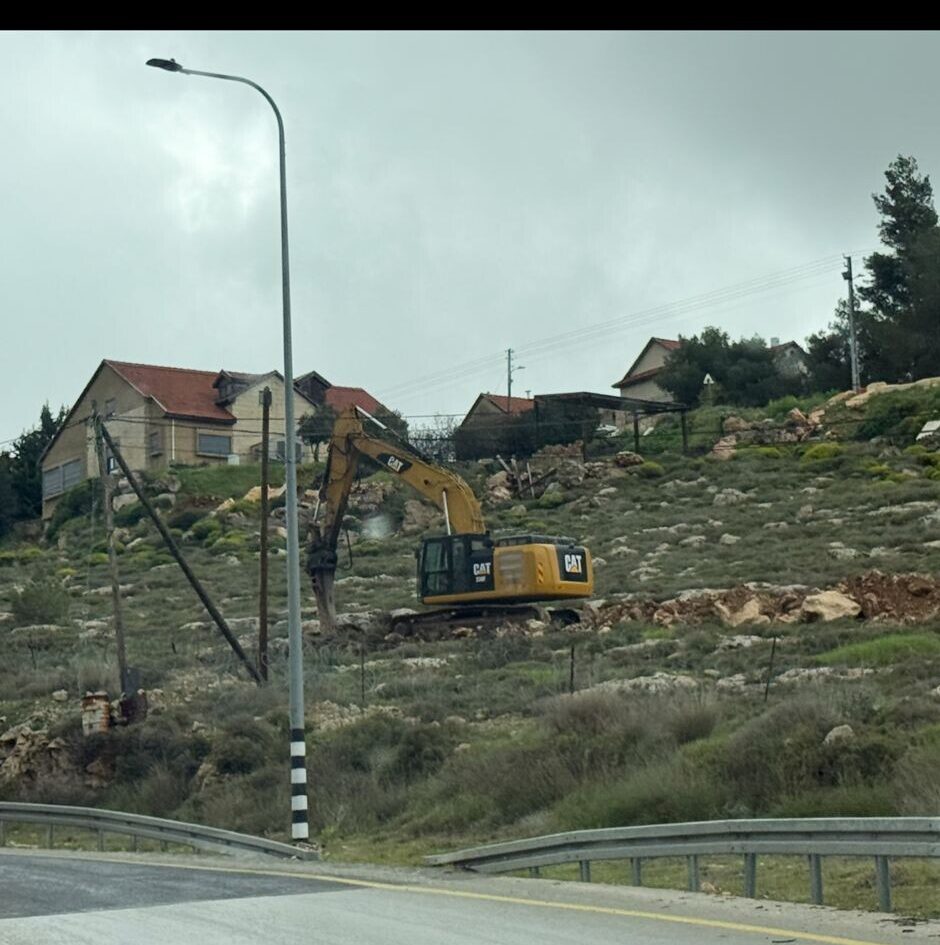 MuhammadFeb-24-2026South Hebron Hill, Beit Hagai: Paving an internal security road
-
Tarqumiya CP
See all reports for this place-
The Tarqumiya Checkpoint is one of the largest and busiest checkpoints where people and goods cross into Israel. It is located on the Separation Barrier close to the Green Line, on Road 35 (connecting Beer Sheva and Hebron). It is run by the Israel Defense Ministry’s Crossings Administration with civilian secuirty companies running the day to day operations. The checkpoint is indeed open to vehicles in both directions 24/7, but Palestinians are prevented from crossing in vehicles, except in special cases. MachsomWatch activists visit the checkpoint as it opens at 3:45 am, in order to observe the daily passage of nearly 10,000 Palestinian workers. The workers arrive from throughout the Southern West Bank. Our activists report on the tremendous overcrowding at this checkpoint; they have observed young men climbing and scrambling on the fences and roofs of the ‘access cages’. This is how the work day begins for those who ‘build the land of Israel’. updated November 2019
-