
Umm al-Khair – a mourning visit for the killing of Odeh Hadalin
Before the trip to Umm al-Khair, we transferred some money to a person we have been helping in shopping for the past few months. In his village he manages to buy more than we do.
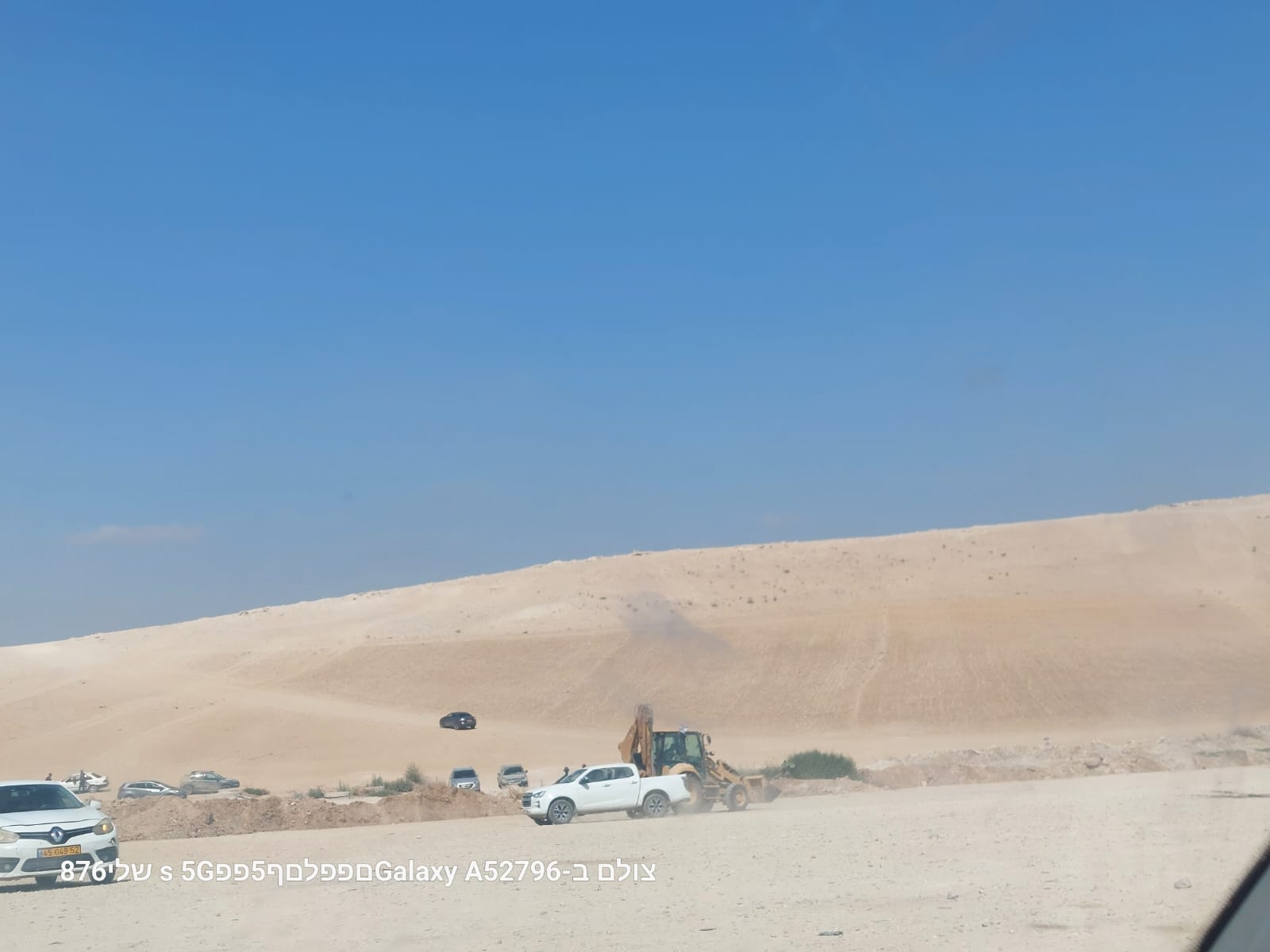
Behind the Meitar crossing, on the way to Ramadin and Dahriya, they poured piles of dirt for kilometres and blocked every path and crossing. A military vehicle drives back and forth accompanied by a tractor with a shovel that completes the piles that are getting higher and higher.
.
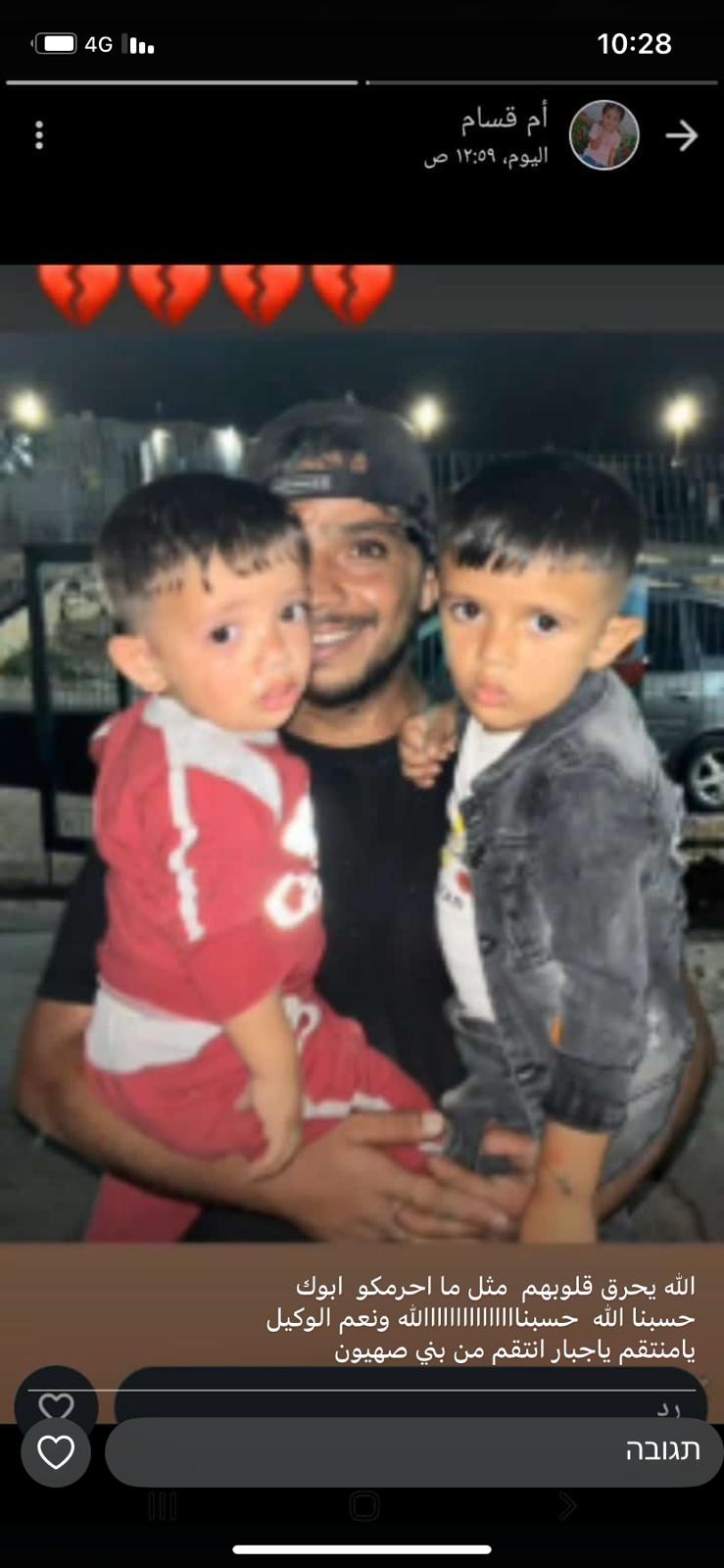
The purpose of this vigil was mainly to comfort the Al-Hadalin family and all the people of Umm al-Khair for the shocking murder of Odeh by Yinon Levy, the settler from Meitarim Farm on Monday, 28.7.25.
Then I received a message and photographs of the settler’s rampage, shooting in all directions at the people of Umm al-Khair who protested against his arrival with a bulldozer to do earthworks in order to take control of their land and prepare for the expansion of the Carmel settlement adjacent to their settlement. Yinon Levy is notorious for being among the leaders of the destruction of Zanuta, the expulsion of the people and the prevention of their return to their land despite the High Court’s decision that allowed them to return.
The place has a history of suffering and destruction when attempts have been made to expel them for many years. A trend that intensified after the events of 7.10.23.
We have been accompanying, visiting, supporting and reporting for many years.
A few months ago, 11 houses were demolished there, including that of Eid Hadalin, our friend. We visited several times and brought groceries from your donations to share among them.
Eid and his family still live in a warehouse near what used to be his house.
We received videos of the terrible murder and posted them on Facebook.
On the evening of the murder, I spoke with Eid, who begged one of his friends to hurry to Soroka Hospital, to see how Odeh was doing. I called everyone I knew who could, and some of them checked immediately. It was already clear that his condition was critical and there was a fear for his life. It did not take long as he died upon reaching Soroka. Therefore, the very next day, on the day of the shift, we went to be with them, to express our sorrow and to share in their mourning.
The situation on the way:
The entrances to the villages were difficult as they were. Samu’ is open, but Dahariya is still closed, for almost two years. In front of the spring near the Dura-al-Fawwar junction, soldiers in a booth. At the junction itself, both entrances are closed.
We thought we would buy as usual at the grocery store at Zif Junction, which is what is customary to bring to the house of mourners, dates, coffee and water, but it was closed, as part of the mourning strike that was being conducted throughout the area. Only in Dirat did we find a shack that was used as a kind of grocery store. There was no water, coffee and dates. So we brought water and coffee, which turned out to be extremely essential given the number of people who arrived. We also came and met Yuval Avraham and Bassel Adra. It turns out that Odeh filmed most of the scenes in the film and was among the peace and non-violence activists. He was an English teacher in high school. The shock was great. I met a Palestinian journalist who agreed to accompany me to the women’s meeting place along with Odeh’s mother and wife. The crying was great, and I was there for only a few minutes and I only wanted to express our pain, shame and participation in their mourning. The large mourning tent was orderly and quiet, inspiring respect despite the horror, despite the arrest of five of the people of Umm al-Khair. We heard that the murderer was arrested for four days and they for five days. Yesterday it was reported that their arrest was extended by 8 days, and the murderer was sent to house arrest.
Israeli justice is infuriating and shameful when the one in power determines the nature of justice just because he can.
A few hours after our visit, the army arrived and its men violently dispersed all the “guests”, declaring the place a closed military area.
In order to “maintain order”, they said.
This violent defence of those who know they have something to hide and incriminate themselves even more is embarrassing.
Videos of what happened were distributed and I posted them on Facebook. Both of what happened and the behaviour of the army afterwards.
Location Description
Dura Al-Fawwar Junction
See all reports for this place-
Junction on Route 60: west - the town of El Dura, east - the Al Fawwar refugee camp. There is a manned pillbox at the junction. From time to time the army sets up flying checkpoints at the entrance to El Fawwar and Al Dura. Al-Fawwar is a large refugee camp (7,000 inhabitants in 2007) established in 1949 to accommodate Palestinian refugees from Be'er Sheva and Beit Jubrin and environs. There are many incidents of stone-throwing. In the vicinity of the pillbox there are excellent agricultural areas, Farmers set up stalls adjacent to the plots close to the road. In recent months the civil administration has set up dirt embankments thereby blocking access to the stalls, and making it impossible for the farmers to sell their vegetables. Updated April 2021, Michal T.
-
Meitar checkpoint / Sansana
See all reports for this place-
Meitar Checkpoint / Sansana The checkpoint is located on the Green Line and serves as a border crossing between Israel and the West Bank. It is managed by the Border Crossing Authority of the Defense Ministry. It is comprised of sections for the transfer of goods as well as a vehicle checkpoint (intended for holders of blue identity cards, foreign nationals or diplomats and international organizations). Passing of Palestinians is prohibited, except for those with entry permits to Israel. Palestinians are permitted to cross on foot only. The crossing has a DCO / DCL / DCL / DCL (District Coordination Office), a customs unit, supervision, and a police unit. In the last year, a breach has been opened in the fence, not far from the crossing. This breach is known to all, including the army. There does not appear to be any interest in blocking it, probably as it permits needed Palestinian workers without the bureaucratic permits to get to work in Israel. Food stalls and a parking area economy have been created, but incidents of violent abuse by border police have also been recorded. Updated April 2022
-
South Hebron Hills
See all reports for this place-
South Hebron Hills
South Hebron Hills is a large area in the West Bank's southern part.
Yatta is a major city in this area: right in the border zone between the fertile region of Hebron and its surroundings and the desert of the Hebron Hills. Yatta has about 64,000 inhabitants.
The surrounding villages are called Masafer Yatta (Yatta's daughter villages). Their inhabitants subsist on livestock and agriculture. Agriculture is possible only in small plots, especially near streams. Most of the area consists of rocky terraces.Since the beginning of the 1980s, many settlements have been established on the agricultural land cultivated by the Palestinians in the South Hebron Hills region: Carmel, Maon, Susia, Masadot Yehuda, Othniel, and more. Since the settlements were established and Palestinians cultivation areas have been reduced; the residents of the South Hebron Hills have been suffering from harassment by the settlers. Attempts to evict and demolish houses have continued, along with withholding water and electricity. The military and police usually refrain from intervening in violent incidents between settlers and Palestinians do not enforce the law when it comes to the investigation of extensive violent Jewish settlers. The harassment in the South Hebron Hills includes attacking and attempting to burn residential tents, harassing dogs, harming herds, and preventing access to pastures.
There are several checkpoints in the South Hebron Hills, on Routes 317 and 60. In most of them, no military presence is apparent, but rather an array of pillboxes monitor the villages. Roadblocks are frequently set up according to the settlers and the army's needs. These are located at the Zif Junction, the Dura-al Fawwar crossing, and the Sheep Junction at the southern entrance to Hebron.
Updated April 2022
 Michal TsadikJan-29-2026Umm al-Khair - a security risk for Carmel settlers
-
Umm al-Khair
See all reports for this place-
Umm al-Kheir
A Palestinian village in the southern Hebron governorate, populated by five families. The Palestinian residents settled there decades ago, after Israel expelled them from the Arad desert and purchased the land from the residents of the Palestinian village of Yatta. The village suffers from the violence of nearby Carmel settlers, from water shortage and is subject to frequent demolition of buildings by the Civil Administration.
-
Zanuta
See all reports for this place-
Zanuta was a small rural Palestinian locality until its demolition. It was situated in the space around the town Dahariya in the South Hebron Hills, about a ten-minute ride from Meitar Checkpoint. There are documented remains of a large Byzantine settlement in the area. Since the Ottoman (Turkish Empire) period (1516-1917) Zanuta was documented as a locality of shepherds and farmers who live in the remains of the ancient structures and the residential caves near them.
Two individual ranches of colonists were created next to Zanuta: Meitarim (of the colonist Yinon Levi) to the east, and Yehudah (of the colonist Elyashiv Nachum) to the north. Endless attacks, harassments and attempt to chase away the Zanuta villagers have originated in these two outposts.
Until the expulsion, four families lived in the village: A-Samama, Al-Tel, Al Batat, and Al-Qaisia. Farming constituted their main economic activity and employed most of the villagers. The total area of the village is about 12,000 dunams, of which about 3,000 are tended, mostly with field crops.
This village has never had a master plan that would legitimize construction permits. The Civil Administration claimed it was too small and the distance to the next town, Dahariya, too great. For this reason, the Israeli authorities pressured the villagers to leave. The colonists did the job for them.
-
Zif Junction
See all reports for this place-
Zif Junction located on the crossroads that directs towards Road 356 to Yata. Yata is the district city of the southern Hebron Mountains. Usually, this junction is open to traffic. The nearby pillbox is unmanned. But the army and police are present occasionally, sometimes setting up a checkpoint and sometimes detaining residents from the big city. Often, the Israeli policemen inspect vehicles and distribute driving reports to Palestinian vehicles. s
-