
Visit to the Olive Checkpoint and a tour of Shuafat Refugee Camp
Throughout the day, when we explained that we work for “huquq al-insan” (human rights), we heard Palestinians repeatedly use the expression “huquq al-hayawan” (animal rights) in reference to themselves. This was accompanied by sarcastic, bitter laughter…
The Olive Checkpoint: A month ago, after many months during which the checkpoint was open for passage to Jerusalem only from 7:00 to 9:00, it was reopened for longer hours: from 6:30 a.m. to 2:00 p.m.; on Fridays and Saturdays from 6:30 a.m. to 12:00 p.m. Returning to the territories requires stamping the magnetic card. The length of stay is checked, and if there is a deviation from the permit, a threatening phone call is received from the Civil Administration. We were glad to see that buses had returned to the checkpoint and were taking those exiting to Damascus Gate in Jerusalem.
From conversations with drivers and people crossing the checkpoint, it emerged that in the mornings those passing are mainly students and Palestinians with permits from al-Eizariya and the surrounding area. Anyone holding a blue ID card, including parents of students and teachers, usually crosses by car at the a-Za’ayyem checkpoint. They prefer to arrive on time for work and school. The opening hours also do not suit Palestinian laborers, who are forced to cross at Qalandiya or Bethlehem—and in any case, there are hardly any permits for Palestinian workers.
Indeed, the checkpoint was quite deserted when we arrived at 9:00. We heard from drivers on the Palestinian side that on average about 500 people pass per day, compared with 4,000 before the war of 7.10. Drivers earn about 60 shekels a day.
The town of Anata, on the other side of the wall, is still bustling; it is the only route through which Palestinians can travel between the northern and southern West Bank and back. Israelis have stopped coming to shop, also because there are sometimes inspections and Border Police checkpoints at the main entrance (opposite Ma’ale Adumim). In general, as we have already seen, from the perspective of the army and the police, Oslo Area B is dead. Now it is simply a “red zone,” where it is an offense for Israelis to be present (settlers excluded, of course…).
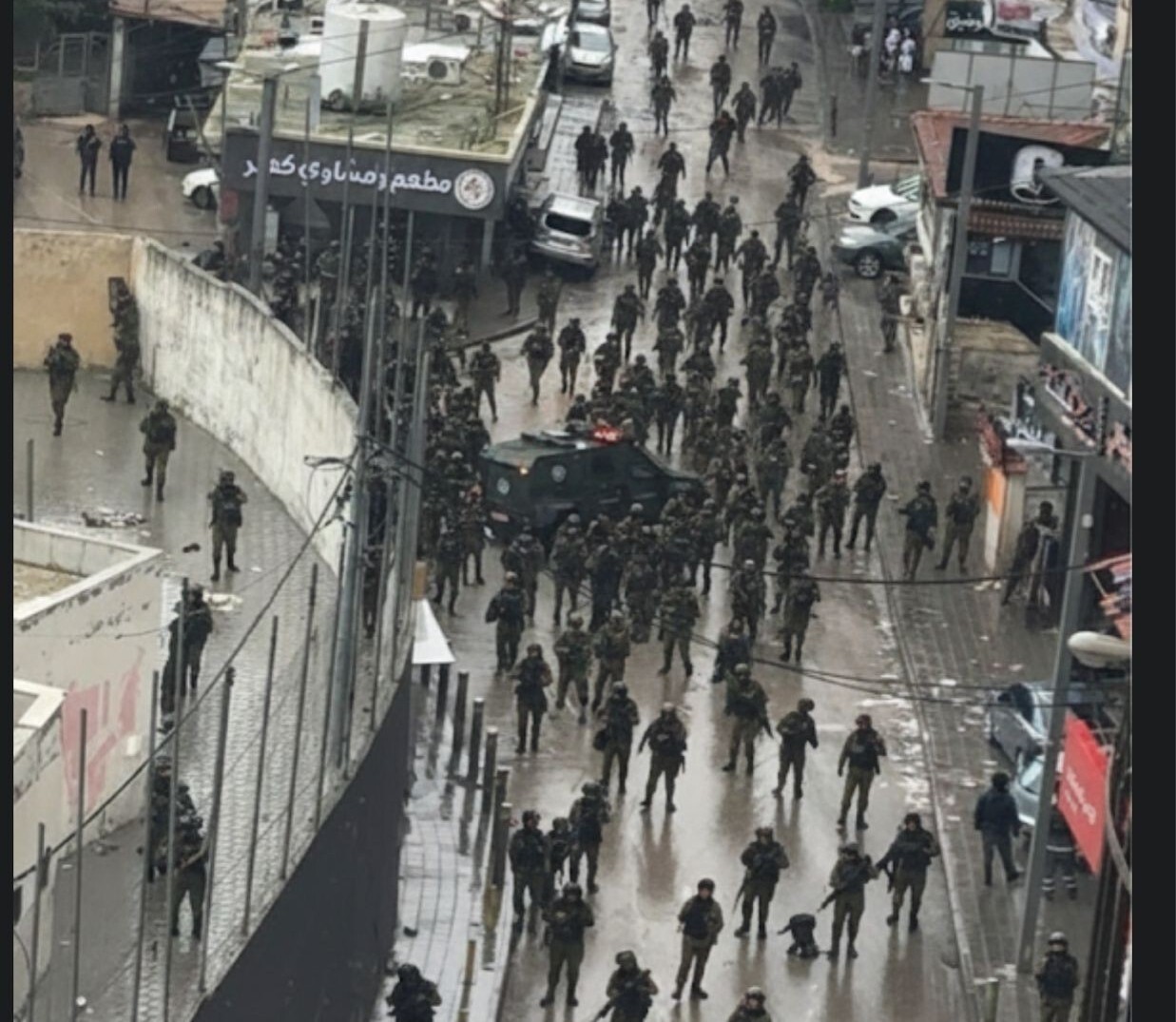
We continued on to a tour of Shuafat Refugee Camp. We arrived two weeks after three days of massive and violent activity by the Jerusalem Border Police in the camp. We came to hear from residents about what happened and about their feelings. To understand how extreme the operation was, I am attaching a video filmed by a local photographer.
In the video, a loudspeaker announcement from an armored police vehicle calls out: “We have come to visit you. Whoever wants to meet me should come to me; whoever wags his tail—we’ll cut it off.”
Shuafat Refugee Camp, 14.1.26.
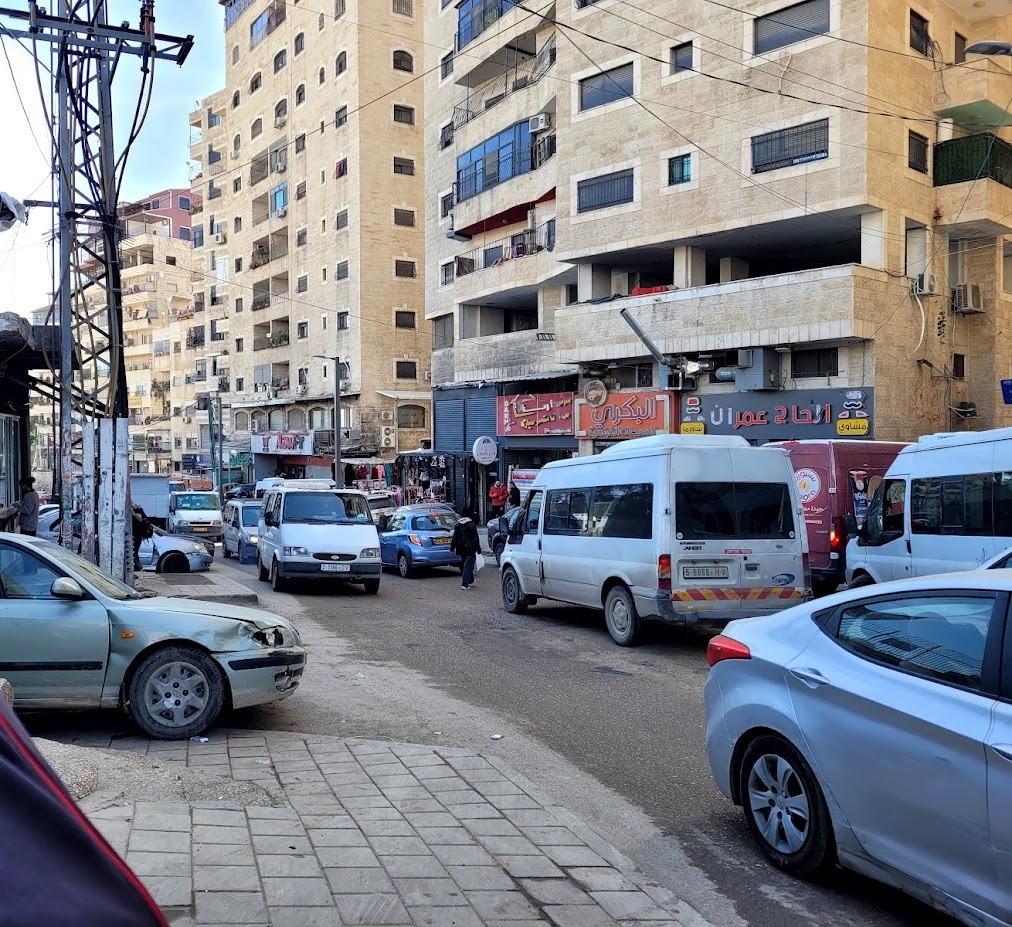
We entered through the main checkpoint into the camp. As usual, there was traffic congestion in the streets leading to the checkpoint.
We first visited the only school (elementary through middle school) operating under the auspices of the Jerusalem municipality. The school is closed on Sundays, but the gate was open, and in the courtyard we met a boy of about ten waiting for a drumming lesson. The music teacher arrived and told us that the children learn a variety of instruments and that there is also an orchestra. Musical activity takes place even on days without classes. He sees this as a calling—to bring joy and enrichment to the children of the camp even when there is no school.
We asked about what had happened there during the Border Police operation and about the children’s reactions. He replied that the army did not enter the school, but that he was unable to add anything to our questions without the principal’s approval, and the principal was not there that day. We knew the principal would not approve; he is closely supervised by the municipality and will not get himself into trouble. The last time we visited, he refused to meet with us.
We began walking along the main street and entered several shops. They were open when the Border Police arrived, but after what took place in the streets, most shops and offices closed and did not reopen for at least two days. In three minimarkets we visited, we were told how soldiers confiscated (stole) imported cigarette cartons worth tens of thousands of shekels, and gleefully smashed hundreds of trays of eggs without official labels against walls and sidewalks. According to them, “dairy products, cheeses, and other goods were also confiscated, depending on the invaders’ whims.” Smoke and stun grenades were thrown down the street as the column of armored vehicles and marching soldiers advanced. Teams from income tax, municipal tax (arnona), and car insurance accompanied the convoy, checking the debts of people in the street and sometimes entering homes.
The town of Anata (under municipal control of the Palestinian Authority—Area B) is connected by the main road, without any marking or checkpoint, to the refugee camp (a municipal area of Jerusalem). The camp (al-Mukhayyam) is populated almost entirely by Jerusalem residents holding blue ID cards. Of course, many Palestinians with IDs from Anata (and elsewhere) work in the businesses of the refugee camp. Many were arrested and taken for questioning, but most were released after a day or two. Some are afraid to return to work.
We kept asking how people—men, women, and children—had reacted, and whether anything in the atmosphere of the camp had changed. The residents told us that this was simply their reality, nothing new, and pointed out buildings that had burned and shops that had been destroyed even before this operation. We were struck by the fact that no one spoke about trauma, fears for the future, or the impact on children who had been exposed to the violence. For us, the scenes evoked memories of horrific images from occupied Europe in the past. Only later did we understand that we do not live within the reality of the camp’s residents. From a brutal occupier, one can expect only inhumane behavior—without compassion and without adherence to human-rights standards. All that remains is to somehow endure the worst days and try to live for as long as the occupier’s attention is directed elsewhere.
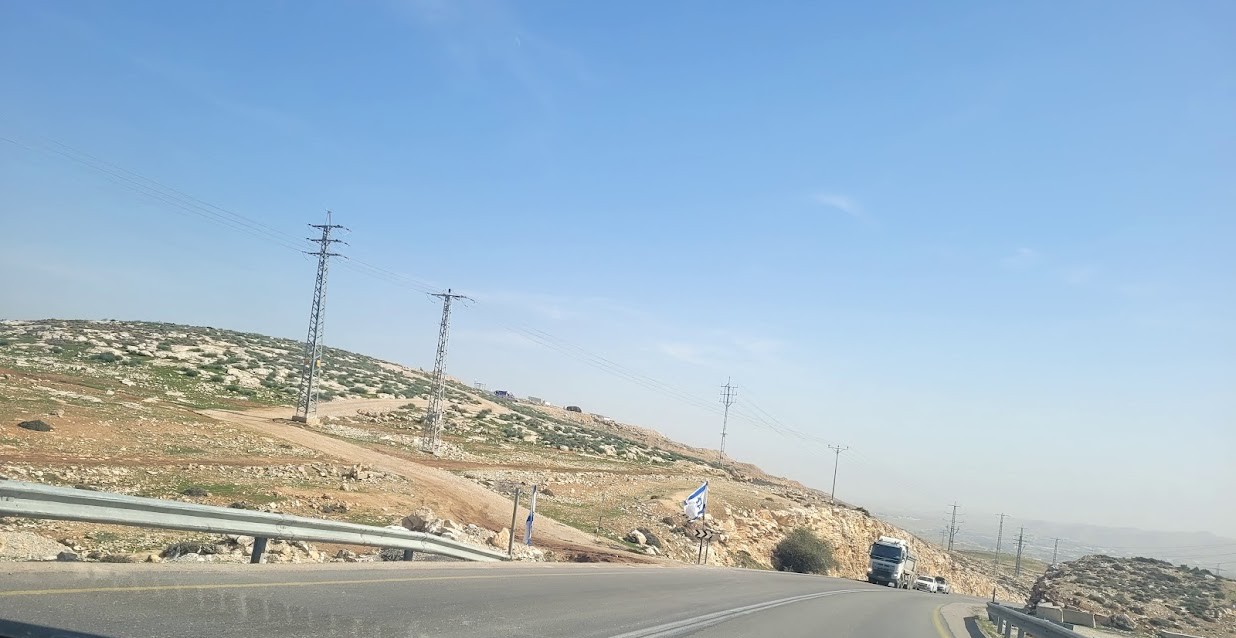
Finally, we drove along the road leading south from the Anata junction. It is crowded, and new outposts keep appearing along it. We photographed a new one. A month and a half ago there were two containers there; now there is already a dirt road and a gate with Israeli flags.
Location Description
Checkpoint Shu'afat camp / Anata-Shu'afat (Jerusalem)
See all reports for this place-
The Shu’afat checkpoint is located in the northern part of East Jerusalem at the exit from the village of Anata and the Shu’afat refugee camp, which are located in the area annexed to Jerusalem in 1967. The refugee camp borders the Shu’afat neighborhood to the west, Pisgat Ze’ev to the north, the French Hill neighborhood to the south and the planned expansion of Ma’aleh Adumim to E-1 in the east. It was established in 1966 for 1948 refugees from the West Bank and was populated after the Six Day War by persons who had been expelled from the Jewish Quarter. Today its population comprises some 25,000 people holding blue ID cards and some 15,000 people with Palestinian ID cards. The camp lacks adequate infrastructure and services, and suffers from poverty, neglect and overcrowding. All its buildings are connected to the public electricity and water infrastructure, but not all are connected to the sewer system. The camp’s services are provided by UNRWA, except for those such as health clinics and transportation of pupils to schools in Jerusalem. In 2005, the Israeli High Court of Justice rejected a suit by the residents requesting that the route of the separation fence be drawn such that the camp would remain on the Israeli side, but conditioned its approval of the route on the establishment of a convenient and rapid crossing facility for the inhabitants of the neighborhood, most of whom are residents of Jerusalem.
A temporary checkpoint operated there until December, 2011. It was extremely congested during rush hours, and dangerous for pedestrians (especially children) because of inadequate safety provisions. The new checkpoint was inaugurated south of the old one, for public and private transportation and for pedestrians, intended solely for the residents of the camp – holders of blue ID cards, and those with Palestinian ID cards who possess appropriate permits. There are five vehicle inspection stations at the checkpoint, and two for pedestrians (one of which is currently closed) where scanners have been installed but are not yet operating. According to the army, representatives of government agencies will also be present to provide services to residents of the neighbourhood. The pedestrian lanes are very long, located far from the small parking lots, and accessible through only a single revolving gate.Anat TuegJan-25-2026Anata: A new outpost has been built south of the junction
-
Ras Abu Sbitan (Olive Terminal)
See all reports for this place-
A large checkpoint/crossing to the area of a-Tur, Abu Dis and the Old City; only for pedestrians. Located on Jerusalem’s municipal boundary.
One of the major crossings in Jerusalem’s central sector. It is located on the separation fence between the northern portion of the al-Ezariya neighborhood and the neighborhood of a-Tur and the rest of East Jerusalem. It is manned by Border Police soldiers and private security companies and operates 24 hours a day. Palestinians are forbidden to go through, other than permanent residents of East Jerusalem (holders of blue ID cards) and holders of work and commercial permits who are allowed through only on foot.
-