
Wadada al Foqa – harassment by the settler from Yinon’s farm

An unscheduled shift, due to fears of attacks by settlers
On Saturday afternoon Muhammad notified Machsom Watch’s southern WhatsApp group that he’d received an urgent phone call from Radwan, who lives in an area called Wadada Tahta (Lower Wadada), south of the Meitarim industrial zone and Zanuta, and bordering Yatir Forest to the north. We’ve reported in the past on frequent incursions and unending threats by setters from Meitarim Farm, belonging to Yinon, located opposite them, near Zanuta. Muhammad’s description of the area follows in a separate email.
That same morning Radwan saw three Palestinian surveyors, who’d arrived at his neighbor Ziad abu-Awwad’s land in Wadada al-Foqa (Upper Wadada, north of Lower Wadada). Six settlers came down from Yinon’s farm to the surveyors, beat them and chased them off. He witnessed that frightening violence so he tried to reach Israeli friends, including Muhammad. Fortunately, the settlers were satisfied with their brawl with the surveyors and with abu-Awwad, and left. Abu-Awwad didn’t see any point in calling the police – they never act against settlers. We’ve already reported settlers who’ve come on ATV’s to abu-Awwad’s compound, threatening him not to approach his lands.
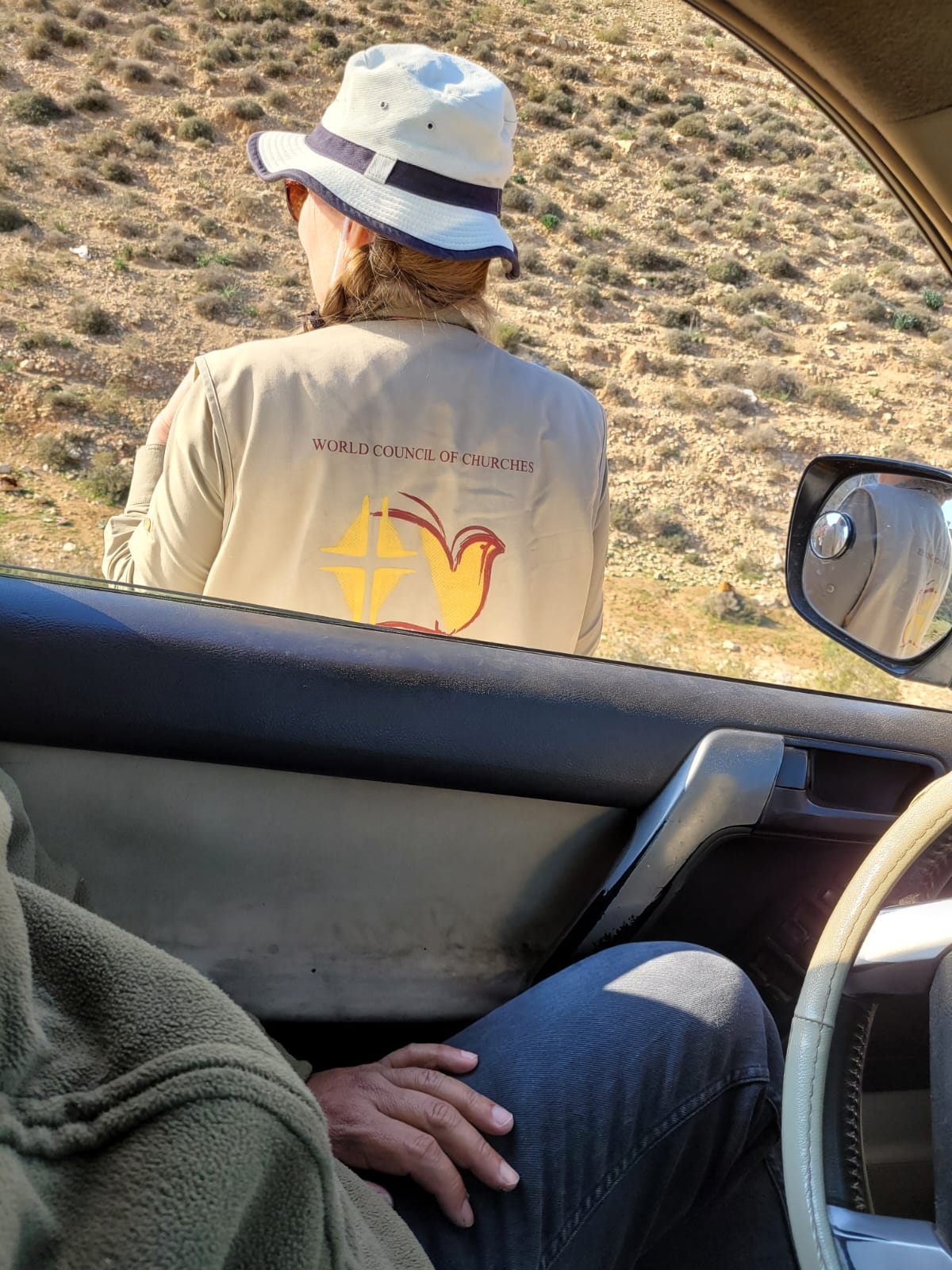
Radwan said that earlier the same morning Saleh, his brother, asked volunteers from the World Council of Churches who apparently live in Yatta to escort him and his flock because of threats he’d received. Shortly after we’d started to leave, Salah’s flock returned, escorted by three volunteers. We spoke with one of them, a Finn. She told us they’ve been in the area for three months and this morning had been asked to escort Salah. They remained with him for six hours while the sheep grazed. They too submit reports on each of their shifts.
From there we drove to Abu Safi, to see how he was. We were pleased to see some of his children were on a visit. He is better after removing some fluid from his knee. We were received with their usual hospitality.
South Hebron Hills
See all reports for this place-
South Hebron Hills
South Hebron Hills is a large area in the West Bank's southern part.
Yatta is a major city in this area: right in the border zone between the fertile region of Hebron and its surroundings and the desert of the Hebron Hills. Yatta has about 64,000 inhabitants.
The surrounding villages are called Masafer Yatta (Yatta's daughter villages). Their inhabitants subsist on livestock and agriculture. Agriculture is possible only in small plots, especially near streams. Most of the area consists of rocky terraces.Since the beginning of the 1980s, many settlements have been established on the agricultural land cultivated by the Palestinians in the South Hebron Hills region: Carmel, Maon, Susia, Masadot Yehuda, Othniel, and more. Since the settlements were established and Palestinians cultivation areas have been reduced; the residents of the South Hebron Hills have been suffering from harassment by the settlers. Attempts to evict and demolish houses have continued, along with withholding water and electricity. The military and police usually refrain from intervening in violent incidents between settlers and Palestinians do not enforce the law when it comes to the investigation of extensive violent Jewish settlers. The harassment in the South Hebron Hills includes attacking and attempting to burn residential tents, harassing dogs, harming herds, and preventing access to pastures.
There are several checkpoints in the South Hebron Hills, on Routes 317 and 60. In most of them, no military presence is apparent, but rather an array of pillboxes monitor the villages. Roadblocks are frequently set up according to the settlers and the army's needs. These are located at the Zif Junction, the Dura-al Fawwar crossing, and the Sheep Junction at the southern entrance to Hebron.
Updated April 2022
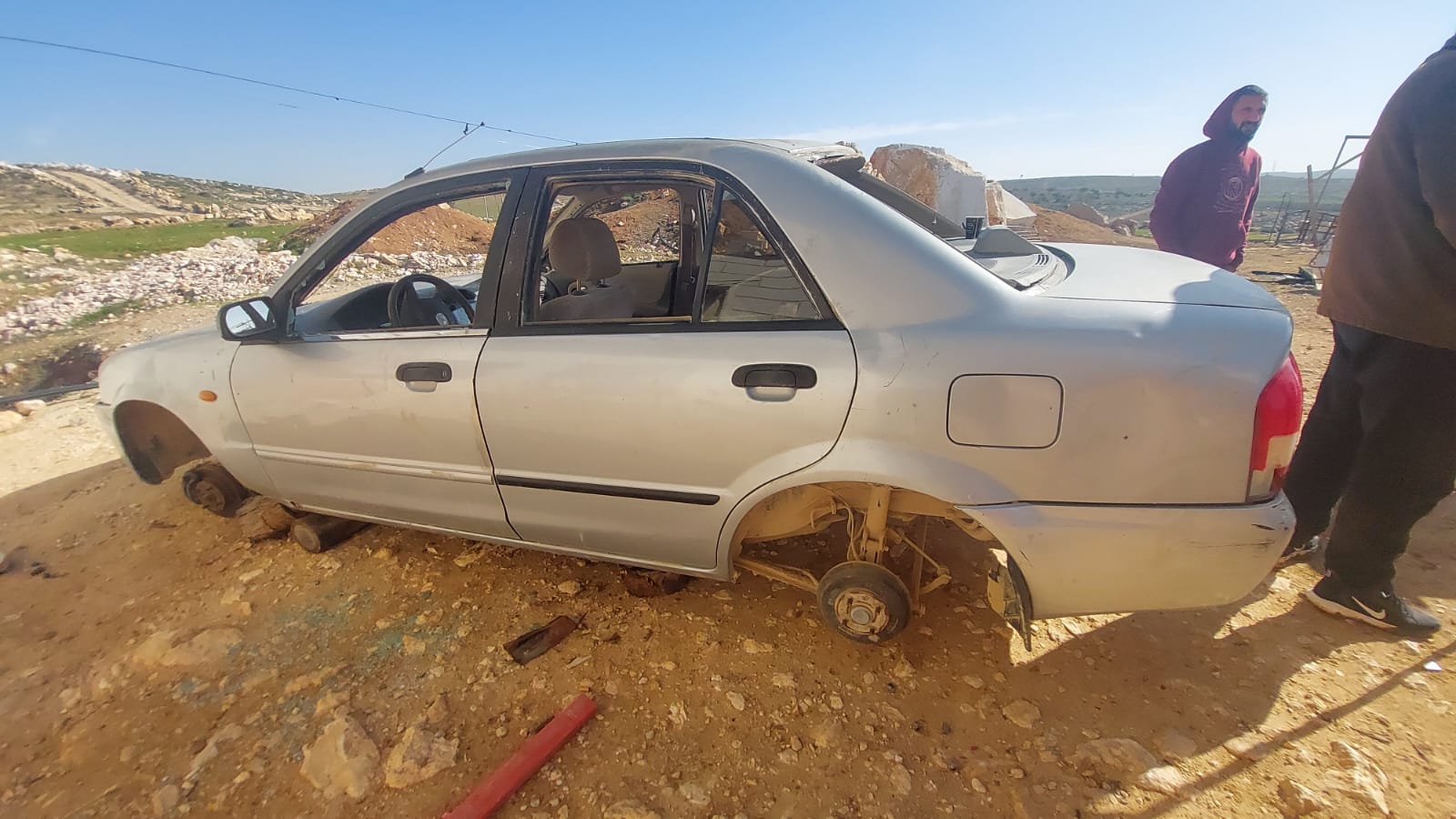 Michal TsadikDec-23-2025Wadi Shahish - The family car vandalized by settlers
-