
Wadi Qadum: Ahead of the New Year, the authorities hurried to demolish a four-story building housing 100 residents.
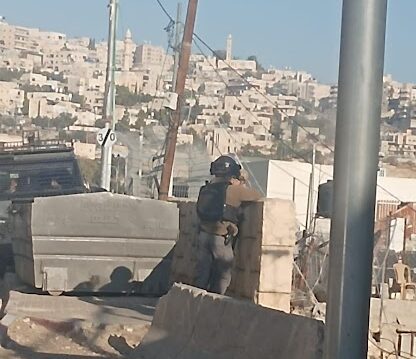
Sheikh Sa‘ad checkpoint: We meet outside the checkpoint with a committee representative of the neighborhood that’s cut off from Jabal Mukaber. At these hours, a house demolition is taking place on the slope opposite Sheikh Sa‘ad. When we ask why it is being demolished, the soldier replies, “An order from the Ministry of Finance.” He doesn’t seem to find this strange at all! Since when does the Ministry of Finance issue orders to demolish houses in Jerusalem? Apparently since Smotrich took over both Finance Ministry and Security, the boundaries have blurred…
N. tells us that the names of about 2,000 residents were removed from the list of people allowed to pass through the Sawahra al-Sharqiya checkpoint. They were on the list because they live within the municipal boundary of Jerusalem, but behind the Separation Wall. Only 10–15 doctors and municipal workers remain on the list, not including teachers and students.
All the others were instructed to pass through the Sheikh Sa‘ad checkpoint, located on a nearby hill as the crow flies, but the road between the two hills is long, winding, and badly maintained. As a result, students and teachers from the two neighborhoods are forced to reach the Sheikh Sa‘ad checkpoint already at 5:30 a.m. in order to make it to schools in Jerusalem by 8:00. All appeals to the municipality and the Civil Administration to revoke this decree were rejected.
Below, in the deep wadi of the Kidron stream, work is underway to build sewage treatment pools for wastewater coming from neighborhoods in western Jerusalem. The pipes will pass beneath the Sheikh Sa‘ad checkpoint.

From there we drove to the Sawahra al-Sharqiya checkpoint — a fortified checkpoint with two successive yellow barriers and a great deal of barbed wire. The friendly Border Policewoman and Border Policeman confirmed that there had been 800 people on the list permitted to pass by vehicle, of whom only 15 remain authorized. We tried to stop and speak with a car that crossed both barriers, but it hurried away.
We continued to Wadi Qadum via the American Road ascending to Ras al-Amud. The day before yesterday our hearts sank when we read that, ahead of the new year, the authorities hurried to demolish, at 3:00 a.m., a four-story building housing 100 residents in Wadi Qadum, alongside the American Road.
During the “evacuation” of belongings, Jewish contractor workers used severe violence against the residents.
We were familiar with the saga of this building since 2021. This is what we wrote on 12.6.22:

“We received from Aviv Tatarsky of ‘Ir Amim’ the coordinates of a house in Wadi Qadum (on the ascent to Ras al-Amud) that received a new demolition order. Its residents are demonstrating today at noon at City Hall. It is a beautiful house built of Jerusalem stone with elliptical balconies. It was built in 2014, houses 100 residents, and has no permit (it is almost impossible to obtain a building permit in East Jerusalem).
This year, the Custodian and the municipality launched a comprehensive operation to examine all permits and land-registry registrations of all Palestinian houses in East Jerusalem in order to ‘put things in order’ (that is, to evacuate and demolish). The location of the house is not typical for demolition; it lies in a wadi beneath the Mount of Olives, from where an apartheid tunnel is planned to be dug to bring settlers from the southern West Bank to Jerusalem and to the roads of the northern West Bank. The municipality claims the land is not designated for housing but for sports, leisure, and recreation. It sounds like mockery of the poor.
At the end of the shift, Netanya went to the residents’ demonstration in front of City Hall. She heard from the residents that the contractor had promised the permit would come and did not deliver. They are literally begging Moshe Lion to show mercy to the families who will be left without a home.”
Since then, we have followed the long negotiations with the Jerusalem Municipality to regularize the building permits.

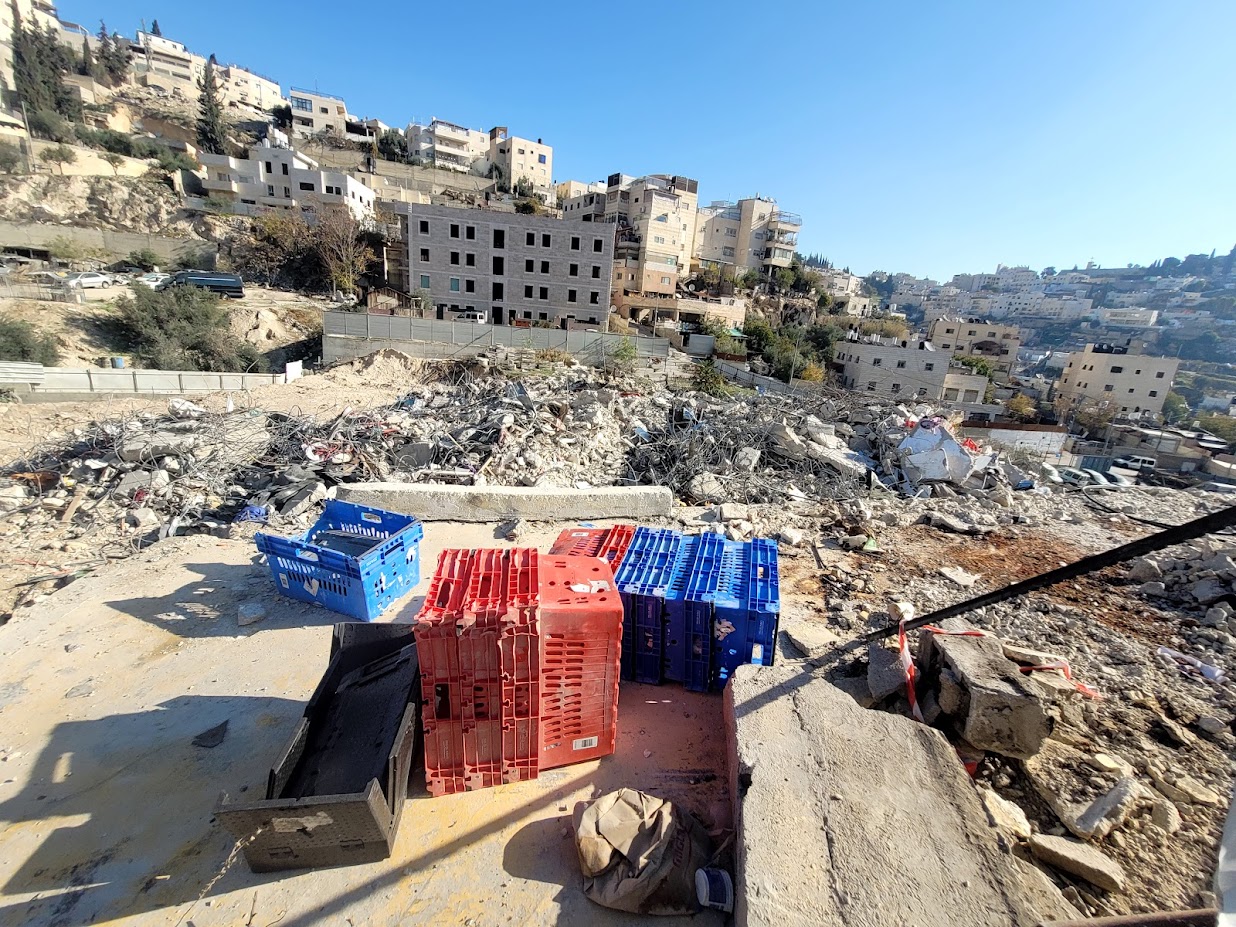
When we arrived at the site, we were greeted only by ruins and by a neighbor who had witnessed the horrific demolition together with her close friend from the building. She told us that all the residents were violently thrown out of their beds, their property was destroyed, they were beaten, and stones were thrown at them. We asked to speak with and film her friend on video, and she coordinated with her by phone that we would come back in an hour and a half for the planned residents’ meeting at the site. But when we returned, no one was there. We will continue to follow up.
Abu Dis: the Comboni Sisters Monastery and the kindergarten on the Separation Wall — Christmas Eve. We went to wish a Merry Christmas to the nuns at the monastery near the Lazarus Crossing, which was permanently closed. The crossing had been intended for pilgrim visits to the Tomb of Lazarus (Elazar, whom Jesus raised from the dead according to the New Testament). According to tradition, the tomb is located beyond the Separation Wall in Abu Dis, on the Palestinian/Azariya side.
As part of the construction of the checkpoint, a small door was once opened in the Separation Wall to allow direct passage of children from Palestinian Abu Dis to the kindergarten on the Jerusalem side of the bisected neighborhood. We witnessed parents bringing children aged 2–5 and handing them to a nun who waited for them at the gate. There were tearful goodbyes, but the parents did not give up on the nuns’ excellent kindergarten, which advocates a way of life based mainly on engagement, education, and community assistance, with less emphasis on liturgy. Despite Vatican pressure not to close it, the checkpoint was permanently closed in 2011. For several years we met the kindergarten teacher squeezing through the turnstiles of the distant Olive checkpoint, accompanied by small children, to return by bus to the kindergarten.
We rang the bell and a young woman’s voice answered and invited us inside. We met Lorena, from Mexico, wearing a sweatshirt and non-monastic track pants. The excitement was great; our Netanya knew her from a shared activist group. She is charming and full of joie de vivre, arrived here two years ago after being in Jordan and other countries, and speaks fluent Arabic, English, and Spanish.
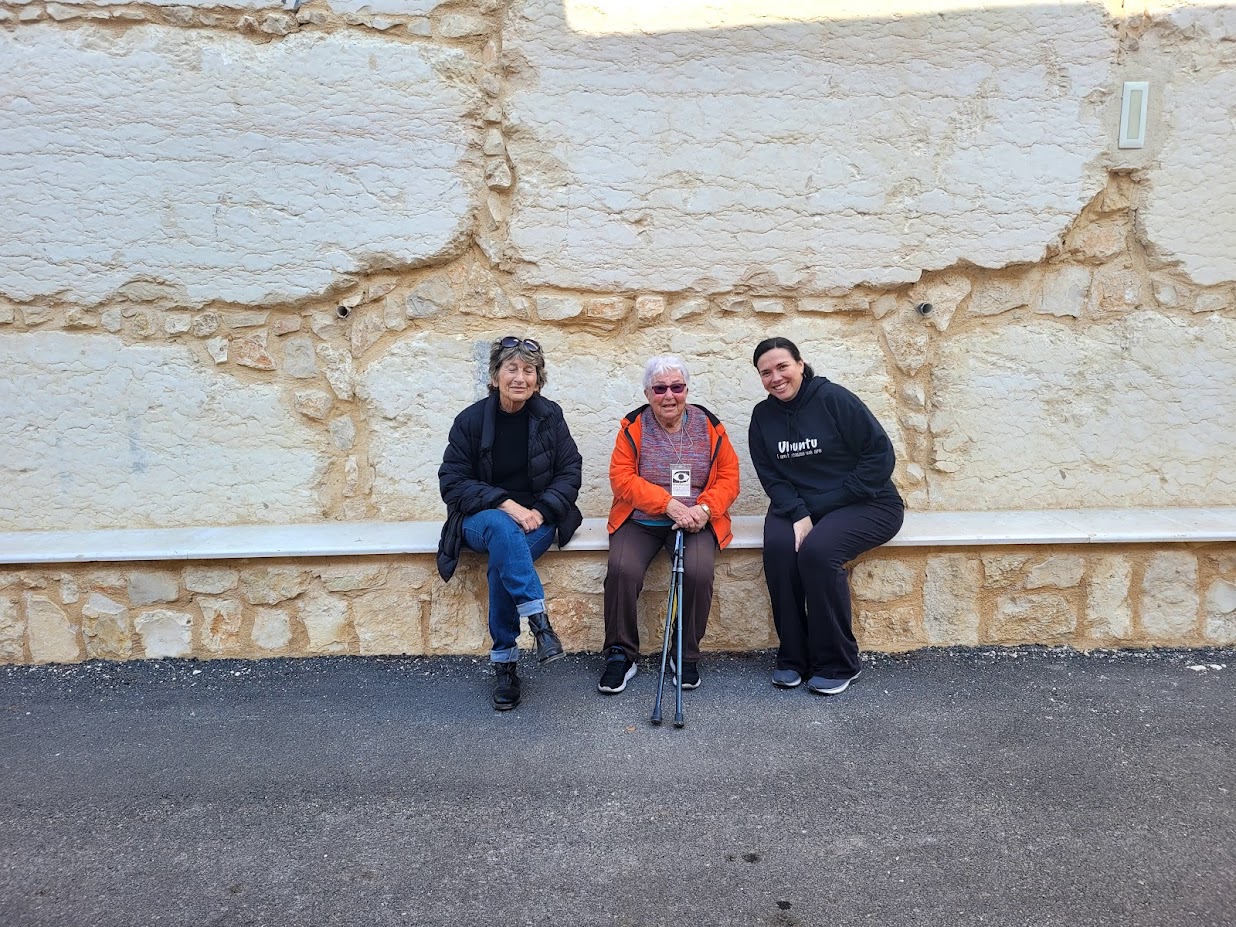
The six nuns who live there are preparing today for Christmas Eve and cleaning everything needed for tomorrow, when there will be a large reception for believers and acquaintances. This evening they will travel to Bethlehem for Mass.
We asked about the kindergarten — is it still operating? Yes, but only for 40 children on the Jerusalem side, not for those on the Palestinian side, whose homes border the monastery on the other side of the wall. We photographed the drawings on the wall that is part of the kindergarten courtyard and promised to come back to visit again.

Location Description
Abu Dis / Lazarus gate (formerly The Wicket)
See all reports for this place-
Abu Dis / Lazarus Checkpoint/Gate (east of the former “wicket”)
Construction of the wall in the Abu Dis area blocked all the gaps that allowed people to cross from al-Ezariya to the neighbourhoods of Abu Dis and Ras al 'Amud that are located within Jerusalem’s municipal boundary. The Lazarus checkpoint is a gate in the wall adjacent to the Lazarus Monastery. Until 2011 it had a door for pilgrims to al-Ezariya and for the monastery’s kindergarten pupils from al-Ezariya. The crossing is currently closed, but the site has infrastructure for conducting inspections.
-
Sheikh Sa'ed
See all reports for this place-
A checkpoint limited to pedestrians, located on Jerusalem’s municipal boundary.
The checkpoint sits on the separation fence at the entrance to Sheikh Sa’ad, dividing it from its neighbourhood of Jabel Mukkabar. It’s manned by Border Police soldiers and private security companies and operates 24 hours a day. Palestinians are forbidden to go through, other than residents of Jabel Mukkabar or Sheikh Sa'ad who have permits. Both groups are permitted through only on foot. Residents of East Jerusalem who don’t live in Jabel Mukkabar are also allowed to cross to Sheikh Sa’ad, but not in the opposite direction; they must return through the Sawahira ash Sharqiya checkpoint.
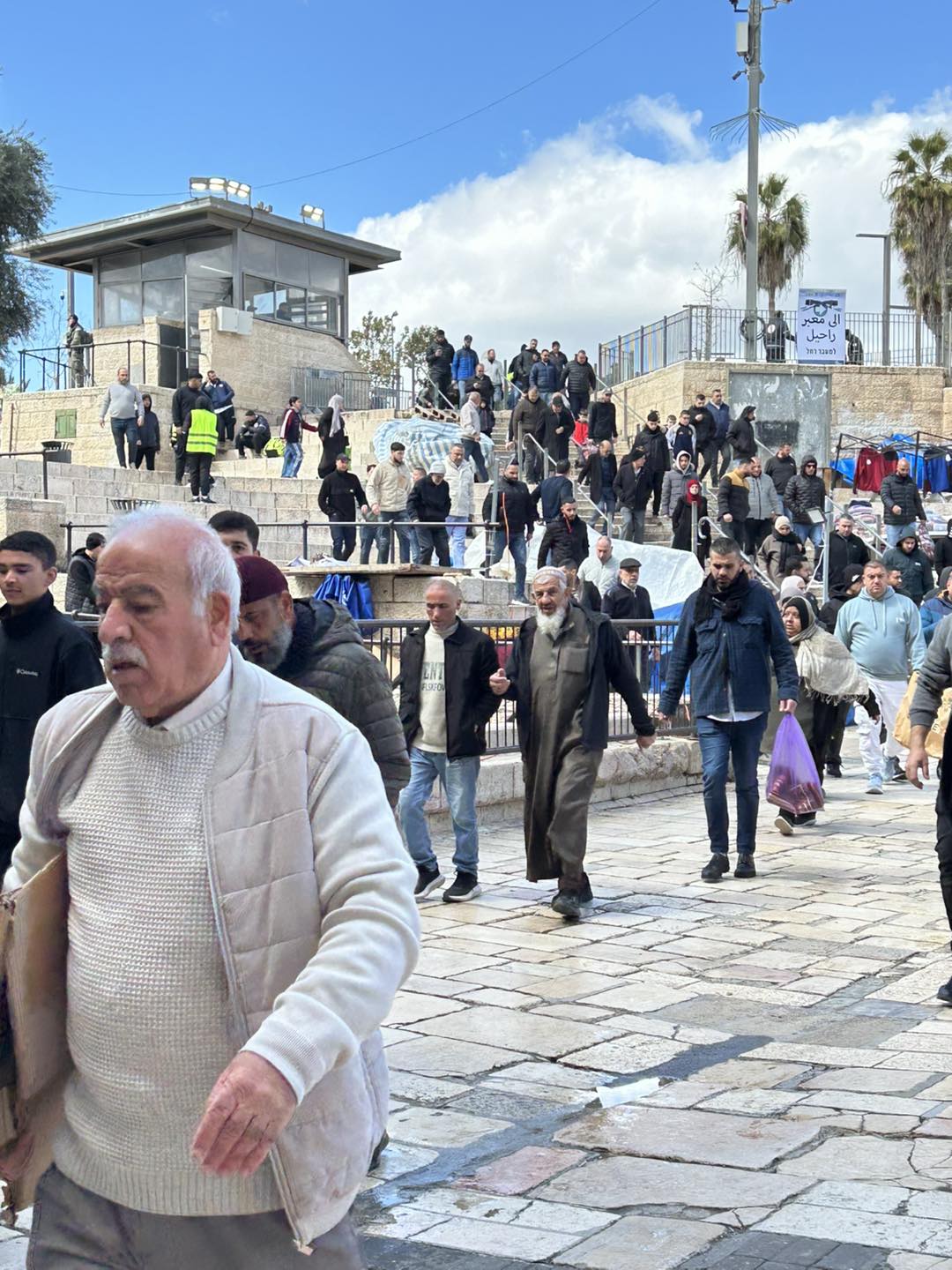 Avital CFeb-27-2026Jerusalem, Damascus Gate: Crowd rushing to prayer
-