
Umm al-Khair - Eid: Between the river and the sea, Arabs and Jews must live together, hatred must be overcome.
The shift was mainly dedicated to visiting Umm al-Khair after we had been informed last night of the violent harassment of shepherds by Israeli settlers and soldiers.
We first drove via Route 60 to see what the situation was concerning the entrances to the villages.
The entrance to Samu’ is open, to Dahariya is still closed since 7.10.23.
The entrance to Karma is open. Abde is closed not only by a yellow gate but also by piles of dirt along the entire side of the road there.
Dura is open. Opposite to al-Fawwar the entrance has been closed for many months. The southern entrance to Hebron at the foot of Beit Hagai is closed.
The Rihiya–Qilqis junction – the entrances to both villages are closed.
At the Sheep Junction, the entrance to Rihiya is closed.
Hebron is open, but manned by soldiers.
At the junction with Route 317 we turned right. In the fields there are many women, men and children, sowing and planting summer vegetables: facus, cucumbers, zucchini, tobacco and tomatoes. A deceptive pastoral appearance.
We arrived at the Zif junction, the entrance to Yatta is open.
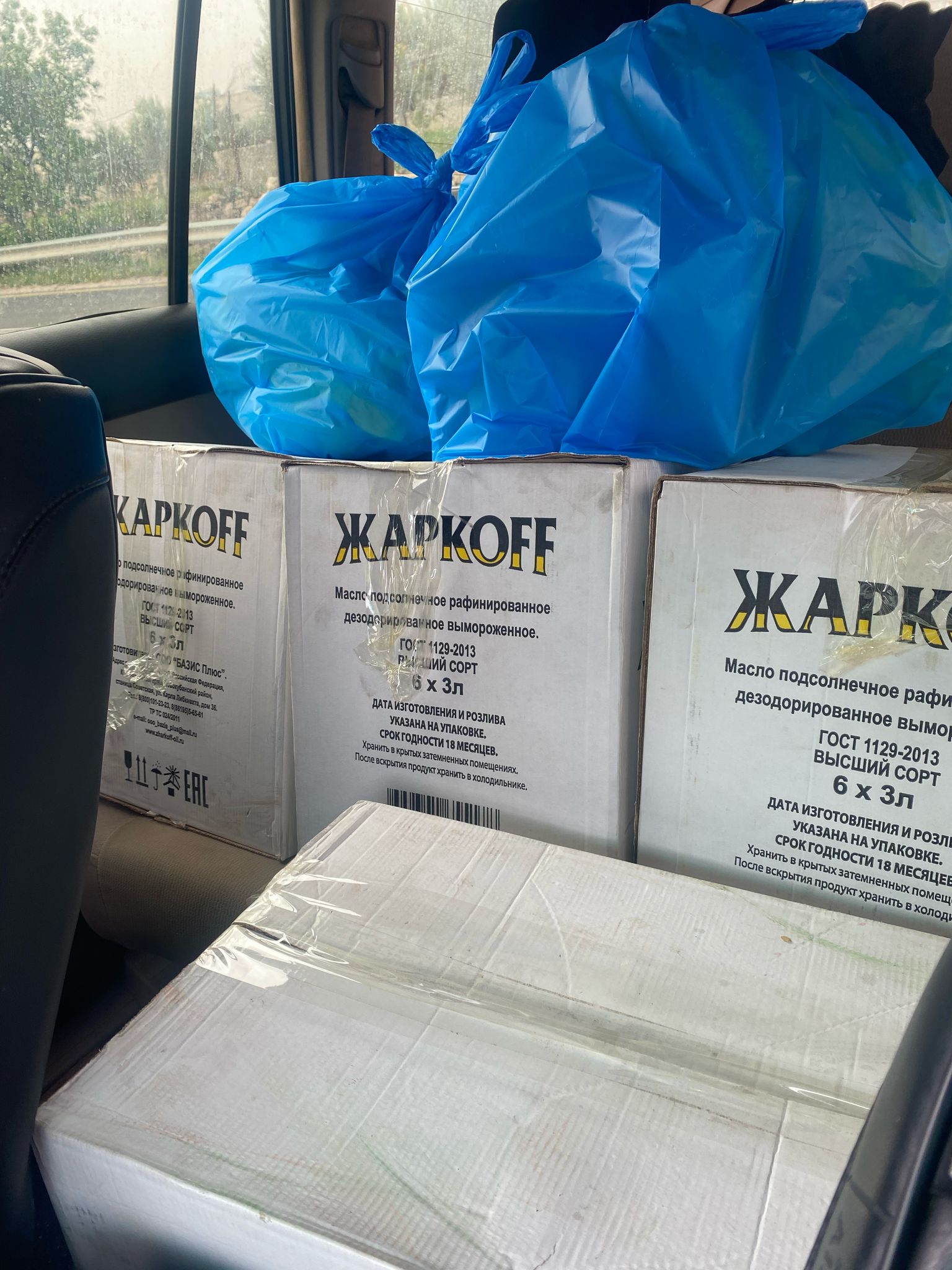
We entered N’s grocery store to buy food for several families in Umm al-Khair. Buying there is much cheaper than in Israel. You can buy more and for less money.
We filled the car with groceries and drove to Umm al-Khair to meet Eid and Khalil Hadalin.
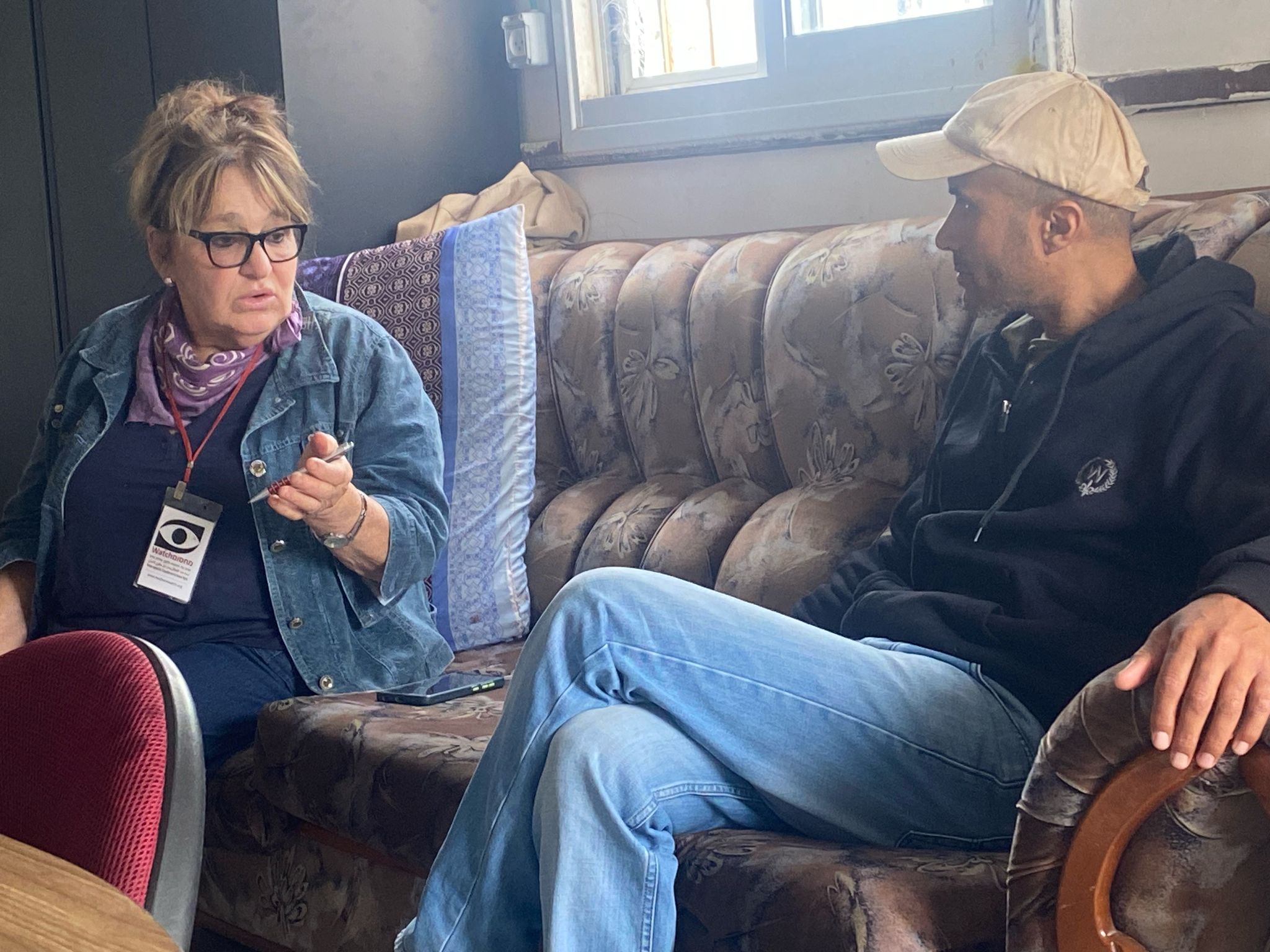
Eid, the wise, the artist, the gentle soul, the humanist who has been written about more than once in the world, was happy to see us As always he spoke wisely and this is an example of what he said: “Between the river and the sea, the Arabs and the Jews must live together, we must overcome hatred. I am not considered, I am not a citizen, I am just an Arab, whose homes were destroyed 18 times, including mine once a few months ago.
And I, my wife, and my five daughters still live in a warehouse. I believe and say, despite the oppression of the settlers, even though we are nothing, that we are not taken into consideration, no one has the right to make a transfer for either side. We need to educate new generations. Not to hate. We must end this hatred that we have built and learn to live together.
There are Palestinians who are angry at Bassel who made the film with Yuval who is a Jew, just as there are Israelis who are angry at Yuval for the same reason.
These opinions exist on both sides. You know, I have more Jewish friends than Arabs because I continue to believe in living together.
I told my wife, who thinks like me, that even though we have suffered over the years from the occupation, oppression, and the settlers’ desire to turn the country into a Jewish-only country, accusing us of being Hamas and terrorists, we continue to believe that it is possible and necessary to be in contact with good Jews like you and to live together with equal rights.”
After we unloaded the groceries, he said goodbye to me with these words: “Dear Michal, send warm greetings to all the good Jewish friends who support us, we continue to believe that we can live together.”
From there we drove to Susiya to meet Wadha and Azzam. It is still a holiday, and his children and grandchildren are with them. It is nice to meet them.
Azzam says that yesterday the settlers Shem Tov Luski from ancient Susiya and Amishav Peled from the Mishkan HaRo’im farm entered Area B with their men. The Jewish settlers with their sheep and cows entered his neighbours’ fields. They destroy and eat everything and eating everything and then they left.
When the police were called, the police claimed they could not enter Area B.
Interestingly, Azzam says with a bitter smile, “They enter Yatta without a problem.”
He goes on to say that at night settlers entered Wadi Rahim and cut down an electricity pole with a disk. They intended to cut down another one, but when they saw people and police coming, they ran away. Now the police are constantly around there. “They are there, but they will do nothing,” he says.
“In addition, the sons of Pavel and Malka from the new farm opposite us brought their sheep and came onto Nasr Nawaja’a’s land. They have a method that they tried two weeks ago and succeeded, mixing their sheep with our sheep and then stealing ours. This time it didn’t work, but this one worked here”.
Everyone there is tired and worried, but they are not giving up.
Location Description
Dura Al-Fawwar Junction
See all reports for this place-
Junction on Route 60: west - the town of El Dura, east - the Al Fawwar refugee camp. There is a manned pillbox at the junction. From time to time the army sets up flying checkpoints at the entrance to El Fawwar and Al Dura. Al-Fawwar is a large refugee camp (7,000 inhabitants in 2007) established in 1949 to accommodate Palestinian refugees from Be'er Sheva and Beit Jubrin and environs. There are many incidents of stone-throwing. In the vicinity of the pillbox there are excellent agricultural areas, Farmers set up stalls adjacent to the plots close to the road. In recent months the civil administration has set up dirt embankments thereby blocking access to the stalls, and making it impossible for the farmers to sell their vegetables. Updated April 2021, Michal T.
-
Hakvasim (sheep) Junction
See all reports for this place-
One of the roadblocks (earthworks, rocks, concrete blocks or iron gates) that prevent transit of vehicles to Route 60 in the southern West Bank and block the southern entrance to Hebron. A manned pillbox supervises the place.
-
South Hebron Hills
See all reports for this place-
South Hebron Hills
South Hebron Hills is a large area in the West Bank's southern part.
Yatta is a major city in this area: right in the border zone between the fertile region of Hebron and its surroundings and the desert of the Hebron Hills. Yatta has about 64,000 inhabitants.
The surrounding villages are called Masafer Yatta (Yatta's daughter villages). Their inhabitants subsist on livestock and agriculture. Agriculture is possible only in small plots, especially near streams. Most of the area consists of rocky terraces.Since the beginning of the 1980s, many settlements have been established on the agricultural land cultivated by the Palestinians in the South Hebron Hills region: Carmel, Maon, Susia, Masadot Yehuda, Othniel, and more. Since the settlements were established and Palestinians cultivation areas have been reduced; the residents of the South Hebron Hills have been suffering from harassment by the settlers. Attempts to evict and demolish houses have continued, along with withholding water and electricity. The military and police usually refrain from intervening in violent incidents between settlers and Palestinians do not enforce the law when it comes to the investigation of extensive violent Jewish settlers. The harassment in the South Hebron Hills includes attacking and attempting to burn residential tents, harassing dogs, harming herds, and preventing access to pastures.
There are several checkpoints in the South Hebron Hills, on Routes 317 and 60. In most of them, no military presence is apparent, but rather an array of pillboxes monitor the villages. Roadblocks are frequently set up according to the settlers and the army's needs. These are located at the Zif Junction, the Dura-al Fawwar crossing, and the Sheep Junction at the southern entrance to Hebron.
Updated April 2022
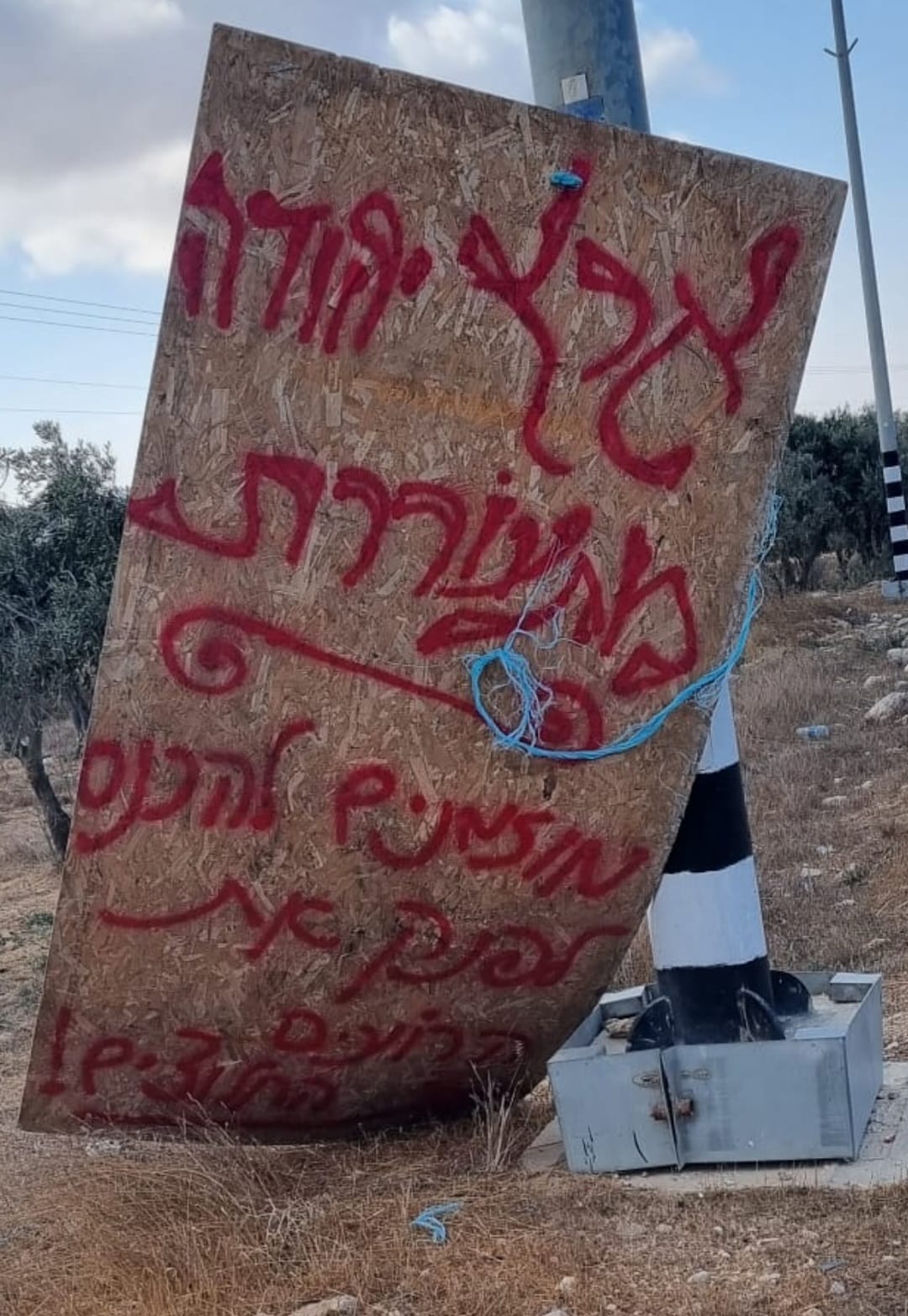 Smadar BeckerOct-17-2026A sign placed by those who call themselves the Pioneer Shepherds, at the outpost adjacent to Qawawis
-
Susiya
See all reports for this place-
Susiya The Palestinian area lies between the settlement of Susya and a military base. The residents began to settle in areas outside the villages in the 1830s and lived in caves, tents and sukkot. To this day they maintain a traditional lifestyle and their livelihood is based on agriculture and herding. Until the 1948 war, the farmers cultivated areas that extended to the Arad area. As a result of the war, a significant portion of their land left on the Israeli side was lost. After the 1967 war and the Israeli occupation, military camps were established in the area, fire zones and nature reserves were declared, and the land area was further reduced. The Jewish settlement in Susya began in 1979. Since then, there has been a stubborn struggle to remove the remains of Palestinian residents who refuse to leave their place of birth and move to nearby town Yatta. With the development of a tourist site in Khirbet Susya in the late 1980s (an ancient synagogue), dozens of families living in caves in its vicinity were deported. In the second half of the 1990s, a new form of settlement developed in the area - shepherds' farms of individual settlers. This phenomenon increased the tension between the settlers and the original, Palestinian residents, and led to repeated harassment of the residents of the farms towards the Palestinians. At the same time, demolition of buildings and crop destruction by security forces continued, as well as water and electricity prevention. In the Palestinian Susya, as in a large part of the villages of the southern Hebron Mountains, there is no running water, but the water pipe that supplies water to the Susya Jewish settlement passes through it. Palestinians have to buy expensive water that comes in tankers. Solar electricity is provided by a collector system, installed with donation funds. But the frequent demolitions in the villages do not spare water cisterns or the solar panels and power poles designed to transfer solar electricity between the villages. Updated April 2021, Anat T.
-
Umm al-Khair
See all reports for this place-
Umm al-Kheir
A Palestinian village in the southern Hebron governorate, populated by five families. The Palestinian residents settled there decades ago, after Israel expelled them from the Arad desert and purchased the land from the residents of the Palestinian village of Yatta. The village suffers from the violence of nearby Carmel settlers, from water shortage and is subject to frequent demolition of buildings by the Civil Administration.
-
Zif Junction
See all reports for this place-
Zif Junction located on the crossroads that directs towards Road 356 to Yata. Yata is the district city of the southern Hebron Mountains. Usually, this junction is open to traffic. The nearby pillbox is unmanned. But the army and police are present occasionally, sometimes setting up a checkpoint and sometimes detaining residents from the big city. Often, the Israeli policemen inspect vehicles and distribute driving reports to Palestinian vehicles. s
-
