
ברטעה-ריחן, טורה-שקד, יעבד-דותן
On our way to our vigil, Q. from Arabe called to see what we had done about his matter. On Thursday, September 23, at 20:45 he had called, all upset, to tell us he had been detained along with 4 others, among them a 15-years-old boy, at Toura Checkpoint from 15:30 until 20:30! And now he was home. The checkpoint commander, an Arabic-speaker as Q. repeatedly insisted, suspected them of not having crossed the checkpoint that morning but rather got through a hole in the fence near it. Q. – 54 years old – insisted he was elderly and his name is not always noted when he crosses in the morning. The commander, he says, spoke roughly and threateningly (we have it all written down and documented), and when he was released that evening – only his ID and phone were returned, but not his permit which is becoming invalid these days. He is supposed to receive a new permit, but fears that the checkpoint commander would prevent this. We told him that we called the DCO but were not answered because of the Jewish holidys, and there was no one to talk to until Wednesday.
Road 611 from Harish to Barta’a Checkpoint
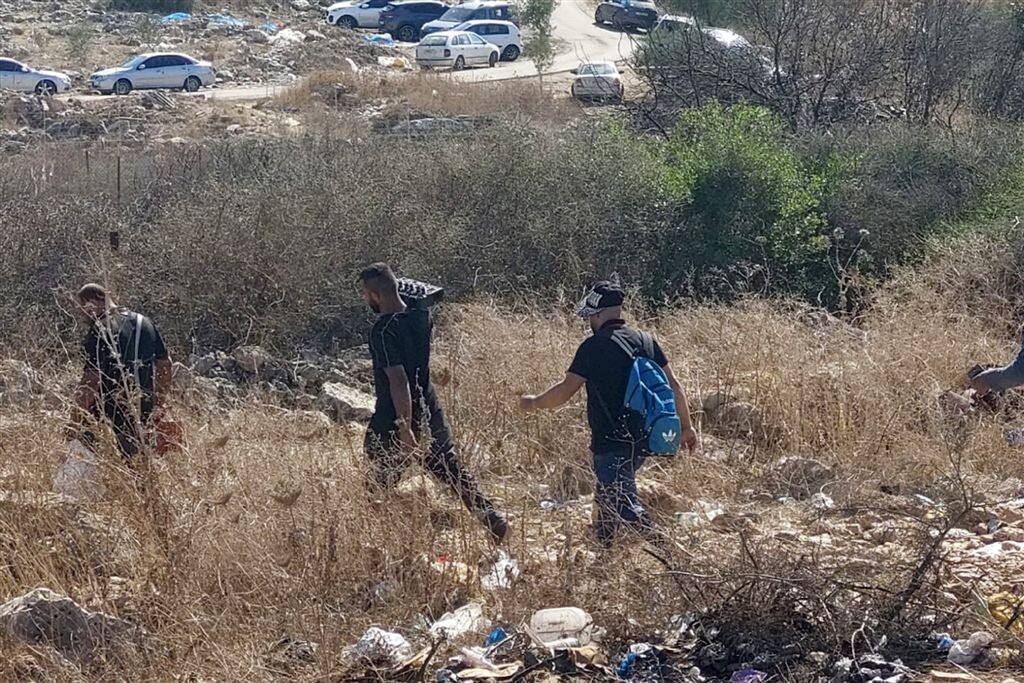
At 15:50 we stopped to view the surreal scene of Palestinians crossing the Separation Fence through the hole that have already grown, near the Palestinian village Qeiqis. We then crossed the Barta’a Checkpoint that was had less vehicular traffic than usual.
15:15 Ya’abad-Dotan Checkpoint
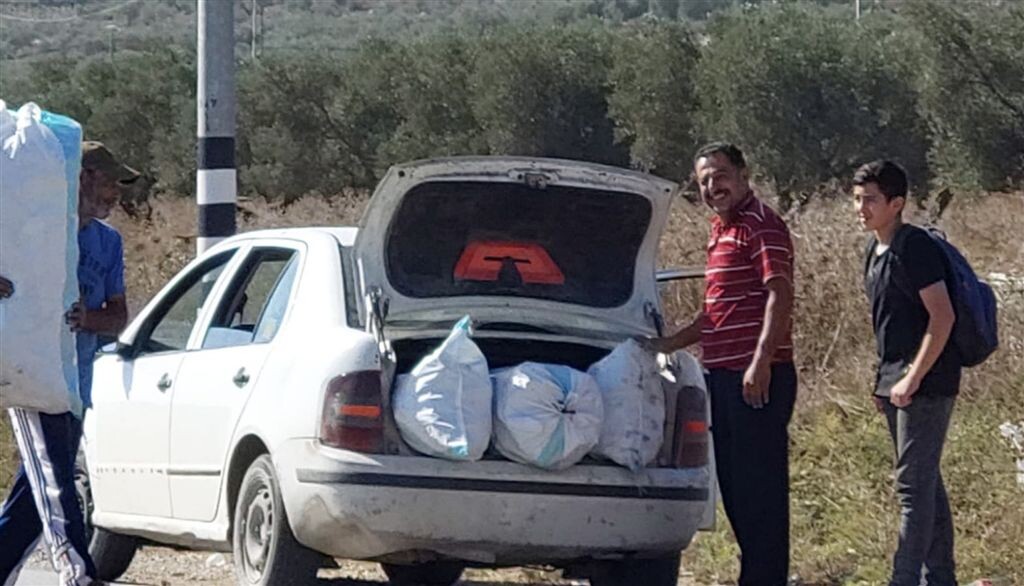
The checkpoint was calm and unmanned, unlike our assumptions that we would see many soldiers there following the Jenin events. Cars crossed it unhampered. Drivers greeted us. At the olive grove next to the road to Mevo-Dotan settler-colony we saw two men and a child collecting empty bottles. They told Marina to “keep well” while Ruti went to check on the olive situation in the grove south of the checkpoint. This whole region sees no olives this year.
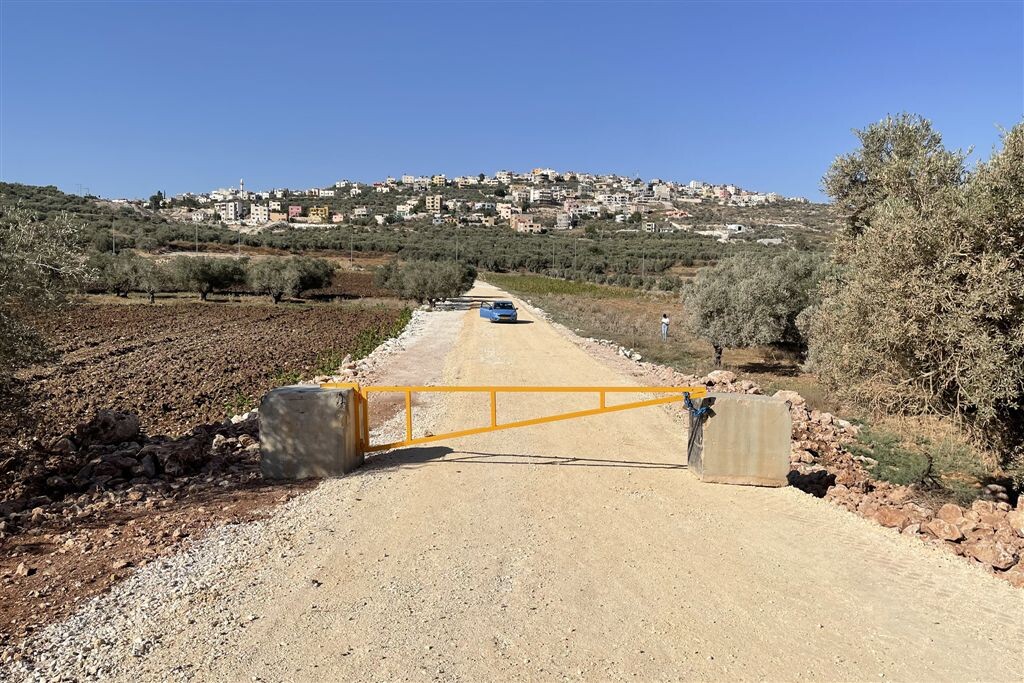
On our way back, halfway to Umriha, we decided to turn left into a new road made among the Palestinian tobacco fields in the valley. We drove until we arrived at a yellow metal barrier. We continued a bit on foot. Facing us on the hill among the trees we noticed two roofs, perhaps of wooden cabins. We’d like to know who lives there and who let him pave a new track on this fertile valley ground that belongs to the Palestinian village of Ya’abad.
16:00 Barta’a-Reihan Checkpoint, Seam Zone side
We did not run into any kind of ‘security’ tension as we crossed into the seam zone. We parked north of the checkpoint, spoke with a worker employed in the East (Palestinian) Barta’a nursery. He earns 150 shekels for a day’s work. In Western Barta’a (the Israeli side) he would earn perhaps 200 shekels a day, he says. Several elderly people disembarked from a large transport, some of them had a hard time climbing to the endless pedestrian track. At least from there they will have a gently downslope…
Loaded trucks slowly exit the inspection compound. Yes, we know: nothing here is right. The security guards are armed, their weapons at the ready. All the time.16:20 Toura-Shaked Checkpoint
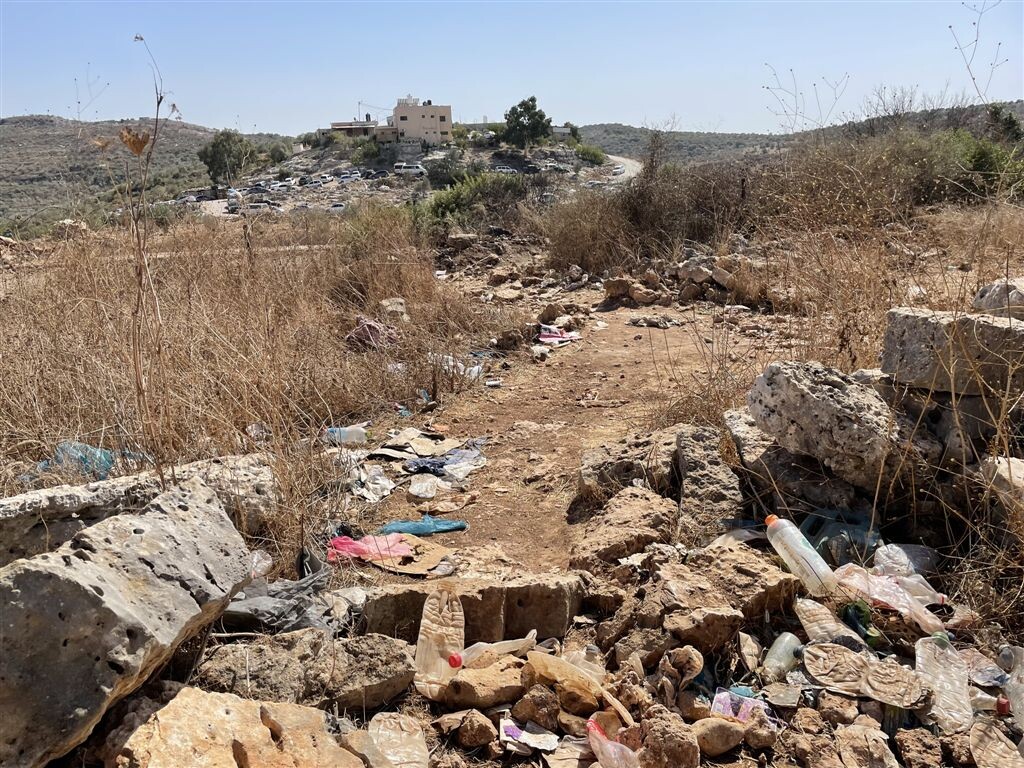
We looked for the commander about whom we wrote earlier. He was not present. Instead was a woman-officer who agreed to come down from the watchtower (after placing someone else there) and speak with us, accompanied by an armed soldier. We told her about the commander’s doings, and she suggested we call the DCO at Salem. We asked about the holes in the fence right under their nose and the soldier answered: “With God’s help we catch them when they do”. So why if they’re out of bounds, why not repair them? His answer amazed and amused us: “The checkpoint belongs to the army. The holes are the state’s business”. And whose business is all this filth around us? We asked for the 1000th time. Apparently, the filth too has an owner, he pointed to a sign: “Linom Ltd., Seam Line Maintenance, in the service of the Ministry of Defense”.
We’ll try calling them too after the holidays.
Barta’a-Reihan Checkpoint
See all reports for this place-
This checkpoint is located on the Separation Fence route, east of the Palestinian town of East Barta’a. The latter is the largest Palestinian community inside the seam-line zone (Barta’a Enclave) in the northern West Bank. Western Barta’a, inside Israel, is adjacent to it. The Checkpoint is open all week from 5 a.m. to 9 p.m. Since mid-May 2007, the checkpoint has been managed by a civilian security company subordinate to the Ministry of Defense. People permitted to cross through this checkpoint into and from the West Bank are residents of Palestinian communities inside the Barta’a Enclave as well as West Bank Palestinian residents holding transit permit. Jewish settlers from Hermesh and Mevo Dotan cross here without inspection. A large, modern terminal is active here with 8 windows for document inspection and biometric tests (eyes and fingerprints). Usually only one or two of the 8 windows are in operation. Goods, up to medium commercial size, may pass here from the West Bank into the Barta’a Enclave. A permanent registered group of drives who have been approved by the may pass with farm produce. When the administration of the checkpoint was turned over to a civilian security firm, the Ya’abad-Mevo Dotan Junction became a permanent checkpoint. . It is manned by soldiers who sit in the watchtower and come down at random to inspect vehicles and passengers (February 2020).
-
Tura-Shaked
See all reports for this place-
Tura-Shaked
This is a fabric of life* checkpoint through which pedestrians, cabs and private cars (since 2008) pass to and from the West Bank and the Seam-line Zone to and from the industrical zone near the settler-colony Shaked, schools and kindergartens, and Jenin university campuses. The checkpoint is located between Tura village inside the West Bank and the village of Dahar Al Malah inside the enclave of the Seam-line Zone. It is opened twice a day, between 7 a.m. and 10 a.m., and from 12 noon to 7 p.m. People crossing it (at times even kindergarten children) are inspected in a bungalow with a magnometer. Names of those allowed to cross it appear in a list held by the soldiers. Usually traffic here is scant.
- fabric of life roads and checkpoints, as defined by the Terminals Authority in the Ministry of Defense (fabric of life is a laundered name that does not actually describe any kind of humanitarian purpose) are intended for Palestinians only. These roads and checkpoints have been built on lands appropriated from their Palestinian owners, including tunnels, bypass roads, and tracks passing under bridges. Thus traffic can flow between the West Bank and its separated parts that are not in any kind of territorial contiguity with it. Mostly there are no permanent checkpoint on these roads but rather ‘flying’ checkpoints, check-posts or surprise barriers. At Toura, a small (less than one dunam) and sleepy checkpoint has been established, which has filled up with the years with nearly .every means of supervision and surveillance that the Israeli military occupation has produced. (February 2020)
 Mar-21-2022Anin Checkpoint: A magnificent breach in the center of the checkpoint
-
Ya'bed-Dotan
See all reports for this place-
Ya’bed-Dotan
This checkpoint is located on road 585, at the crossroads of Mevo Dotan settler-colony / Jenin/ Ya’abad. It has an army watchtower (‘pillbox’ post) and concrete blocs that slow down vehicular traffic. It was erected when Barta’a Checkpoint, lying to the west on the Separation Fence, was privatized and its operation was passed over to civilian security personnel. Since December 2009 this checkpoint enables flow of Palestinian vehicular traffic towards the Barta’a Checkpoint. Seldom is it manned by soldiers sitting in the watchtower, who conduct random inspections of vehicles and passengers. (february 2020)
-