
Jewish terrorism is abusing and, following false testimonies, Palestinians are arrested and even imprisoned.
For the first time, while passing Meitar Checkpoint, a security guard stopped us at the sight of donation bags in our car. He asked where they were from and where we were going. We answered we were giving them to families who needed them. We were demanded to stand aside and were interrogated again by a female security guard and a AVT representative. When they realized the bags contained second-hand clothes, they enabled us to drive on.
We drove along Road 60.
Samu’ checkpoint – closed.
Dhahariya checkpoint has been moved and is now near Road 60, no longer enabling vehicles who used to park as they waited for the back-to-back procedure at the shop.
Dura – open.
Fawwar – open.
Sheep junction near Hebron – open in the direction of Hebron.
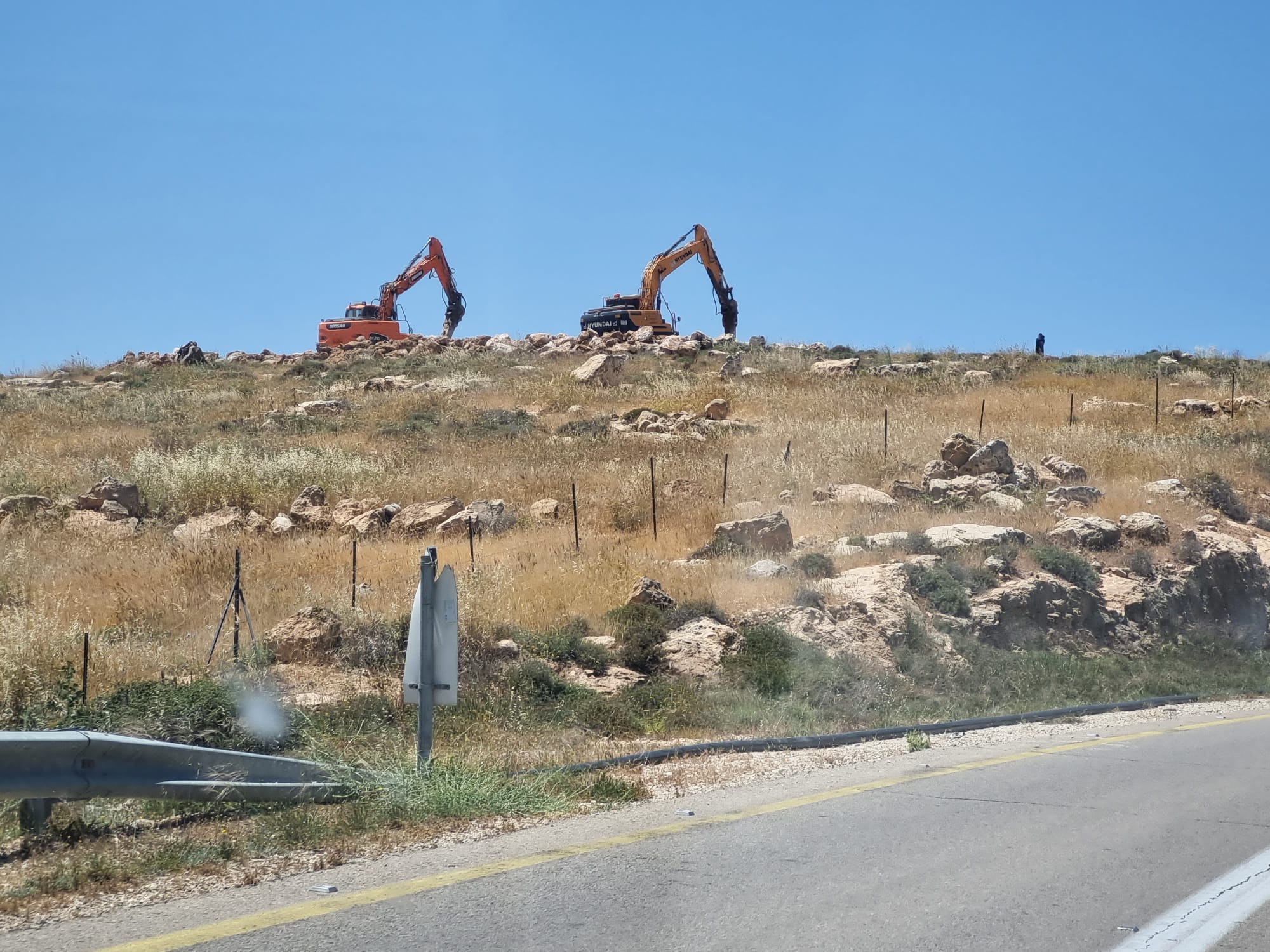
Zif checkpoint – open. Cameras are being installed on posts, the army guards the work and traffic is slow.
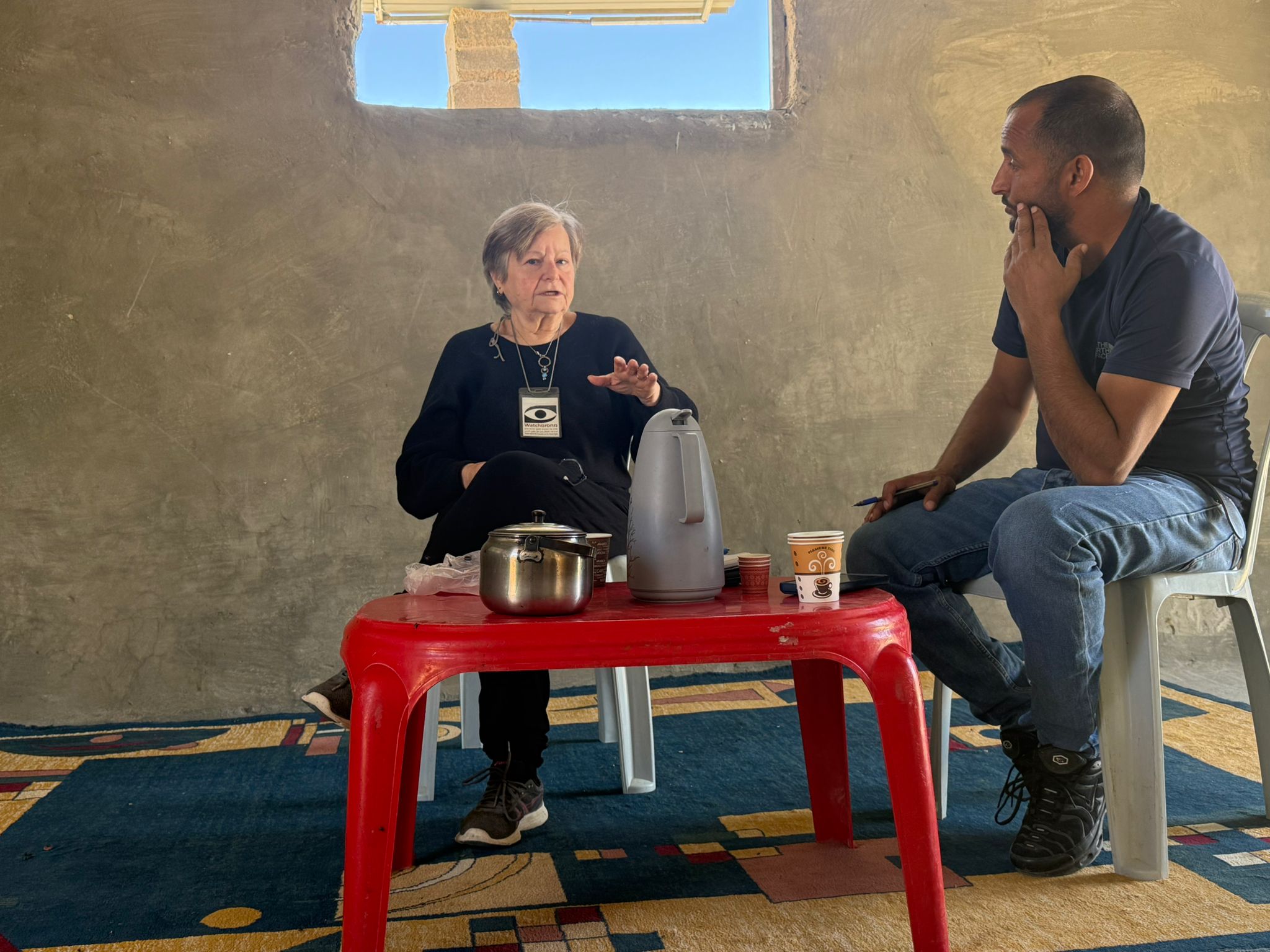
We arrived at Najeh’s, at Umm Qusa, after not visiting him because of the Iran war. The children, usually in school, were home. There is no school on Thursdays in the West Bank, as studies take place only 3 days a week. After saying hello to N.’s wife we sat in the hospitality room. As usual, we asked how they were and what had happened since we visited there last. Najeh said that now is worse – under occupation and the harassment of outpost colonists all around. There is hardly a day when colonists do not enter the village, make their presence known and yell at the villagers to leave.
Najeh tells us about an incident that happened shortly before the Iran war:
Around 8 a.m. he rode with friends to do some shopping in Yatta. Close to Zweidin and Carmel colony, a crash took place between a Zweidin resident and one of the workers at nearby Havat Shorashim farm belonging to Shim’on Atiya. Najeh called the police to report and sometime later several policemen arrived. As often happens, the worker gave false testimony and claimed that Najeh thew stones at him. Within minutes Najah was taken to the army base in Susia, shackled and blindfolded. He sat on the ground in the same position until 2 p.m. and no one spoke to him.
I ask whether he received any food or drink and he says that only once, when he asked, he got some water. At 2 p.m. he was transferred to an army base near Fawwar. There he spent an hour in the same state, shackled and blindfolded. From there he was transferred to the Kiryat Arba police station.
Several hours later he got a phone call from Attorney Riham Nasser who was notified by Najeh’s family. Following her appeal, he was released on condition that if he is summoned to a police interrogation and not immediately show up, he will have to pay 2000 shekels.
He only got home at 2 a.m. after there had been no information on his state and whereabouts for hours.
This is just one case of Jewish terrorism and false testimonies that bring about detention and arrest of Palestinians.
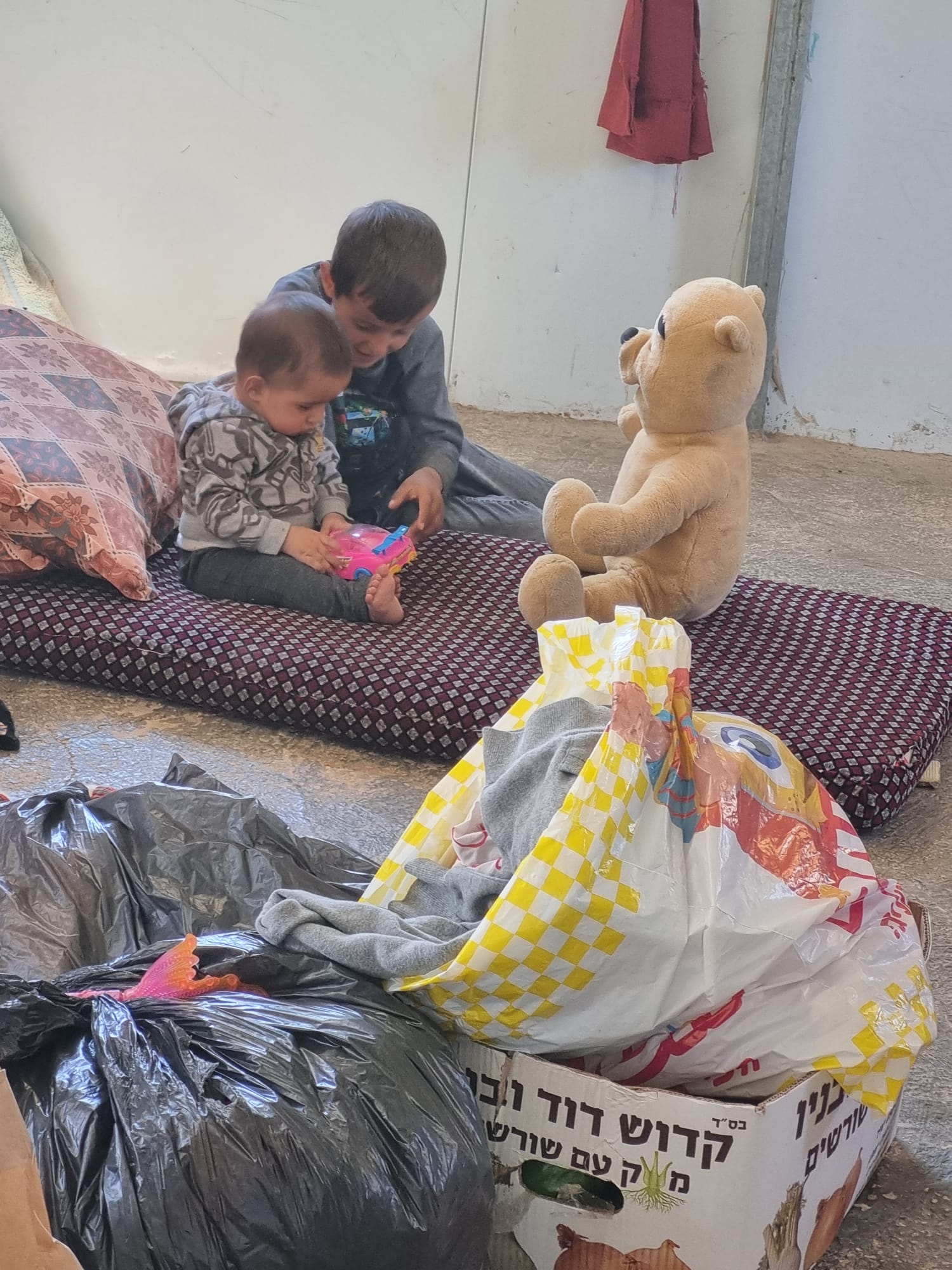
We left food, clothes and games and drove back.
Location Description
Dura Al-Fawwar Junction
See all reports for this place-
Junction on Route 60: west - the town of El Dura, east - the Al Fawwar refugee camp. There is a manned pillbox at the junction. From time to time the army sets up flying checkpoints at the entrance to El Fawwar and Al Dura. Al-Fawwar is a large refugee camp (7,000 inhabitants in 2007) established in 1949 to accommodate Palestinian refugees from Be'er Sheva and Beit Jubrin and environs. There are many incidents of stone-throwing. In the vicinity of the pillbox there are excellent agricultural areas, Farmers set up stalls adjacent to the plots close to the road. In recent months the civil administration has set up dirt embankments thereby blocking access to the stalls, and making it impossible for the farmers to sell their vegetables. Updated April 2021, Michal T.
-
Hakvasim (sheep) Junction
See all reports for this place-
One of the roadblocks (earthworks, rocks, concrete blocks or iron gates) that prevent transit of vehicles to Route 60 in the southern West Bank and block the southern entrance to Hebron. A manned pillbox supervises the place.
-
South Hebron Hills
See all reports for this place-
South Hebron Hills
South Hebron Hills is a large area in the West Bank's southern part.
Yatta is a major city in this area: right in the border zone between the fertile region of Hebron and its surroundings and the desert of the Hebron Hills. Yatta has about 64,000 inhabitants.
The surrounding villages are called Masafer Yatta (Yatta's daughter villages). Their inhabitants subsist on livestock and agriculture. Agriculture is possible only in small plots, especially near streams. Most of the area consists of rocky terraces.Since the beginning of the 1980s, many settlements have been established on the agricultural land cultivated by the Palestinians in the South Hebron Hills region: Carmel, Maon, Susia, Masadot Yehuda, Othniel, and more. Since the settlements were established and Palestinians cultivation areas have been reduced; the residents of the South Hebron Hills have been suffering from harassment by the settlers. Attempts to evict and demolish houses have continued, along with withholding water and electricity. The military and police usually refrain from intervening in violent incidents between settlers and Palestinians do not enforce the law when it comes to the investigation of extensive violent Jewish settlers. The harassment in the South Hebron Hills includes attacking and attempting to burn residential tents, harassing dogs, harming herds, and preventing access to pastures.
There are several checkpoints in the South Hebron Hills, on Routes 317 and 60. In most of them, no military presence is apparent, but rather an array of pillboxes monitor the villages. Roadblocks are frequently set up according to the settlers and the army's needs. These are located at the Zif Junction, the Dura-al Fawwar crossing, and the Sheep Junction at the southern entrance to Hebron.
Updated April 2022
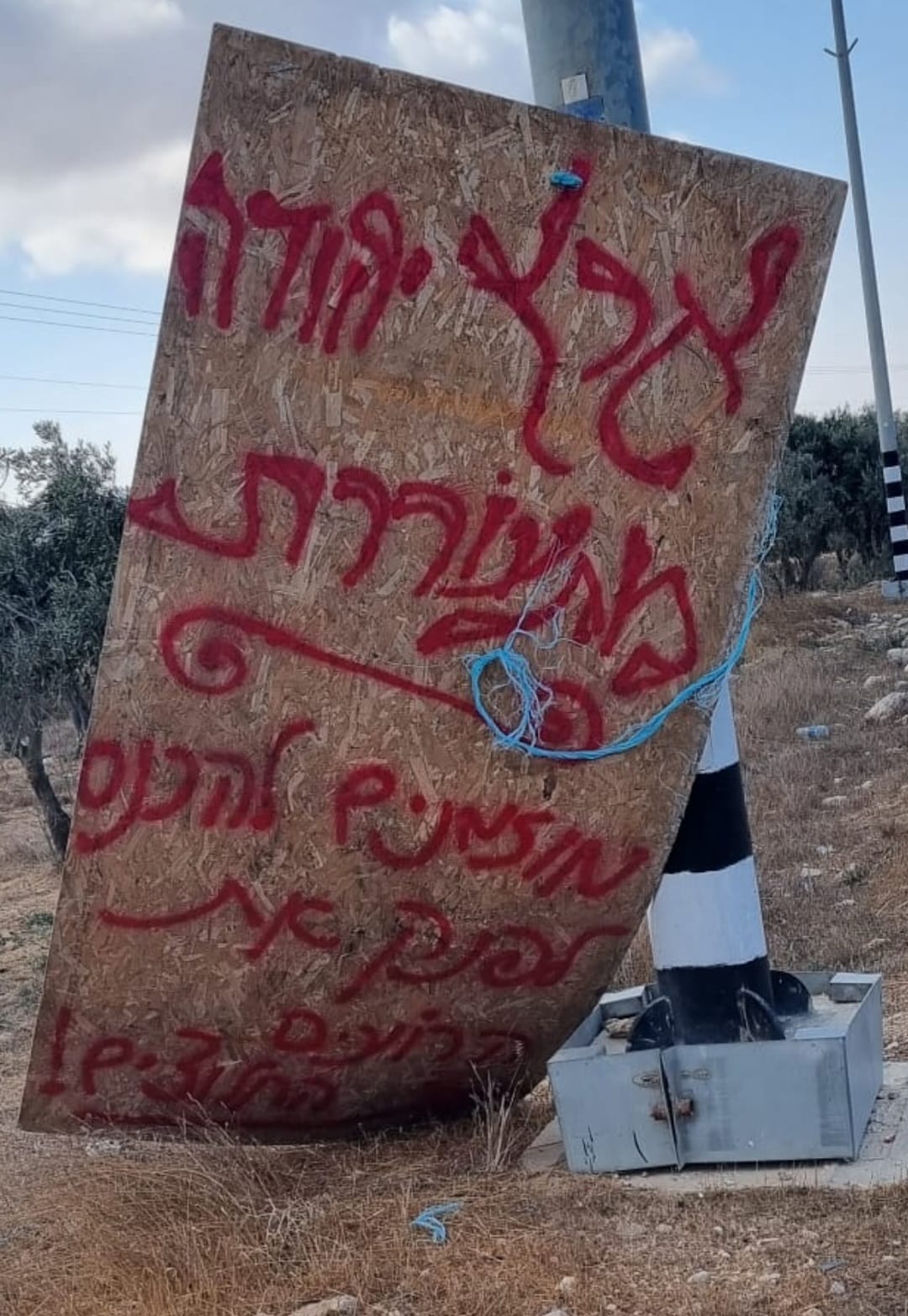 Smadar BeckerOct-17-2026A sign placed by those who call themselves the Pioneer Shepherds, at the outpost adjacent to Qawawis
-
Zif Junction
See all reports for this place-
Zif Junction located on the crossroads that directs towards Road 356 to Yata. Yata is the district city of the southern Hebron Mountains. Usually, this junction is open to traffic. The nearby pillbox is unmanned. But the army and police are present occasionally, sometimes setting up a checkpoint and sometimes detaining residents from the big city. Often, the Israeli policemen inspect vehicles and distribute driving reports to Palestinian vehicles. s
-
