
Sha'ab al-Butum: Settler Amichai Shiloh encroaches on private lands with his herds
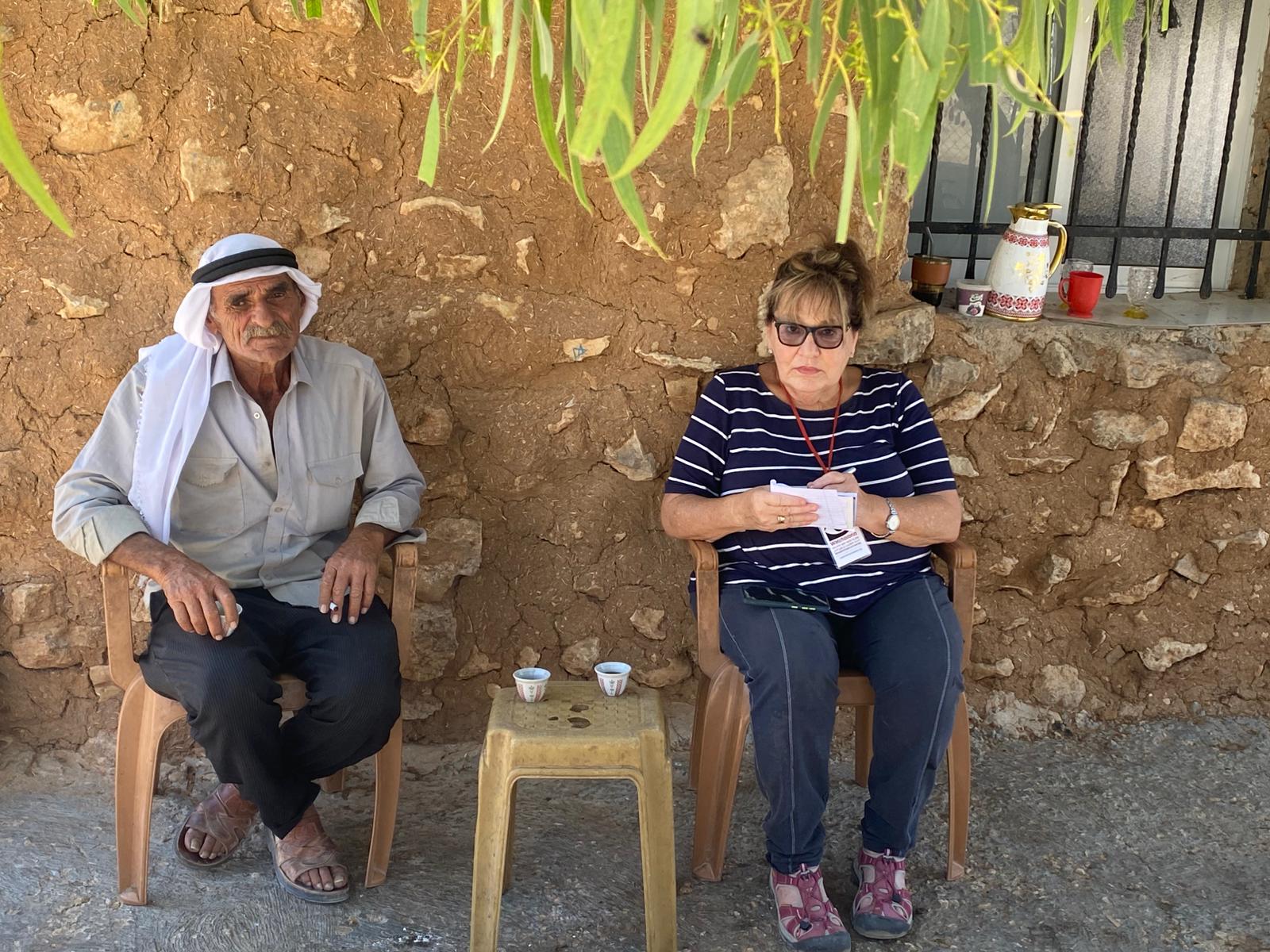
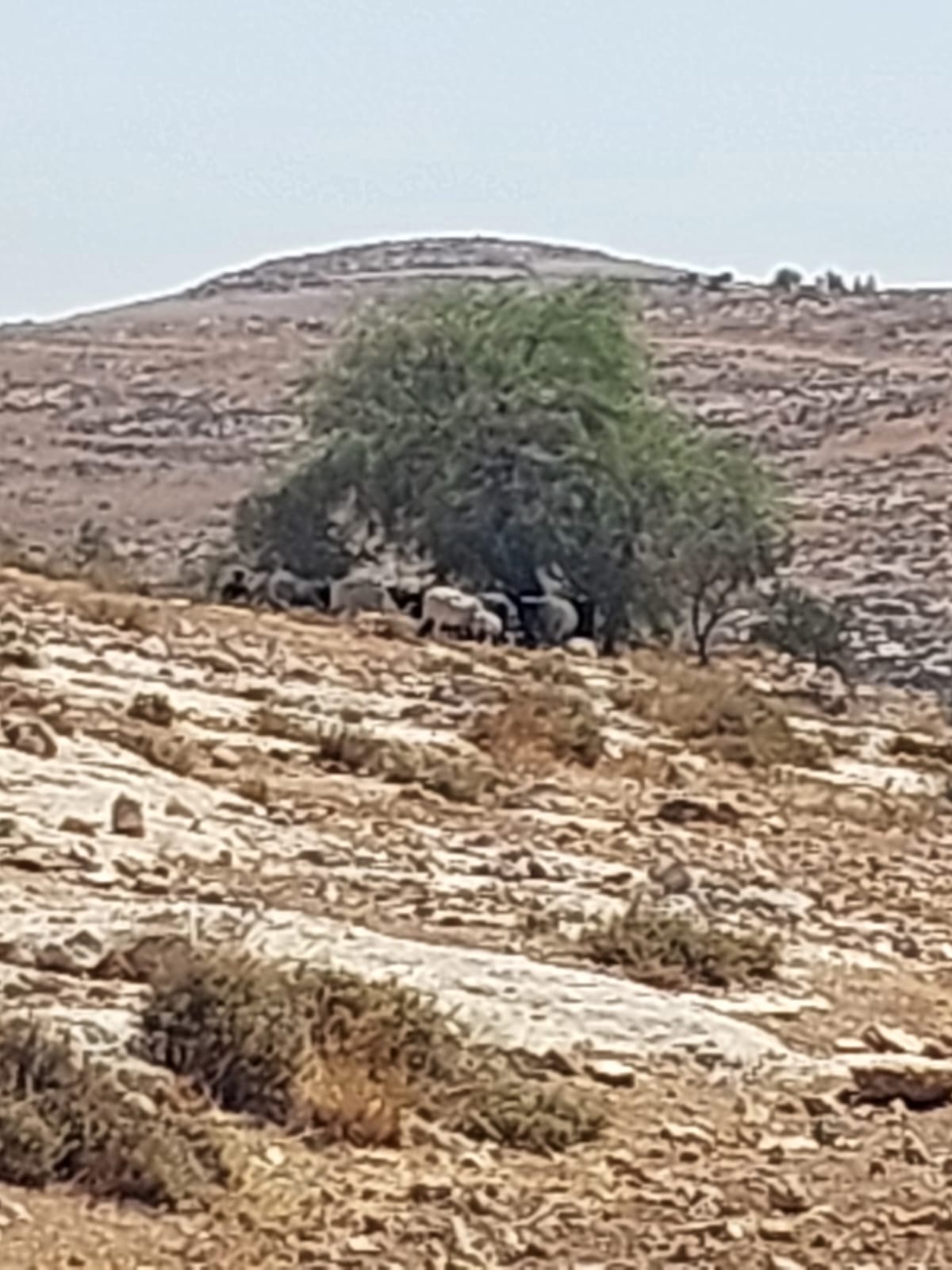
We drove to Sha’ab al-Butum to the compound of the extended Is’hak Jabarin family.
On the way, we surveyed the entrances to the villages along Highway 60:
The entrances to Samu’ and Simiya are open. The entrance to Abda is closed; the northern entrance is also closed, but cars find a way along a side road.
The post that monitors the spring before the Dura al-Fawwar junction is currently manned by two soldiers. At the junction itself, the entrances to both villages are closed.
At the gas station at the junction, we are told that the army also comes to them at times of its own choosing, usually in the morning, checking the cars that come to refuel and prohibiting people from walking on the road and warning anyone approaching. So, people walk through the fields from one side to the other to get to Dura.
Qilqis–Hebron junction: The entrances are closed on both sides. Again, there are scenes of old people, women and children trudging along with suitcases or bundles from one side to the other. The entrance to Hebron at the foot of Beit Hagai is closed.
At the Sheep Junction, the entrance to Hebron is open.
We turned onto Route 317 on the way to the Zif Junction, to Nabil’s grocery store to buy groceries for the Jabarin family.
At the junction, the road to Samu’ is open.
We reached the family. Is’hak came later, he went to see what is happening again with Amichai Shilo and his flock. This time the police and the army are there, as well as representatives of the DCO. After a few minutes he arrived and said that the settler had been on their land since 6 am and now it is 11 am and the police have finally arrived. And they say they will come and check what is happening only if the settlers enter their house. Now they are just showing their presence. The dogs are literally barking and the convoy is passing by.
When I asked if he had any photos, he said that they were afraid to get close enough to take photos and photos from a distance do not sufficiently explain what is happening. If there are volunteers taking photos then there are, as I have sent more than once. But if there are no volunteers then there are no photos. And so, in the daily routine the settlers come with the flock and the sheep eat the olive seedlings and the vines of the Palestinians.
Sometimes Bodi, the Security coordinator of Mitzpe Avigail also arrives with an ATV. That’s Bodenheimer’s nickname without a first name. He shot and wounded Sheikh Sa’id from al-Rakiz. Now the Sheikh is a cripple with an amputated leg. So Bodenheimer and his boys go around and intimidate and sometimes even block the access road to them. They all threaten Palestinians with beatings and curses and sentences like “This is our land’ get out of here”.
A 24/7 routine.
There are about 70 people in this residential complex: 24 children of Is’hak and his two wives and 4 of his married sons, their wives and children. That is, his grandchildren too. In the nearby school, there are 47 children, most of them from this family. Is’hak’s son tells of the routine of harassment, false pretences of searching for animals that the settlers claim they thought were lost, on a daily basis. Recently, the settlers also threw animal carcasses that had died right next to the Palestinian on purpose and deliberately caused a stench. They did the same with dead sheep. The main thing is to show their presence in every way, all the time.
On our way back, we noticed from afar, among the rocks blocking the passage from the road to the road to them, two figures walking with difficulty. They were Bilkis, Leila’s daughter-in-law, with her two-month-old twins and her brother-in-law who was helping her walk back from Yatta, in the terrible heat, in the sun, on a dirt road, to get home. We immediately put them in the air conditioning in the car, turned around and took them home. The brother-in-law was then free to return to his job in Yatta.
It is completely incomprehensible that this is the daily life of people there as caused by the representatives of the Chosen People.
Location Description
Dura Al-Fawwar Junction
See all reports for this place-
Junction on Route 60: west - the town of El Dura, east - the Al Fawwar refugee camp. There is a manned pillbox at the junction. From time to time the army sets up flying checkpoints at the entrance to El Fawwar and Al Dura. Al-Fawwar is a large refugee camp (7,000 inhabitants in 2007) established in 1949 to accommodate Palestinian refugees from Be'er Sheva and Beit Jubrin and environs. There are many incidents of stone-throwing. In the vicinity of the pillbox there are excellent agricultural areas, Farmers set up stalls adjacent to the plots close to the road. In recent months the civil administration has set up dirt embankments thereby blocking access to the stalls, and making it impossible for the farmers to sell their vegetables. Updated April 2021, Michal T.
-
Hakvasim (sheep) Junction
See all reports for this place-
One of the roadblocks (earthworks, rocks, concrete blocks or iron gates) that prevent transit of vehicles to Route 60 in the southern West Bank and block the southern entrance to Hebron. A manned pillbox supervises the place.
-
Sha'ab al-Butum
See all reports for this place-
This is one of the small Palestinian communities in Masafer Yatta in the southern Hebron Hills, near the settlement of Mitzpe Avigail.
Since the outbreak of the October 7, 2023 war, settler violence against residents has escalated greatly, as in the entire Palestinian community. This violent conduct receives full backing from the state and full cooperation from the IDF. The goal is to make the lives of the Palestinian residents miserable and make them abandon and leave.
The population consists of mostly shepherds who peacefully seek to cultivate the land and graze their sheep, whom the settlers treat as a dangerous enemy. They prohibit them from any movement related to herding sheep and cultivating the land and harm everything: trampling crops, breaking olive trees, smuggling herds, scaring shepherds, conducting wild searches of houses, shouting, cursing and threatening - at all hours of the day. "We are Besieged, but will not move from our land," says Lila G. New settlements are springing up around them. At first it's a bus or a truck that turns into residential buildings, on top of which every week more residential buildings and animal sheds are added. With the open encouragement of the current government, Jewish terrorism is raising its head, with authority and permission. The settlers have received army uniforms and weapons, and no one is stopping them. The police, who are supposed to protect the Palestinians from the settlers' riots, sometimes respond to calls for help, but in practice they don't do much more than provide them with a report, and they are required to go and file a complaint in Kiryat Arba Settlemnt police station . Though the settlers' identities are known, they are !never arrested.
-
South Hebron Hills
See all reports for this place-
South Hebron Hills
South Hebron Hills is a large area in the West Bank's southern part.
Yatta is a major city in this area: right in the border zone between the fertile region of Hebron and its surroundings and the desert of the Hebron Hills. Yatta has about 64,000 inhabitants.
The surrounding villages are called Masafer Yatta (Yatta's daughter villages). Their inhabitants subsist on livestock and agriculture. Agriculture is possible only in small plots, especially near streams. Most of the area consists of rocky terraces.Since the beginning of the 1980s, many settlements have been established on the agricultural land cultivated by the Palestinians in the South Hebron Hills region: Carmel, Maon, Susia, Masadot Yehuda, Othniel, and more. Since the settlements were established and Palestinians cultivation areas have been reduced; the residents of the South Hebron Hills have been suffering from harassment by the settlers. Attempts to evict and demolish houses have continued, along with withholding water and electricity. The military and police usually refrain from intervening in violent incidents between settlers and Palestinians do not enforce the law when it comes to the investigation of extensive violent Jewish settlers. The harassment in the South Hebron Hills includes attacking and attempting to burn residential tents, harassing dogs, harming herds, and preventing access to pastures.
There are several checkpoints in the South Hebron Hills, on Routes 317 and 60. In most of them, no military presence is apparent, but rather an array of pillboxes monitor the villages. Roadblocks are frequently set up according to the settlers and the army's needs. These are located at the Zif Junction, the Dura-al Fawwar crossing, and the Sheep Junction at the southern entrance to Hebron.
Updated April 2022
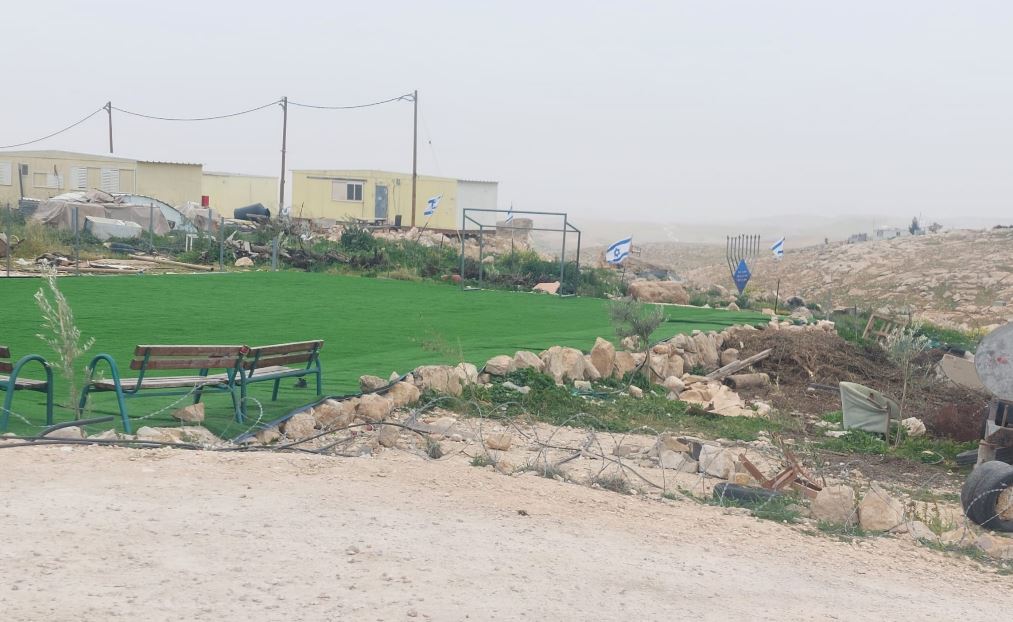 Michal TsadikFeb-17-2026Umm al-Khair: The soccer field for Palestinian children is surrounded by new trailers and lots of Israeli flags
-
Zif Junction
See all reports for this place-
Zif Junction located on the crossroads that directs towards Road 356 to Yata. Yata is the district city of the southern Hebron Mountains. Usually, this junction is open to traffic. The nearby pillbox is unmanned. But the army and police are present occasionally, sometimes setting up a checkpoint and sometimes detaining residents from the big city. Often, the Israeli policemen inspect vehicles and distribute driving reports to Palestinian vehicles. s
-