
‘Anata-Shu’afat, Ras Abu Sbitan (Olive Terminal)
Zeitim Checkpoint and Shuafat Refugee Camp
General: Palestinians’ entry limited following terrorist attack, no special incidents.
According to this morning’s press, the quota of entry permits to Jerusalem for the Ramadan prayers has been reduced following the terrorist attack in Tel Aviv of a few days ago.
We reached Zeitim Checkpoint at 9:20 a.m. after witnessing the East Jerusalem in the A-Tour neighborhood quieter than usual. Some traffic is noted in the streets, and at a certain point the police blocked the exit from the main road.
In front of the checkpoint was a military and police post (a vehicle blocking the road), not allowing further vehicular movement. We parked nearby and proceeded to the checkpoint area. At this time, fewer numbers of people were seen entering Jerusalem. Buses waited for the incoming, to drive them directly to the Old City for prayers.
Photos:
Zeitim Checkpoint – exit Jerusalem-bound – empty
Zeitim Checkpoint – entry from the Palestinian side


According to the soldiers, entry for prayers is allowed men from the age of 45 on, and women of all ages. No entry is allowed for workers and merchants. This contradicts the news in the press about the 83,000 Ramadan permits that have been revoked. So would the worker or merchant over the age of 45 be allowed in? We did not inquire. The people arriving were festively dressed and proceeded in small groups towards the buses.
We went up to the checkpoint towards the Palestinian side. A soldier told us they expect about 40% of the public to arrive this morning.
We noticed many military and police personnel on site, and the atmosphere was calm.
We decided to proceed to the checkpoint at the entrance to the Shuafat (Anata) refugee camp checkpoint. The road was calm and according to the one Jerusalemite among us, traffic here is usually very heavy and today was not typical. We easily reached the checkpoint, although Waze (navigation system) did not quite follow our instructions…
10:50 – the car park near the checkpoint was full, the area neglected and filled with rubbish. Very few people enter or exit through the checkpoint. We decided to enter since the exit would not be crowded. And there was no excessive pressure at the checkpoint at this early hour, and the neglect all around was noticeable, rubbish everywhere. We saw charred walls because of burning rubbish and smoke grenades (according to our Jerusalemite). Shops were closed because of Ramadan. A stand sells Jericho grapes, in spite of Ramadan.
Exiting the checkpoint, we were at the same checkpoint, standing with another 6-7 people, waiting for the turnstile to open. The voice of a woman soldier (policewoman?) announced there was no exit here, only at either Qalandiya or Zeitim. Then a man went back inside (the one for whom the announcement was intended) and must have had to make the entire detour to get to Al Aqsa mosque. Later more people were told they had to do the roundabout way. They were probably not up to the prayer-permits criteria. We were stopped for some minutes for some inspection purpose or other.
Outside we met the Machsomwatch noon shift, and drove on home.

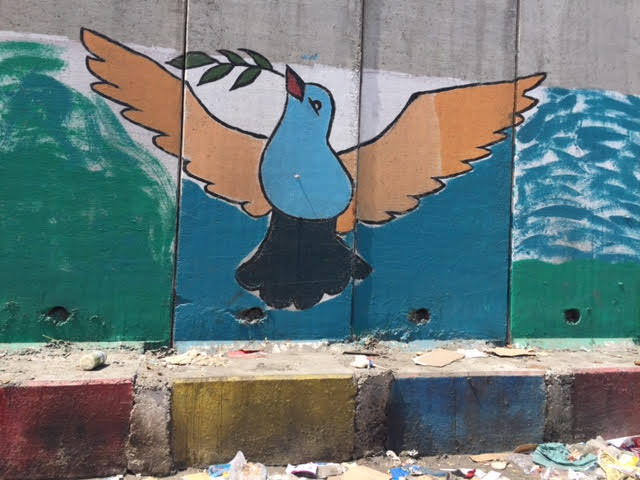
Shuafat – a painting on the wall surrounding the refugee camp
Checkpoint Shu'afat camp / Anata-Shu'afat (Jerusalem)
See all reports for this place-
The Shu’afat checkpoint is located in the northern part of East Jerusalem at the exit from the village of Anata and the Shu’afat refugee camp, which are located in the area annexed to Jerusalem in 1967. The refugee camp borders the Shu’afat neighborhood to the west, Pisgat Ze’ev to the north, the French Hill neighborhood to the south and the planned expansion of Ma’aleh Adumim to E-1 in the east. It was established in 1966 for 1948 refugees from the West Bank and was populated after the Six Day War by persons who had been expelled from the Jewish Quarter. Today its population comprises some 25,000 people holding blue ID cards and some 15,000 people with Palestinian ID cards. The camp lacks adequate infrastructure and services, and suffers from poverty, neglect and overcrowding. All its buildings are connected to the public electricity and water infrastructure, but not all are connected to the sewer system. The camp’s services are provided by UNRWA, except for those such as health clinics and transportation of pupils to schools in Jerusalem. In 2005, the Israeli High Court of Justice rejected a suit by the residents requesting that the route of the separation fence be drawn such that the camp would remain on the Israeli side, but conditioned its approval of the route on the establishment of a convenient and rapid crossing facility for the inhabitants of the neighborhood, most of whom are residents of Jerusalem.
A temporary checkpoint operated there until December, 2011. It was extremely congested during rush hours, and dangerous for pedestrians (especially children) because of inadequate safety provisions. The new checkpoint was inaugurated south of the old one, for public and private transportation and for pedestrians, intended solely for the residents of the camp – holders of blue ID cards, and those with Palestinian ID cards who possess appropriate permits. There are five vehicle inspection stations at the checkpoint, and two for pedestrians (one of which is currently closed) where scanners have been installed but are not yet operating. According to the army, representatives of government agencies will also be present to provide services to residents of the neighbourhood. The pedestrian lanes are very long, located far from the small parking lots, and accessible through only a single revolving gate.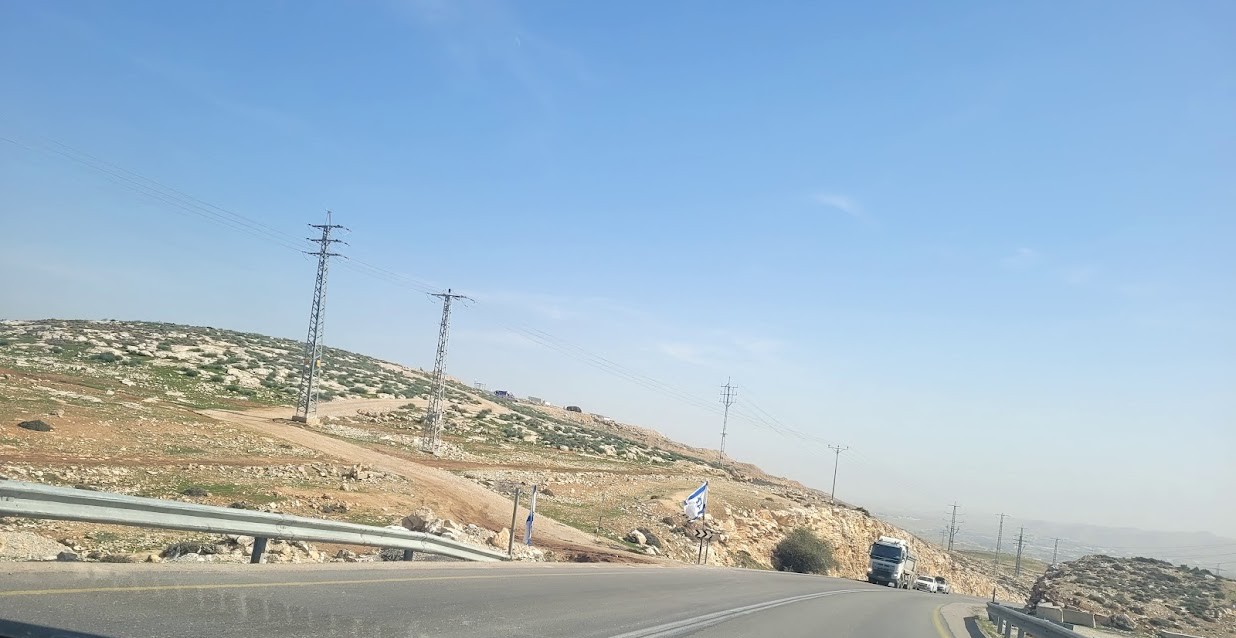 Anat TuegJan-25-2026Anata: A new outpost has been built south of the junction
-
Ras Abu Sbitan (Olive Terminal)
See all reports for this place-
A large checkpoint/crossing to the area of a-Tur, Abu Dis and the Old City; only for pedestrians. Located on Jerusalem’s municipal boundary.
One of the major crossings in Jerusalem’s central sector. It is located on the separation fence between the northern portion of the al-Ezariya neighborhood and the neighborhood of a-Tur and the rest of East Jerusalem. It is manned by Border Police soldiers and private security companies and operates 24 hours a day. Palestinians are forbidden to go through, other than permanent residents of East Jerusalem (holders of blue ID cards) and holders of work and commercial permits who are allowed through only on foot.
-