
סיכום שנתי 2020
Annual activity report for 2020
To download the report or view the PDF
About the Watch barrier
Since 2001, Checkpoint Watch companies have been observing – monitoring, documenting and raising awareness about the conditions in which Palestinians live in the West Bank under Israeli military control. In 2004, the Mehsom Watch organization became an independent legal entity registered as a non-profit organization under the name Women’s Foundation for Human Rights Ltd.
The Checkpoint Watch organization includes about 200 Israeli volunteers. As a grassroots organization of women, we reject the methods of hierarchy and work exclusively in the cooperation of teams. The organization does not have an office, we work from home and in the field itself. The expenses are only for the needs of the activity in the field, for the needs of documentation and distribution in the media.
Checkpoint Watch activities devote a lot of time, energy and commitment to protest against the occupation. We embody a democratic, civil, female presence in military spaces. Our daily presence in front of Israeli soldiers and Palestinian citizens is proof of the presence of Israelis who oppose the occupation. The role of women dissidents in Israel exposes us to quite a few challenges to our right to freedom of expression and protest, even in the heart of a society that considers itself democratic.
2020: a completely different year
This year has been challenging, to say the least. The corona epidemic and the closures that followed each other suspended some of our operations and greatly changed other forms of operation. Closures within Israel-Gofa were accompanied by regulations of the Palestinian Authority, during which cities and villages in the entire West Bank were under complete closure.
Corona closures , settler violence , protest demonstrations and democracy under attack
While Israel experienced two periods of closure in 2020, this fact did not prevent the Israeli settlers in the West Bank territories from continuing to commit acts of violence, rioting and sabotage. They prevented Palestinian shepherds from leaving with their herds to graze in the Jordan Valley, ran over sown fields, set fire to orchards and various agricultural areas, and cut down countless olive trees. Unfortunately, the Israeli army stands by these types of operations and sometimes even assists them, instead of protecting the Palestinians.


The mass protest demonstrations against the Prime Minister and his government ministers, and the growing threats to Israeli democracy have energized many of our friends and strengthened what we have understood for a long time: that Israeli democracy is unstable and many forces, including the occupation and violations of human rights, contribute to its destruction.
Our focus in 2020
Presence at checkpoints
Checkpoint Watch volunteers conducted almost 400 shifts at the checkpoints in 2020. In March, after the outbreak of the Corona epidemic, we contacted Palestinian friends and acquaintances who reported to us in over 150 phone calls about what was happening at their place. All these reports have been added to our website in Hebrew and English .

Our reports from the checkpoints detailed overcrowding, traffic jams, non-removal of garbage, and other unexpected delays. Palestinians regularly turned to us for help in obtaining permits .
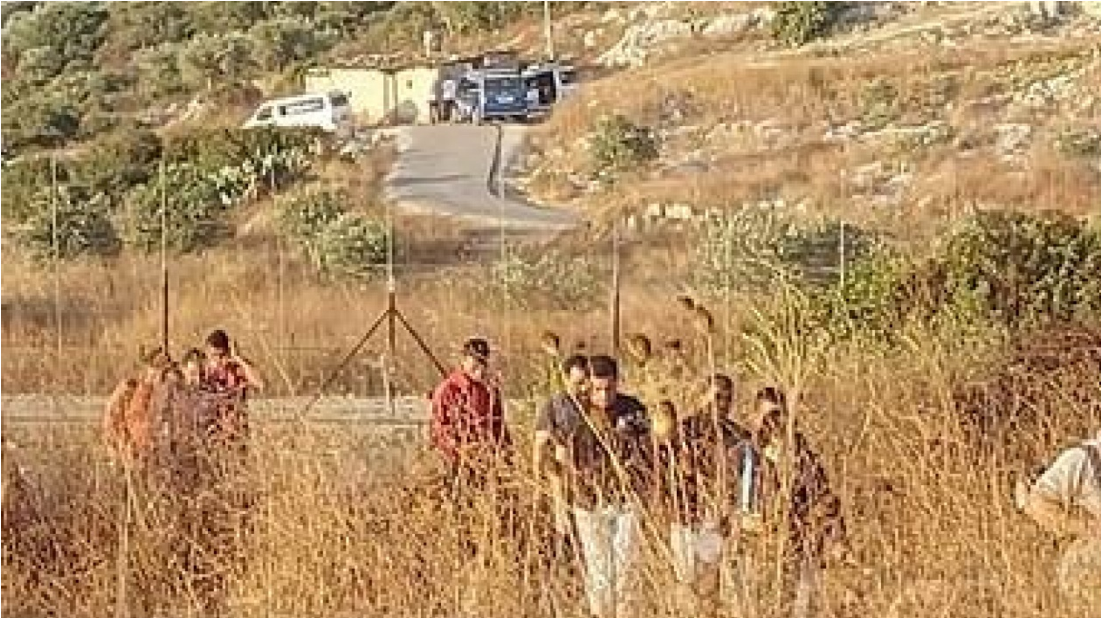
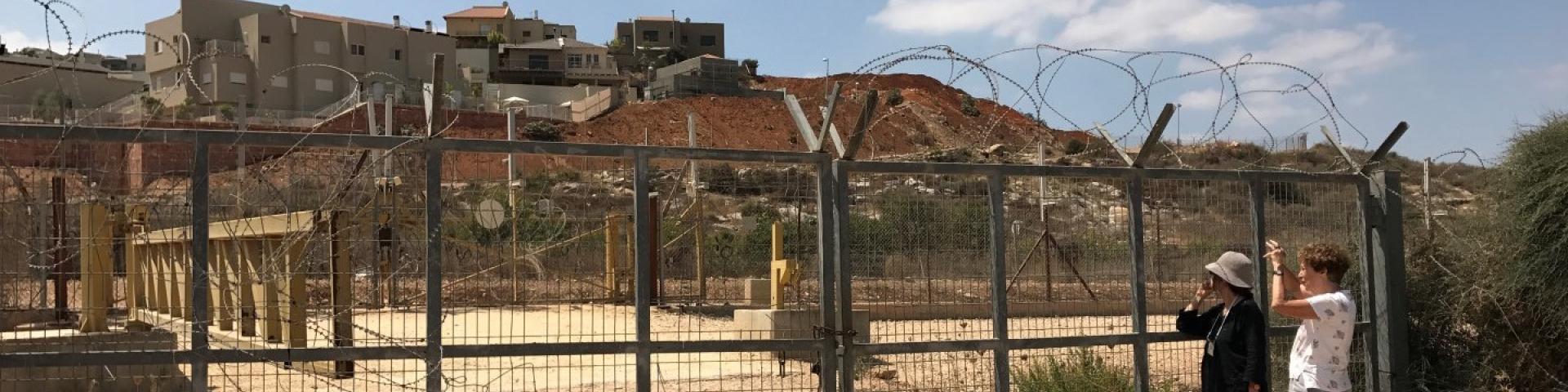
Our reports also stated that some of the checkpoints were closed or unmanned when Palestinians passed through holes in the separation fence that suddenly appeared, and had not been under surveillance since the beginning of the Corona crisis. The Israeli army is aware of this, sees what is happening, and does not react. Palestinian workers told Checkpoint Watch companies that because of the epidemic, the Palestinian Authority does not allow the workers to return to their homes unless they have been in Israel for three weeks. Passing through the holes in the fence allowed them to return home by stealth every day.
Permanent presence in the Jordan Valley
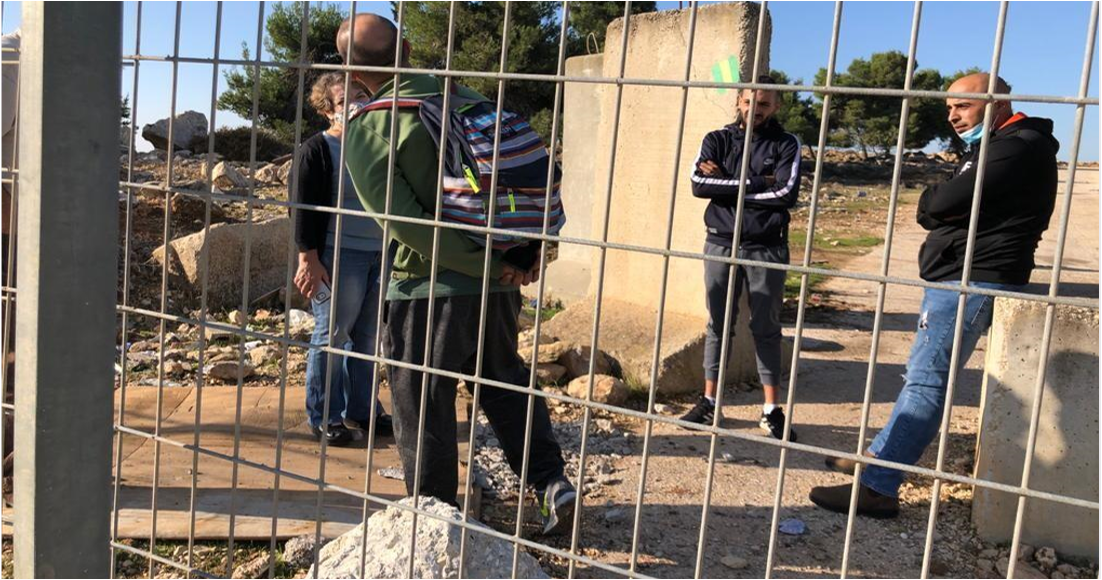
In the Jordan Valley , the harsh conditions, the poverty and the violent actions of the settlers continued without a break. Our team made regular visits to the Jordan Valley and was regularly updated by Palestinian residents when we could not visit there during the closures.
Checkpoint activity and Watch successfully initiated a complaint to the army through attorney Itai Mak, demanding the removal of a dirt barrier that prevented passage from the herders’ community in Al-Frisia in the northern Jordan Valley. The barrier was removed a few days later.
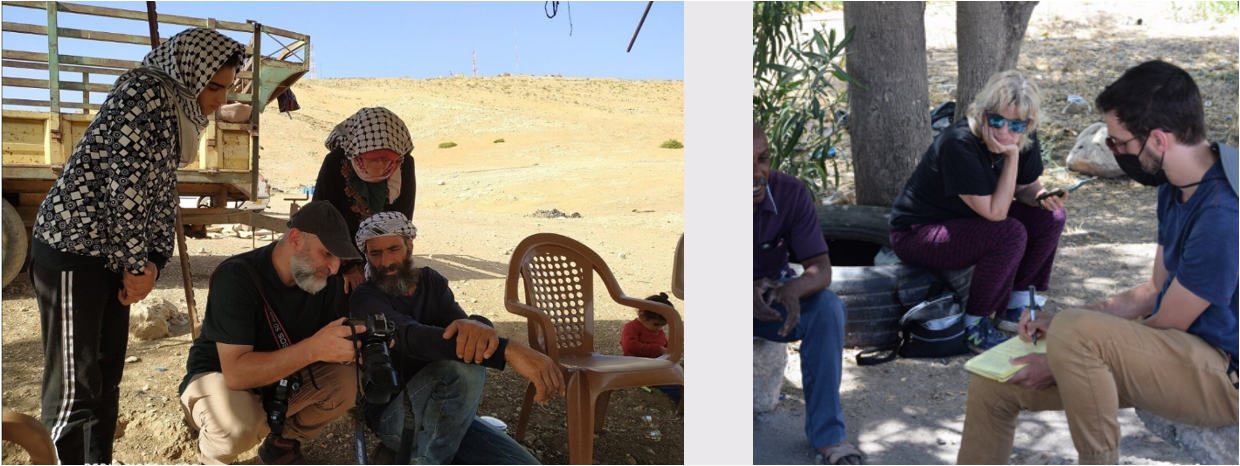
The threat of annexation led to renewed international interest in the region. In February, we led a tour of American congressmen’s assistants, an American journalist, a Palestinian journalist, and five other Americans, including those who live permanently in Ramallah. We introduced the visitors to the residents of the Jordan Valley and the difficult challenges they face. In the village of Al-Aqaba, the guests met Haj Sami who gave details about the problems with the army. The village is located in an area where many live fire exercises are conducted, as well as in most parts of the valley. The guests also heard about the problems created by the illegal outposts as well as the lack of water, as manifested for example in the village of Bardala .
Later that month, we hosted a journalist from the Japanese Kyoto News Agency. In June, we guided two New York Times journalists on a private tour to the Jordan Valley, where they learned about roadblocks and roadblocks preventing access, water shortages, and ruins. Meetings with Palestinians were an opportunity for them to hear opinions on the planned annexation.
The following articles appeared as a result of said tour:
- David M. Halbfinger and Adam Rasgun, “Under Threat of Annexation, Israeli Experts Warn of Security Risks”, New York Times , June 19, 2020
- Adam Rasgun, “Palestinians in the Jordan Valley fear annexation will suffocate their villages”, New York Times , June 24, 2020
Haaretz journalists also went to the Watch checkpoint and our friends accompanied them in the Jordan Valley. A visit to the Al-Hadidiya community was published as a podcast .
Help for families in dire need:
Our female volunteers organized the distribution of food supplies to some of the more remote herding communities in the Jordan Valley, such as Fasail and to dozens of families in Khan al-Ahmar, Mekhol, Ain al-Bida, al-Burj and Makassar . These food deliveries were very significant for families who could not take care of themselves during the epidemic.

The sea project was canceled this year due to the corona epidemic. However, our female volunteers managed to organize a trip to one of the local springs in the Jordan Valley. Cheers of laughter and joy were heard from all the women and children present there.
Checkpoint Watch continues to work hand in hand with the organizations ‘ Taayush’ and ‘ Dharma Social Engagement’ in the Jordan Valley. We join other activists in the Jordan Valley in the early morning hours to accompany Palestinian shepherds who regularly suffer from violent abuse by Israeli settlers.

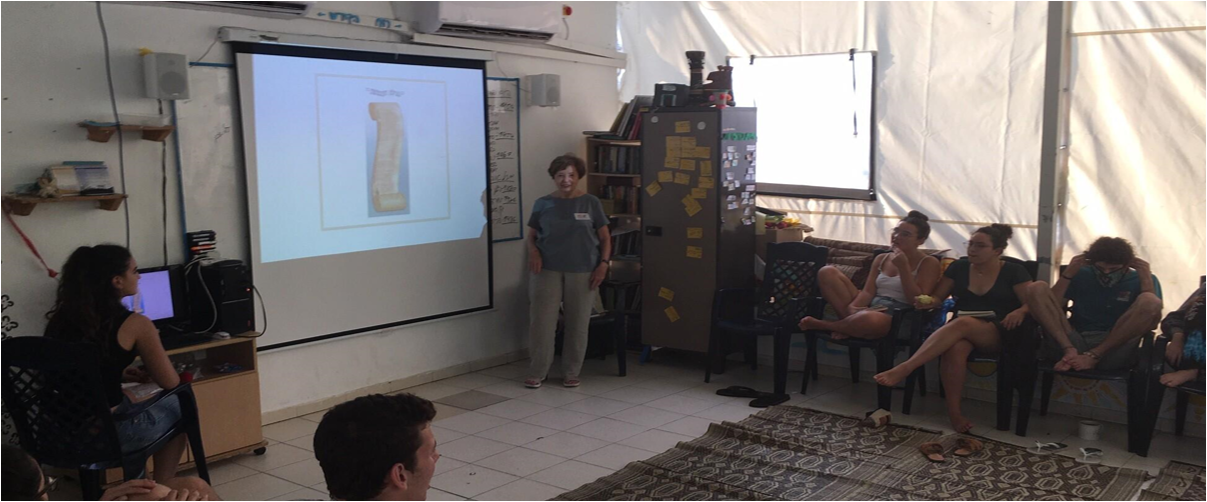
Watch checkpoint team at the military courts
Our team of volunteers at the military courts attended them 10 times in January and February. Since March 2020, their activity has been suspended due to the epidemic. The number of hearings was reduced, cases were played on video so that there was no need to transport prisoners to court, and public access to the courts was suspended for the time being.
The Israeli Prison Service even enforced restrictions under the emergency regulations, which prevent those accused of security offenses from seeing or speaking with their family members or lawyers.
Help for Palestinians prevented from entering Israel
This team spends over 12 hours a week contacting people and helping them fill out forms, and preparing requests to remove their names from the engine lists. This year, Palestinians found themselves excluded simply because they came from areas directly affected by the Corona epidemic. In order to remove their name from the list, they had to present a written confirmation of a negative corona test, and submit a request for removal from the list.
This activity was also affected by the plague. It is increasingly difficult to request letters of application from employers (required to remove a name from the list). This year, the Office of the Coordinator of Government Operations in the Territories began an online process that allows many Palestinians to submit applications themselves.
In 2020, 1,489 applications were submitted. Of these, 437 (47%) were removed from the engine lists, out of a total of 922 requests that were answered. To submit the applications, we worked closely with two offices in Hebron.
We received 23 positive verdicts out of the 53 appeals that were submitted (with the help of attorney Tamir Blank) against Shin Bet and police motives (compared to 190 petitions in 2019). This year there was a decrease in the number of petitions due to the closures, which did not allow us to meet people to receive signed documents from them, and also due to the economic crises that the epidemic caused and did not allow people to meet the costs.
Tours and lectures
In the short period that passed from the outbreak of the plague until the closure, we conducted several tours for guests as well as for the Mechasom Watch companies themselves. We had to postpone a new tour to the Jordan Valley that was planned for March and April.

Instead of an online meeting tour
 because it was not possible to hold the tours in the field, we started holding monthly webinars on each of our activities.
The first focused on Kfar Kadum , one of the places visited by our tours in the center of the West Bank. This webinar was held in October and about 100 people participated in it, the maximum number that was possible for us. In November we held a webinar on the Jordan Valley , attended by about 200 people. And additional webinars are planned for the whole of 2021