
Qalandiya, Mon 13.8.12, Afternoon
As we approached Qalandiya, a little after 3 PM, we saw an ambulance waiting in the parking lot on the Israeli side of the CP. Natanya jumped out to discover what was happening and the soldiers told her that there was “no coordination”, a statement that was disputed by the ambulance drivers waiting on both sides of the CP. When I reached the Palestinian ambulance in the northern square, I phoned the medical liaison hotline (029977929) who confirmed that there was coordination and promised to do what they could to speed passage. Within a few minutes the Palestinian ambulance was called into the CP where it once again stopped to wait in the sun. Inside the ambulance was a heart patient. The air conditioning was not working (as deduced from the fact that the windows were open). The wait in the searing Jerusalem sun could not have been beneficial to the patient inside.
While we were waiting for the first ambulance to get through, another ambulance arrived from Ramallah. The second ambulance did not have to wait very long and followed the first through the CP without any help on our part.
An aside about the people staffing the CP; the soldiers at the CP generally behave in a humane manner lately, but the civilian security personnel intervene in what is happening, making conditions more difficult. They are openly hostile to MW people and prevent any contact with the soldiers. They give orders to the soldiers and the soldiers obey them. What is the status of these citizens who are commanding the soldiers?
We noted that the bus passageway was not operating and that buses used the regular vehicle CP all afternoon. This naturally caused overcrowding in the pedestrian passageways. When we finally entered the CP we found a crowd of about 200 men, women and children waiting patiently in the northern shed. Inside the CP 4 passageways were operating (Passageway 5 also serving for entry to Jerusalem). Several people told us that this was a special day, the Eve of El Kadr, and that many people would be trying to reach the El Aksa mosque. The soldiers at headquarters, whom we phoned to ask that something be done to relieve the crowding, also told us that this was a special day. This kind of begs the question: if the authorities knew in advance that the CP would be very crowded, why didn’t they take steps to open more passageways and facilitate passage?
As we said, there were very many women and children among those waiting in the shed. The women were wearing floor length coats over their holiday best, so that for them conditions were especially difficult, the more so as some of them were also carrying babes in arms. We had to intervene and call headquarters and the DCO offices several times to request assistance for women who were feeling poorly. Each time we called, the same Arabic speaking DCO officer would appear after several minutes and deal with the situation very efficiently. Among the people he helped were a young man on crutches, an elderly woman who had just been released from hospital and had to get home to the Gaza Strip, a family (mother, father and son) on their way to a doctor’s appointment at a Jerusalem hospital and a young woman 5 months pregnant who was feeling quite sick in the heat and crowding of the lines in the shed. We asked several times that the humanitarian passageway be opened but the response was always that they hadn’t been given authority to do so. Who authorizes opening of the humanitarian passageway?
At about 5 PM, after a long period during which we saw no progress in the lines, we phoned the DCO once again. The soldier who answered promised to see what was happening. Suddenly the gates opened and the whole crowd of about 200 people went into the CP at once. (Unfortunately, after the last person had gone through the gates were closed once again and new lines began to form…..)
Qalandiya Checkpoint / Atarot Pass (Jerusalem)
See all reports for this place-
Click here to watch a video from Qalandiya checkpoint up to mid 2019 Three kilometers south of Ramallah, in the heart of Palestinian population. Integrates into "Jerusalem Envelope" as part of Wall that separates between northern suburbs that were annexed to Jerusalem in 1967: Kafr Aqab, Semiramis and Qalandiya, and the villages of Ar-Ram and Bir Nabala, also north of Jerusalem, and the city itself. Some residents of Kafr Aqab, Semiramis and Qalandiya have Jerusalem ID cards. A terminal operated by Israel Police has functioned since early 2006. As of August 2006, northbound pedestrians are not checked. Southbound Palestinians must carry Jerusalem IDs; holders of Palestinian Authority IDs cannot pass without special permits. Vehicular traffic from Ramallah to other West Bank areas runs to the north of Qalandiya. In February 2019, the new facility of the checkpoint was inaugurated aiming to make it like a "border crossing". The bars and barbed wire fences were replaced with walls of perforated metal panels. The check is now performed at multiple stations for face recognition and the transfer of an e-card. The rate of passage has improved and its density has generally decreased, but lack of manpower and malfunctions cause periods of stress. The development and paving of the roads has not yet been completed, the traffic of cars and pedestrians is dangerous, and t the entire vicinity of the checkpoint is filthy. In 2020 a huge pedestrian bridge was built over the vehicle crossing with severe mobility restrictions (steep stairs, long and winding route). The pedestrian access from public transport to the checkpoint from the north (Ramallah direction) is unclear, and there have been cases of people, especially people with disabilities, who accidentally reached the vehicle crossing and were shot by the soldiers at the checkpoint. In the summer of 2021, work began on a new, sunken entrance road from Qalandiya that will lead directly to Road 443 towards Jerusalem and Tel Aviv. At the same time, the runways of the old Atarot airport were demolished and infrastructure was prepared for a large bus terminal. (updated October 2021)
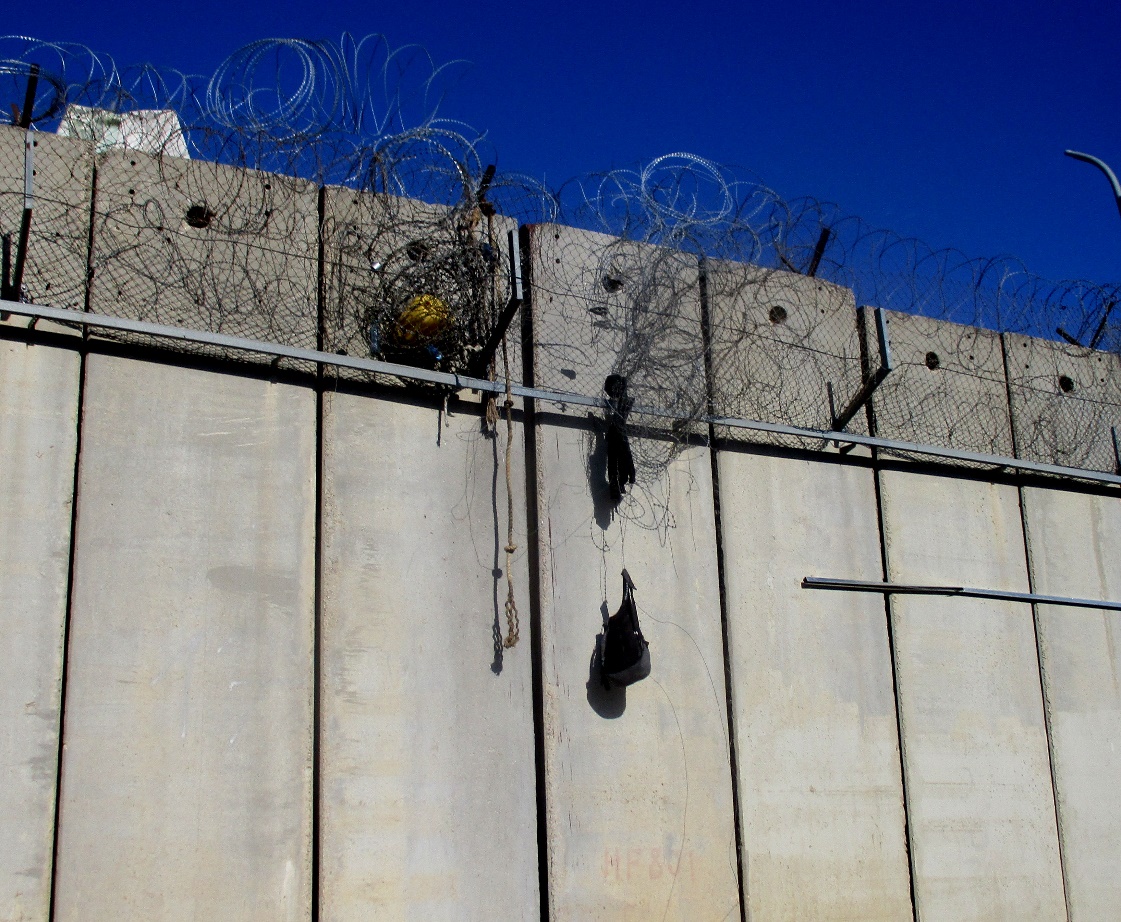 Tamar FleishmanMay-31-2026Qalandiya. Human remains or clothing remains
-