
Susiya: Settlers disguised as soldiers attack Palestinians under false pretenses
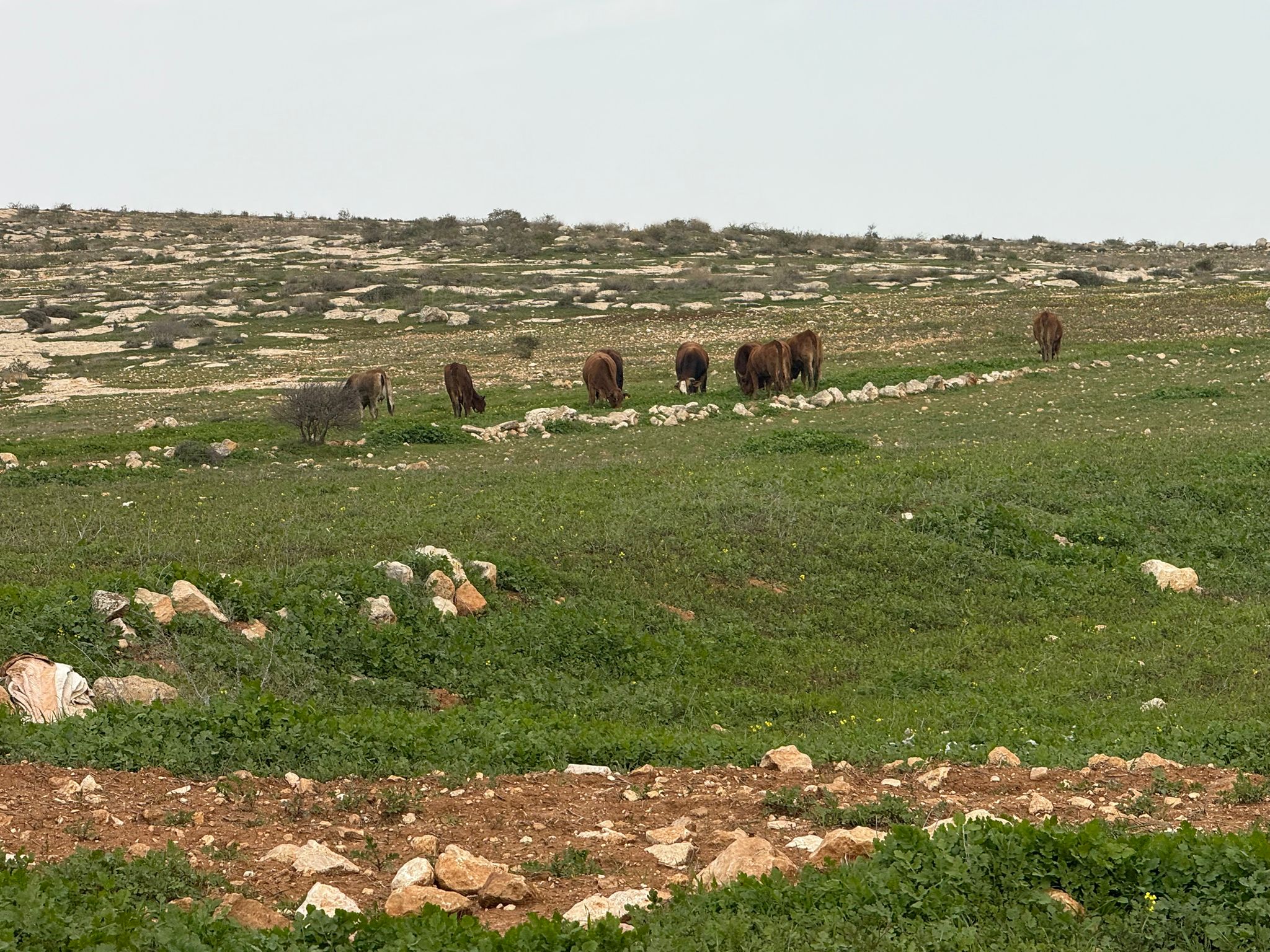
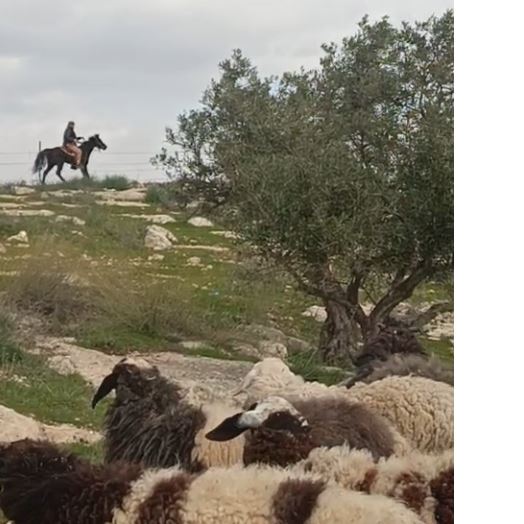
Following threats and harassment by colonists, we drove out on a cold, windy day to visit Halima and Ahmad N. in their “home” that manages to be warm in spite of its state and looks. Halima and Ahmad say that yesterday, Tuesday, January 20th, they took out the sheep to graze very near their home. At 11 a.m., the three shepherds working for Shem Tov Lusky who lives near the ancient Susya site appeared. They brought their cattle to the field and these ate everything the Palestinians had sown and was already sprouting or flourishing.
They yelled at us – get inside, you terrorist! I entered the house for fear they would take my sheep. They also come in the afternoon.
At night volunteers sleep there, and their presence gives the shepherds a slight bit of security, but they leave early for they are not allowed to be there. A week ago, in the evening three came who first looked like soldiers, but he identified them as colonists. They were wearing partial army uniforms, were masked, with tassels waving out of their shirts… They came inside and ordered the Palestinians including the girls to get out. “We are looking for terrorists who throw stones”, they said. “Take us to your neighbor” for they know that this is how the neighbor’s dogs will not jump at them. I didn’t want to go, Ahmad says. But the colonist threatened me with his gun and pulled my hand. So, they went and searched the neighbor’s house too. When they were through, the colonists told him: “You are not released, you’re coming with us”.
They took him to their vehicle which was parked on the road, about 100 meters from his house. “I want to speak with you”, the “soldier” said, and took me behind the jeep. He showed me a video with children. “Tell me which of them threw stones at us”. I don’t know them, I said. So, he pushes me down to the ground, my head in the mud, and all three of them step on me, trying to pressure me to identify the children, for they know these are Nawajha kids.
“Surely you know them”, they keep saying, hitting and stepping on me.
This was all because they saw children moving stones to clear the way that the colonists placed on the road. The children were not throwing stones. But this was reason enough to justify searches and violence.
After such 30 minutes, they said to me, “Go home, but don’t dare tell anyone we beat you up”.
Ahmad went home.
“Today they didn’t take the sheep out for they saw one of Lusky’s guys riding his horse nearby and were afraid. That’s how it is all the time. They are afraid to take the sheep out to graze, for the colonists immediately come out and chase them away, not even near the colony.”
Halima brings out a wonderful magluba (a delicious rice, chicken and vegetable dish) and insists that we eat. You always come and leave in a hurry, she says. She is a great cook, the magluba is terrific, but we also wanted to visit Azam and Wadeha. We parted and went to see this noble couple, with the man who speaks excellent Hebrew and always adds more information.
We heard that Lusky Senior and Junior were detainees, then prohibited from coming near their victims. Now, back at the ranch, they send their shepherds out again. They also have a new M16. They have come to his neighbors M., A., Sh., and E., forced them to take their sheep inside and let the colonists’ cattle eat their new barley crop.
The colonists destroyed the fence that Abu Saddam built out of tires, so that his fields too could be invaded by their cattle.
That’s what life is like there in the past 2 year and a quarter.
Location Description
Susiya
See all reports for this place-
Susiya The Palestinian area lies between the settlement of Susya and a military base. The residents began to settle in areas outside the villages in the 1830s and lived in caves, tents and sukkot. To this day they maintain a traditional lifestyle and their livelihood is based on agriculture and herding. Until the 1948 war, the farmers cultivated areas that extended to the Arad area. As a result of the war, a significant portion of their land left on the Israeli side was lost. After the 1967 war and the Israeli occupation, military camps were established in the area, fire zones and nature reserves were declared, and the land area was further reduced. The Jewish settlement in Susya began in 1979. Since then, there has been a stubborn struggle to remove the remains of Palestinian residents who refuse to leave their place of birth and move to nearby town Yatta. With the development of a tourist site in Khirbet Susya in the late 1980s (an ancient synagogue), dozens of families living in caves in its vicinity were deported. In the second half of the 1990s, a new form of settlement developed in the area - shepherds' farms of individual settlers. This phenomenon increased the tension between the settlers and the original, Palestinian residents, and led to repeated harassment of the residents of the farms towards the Palestinians. At the same time, demolition of buildings and crop destruction by security forces continued, as well as water and electricity prevention. In the Palestinian Susya, as in a large part of the villages of the southern Hebron Mountains, there is no running water, but the water pipe that supplies water to the Susya Jewish settlement passes through it. Palestinians have to buy expensive water that comes in tankers. Solar electricity is provided by a collector system, installed with donation funds. But the frequent demolitions in the villages do not spare water cisterns or the solar panels and power poles designed to transfer solar electricity between the villages. Updated April 2021, Anat T.
-