
Umm al-Kheir - Eid says that if you are not a Jewish settler, you are doomed
Survey of checkpoints along Route 60:
Samu’ – closed
Dura – open
Al-Fawwar – closed
Dhahariya – closed
Abda – closed
Qilqis – closed
The Sheep Junction – closed
Zif – open
We stopped at Nabil’s grocery store at Zif Junction to purchase a food basket, mainly for the children of Umm al-Kheir.
In most cases, our decision to visit a particular family during a watch shift follows a shocking incident or pogrom in the South Hebron Hills that we learn about through social media or reports sent directly to us and to Muhammad.
That was also the reason for our visit to Umm al-Kheir today.
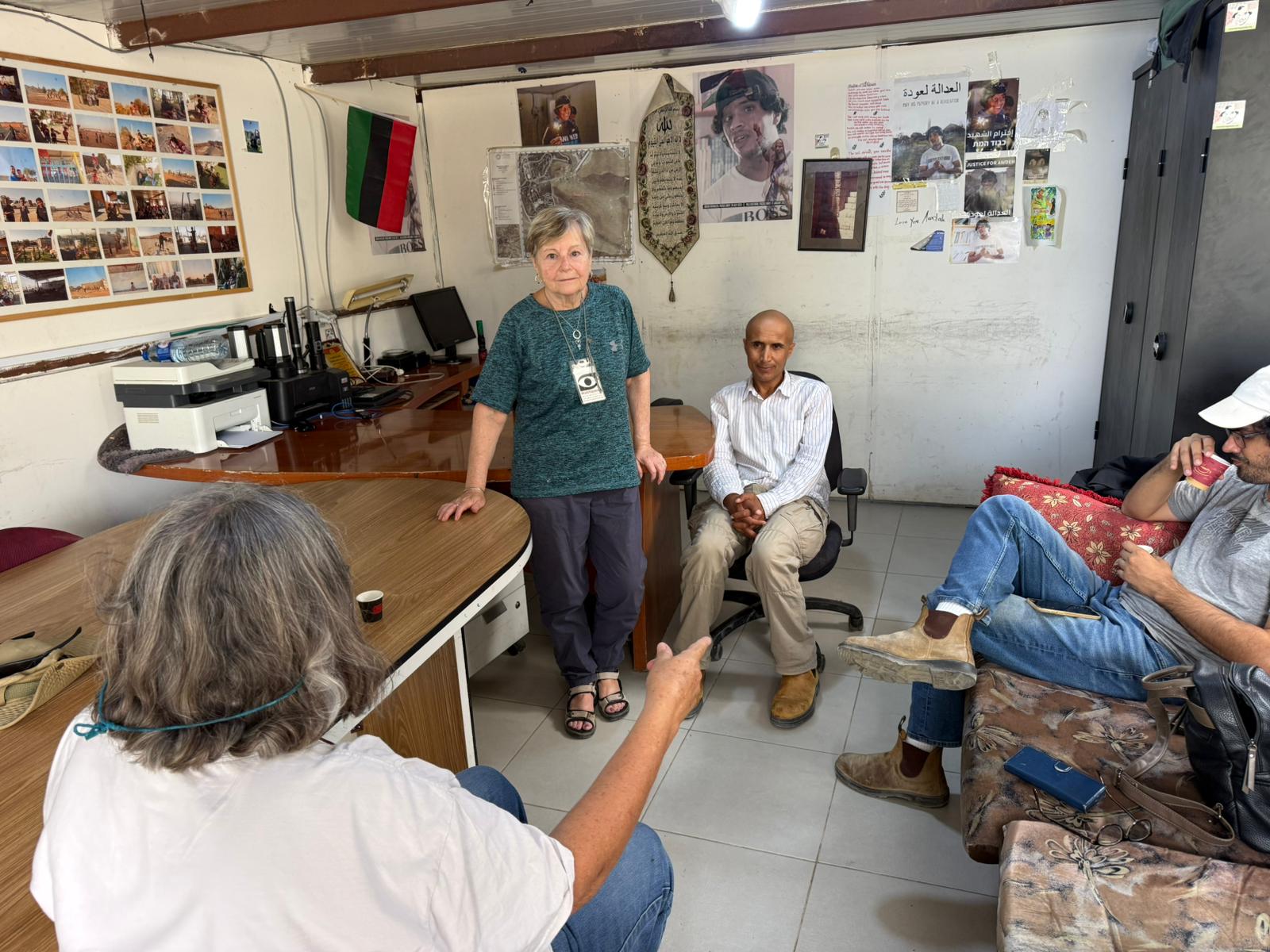
On Saturday, August 29, 2026, the children of Umm al-Kheir were playing football on a small grass field near the hospitality and meeting area at the entrance to the village. Several children and an armed adult from the nearby settlement of Carmel and the caravan neighborhood known as the Barkai neighborhood arrived and began disrupting and harassing the children, for whom the football game means the world.
Several activists and an English journalist who were staying in Umm al-Kheir as part of a Protective-Presence initiative documented the incident. A British activist named Finn Joughin, together with several of our friends from the village, tried to separate the children who were causing the disturbance from the local children.
The situation escalated. Several adults falsely accused Finn of pressing himself against their children—an allegation that was entirely untrue.
As always, there was no law and there were no limits. The activist was taken to the caravan area. The police arrived, collected his belongings, and confiscated his mobile phone. He was brought before a judge. While I was writing this report, I received an update from the village that a decision had been made to deport him from Israel.
Eid says that if you are not a Jewish settler, you are doomed.
They are guided by a belief in Jewish supremacy, and their way is one of violence, hatred, and a desire to kill.
The residents live under strain 24 hours a day and endure never-ending trauma. The machinery of occupation and the security forces provide them with no protection. On the contrary, they collaborate with the settlers throughout the occupied territories.
As usual, we left food supplies and donations in an effort to bring the children a little joy.
On our way back, I asked to call Taleb in Qawawis. Eid had told us that settlers from Yehoyariv Shevo’s nearby outpost had thrown tear-gas grenades, striking the residents in the face as well as an older activist who was with them.
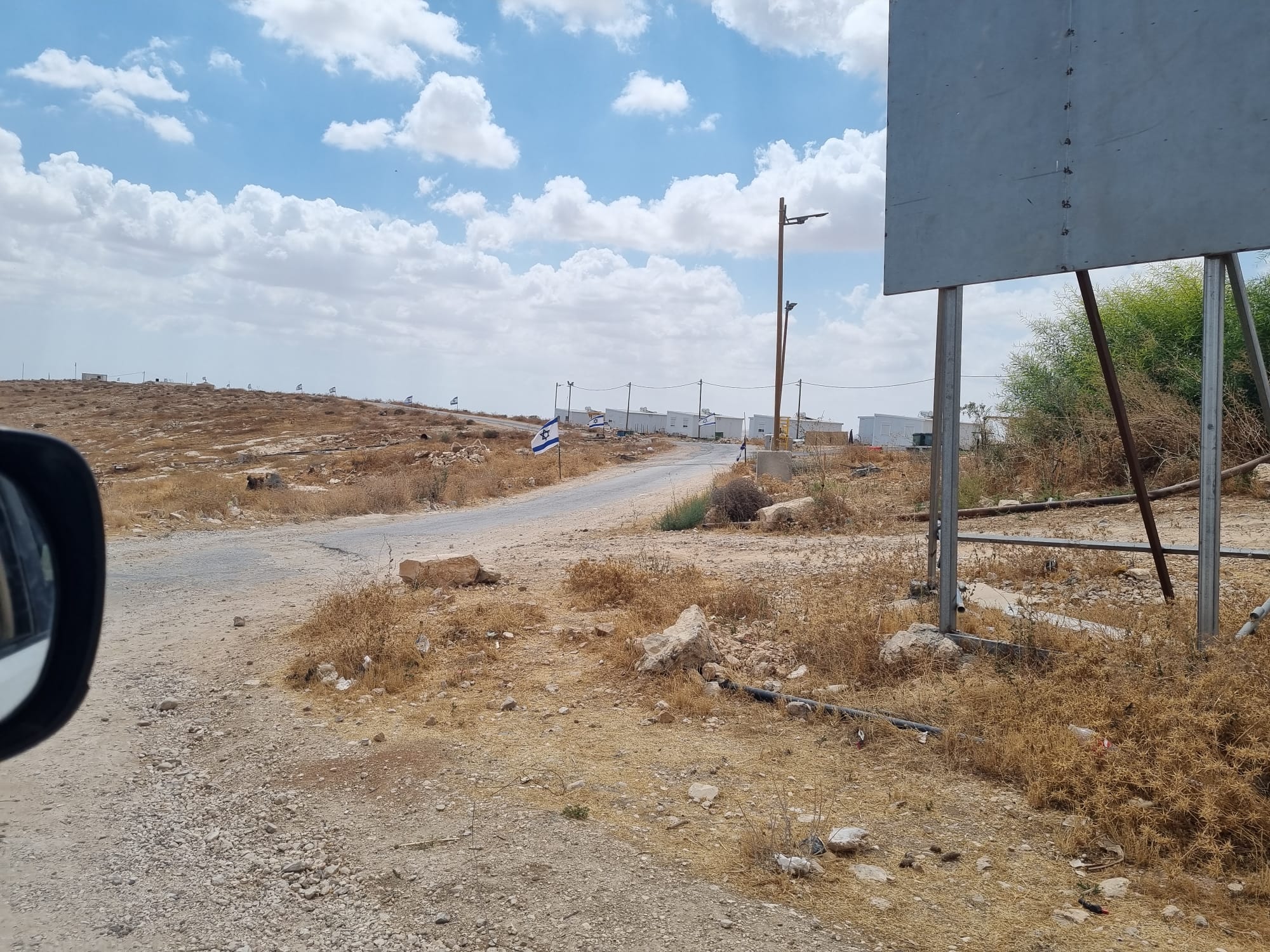
The entire route we traveled today tells the story of what Palestinians who have lived in this area for decades—and sometimes much longer—have endured. The objective of government policy, pursued with even greater force since October 7, is to carry out ethnic cleansing. Approximately ten communities that we visited during our watch shifts over the years have already been driven from their homes. New outposts and extensive vineyards have taken their place.
The Israel Electric Corporation is working to improve infrastructure in the settlements. At Asa’el, along Route 317, work to expand the junction is continuing.
As on every watch shift, we feel profound anguish as we witness the hell that Palestinians are enduring.
#ThisIsTheOccupation
Location Description
Dura Al-Fawwar Junction
See all reports for this place-
Junction on Route 60: west - the town of El Dura, east - the Al Fawwar refugee camp. There is a manned pillbox at the junction. From time to time the army sets up flying checkpoints at the entrance to El Fawwar and Al Dura. Al-Fawwar is a large refugee camp (7,000 inhabitants in 2007) established in 1949 to accommodate Palestinian refugees from Be'er Sheva and Beit Jubrin and environs. There are many incidents of stone-throwing. In the vicinity of the pillbox there are excellent agricultural areas, Farmers set up stalls adjacent to the plots close to the road. In recent months the civil administration has set up dirt embankments thereby blocking access to the stalls, and making it impossible for the farmers to sell their vegetables. Updated April 2021, Michal T.
-
Hakvasim (sheep) Junction
See all reports for this place-
One of the roadblocks (earthworks, rocks, concrete blocks or iron gates) that prevent transit of vehicles to Route 60 in the southern West Bank and block the southern entrance to Hebron. A manned pillbox supervises the place.
-
Mesafer Yatta
See all reports for this place-
This is happening in Fire Area 918 in the South Hebron Hills
On the eve of Remembrance Day (the day before Israel Independence Day), 4th May, 2022, the Israeli High Court decided on the transfer and expulsion of residents from 8 Palestinian communities in the area of Masafar Yata in the South Hebron Hills. Residents of the villages have been living under the threat of demolition, evacuation and expropriation since the IDF issued evacuation orders in 1999 based on the 1980s proclamation of their area of residence as a firing zone for IDF drills. None of the nearby settlements were included in this zone. The Masafer Yata Palestinian villages retain a special lifestyle and ancient agricultural culture. They also posess a clear historical documentation that testifies to a Palestinian settlement in this area, generations before the establishment of Israel, long ago in the caves and at later times outside them.
Evacuating residents from the area means destroying these historic villages and leaving entire families (about 2,000 people, children, adults, and the elderly) homeless. This is contrary to international law.
In June 2022, a firing drill started, and life became harder.
-
South Hebron Hills
See all reports for this place-
South Hebron Hills
South Hebron Hills is a large area in the West Bank's southern part.
Yatta is a major city in this area: right in the border zone between the fertile region of Hebron and its surroundings and the desert of the Hebron Hills. Yatta has about 64,000 inhabitants.
The surrounding villages are called Masafer Yatta (Yatta's daughter villages). Their inhabitants subsist on livestock and agriculture. Agriculture is possible only in small plots, especially near streams. Most of the area consists of rocky terraces.Since the beginning of the 1980s, many settlements have been established on the agricultural land cultivated by the Palestinians in the South Hebron Hills region: Carmel, Maon, Susia, Masadot Yehuda, Othniel, and more. Since the settlements were established and Palestinians cultivation areas have been reduced; the residents of the South Hebron Hills have been suffering from harassment by the settlers. Attempts to evict and demolish houses have continued, along with withholding water and electricity. The military and police usually refrain from intervening in violent incidents between settlers and Palestinians do not enforce the law when it comes to the investigation of extensive violent Jewish settlers. The harassment in the South Hebron Hills includes attacking and attempting to burn residential tents, harassing dogs, harming herds, and preventing access to pastures.
There are several checkpoints in the South Hebron Hills, on Routes 317 and 60. In most of them, no military presence is apparent, but rather an array of pillboxes monitor the villages. Roadblocks are frequently set up according to the settlers and the army's needs. These are located at the Zif Junction, the Dura-al Fawwar crossing, and the Sheep Junction at the southern entrance to Hebron.
Updated April 2022
Muhammad D.Aug-30-2026Umm al-Khair, Smadar with Eid, Or and Timna, in the Situation Room
-
Umm al-Khair
See all reports for this place-
Umm al-Kheir
A Palestinian village in the southern Hebron governorate, populated by five families. The Palestinian residents settled there decades ago, after Israel expelled them from the Arad desert and purchased the land from the residents of the Palestinian village of Yatta. The village suffers from the violence of nearby Carmel settlers, from water shortage and is subject to frequent demolition of buildings by the Civil Administration.
-
Zif Junction
See all reports for this place-
Zif Junction located on the crossroads that directs towards Road 356 to Yata. Yata is the district city of the southern Hebron Mountains. Usually, this junction is open to traffic. The nearby pillbox is unmanned. But the army and police are present occasionally, sometimes setting up a checkpoint and sometimes detaining residents from the big city. Often, the Israeli policemen inspect vehicles and distribute driving reports to Palestinian vehicles. s
-
