
Khashem a-Daraj - Yoav the settler rides an ATV throughout the area and shows who is the ruler
Most of the checkpoints are closed.
The kindergarten is open from 7:30 to 12:30. There are about 20 children in the younger children’s class, and about 28 in Huda’s class. They do not always all attend.
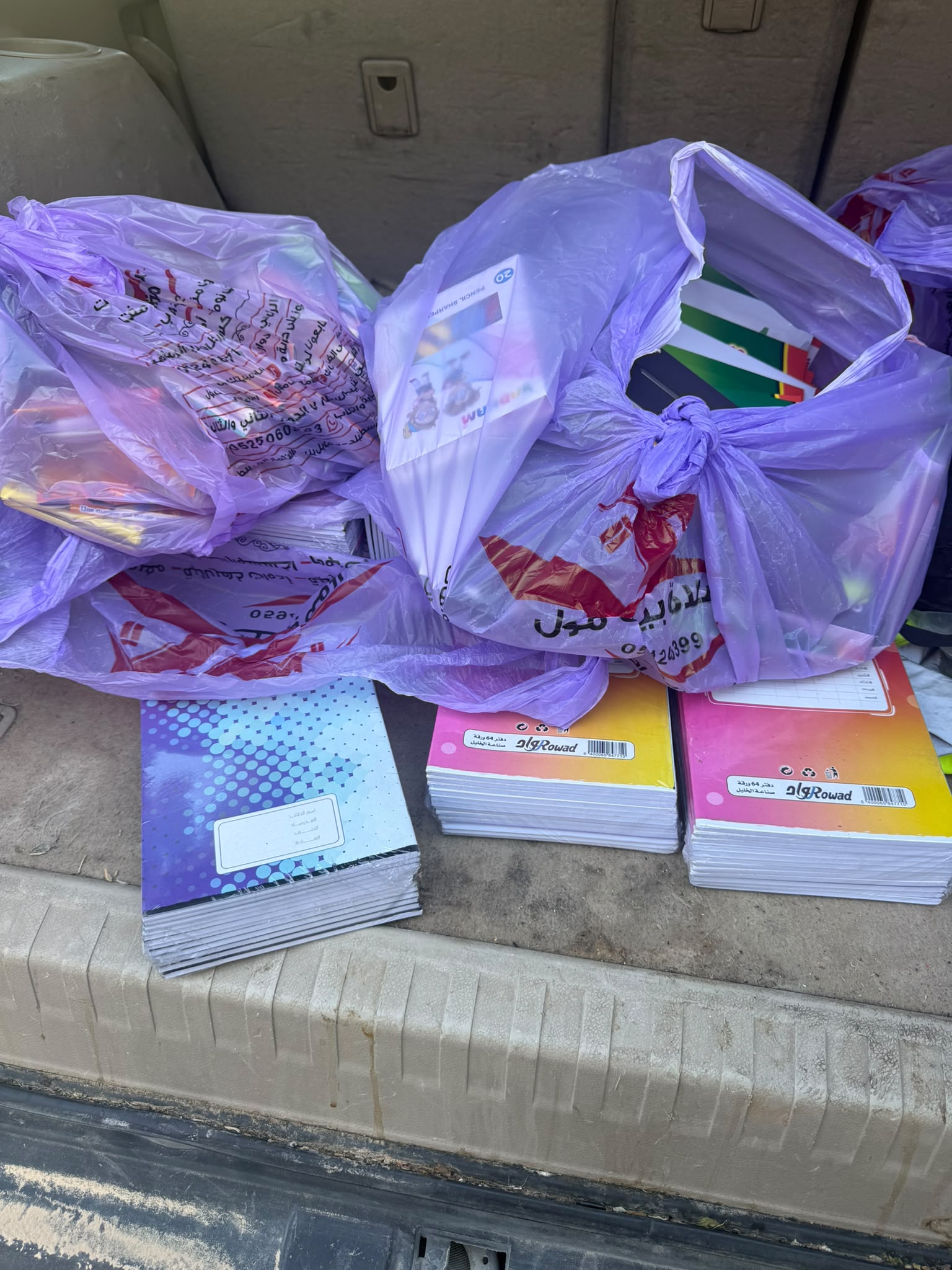
A few days ago, Huda asked for notebooks, workbooks, crayons and pencils, and each time she asks for a television screen.
Fortunately, my neighbours posted that they had a large screen to give away, so we were able to bring that too.
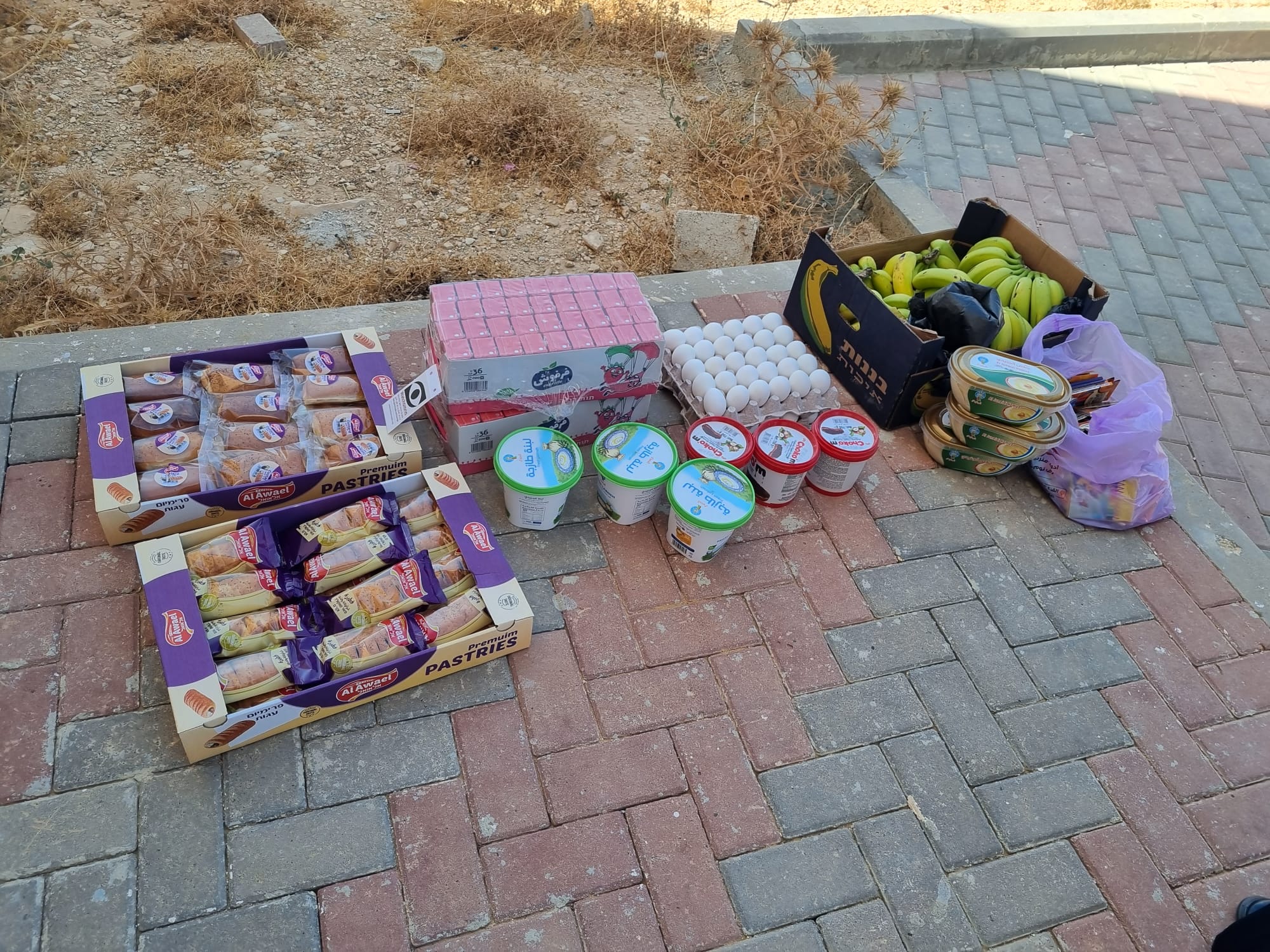
With donations from members of the southern group, Muhammad purchased what she had requested. Before arriving at the kindergarten, we stopped at Nabil’s and bought labaneh, hummus, chocolate spread, bananas, individual cakes and a carton of drink for each child. Huda had asked for the spreads because some children come to kindergarten with only bread; some of their families cannot afford anything to put on it.
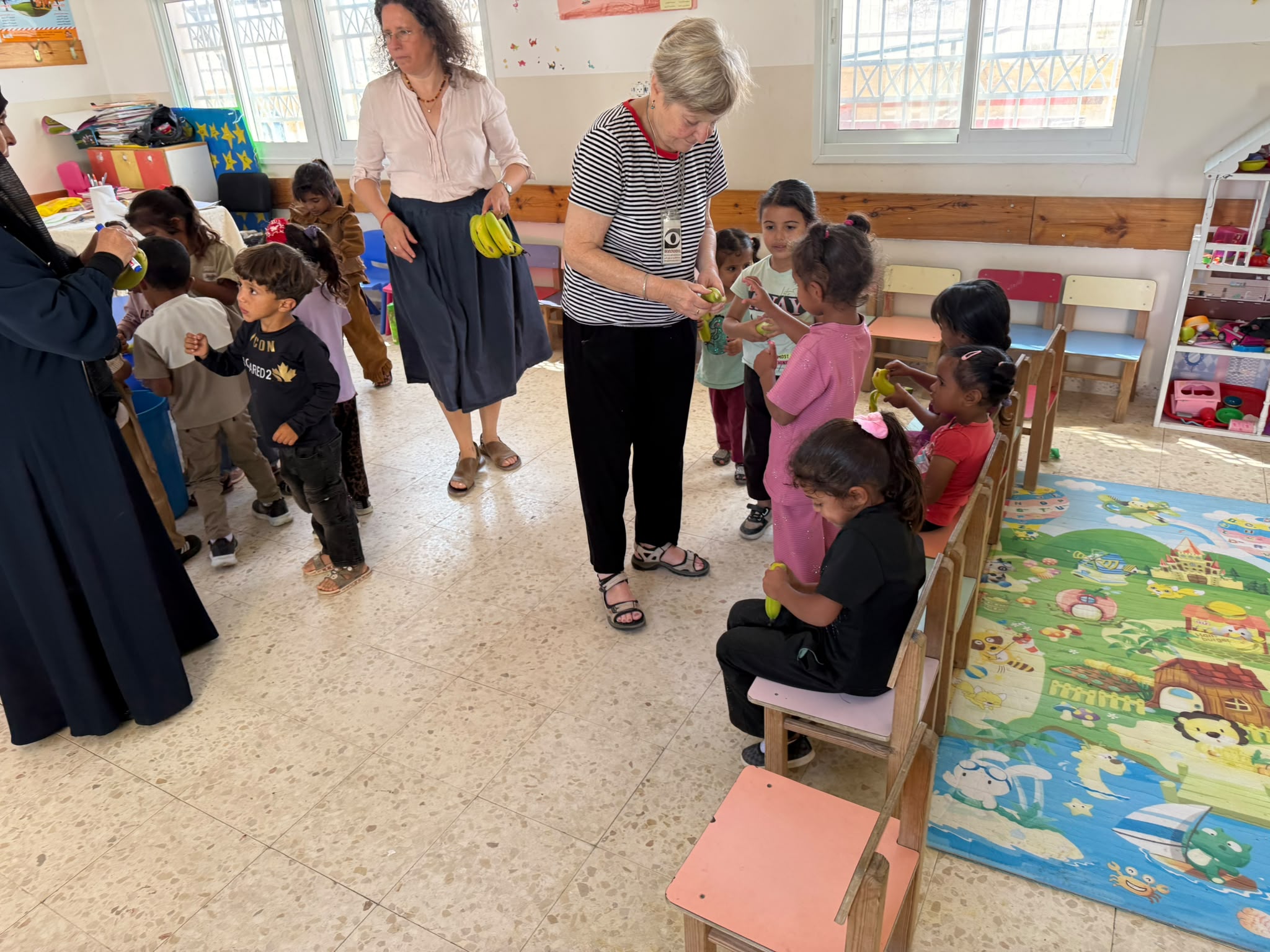
The children’s joy when we gave them what we had bought for their mid-morning snack meant the world. They hugged us and showed us affection throughout the visit, and this is the only monitoring visit that brings joy.
We also left the television I had managed to obtain through donations, clothes, games and the learning supplies.
I ask the kindergarten teachers whether they can share what is happening outside the kindergarten. Amna tells us:
If one of the family’s camels gets loose, the settler from the Mitzpe Midrag farm chases it. Its owner catches it.
A year ago, settlers dressed in army uniforms came to the land belonging to her son and his family, on the edge of Khashem a-Daraj. They arrested him, claiming that he had ridden a donkey near the land of Yoav Etzion from Mitzpe Midrag. The person riding the donkey was a Palestinian from Zuweidin who grazes his flock there, and Yoav took his donkey. Yoav thought Amna’s son was that shepherd.
Yoav, or one of his workers, rides an ATV throughout the area, showing who is in charge. Every day he tells the shepherds: Go away, this is not your land.
When we said goodbye to the children, they came to hug us again, and seeing the smiles on their faces made us happy too. We promised to come again.
#ThisIsTheOccupation
Location Description
South Hebron Hills
See all reports for this place-
South Hebron Hills
South Hebron Hills is a large area in the West Bank's southern part.
Yatta is a major city in this area: right in the border zone between the fertile region of Hebron and its surroundings and the desert of the Hebron Hills. Yatta has about 64,000 inhabitants.
The surrounding villages are called Masafer Yatta (Yatta's daughter villages). Their inhabitants subsist on livestock and agriculture. Agriculture is possible only in small plots, especially near streams. Most of the area consists of rocky terraces.Since the beginning of the 1980s, many settlements have been established on the agricultural land cultivated by the Palestinians in the South Hebron Hills region: Carmel, Maon, Susia, Masadot Yehuda, Othniel, and more. Since the settlements were established and Palestinians cultivation areas have been reduced; the residents of the South Hebron Hills have been suffering from harassment by the settlers. Attempts to evict and demolish houses have continued, along with withholding water and electricity. The military and police usually refrain from intervening in violent incidents between settlers and Palestinians do not enforce the law when it comes to the investigation of extensive violent Jewish settlers. The harassment in the South Hebron Hills includes attacking and attempting to burn residential tents, harassing dogs, harming herds, and preventing access to pastures.
There are several checkpoints in the South Hebron Hills, on Routes 317 and 60. In most of them, no military presence is apparent, but rather an array of pillboxes monitor the villages. Roadblocks are frequently set up according to the settlers and the army's needs. These are located at the Zif Junction, the Dura-al Fawwar crossing, and the Sheep Junction at the southern entrance to Hebron.
Updated April 2022
Muhammad D.Sep-27-2026Food items we brought to Huda's kindergarten in Khashem a-Daraj
-
