
Umm Qusa - The settlers from the farms are making the lives of the residents miserable
The checkpoints along the way to Umm Qusa are closed.
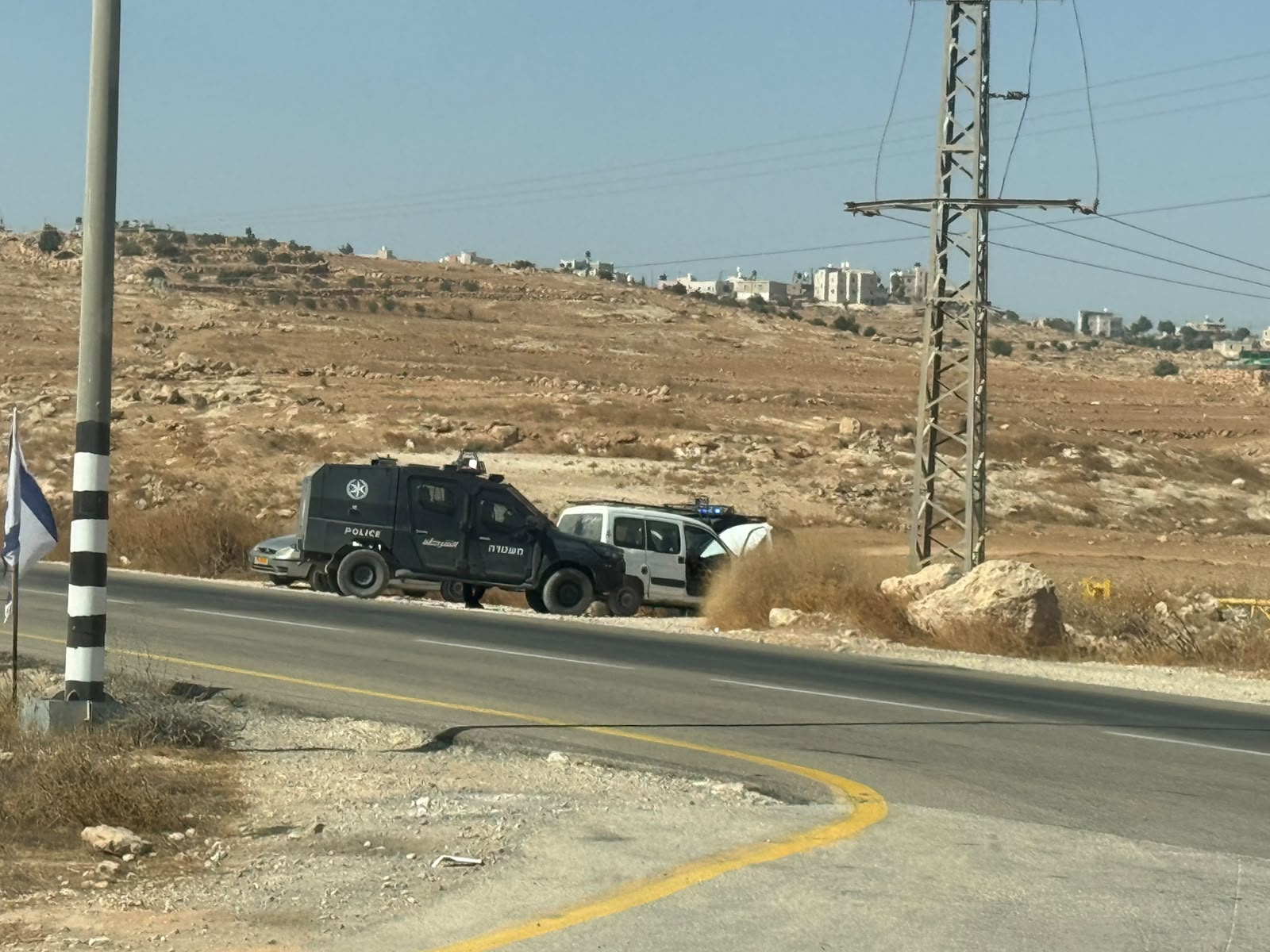
Opposite the entrance to Tuwani, on the side leading into Yatta, police in two jeeps had stopped two Palestinian vehicles. Apparently, they had stopped them because the cars were not roadworthy. When we passed there on our way back, they were no longer there.
We continue to Umm Qusa, to Najeh and his family. Today is Saturday, and the children are at home.
Not a day goes by without Yoav Etzion coming and driving his pickup truck around the roads surrounding his outpost. The outpost stands on the site of a former British police station, which became the Midrag lookout and also serves as a tourist attraction.
Najeh says that on September 23, a resident of Zuweidin was stranded near Umm Qusa when his car broke down. His father suggested that he wait until he could come and help him, but Shimon Atiya from Shorashim Farm spotted the car and its driver and, with the help of a settler soldier, pushed the car into a wadi. Repairing the damage took time and a large sum of money.
Another incident occurred the day before yesterday: a resident of Zuweidin and his seven-year-old son were travelling to Umm Qusa. Yoav Etzion saw them and came over to act as the local sheriff. He ordered Mahmud from Zuweidin to walk a kilometre to his father’s house. Yoav insisted that this was his private property, and they had to take a detour both on the way there and on the way back.
Yoav threatened Mahmud, saying that he knew his entire extended family.
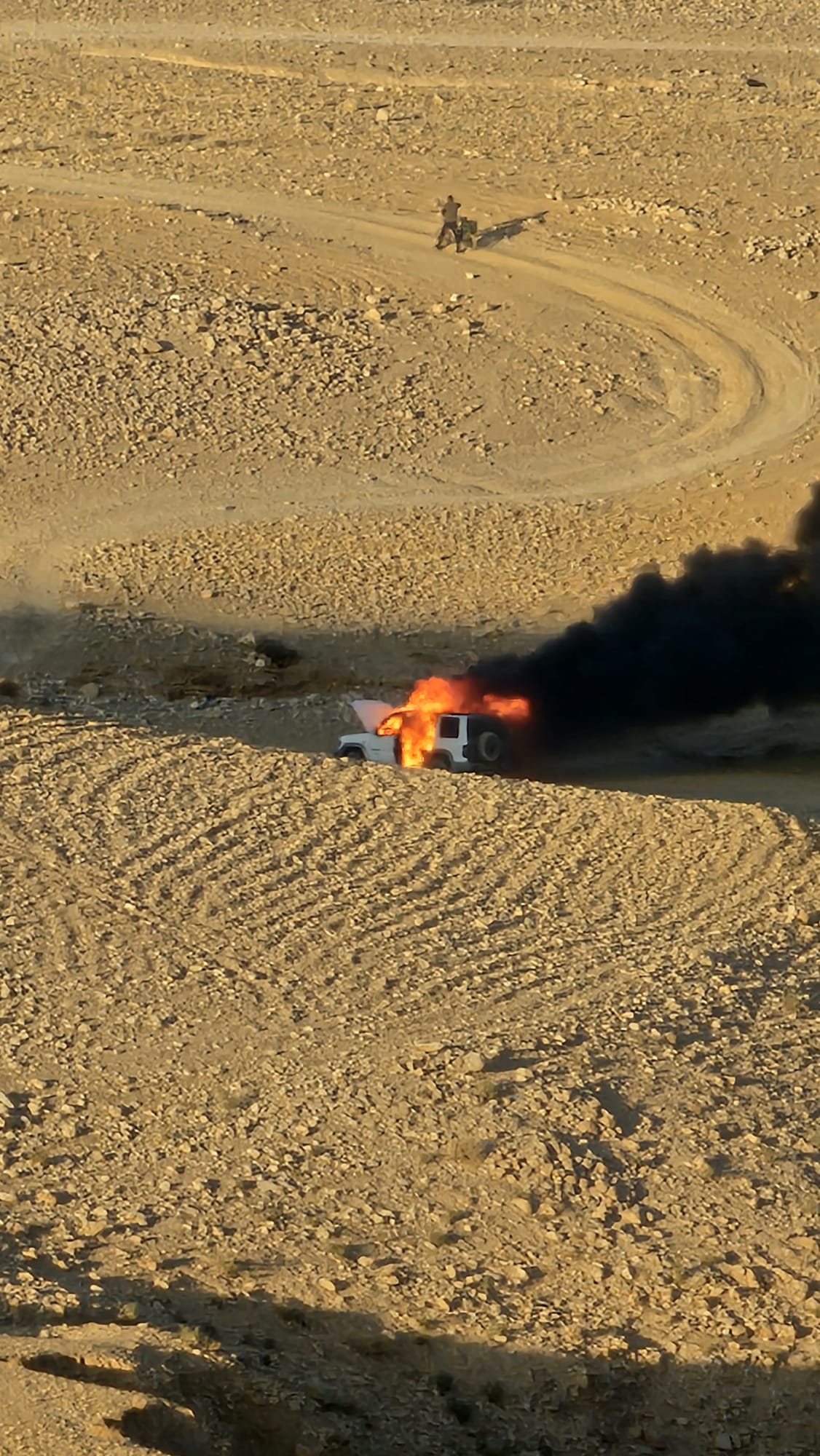
At the end of September, a jeep was driving near the school. Yoav stopped it and told the driver that he knew he regularly transported workers in his jeep. He gave him an order and burned his vehicle. Photos are attached.
I want to note that yesterday, October 9, 2026, Shimon Atiya entered Umm al-Khair accompanied by other settlers and supported by the army. They did whatever they pleased, all to force the residents of Umm al-Khair to leave the land where they have lived for decades.
They fenced off and blocked Salem al-Hathalin’s access to his flock and prevented him from feeding the animals for many hours.
Salem’s wife was arrested without explanation (we are familiar with this) and taken to the military base in Susiya. She was brought back after four hours.
We will document the horrors of that day when we visit Umm al-Khair soon.
There is not a moment’s respite. The perpetrators act in full cooperation with the Israeli army. A large proportion of the soldiers are settlers, dressed in uniform and directing the events.
As always, the journey home is difficult, mainly because of our inability to help. We try to ease things a little. We left basic food supplies and vegetables that Muhammad receives through a greengrocer’s generosity.
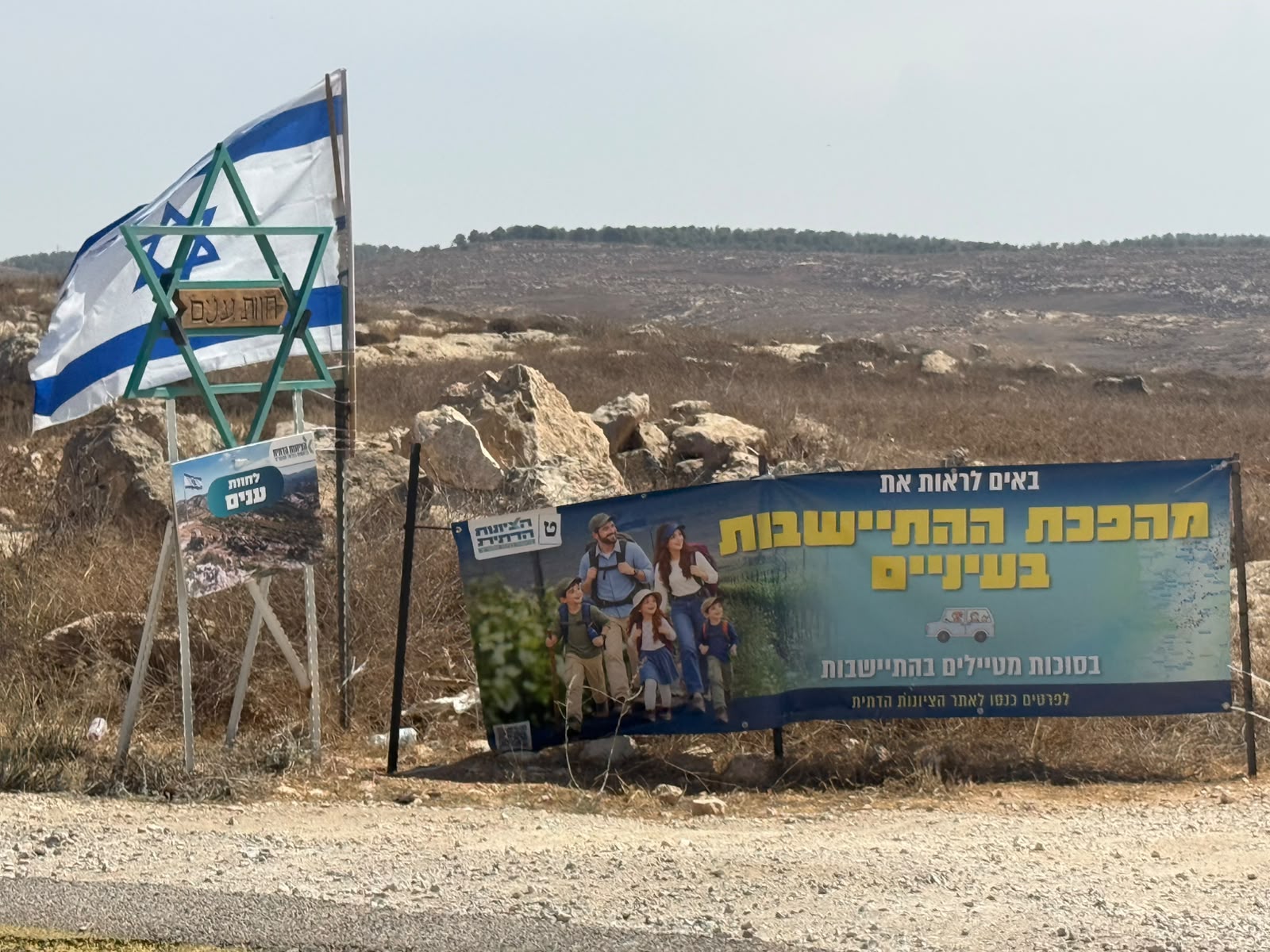
In the Zanuta area, we noticed a sign, shown in the attached photos, that had been seen last week. Although it is only a sign, it reflects a Jewish supremacy that knows no bounds and declares: “This is not Zanuta; this is ancient Susiya.”
I sent it to the lawyers Neta and Qamar, who had not known about it, but there is little that can be done about it.
#ThisIsTheOccupation. Evil, malicious, humiliating, starving people, depriving them of water, destroying, devastating.
Location Description
A-Tuwani
See all reports for this place-
A-Tuwani
The locals came to a-Tuwani during the 20th century from the village of Yatta. They settled in abandoned ruins, utilizing the arable land, pastures for grazing sheep and the abundance of natural caves for habitation. The residents who settled in the caves came from families who could not purchase land for houses in the mother villages, as well as shepherds who did not have enough land to graze. They were joined by clan members who quarreled with other families in the mother locality.
Some of the residents today live in concrete buildings built above the caves. In the area of the village are several water cisterns and an ancient water well called 'Ein a-Tuwani. Local residents are forced to buy water in containers and transport them through many road blocks to the village. With the help of international organizations, an electrical system was installed in the village. In the late 90s of the 20tTh century, an elementary school was established in the serving several small villages in the area.
In 2004, MachsomWatch began visiting and reporting from the Khirbet Tuwani cave village, which suffers badly from the settlers of nearby outposts, and especially from the extremist Ma'on outpost. . The settlers contaminate cisterns, poison the flocks and uproot trees.Particularly notable is the harassment of children from the surrounding villages on their way to school in a-Tuwani, so much so that military escort of children is required to separate them from the attackers (this was arranged following an initiative of the organization's members). In the past year, the escort has been without the vital presence of overseas volunteers.
Near a-Tuwani there are several families who have returned to the caves due to the incessant demolitions of the civil administration (as there is a total construction ban in all of area C). Destroyed are not only residential and agricultural buildings, but also water pipes, machinery. Even water cisterns are clogged up. a-Tuwani residents have created an association for non-violent demolition protests, but in the past year the army’s harsh harassment and settler violence have intensified and escalated. The incident of the small generator confiscation, which left a young man paralyzed, is one of many examples - any legitimate protection of property rights leads to violence and even shootings by the army and the civil administration.
Updated April 2022
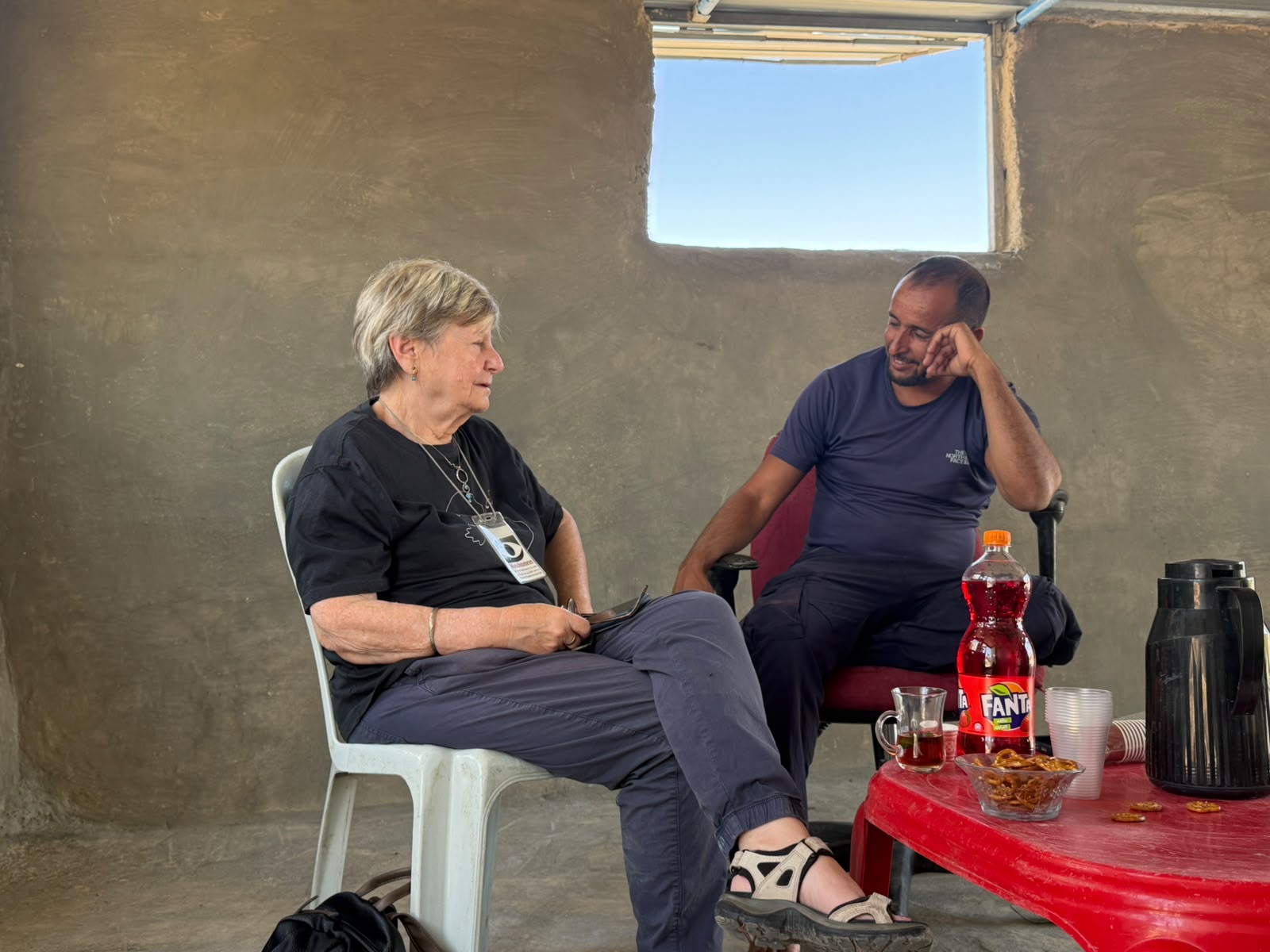
Muhammad D.Oct-10-2026Smadar with Najeh in Umm Qusa
-
Mesafer Yatta
See all reports for this place-
This is happening in Fire Area 918 in the South Hebron Hills
On the eve of Remembrance Day (the day before Israel Independence Day), 4th May, 2022, the Israeli High Court decided on the transfer and expulsion of residents from 8 Palestinian communities in the area of Masafar Yata in the South Hebron Hills. Residents of the villages have been living under the threat of demolition, evacuation and expropriation since the IDF issued evacuation orders in 1999 based on the 1980s proclamation of their area of residence as a firing zone for IDF drills. None of the nearby settlements were included in this zone. The Masafer Yata Palestinian villages retain a special lifestyle and ancient agricultural culture. They also posess a clear historical documentation that testifies to a Palestinian settlement in this area, generations before the establishment of Israel, long ago in the caves and at later times outside them.
Evacuating residents from the area means destroying these historic villages and leaving entire families (about 2,000 people, children, adults, and the elderly) homeless. This is contrary to international law.
In June 2022, a firing drill started, and life became harder.
-
South Hebron Hills
See all reports for this place-
South Hebron Hills
South Hebron Hills is a large area in the West Bank's southern part.
Yatta is a major city in this area: right in the border zone between the fertile region of Hebron and its surroundings and the desert of the Hebron Hills. Yatta has about 64,000 inhabitants.
The surrounding villages are called Masafer Yatta (Yatta's daughter villages). Their inhabitants subsist on livestock and agriculture. Agriculture is possible only in small plots, especially near streams. Most of the area consists of rocky terraces.Since the beginning of the 1980s, many settlements have been established on the agricultural land cultivated by the Palestinians in the South Hebron Hills region: Carmel, Maon, Susia, Masadot Yehuda, Othniel, and more. Since the settlements were established and Palestinians cultivation areas have been reduced; the residents of the South Hebron Hills have been suffering from harassment by the settlers. Attempts to evict and demolish houses have continued, along with withholding water and electricity. The military and police usually refrain from intervening in violent incidents between settlers and Palestinians do not enforce the law when it comes to the investigation of extensive violent Jewish settlers. The harassment in the South Hebron Hills includes attacking and attempting to burn residential tents, harassing dogs, harming herds, and preventing access to pastures.
There are several checkpoints in the South Hebron Hills, on Routes 317 and 60. In most of them, no military presence is apparent, but rather an array of pillboxes monitor the villages. Roadblocks are frequently set up according to the settlers and the army's needs. These are located at the Zif Junction, the Dura-al Fawwar crossing, and the Sheep Junction at the southern entrance to Hebron.
Updated April 2022
Muhammad D.Oct-10-2026Smadar with Najeh in Umm Qusa
-
Umm al-Khair
See all reports for this place-
Umm al-Kheir
A Palestinian village in the southern Hebron governorate, populated by five families. The Palestinian residents settled there decades ago, after Israel expelled them from the Arad desert and purchased the land from the residents of the Palestinian village of Yatta. The village suffers from the violence of nearby Carmel settlers, from water shortage and is subject to frequent demolition of buildings by the Civil Administration.
-
