
Hamra, Ma’ale Efrayim, Tayasir, Za’tara (Tapuah), Sun 23.5.10, Afternoon
Translator: Charles K. Ten days ago settlers from Mehola stole a sheep from a Bedouin family living near Ro’i. We see, as we do whenever we come to the Jordan Valley, various indications that the intent is to make life here impossible for the Bedouin, so they’ll leave: – Gochya gate isn’t open even during the limited number of hours it’s scheduled to be open, perhaps as part of the policy to separate the Jordan Valley from the West Bank and prevent the Bedouin in the Jordan Valley from accessing basic services (medical clinics, banks, etc.). – Declaring the entire area north of the Hamra checkpoint to be a “live fire zone,” in preparation for expelling the Bedouin from the region. – Restricting the depth of the Bedouin’s wells in order to rob them of underground water and water from springs in the area and transfer it to the settlers. Each year Israel pumps 33.9 million cubic meters of water in the Jordan Valley for Israeli use. – Banning construction, including sheepfolds, even on private land. On the way – as usual Marda is open, Zeita is blocked. Za’tara junction – nothing unusual happening. Efraim gate – A checkpoint at the entrance to the Jordan Valley at which Palestinians are inspected. A few kilometers north of Gitit we see the vegetable fields belonging to one of the settlers. He lives in the southern Jordan Valley and received at least ten dunums, an allocation of water (vegetables need a lot of water), and also erected a packing house – while the Bedouin have to buy water at a high price and transport it long distances. We went into one house before reaching the Hamra checkpoint. The husband, wife and young son welcomed us. They’re happy with their lot, and have no problems with their Jewish neighbors. But when we scratch the surface we see the effects of the occupation on every resident of the Jordan Valley. We saw an empty, neglected well, and they told us they used to have a well from which they drew water for the family and for their animals (there are 22 people in the family), but it dried up. The reason – they’re forbidden to dig wells deeper than 170 meters. Beqa’ot, the settlement nearby, has wells whose depths are unlimited, and they’re utilizing all the underground water in the area. In Hamra (a Palestinian locality), next door, are three wells that also dried up. This family now buys tankloads of water and pays NIS 120 for a tank containing 15 cubic meters. They can’t farm because of the water shortage, while agriculture in Beqa’ot is flourishing. They showed us an order from the Civil Administration’s Supreme Planning Council, dating from 2008, to cease construction of three cattle sheds. Since the occupation began they haven’t been permitted to build anything even though the land belongs to them and is registered in the Tabu (the Land Registry books). They’re fortunate their home was built before 1967. They showed us another order, dating from 2005, expelling them from lands some distance away. Our knowledge of Arabic isn’t good enough to understand the reason. Hamra checkpoint, 12:50-13:25Two soldiers inspect vehicles, first those coming from one direction, then from the other. They take breaks, and even though there’s almost no traffic at 13:15, there are nine cars on line from the south and two more from the east. We time the wait – 8 minutes. Suddenly we hear inexplicable shouting from the direction of the checkpoint (in order to avoid arguments with the soldiers we stood beyond the surrounding fence). It turned out that one of the soldiers, for some reason, without provocation, began yelling at and cursing the Palestinians passing through the checkpoint. When we came near he began yelling at us also (where are we from, etc.). People coming from Nablus have to get out of their vehicles and pass through the pedestrian lane. They emerge holding their belts and tucking in their clothes. Traffic to the Jordan Valley is screened – that is, the entry of Palestinians from the West Bank to the Jordan Valley is restricted. Only cars whose owners and drivers are permanent residents of the Jordan Valley are permitted to enter. We pass large areas of greenhouses and bright green groves belonging to the settlement of Ro’i. According to the Israel Central Bureau of Statistics, at the end of 2008 it numbered 122 inhabitants. According to an article by Amira Hass in Ha’aretz (9.2.07), each family in Ro’i is allocated 40,000(!) cubic meters of water a year, at a price of NIS 1.5-3.5 /cubic meter. According to another article by Amira in Walla, 8.3.08, Israel pumps 33.9 cubic meters of water in the Jordan Valley each year, for Israeli use. Near the settlement of Ro’i we entered a Bedouin encampment that we often visit. Three amiable women and two little children. The older children are in school and live during the week in Auja because of the distance. Were the Gochya gate open they’d probably be going to school in Tamun and come home every day. They tell us that ten days earlier a white Mitsubishi pickup truck, license plate no. 5554617, in which there were three settlers from Mehola, came and stole one of their sheep. They filed a complaint with the Jericho DCO, but have had no response. We gave the information to Yesh Din. Last year, settlers from Hemdat stole one of their horses, and the authorities did nothing. All along the road north of Hamra are signs reading “Danger. Live fire zone. Entry prohibited.” They’re warning signs of the intention to expel all the Bedouin from the northern Jordan Valley. Tayassir checkpoint – 14:30 – 14:40We arrived too late to see the children from Hamam al Malik coming home from school in Tayassir.Here, too, anyone coming from the west must get out of their vehicle and pass through the pedestrian lane.Today we didn’t see the usual checkpoint ritual in which men must lift their shirts and turn around.Traffic at this hour is light. Gochya gate – 15:15-15:30An earthen berm stretches for kilometers north and south of the checkpoint, parallel to the Alon road, only a few dozen meters west of it. These piles of earth block the movement of Bedouin to and from the Jordan Valley and the West Bank and force them to pass through the checkpoints. The gate itself, which is supposed to open three times a week for half an hour in the morning and half an hour in the afternoon – is closed. Even though now is the time it’s scheduled to be open. Whenever we’ve been here at this hour, the gate has always been closed. When we telephone the DCO they give us various excuses. So the only possible conclusion we can draw is that the policy is to keep it closed. Once two tractors were waiting, and the soldiers showed up only after we called. No was waiting at the gate the other times, perhaps because they know it will be closed. Two months ago some laborers from Tamun were caught avoiding the gate and received heavy fines. Afterwards large mounds of earth were placed to prevent people from going around the gate. We spoke today to Itzik Deri, the head of the DCO. He said he’d look into it. When we called back we got his answering machine. This gate cuts off the local Bedouin from the town of Tamun where essential services are located – school, bank, clinic, etc. We passed the hill on which settlers from Maskiyot erected a tent last month to get rid of the Bedouin tent, even though it had stood on private land. The hill was bare.
Hamra (Beqaot)
See all reports for this place-
One of the Jordan Rift Valley checkpoints that prevent direct transit between the West Bank and the Jordan Valley, in addition to Tayasir Checkpoint. Located next to Hamra settlement, on Route 57 and the Allon Road.
Read about the peple of the Jordan Valley and the quiet transfer happening there.
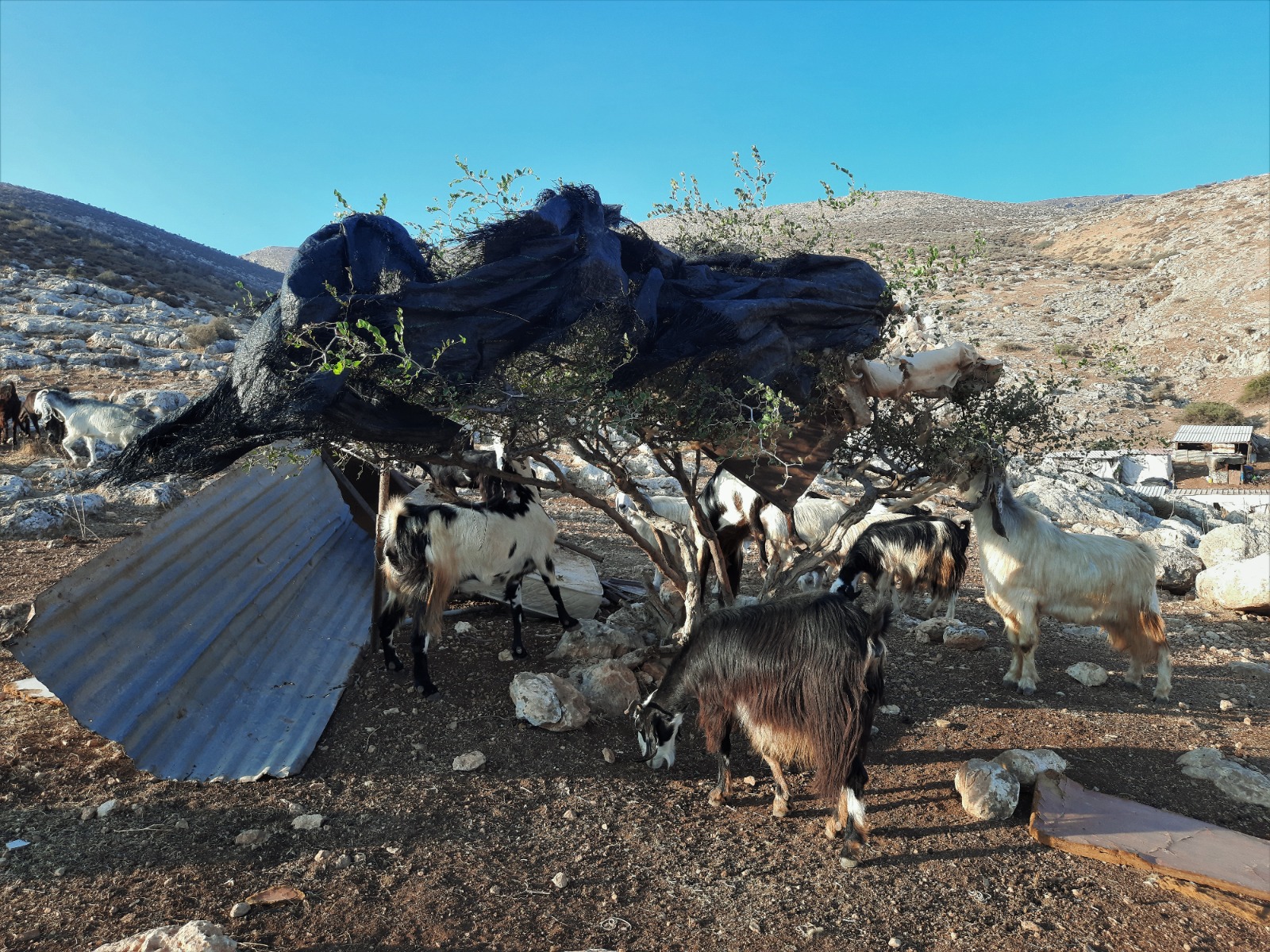 Shahar ShilohNov-3-2021Ein Shibli: grazing begins close to home
-
Ma'ale Efrayim
See all reports for this place-
Ma'ale Efrayim On the road connecting Route 90 (the Jordan Valley road) to the Allon Road.
-
Tayasir CP
See all reports for this place-
Located on road 5799, It is one of the checkpoints control the passage between the northern West Bank and the Jordan Valley. For a long time, it stood empty and open, with only a sign next to it warning against entering Area A. It was adjacent to an old military camp - now everything is neglected. How much money was invested here, and how much brainwashing was done to the soldiers of Netzah Yehuda and Kfir.
Today, it is very difficult to pass there. Many delays. Often, teachers from Tubas are not allowed to pass into the Valley to villages like Ein al-Bida where the local schools are located, and there are no classes. There are additional days when the checkpoint is closed. In general, there is a wait there of about two to four hours to go towards the Valley and also to return. Many times the Palestinians are forced to use the Hamra checkpoint, which also leads into Tubas and the West Bank, but there is also a huge queue there and a long wait.
Following a deadly attack on soldiers at the nearby base in February 2025, the checkpoint was completely closed for the time being. (Updated March 2025)
-
Za'tara (Tapuah)
See all reports for this place-
Za'tara (Tapuah) Za'tara is an internal checkpoint in the heart of the West Bank, at the intersection of Road 60 and Road 505 (Trans-Samaria), east of the Tapuah settlement. This checkpoint is the "border" marked by the IDF between the north and south of the West Bank, in accordance with the policy of separation between the two parts of the West Bank that has been in place since December 2005. At the Za'tara checkpoint, there are separate routes for Israelis and Palestinians. In the route for Israelis, there are no inspections and the route for Palestinians inspects. The queue lengthens and shortens suits. The checkpoint is open 24 hours a day. The checkpoint is partially staffed and the people who pass through it are checked at random.
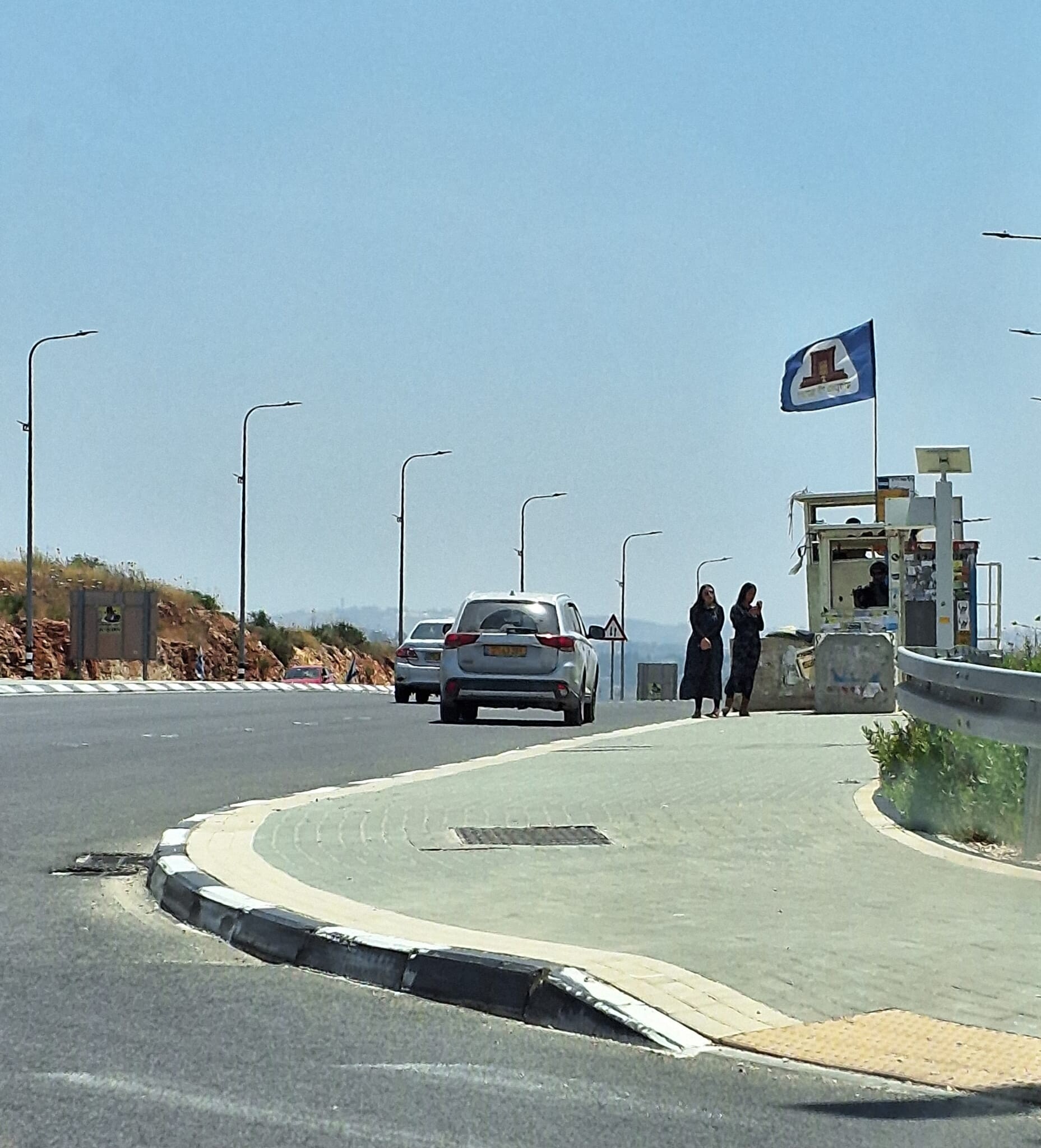 Ronit Dahan-RamatiJun-9-2026Za'atara (Tapuach Junction). The Temple Flag Above a Station
-
