
‘Awarta, Huwwara, Za’tara (Tapuah), Sun 20.3.11, Morning
We planned to go to the Jordan Valley, but yesterday evening we received an email asking us to go to Awarta which, according to reports, got shameful “special treatment” from the army as they searched for those who murdered the people in Itamar.
11:00 We came to Awarta and went to the grocery at the entrance to the village, where we spoke to the owner and a number of upset residents who told us that settlers wait for yellow taxis leaving the village (on their way to Huwwara) to throw rocks at them.
We drove into the village and spoke with residents we met along the way. We stopped for a longer time near one of the shops and spoke with more and more residents who came to talk with us. Children also gathered, of course, among them schoolchildren with painted faces. It turns out that they had a “free day” in school – the parents laughed, saying, “Like your Purim”…
The town is quiet today, no soldiers visible, but all the residents appear pretty upset after five days of curfew, rude and violent searches, soldiers remaining in their homes (“they put us all in one room”) and many residents arrested, only a few of whom had returned to the village.
Here’s a summary of the feelings we heard from everyone we spoke to: All of them strongly condemned the murders in Itamar. Not one sought to excuse them, or moderate their abhorrence of the murders. They stressed that to murder children is an anti-Muslim act, “against our religion,” “We don’t believe a Muslim could do such a terrible thing”…”Even though they took our lands, that’s a terrible murder.” At the same time, they feel the army decided the murderer came from Awarta; “they’ll stop at nothing to accuse us all”… They’re bitter about the violent searches, during which everything within reach was broken. A shop owner said that in addition to dumping everything from his shelves, they also stole NIS 1500 from the shop. But they’re afraid to complain, afraid of retaliation from the authorities (the army, the GSS): all of them want permits to work in Israel, and won’t risk losing an opportunity to get one by giving evidence or filing a complaint with the police. Two teachers who came and talked to us gave us photos from their cellphones (I’ll try to upload them tomorrow to the computer and then to the internet), and one promised to send me a short video clip documenting the property damage. The Palestinians also pointed out the letter “shin” sprayed on doors – the army’s sign that they’re to be searched.
When we came to the municipality building we met our colleagues from “Yesh Din.” The municipality is in a new building, and the violent entry was visible (the broken lock and door frame).
12:50 We arrived at Huwwara and saw seven soldiers randomly inspecting vehicles at the entrance to Nablus. When we showed up one soldier began running after us and announced, A. that we’re not permitted to enter or be present here (later, after we’d been standing and observing, he tried to see our ID’s – we refused), and B. that we should be ashamed of ourselves!… We parked and stood watching, facing considerable hostility from the soldiers. The checkpoint commander, who wanted to talk to us, “pulled up short” by his soldiers, who even warned him that we might be recording what he says…
13:20 We left to go home. A Border Police jeep at the Yitzhar junction, is inspecting cars going toward Yitzhar.
No soldiers at the Za’tara (Tapuach) junction; traffic flows freely.
'Awarta
See all reports for this place-
Awarta, an internal checkpoint in the heart of the West Bank, is located east of the Hawara checkpoint, at the junction of Roads 555 (which was forbidden for Palestinian traffic in this area) and the entrance road to Nablus. It was one of the four checkpoints that surrounded Nablus until 2009. We used to watch it at Huwwara shifts because it was the only one where goods could be transferred to and from Nablus, using the back-to-back method. It was operated by the army, from 06:00 to 20:00. Until 2009.
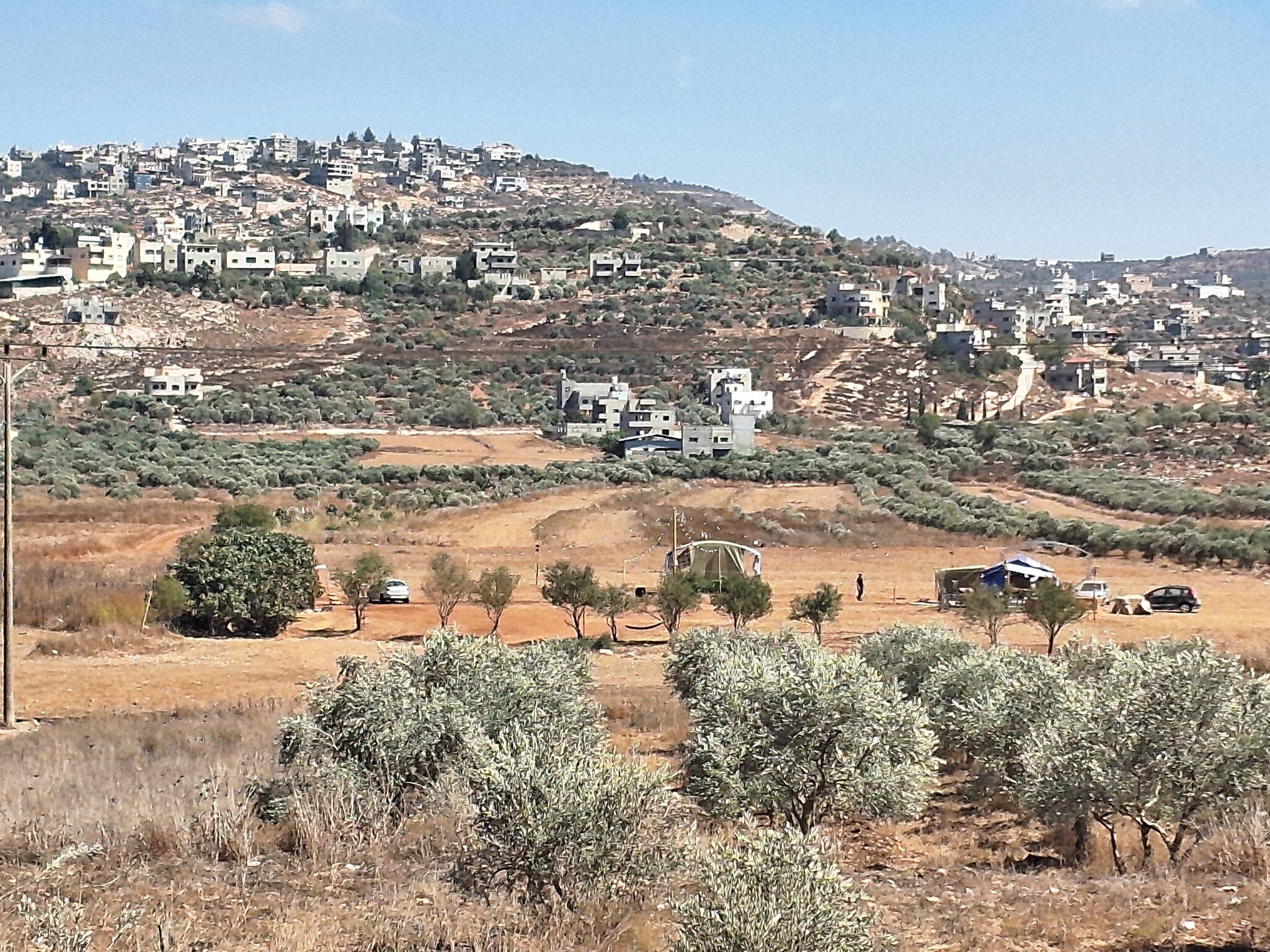 Ronit Dahan-RamatiSep-10-2026Awarta. Outpost below the town
-
Huwwara
See all reports for this place-
The Huwwara checkpoint is an internal checkpoint south of the city of Nablus, at the intersection of Roads 60 and 5077 (between the settlements of Bracha and Itamar). This checkpoint was one of the four permanent checkpoints that closed on Nablus (Beit Furik and Awarta checkpoints to the east and the Beit Iba checkpoint to the west). It was a pedestrian-only barrier. As MachsomWatch volunteers, we watched therre since 2001 two shifts a day - morning and noon, the thousands of Palestinians leaving Nablus and waiting for hours in queues to reach anywhere else in the West Bank, from the other side of the checkpoint the destination could only be reached by public transport. In early June 2009, as part of the easing of Palestinian traffic in the West Bank, the checkpoint was opened to vehicular traffic. The passage was free, with occasional military presence in the guard tower. Also, there were vehicle inspections from time to time. Since the massacre on 7.10.2023, the checkpoint has been closed to Palestinians.
On February 26, 2023, about 400 settlers attacked the town's residents for 5 hours and set fire to property, such as houses and cars. Disturbances occurred in response to a shooting of two Jewish residents of Har Bracha by a Palestinian Terrorist. The soldiers stationed in the town did not prevent the arson and rescued Palestinian families from their homes only after they were set on fire. No one was punished and Finance Minister Smotrich stated that "the State of Israel should wipe out Hawara." Left and center organizations organized solidarity demonstrations and support actions for the residents of Hawara.Hawara continued to be in the headlines in all the months that followed: more pogroms by the settlers, attacks by Palestinians and a massive presence of the army in the town. It amounted to a de facto curfew of commerce and life in the center of the city. On October 5, 2023, MK Zvi established a Sukkah in the center of Hawara and hundreds of settlers backed the army blocked the main road and held prayers in the heart of the town all night and the next day. On Saturday, October 7, 23 The "Swords of Iron" war began with an attack by Hamas on settlements surrounding Gaza in the face of a poor presence of the IDF. Much criticism has been made of the withdrawal of military forces from the area surrounding Gaza and their placement in the West Bank, and in the Hawara and Samaria region in particular, as a shield for the settlers who were taking over and rioting.
On November 12, 2023, the first section of the Hawara bypass road intended for Israeli traffic only was opened. In this way, the settlers can bypass the road that goes through the center of Hawara, which is the main artery for traffic from the Nablus area to Ramallah and the south of the West Bank. For the construction of the road, the Civil Administration expropriated 406 dunams of private land belonging to Palestinians from the nearby villages. The settlers are not satisfied with this at the moment, and demand to also travel through Hawara itself in order to demonstrate presence and control.(updated November 2023)
.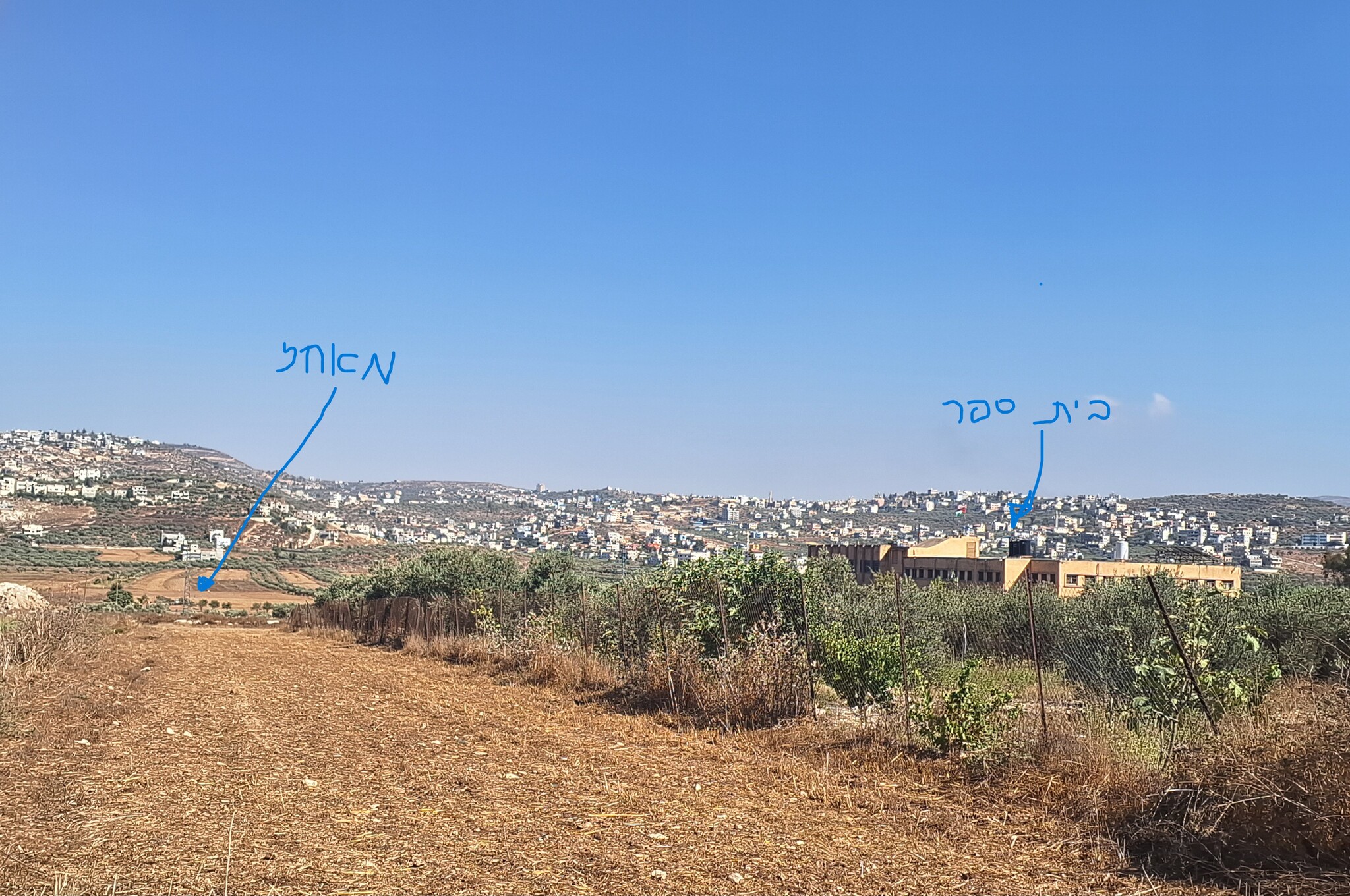 Ronit Dahan-RamatiAug-24-2026Huwara: The school on the outskirts of town and an outpost hidden among the trees
-
Za'tara (Tapuah)
See all reports for this place-
Za'tara (Tapuah) Za'tara is an internal checkpoint in the heart of the West Bank, at the intersection of Road 60 and Road 505 (Trans-Samaria), east of the Tapuah settlement. This checkpoint is the "border" marked by the IDF between the north and south of the West Bank, in accordance with the policy of separation between the two parts of the West Bank that has been in place since December 2005. At the Za'tara checkpoint, there are separate routes for Israelis and Palestinians. In the route for Israelis, there are no inspections and the route for Palestinians inspects. The queue lengthens and shortens suits. The checkpoint is open 24 hours a day. The checkpoint is partially staffed and the people who pass through it are checked at random.
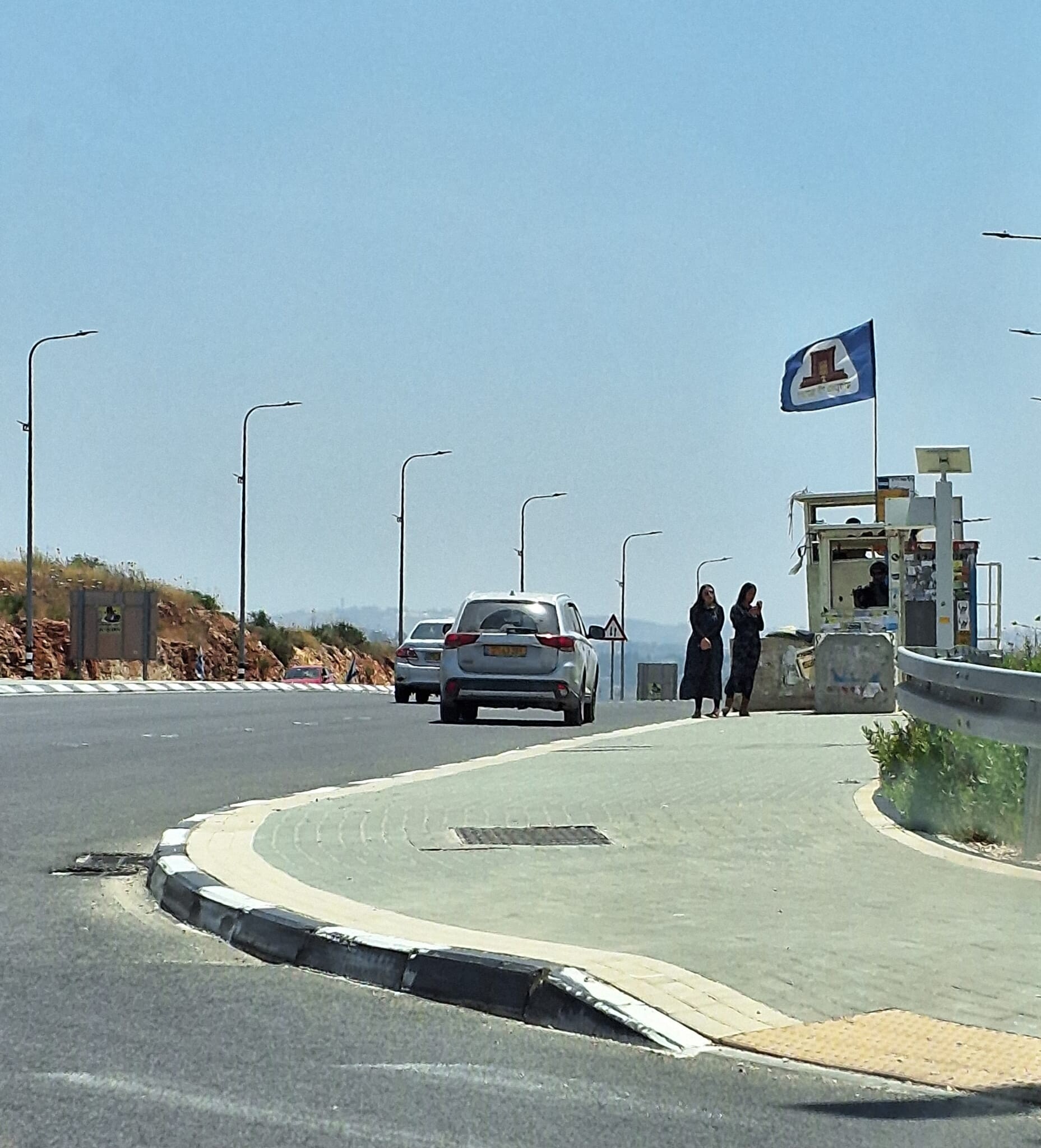 Ronit Dahan-RamatiJun-9-2026Za'atara (Tapuach Junction). The Temple Flag Above a Station
-
