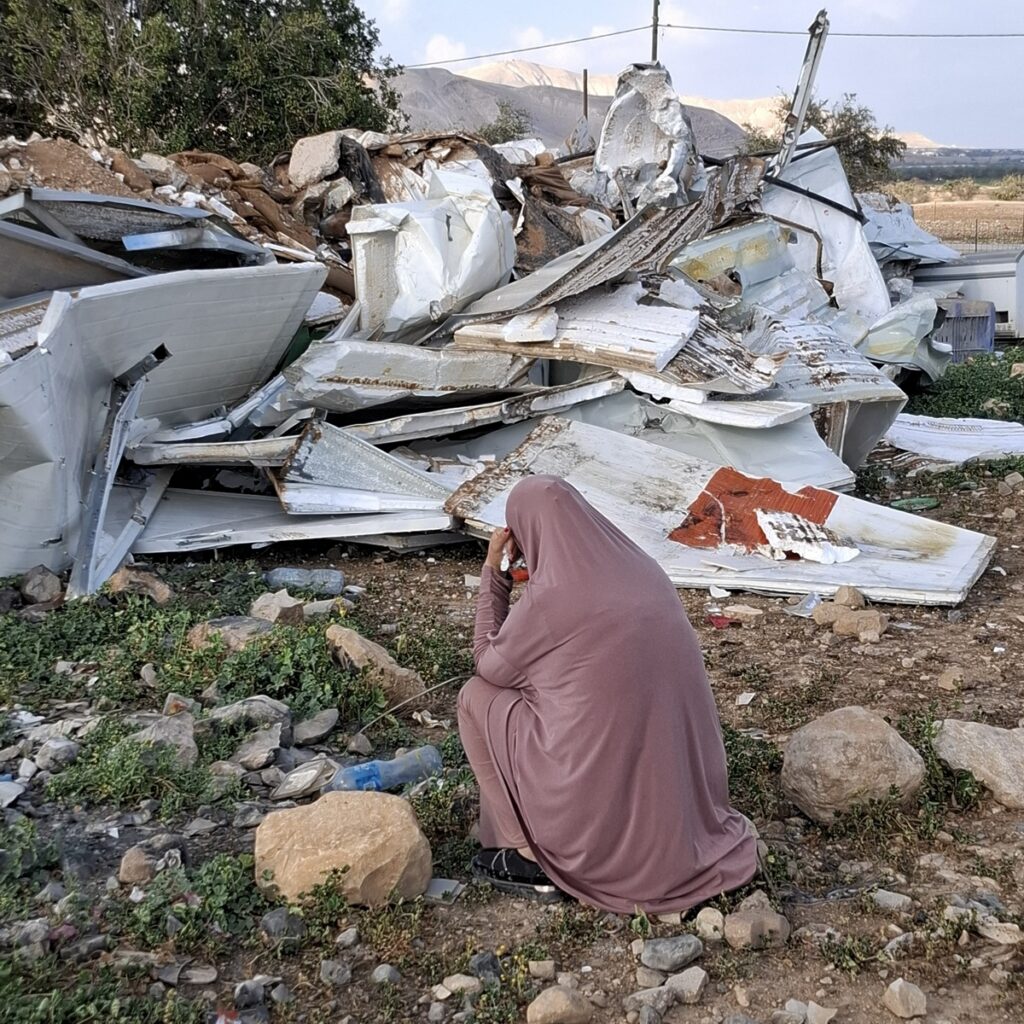
Qalandiya
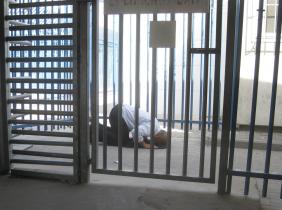
Freedom
Women and men crowded together at the mute metal bars of the locked gate outside the DCL offices. A fair-haired female soldier sat in position opposite them, leaning forward slightly, busy chewing mouthfuls of food on the table before her. Her glance passed over them as if they’d been transparent. They saw her; she didn’t see them.
Most had come to obtain crossing permits because of medical conditions. Fewer than two hours remain until the offices close; then a closure will be imposed on the occupied territories for the first two days of Passover, the Jews’ festival of freedom. They know that if they don’t reach the offices within the next hour or hour and a half, their condition will become worse.
An old woman held a file filled with medical documents; she’s to be admitted to Makassed Hospital. An old man wanted to obtain a permit for his daughter who needs an operation, and one for him to accompany her. Murad was there; his month-old daughter was scheduled for an eye operation at Saint John Hospital.
I stood alongside Murad. All of us were worried. A woman from Gaza who’d been discharged from a hospital on the West Bank and wanted to return home also stood there worrying, along with others – I don’t know what they needed.
The minutes passed; the fair-haired soldier who controls the button that opens the gate kept eating. Many phone calls were needed, and many conversations with many dispatchers, until one of those who said they’d take care of it kept their promise and the locked gate opened. We passed through to the covered waiting area at the entrance to the DCL offices, which were empty.
People were admitted in groups. The old man knelt to pray at the entrance to the offices. Only then did he enter. He exited holding a permit for his daughter. They refused his request for a permit to accompany her. Those are the laws of occupation. Being the father is insufficient reason to care for an ill daughter. The old woman also returned disappointed. She’d presented the bundle of medical documents to those who determine her fate, but one piece of paper was missing.
The woman from Gaza emerged satisfied, holding a permit to go through Qalandiya checkpoint, home to recuperate.
And Murad received a permit for the infant Aram.
*
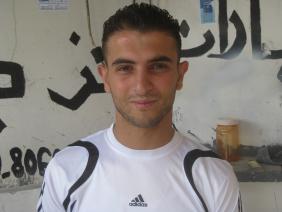
In the refugee camp I met Ahmad, who’d been released from the Ofer prison a few days ago after serving the sixteen months imposed by a military court. He’d been arrested at his workplace on 1 January 2013. I’d photographed him at the time of the arrest being taken away, holding a half-eaten sandwich. He’d been accused, tried and convicted. Many preceded him; many will follow.
Qalandiya Checkpoint / Atarot Pass (Jerusalem)
See all reports for this place-
Click here to watch a video from Qalandiya checkpoint up to mid 2019 Three kilometers south of Ramallah, in the heart of Palestinian population. Integrates into "Jerusalem Envelope" as part of Wall that separates between northern suburbs that were annexed to Jerusalem in 1967: Kafr Aqab, Semiramis and Qalandiya, and the villages of Ar-Ram and Bir Nabala, also north of Jerusalem, and the city itself. Some residents of Kafr Aqab, Semiramis and Qalandiya have Jerusalem ID cards. A terminal operated by Israel Police has functioned since early 2006. As of August 2006, northbound pedestrians are not checked. Southbound Palestinians must carry Jerusalem IDs; holders of Palestinian Authority IDs cannot pass without special permits. Vehicular traffic from Ramallah to other West Bank areas runs to the north of Qalandiya. In February 2019, the new facility of the checkpoint was inaugurated aiming to make it like a "border crossing". The bars and barbed wire fences were replaced with walls of perforated metal panels. The check is now performed at multiple stations for face recognition and the transfer of an e-card. The rate of passage has improved and its density has generally decreased, but lack of manpower and malfunctions cause periods of stress. The development and paving of the roads has not yet been completed, the traffic of cars and pedestrians is dangerous, and t the entire vicinity of the checkpoint is filthy. In 2020 a huge pedestrian bridge was built over the vehicle crossing with severe mobility restrictions (steep stairs, long and winding route). The pedestrian access from public transport to the checkpoint from the north (Ramallah direction) is unclear, and there have been cases of people, especially people with disabilities, who accidentally reached the vehicle crossing and were shot by the soldiers at the checkpoint. In the summer of 2021, work began on a new, sunken entrance road from Qalandiya that will lead directly to Road 443 towards Jerusalem and Tel Aviv. At the same time, the runways of the old Atarot airport were demolished and infrastructure was prepared for a large bus terminal. (updated October 2021)
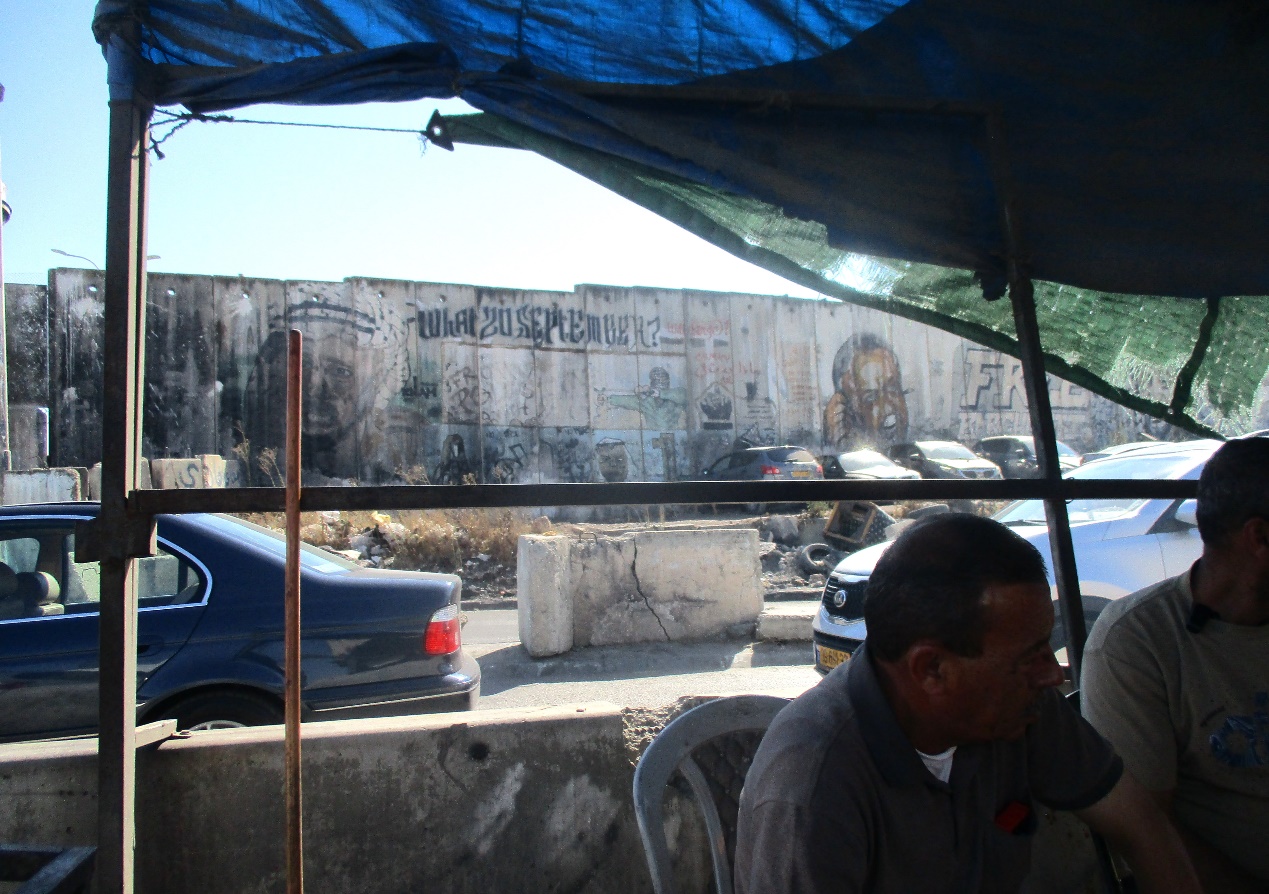 Tamar FleishmanJul-21-2026Qalandiya. Conversation in the shadow of the wall
-