
‘Anata-Shu’afat, Ras Abu Sbitan (Olive Terminal)
Second Friday of Ramadan.
"We only obey orders, we don't take decisions" — again and again this is the answer to our questions.
Olive Terminal
We were greeted by lively traffic of persons crossing when we arrived at 9:30. Passage was orderly, but not without the usual cases of young persons without the appropriate permits who were turned away. Always the usual arguments, but to no avail.
Worth recording is the case of a man with a work permit (Sunday to Thursday) and a letter citing his efforts, at the risk of his life, in saving the lives of people endangered by flooding in Gethsemane (Jerusalem). He was certain he'd be able to cross, as he does daily, and it was touching to see how insulted he felt by the indifference to the citation in his letter. When we asked the DCO officer why he should be prevented when he crosses daily anyway without danger to the public, the answer was that some were prevented to avoid crowding in the area of the mosques. As though to say: the State of Israel acts on behalf of the welfare of Palestinians and of good order! And when we observed that no such restrictions on Jewish entry to the Wailing Wall area, which is much smaller, have ever been imposed, the answer was that Jews don't throw stones, whereas Muslims get involved in disorderly behaviour. We could only stand and pull our hair out in the face of such iron logic. It's not clear whether this officer believed in what he said, or simply complied with the ethic of "obeying orders", and was eager to shut us up. In the event, we learned that today at least 300 men were denied passage.
The road that descends from the pillbox to the checkpoint was blocked, and people were sent on a long detour to the lower checking point from which they had to climb back to the checkpoint. Arguments ensued, almost leading to violence. Only one man with walking difficulties crossed there. Two border policemen, with a brusque and impatient attitude to the Palestinians, sat there. Since in previous years there was a checking point which allowed people to enter the checkpoint directly, we inquired about the reason for the change, and were sent to I., the police officer in charge of the checkpoint. He told us the decision had been made by the border police.
Passing the buck again — and who suffers?
A 63 year old man approached us when he was turned away. He said he crosses daily and doesn't understand why he was refused today. While we were consulting with ourselves what to do, one of the soldiers (B.P.) asked the DCO officer to check. The upshot was that there had been no reason to prevent him, and he was asked to cross again — but was then stopped by a police office who shooed him away. After further toing and froing, the man crossed. All's well that ends well?
The age limit for children is 12, but for a feel-better mood, it was raised to 14. And what about the 15 year olds? In Israel, they are minors, under the wardship of their parents.
A brother and a sister arrived, on their way to visit their hospitalised father in Jerusalem. The sister had no problems, but the brother had to be checked before they both crossed. It seems that this time leniency was exercised — but why not every time, rather than treat Palestinians as confirmed liars?
Shuafat checkpoint
Sparse traffic, very few pedestrians, most people have moved to public transportation. Private cars in the checkpoint for vehicles crossed relatively fast, but some people were asked to disembark from the buses, and checking was slow.
Particularly vexing is the practice of sending to Qalandia persons whose place of residence in their IDs is neither Anata nor Shuafat. Hanna B. dealt with this in previous years and the practice was cancelled, but it has come back for no rhyme or reason.
Checkpoint Shu'afat camp / Anata-Shu'afat (Jerusalem)
See all reports for this place-
The Shu’afat checkpoint is located in the northern part of East Jerusalem at the exit from the village of Anata and the Shu’afat refugee camp, which are located in the area annexed to Jerusalem in 1967. The refugee camp borders the Shu’afat neighborhood to the west, Pisgat Ze’ev to the north, the French Hill neighborhood to the south and the planned expansion of Ma’aleh Adumim to E-1 in the east. It was established in 1966 for 1948 refugees from the West Bank and was populated after the Six Day War by persons who had been expelled from the Jewish Quarter. Today its population comprises some 25,000 people holding blue ID cards and some 15,000 people with Palestinian ID cards. The camp lacks adequate infrastructure and services, and suffers from poverty, neglect and overcrowding. All its buildings are connected to the public electricity and water infrastructure, but not all are connected to the sewer system. The camp’s services are provided by UNRWA, except for those such as health clinics and transportation of pupils to schools in Jerusalem. In 2005, the Israeli High Court of Justice rejected a suit by the residents requesting that the route of the separation fence be drawn such that the camp would remain on the Israeli side, but conditioned its approval of the route on the establishment of a convenient and rapid crossing facility for the inhabitants of the neighborhood, most of whom are residents of Jerusalem.
A temporary checkpoint operated there until December, 2011. It was extremely congested during rush hours, and dangerous for pedestrians (especially children) because of inadequate safety provisions. The new checkpoint was inaugurated south of the old one, for public and private transportation and for pedestrians, intended solely for the residents of the camp – holders of blue ID cards, and those with Palestinian ID cards who possess appropriate permits. There are five vehicle inspection stations at the checkpoint, and two for pedestrians (one of which is currently closed) where scanners have been installed but are not yet operating. According to the army, representatives of government agencies will also be present to provide services to residents of the neighbourhood. The pedestrian lanes are very long, located far from the small parking lots, and accessible through only a single revolving gate.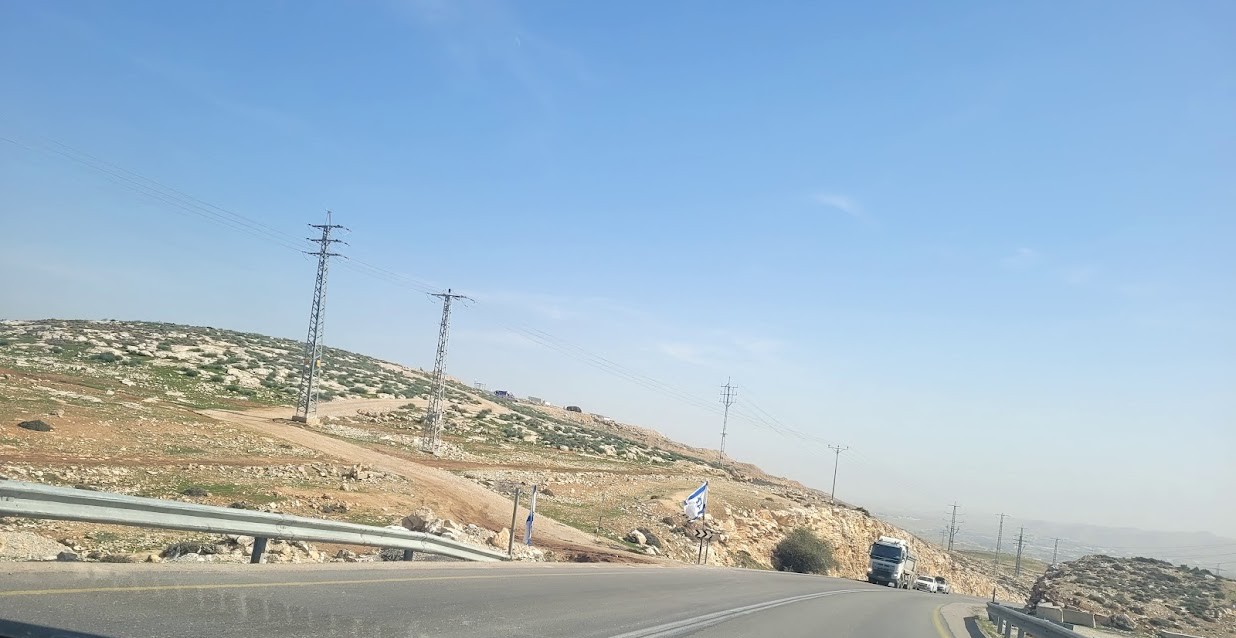 Anat TuegJan-25-2026Anata: A new outpost has been built south of the junction
-
Ras Abu Sbitan (Olive Terminal)
See all reports for this place-
A large checkpoint/crossing to the area of a-Tur, Abu Dis and the Old City; only for pedestrians. Located on Jerusalem’s municipal boundary.
One of the major crossings in Jerusalem’s central sector. It is located on the separation fence between the northern portion of the al-Ezariya neighborhood and the neighborhood of a-Tur and the rest of East Jerusalem. It is manned by Border Police soldiers and private security companies and operates 24 hours a day. Palestinians are forbidden to go through, other than permanent residents of East Jerusalem (holders of blue ID cards) and holders of work and commercial permits who are allowed through only on foot.
-