
PM
Huwwara 16/3/2004 Watchers: Michal, Irit S., Dafna B., Michael, a journalist with the Philadelphia Inquirer, and another guest 15:00. It was the day after a young boy porter had been caught carrying a bomb across the checkpoint. We expected to find a checkpoint that was tense, on edge and hostile towards the Palestinians, but to our amazement everyone was calm and behaving as usual to the Palestinians; the checkpoint was operating quite normally, checks were carried out, some people were detained, as if nothing at all had happened yesterday. Huwwara South. Very few Palestinians, going through quite quickly. There were five detainees who had been waiting about an hour while their documents were checked. Huwwara North. There were about 80 people waiting to come through. At first, only women were let through, but 20 minutes later they started processing the men according to a new system: about 15 of them were lined up alongside the concrete blocks that mark out the limits of the waiting line, their documents were collected and checked in a batch, and then the men were let through one at a time. Four men had been detained for about an hour and three women for some two hours. We did not have much success. The soldiers were not pleasant, but neither were they aggressive. They simply said that the documents of the detainees were being checked. Two men were let go at 15:30, but the other two were still there when we left. At 16:30 one of them was called by the soldiers. He jumped for joy, but it was only then that they rang to have his documents checked, and the man was sent back to the fenced-off space where the detainees wait.At 16:00 a woman soldier freed two of the waiting women. As far as we could see it was at her own initiative because she did not receive any phone call and no one spoke with her; she simply went up to the women, out of the blue, and returned their identity cards to them. And just to make sure that things would not be too easy for them, she was insistent that they go and stand again at the end of the line waiting to go through, which added on exactly another 20 minutes after their three hour detention.The third woman remained, standing there and crying. She told us that she was a student at A-Najah university in Nablus and lived in Salfit. But since she was born in Venezuela this apparently made her suspect in the eyes of the soldiers, and so, every time she went through the checkpoint she was stopped and held up for hours, and she was fed up. Her identity card was held by the commander of the checkpoint and he did not want to release it. He was waiting for a reply (to his queries about her]) A lieutenant — we think from the DCO — arrived on the scene and we tried to talk to him, but he insisted that she had not been waiting for more than three hours (the time that the soldiers often claim they may hold someone without questions being asked). “I was here a quarter of an hour ago, and she wasn’t around then,” he said. But we had already been there two hours, and she was here when we arrived…In the end he listened to us and asked one of the soldiers to call and find out what was happening with her case. It had become extremely cold by now and the group that had gone to Beit Iba had arrived to pick us up for the journey home. Before we went, we again spoke to the officer who had just arrived and, appealing to his better nature, we asked him to see to it that she was not kept much longer. We took her phone number, and in fact a few minutes after we had left she was freed. An addendum: We saw the crater made by the controlled explosion yesterday. There were a lot of ball-bearings there, very shiny and new-looking. Don’t they get blackened by an explosion, or fly off in all directions? The ones we saw were right in the crater and alongside it. Before we left, Michal found a youngster at the southern checkpoint. He was from Salem and wanted to get home. The soldiers had sent him back and he was in despair. Where was he supposed to go? Michal pleaded with the soldiers to some good effect, and they agreed to have his documents checked and if the check was alright they would let him through, they said. We warned him that this might take some hours, but he didn’t care; the main thing was that he would eventually be able to get home.
Huwwara
See all reports for this place-
The Huwwara checkpoint is an internal checkpoint south of the city of Nablus, at the intersection of Roads 60 and 5077 (between the settlements of Bracha and Itamar). This checkpoint was one of the four permanent checkpoints that closed on Nablus (Beit Furik and Awarta checkpoints to the east and the Beit Iba checkpoint to the west). It was a pedestrian-only barrier. As MachsomWatch volunteers, we watched therre since 2001 two shifts a day - morning and noon, the thousands of Palestinians leaving Nablus and waiting for hours in queues to reach anywhere else in the West Bank, from the other side of the checkpoint the destination could only be reached by public transport. In early June 2009, as part of the easing of Palestinian traffic in the West Bank, the checkpoint was opened to vehicular traffic. The passage was free, with occasional military presence in the guard tower. Also, there were vehicle inspections from time to time. Since the massacre on 7.10.2023, the checkpoint has been closed to Palestinians.
On February 26, 2023, about 400 settlers attacked the town's residents for 5 hours and set fire to property, such as houses and cars. Disturbances occurred in response to a shooting of two Jewish residents of Har Bracha by a Palestinian Terrorist. The soldiers stationed in the town did not prevent the arson and rescued Palestinian families from their homes only after they were set on fire. No one was punished and Finance Minister Smotrich stated that "the State of Israel should wipe out Hawara." Left and center organizations organized solidarity demonstrations and support actions for the residents of Hawara.Hawara continued to be in the headlines in all the months that followed: more pogroms by the settlers, attacks by Palestinians and a massive presence of the army in the town. It amounted to a de facto curfew of commerce and life in the center of the city. On October 5, 2023, MK Zvi established a Sukkah in the center of Hawara and hundreds of settlers backed the army blocked the main road and held prayers in the heart of the town all night and the next day. On Saturday, October 7, 23 The "Swords of Iron" war began with an attack by Hamas on settlements surrounding Gaza in the face of a poor presence of the IDF. Much criticism has been made of the withdrawal of military forces from the area surrounding Gaza and their placement in the West Bank, and in the Hawara and Samaria region in particular, as a shield for the settlers who were taking over and rioting.
On November 12, 2023, the first section of the Hawara bypass road intended for Israeli traffic only was opened. In this way, the settlers can bypass the road that goes through the center of Hawara, which is the main artery for traffic from the Nablus area to Ramallah and the south of the West Bank. For the construction of the road, the Civil Administration expropriated 406 dunams of private land belonging to Palestinians from the nearby villages. The settlers are not satisfied with this at the moment, and demand to also travel through Hawara itself in order to demonstrate presence and control.(updated November 2023)
.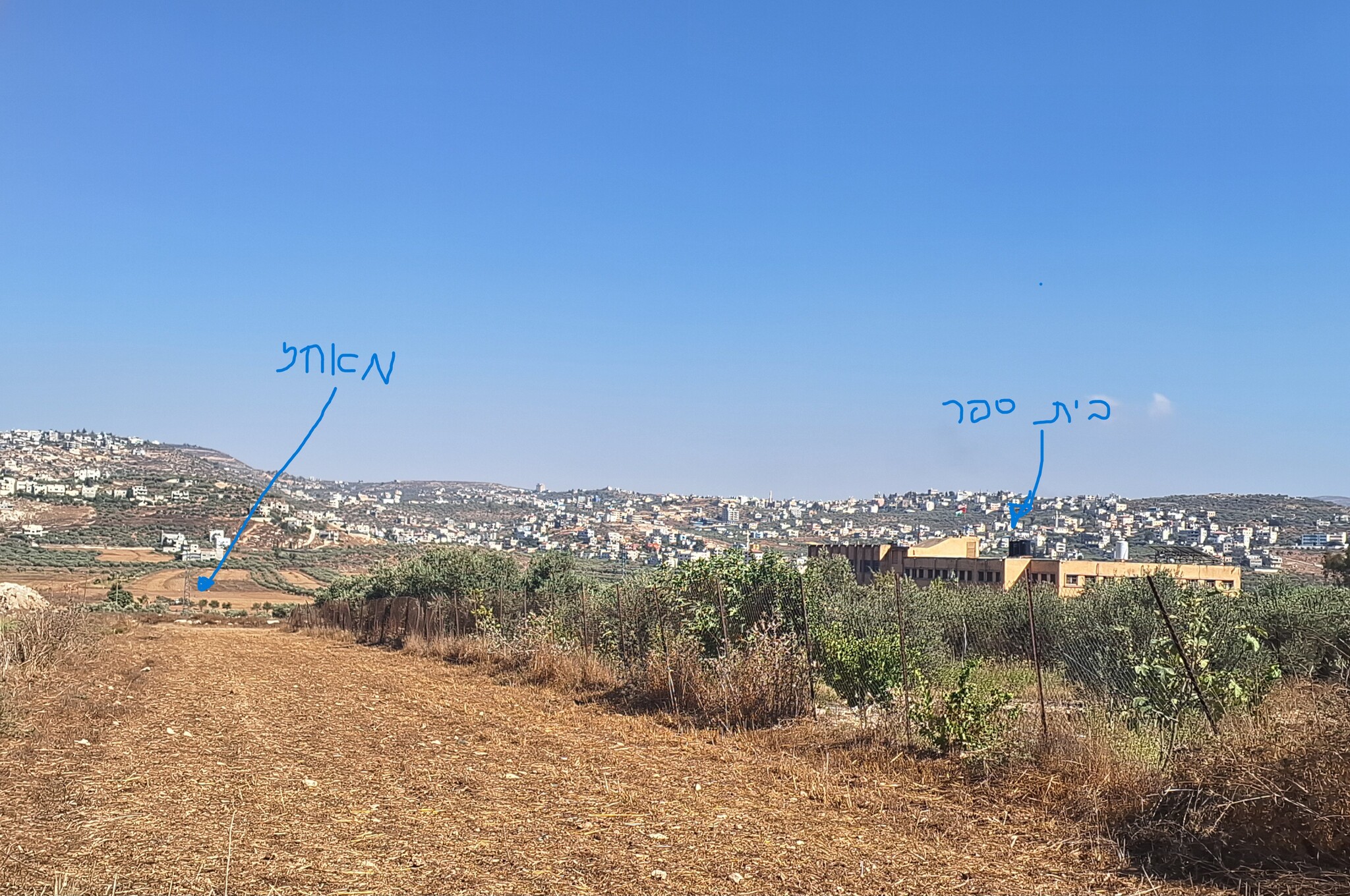 Ronit Dahan-RamatiAug-24-2026Huwara: The school on the outskirts of town and an outpost hidden among the trees
-
