
PM
HUWARRA, Thursday 8 April 8 2004 PM Observers: Menucha M., Tamar L., Naomi L. (reporting) colour =red> Passage through the checkpoint was reasonable from both sides, the lines weren’t long and the checks were carried out rapidly. There were 25 detainees at one side, detained for periods ranging from one to four hours. New detainees joined them now and then, while others were released. It looked as if the checkpoint commander really did want to let them go quickly.Among the detainees: a young man living in Nablus who had taken his family to Qalqiliya two days ago, and now had to return to Nablus for an eye operation — he had an appointment for 14:00. It was 13:45 and he’d been detained for the past two hours. The checkpoint commander, H., asked us to verify the name of the doctor and the hospital with Physicians for Human Rights, and the man was released immediately. A teacher from a school in Nablus, had been on his way to work when he was detained because the soldiers said his name wasn’t on the list of teachers in Nablus.A young man with high blood pressure, was en route from Nablus to Ramallah on business. After some hours under detention, he felt unwell and wanted to return to Nablus. At our request, a medic was sent to take his pulse and decided that he seemed fine. We weren’t satisfied with this , and stopped a passing ambulance. After taking his blood pressure with a proper device, the medic referred him to hospital immediately . Due to a General Security Services [Shin Bet] alert, his permit wasn’t returned to him at the end of the checks, but was given to his friend who had been detained at the checkpoint together with him. The problem with the medical cases among the detainees is the lack of communication with the soldiers – the soldiers don’t make a point of asking who’s sick, who’s on the way to an operation, and so on. We encounter cases like these in every shift, and generally our intervention helps to release them and send them on their way. And to end on a positive note – despite their adherence to procedures and instructions, the soldiers at the checkpoint (A., R. – the medic, N. the officer, and others) were decent and fair, maintained a calm atmosphere, and were willing to listen and help. These qualities cannot be taken for granted. Some of them asked for the URL of our web site, so that they could read reports and they also wanted a video of the film “Machsom” (Checkpoint). Once again we saw that – all in all – a checkpoint, however superfluous and evil it may be, is simply the sum total of its components. Even though soldiers serving there adhere to its rules, they can make a difference. Maybe we’re getting used to the situation, too?
Huwwara
See all reports for this place-
The Huwwara checkpoint is an internal checkpoint south of the city of Nablus, at the intersection of Roads 60 and 5077 (between the settlements of Bracha and Itamar). This checkpoint was one of the four permanent checkpoints that closed on Nablus (Beit Furik and Awarta checkpoints to the east and the Beit Iba checkpoint to the west). It was a pedestrian-only barrier. As MachsomWatch volunteers, we watched therre since 2001 two shifts a day - morning and noon, the thousands of Palestinians leaving Nablus and waiting for hours in queues to reach anywhere else in the West Bank, from the other side of the checkpoint the destination could only be reached by public transport. In early June 2009, as part of the easing of Palestinian traffic in the West Bank, the checkpoint was opened to vehicular traffic. The passage was free, with occasional military presence in the guard tower. Also, there were vehicle inspections from time to time. Since the massacre on 7.10.2023, the checkpoint has been closed to Palestinians.
On February 26, 2023, about 400 settlers attacked the town's residents for 5 hours and set fire to property, such as houses and cars. Disturbances occurred in response to a shooting of two Jewish residents of Har Bracha by a Palestinian Terrorist. The soldiers stationed in the town did not prevent the arson and rescued Palestinian families from their homes only after they were set on fire. No one was punished and Finance Minister Smotrich stated that "the State of Israel should wipe out Hawara." Left and center organizations organized solidarity demonstrations and support actions for the residents of Hawara.Hawara continued to be in the headlines in all the months that followed: more pogroms by the settlers, attacks by Palestinians and a massive presence of the army in the town. It amounted to a de facto curfew of commerce and life in the center of the city. On October 5, 2023, MK Zvi established a Sukkah in the center of Hawara and hundreds of settlers backed the army blocked the main road and held prayers in the heart of the town all night and the next day. On Saturday, October 7, 23 The "Swords of Iron" war began with an attack by Hamas on settlements surrounding Gaza in the face of a poor presence of the IDF. Much criticism has been made of the withdrawal of military forces from the area surrounding Gaza and their placement in the West Bank, and in the Hawara and Samaria region in particular, as a shield for the settlers who were taking over and rioting.
On November 12, 2023, the first section of the Hawara bypass road intended for Israeli traffic only was opened. In this way, the settlers can bypass the road that goes through the center of Hawara, which is the main artery for traffic from the Nablus area to Ramallah and the south of the West Bank. For the construction of the road, the Civil Administration expropriated 406 dunams of private land belonging to Palestinians from the nearby villages. The settlers are not satisfied with this at the moment, and demand to also travel through Hawara itself in order to demonstrate presence and control.(updated November 2023)
.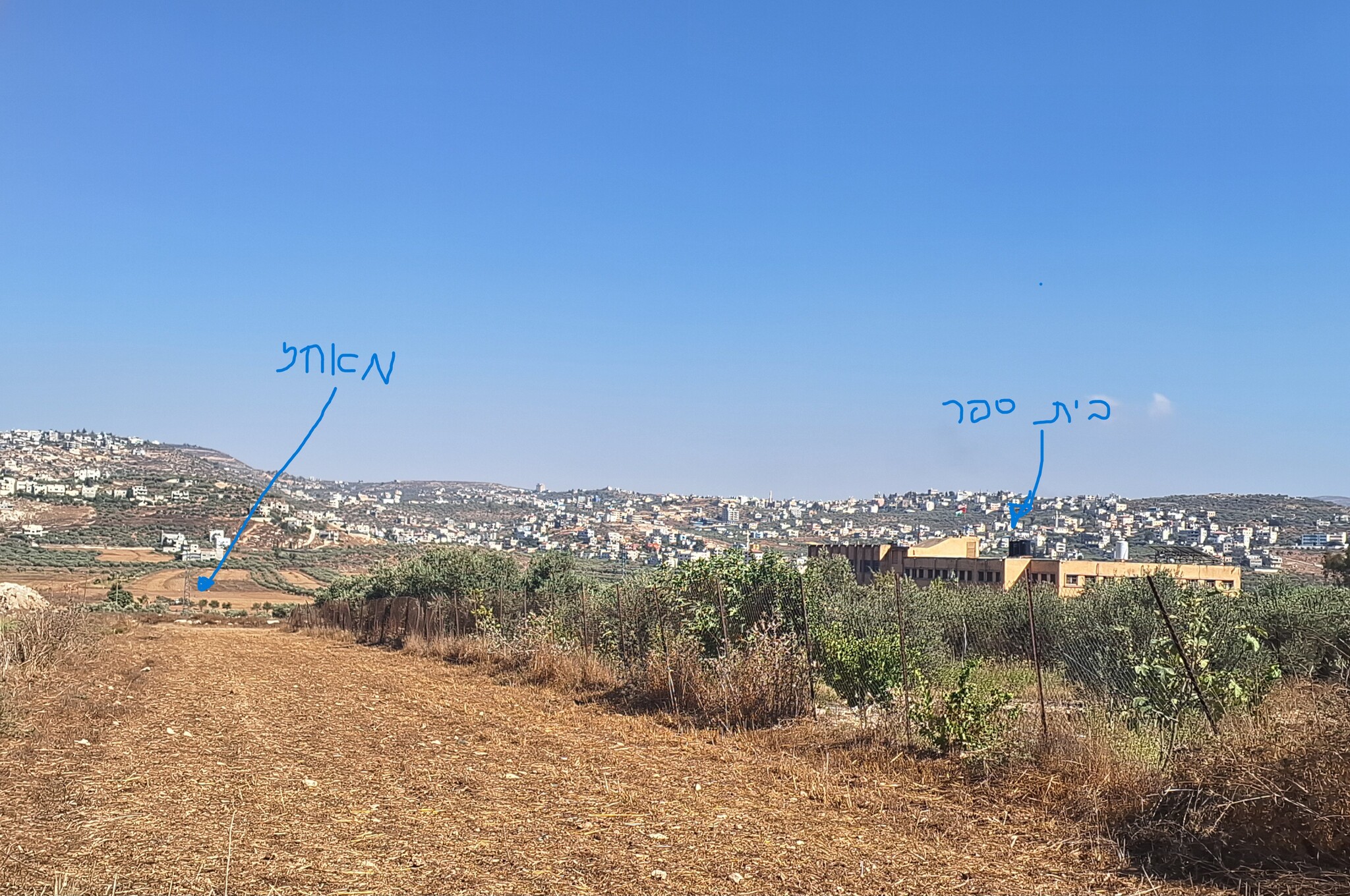 Ronit Dahan-RamatiAug-24-2026Huwara: The school on the outskirts of town and an outpost hidden among the trees
-
