
AM
HUWWARA ,BEIT FURIK, Tuesday 11 May 2004 AM Observers: Esti T., Hagit A., Tammy P. (reporting) colour=red>In a single sentence – this was a routine checkpoint morning. There weren’t many people, and sooner or later most of them went through the checkpoints.Huwwara SouthOur shift began to the accompaniment of an alarming screech of brakes. For some reason, a Border Police jeep stopped a millimetre away from an elderly woman loaded with baskets, who was crossing the road. When we arrived, there were around 20 detainees in the ‘pit’ [a slightly sunken area parallel to the passage used by pedestrians going through the checkpoint]. The soldiers let us speak to them and just a few moments later they were almost all released (although there was no abandoning of the usual rituals observed by the soldiers, such as arranging people in line). Our presence seemed to act as a catalyst for the speedy release. Otherwise, traffic was sparse and flowed well.Huwwara NorthIt was much less pleasant here . The shaded area for detainees was almost empty. However, the conduct of the two women soldiers in charge of the checks was appalling. O., the checkpoint commander, added to the menacing atmosphere. True, it was only little things – tone of voice, gestures, posture – but they can be really unbearable, and indeed they were. Two Dutch musicians, a man and a woman, from the Hope Project, left Nablus after having spent a short while providing the children in Balata and Ansar [Palestinian refugee camps] with some fun. The women soldiers insisted on addressing them time and again in Arabic, and they were forced to unpack their baggage, down to the tiniest item. When they realized who we were, they were very keen to share their harsh experiences with us, asking us to “make their story known”. The woman wondered if we know that children are shot in Nablus every day. A few days previously, she said, they had been playing in a certain square in Balata to a group of children who had gathered round them. The atmosphere was terrific, until – for no clear reason – shots were fired and one of the kids was killed.They also left a written testimony with us, hoping that we could file a complaint. This is the translated version:1. The Palestinian woman in charge of the project (we have her name) was sexually harassed at the checkpoint, with a rifle pointed at her. All she could do was keep smiling, because, ultimately, she had to get through the checkpoint. It’s just an example, but the sexual harassment is rife.2. The Dutch violinist herself was forced by soldiers to play her violin for them, while their guns were aimed at her.(‘Family sources’ who listened to my story this evening told me (tragically, again and again) that the issue of sexual harassment crops up in every conversation with the Palestinians. Last week, I heard, the matter had assumed a deeper, more horrifying dimension. A bus with nursery-school children from Bidu [a Palestinian village quite near to Jerusalem] was stopped, the children were taken off the bus, forced to take down their trousers and to suffer the soldiers’ laughter and derision. In this case, too, a complaint must be filed, I believe).Beit FurikThere were quite a few cars parked along the roadside. We tried to find out if their keys had been confiscated, but before we could, a child was wounded near the checkpoint and was rushed over the crossing by a man who ran with him towards the taxis. We offered his mother and another woman a ride to the checkpoint, and then stayed there. There were some 15 detainees at the side. It’s now a matter of routine for them – they enter Nablus, illegally, through the hills, to work, and on the way back are detained for hours [because they had no permits to be in Nablus] ‘to teach them a lesson’. They and the soldiers all said that this was their fate, to be repeated day after day. Apart from this, traffic flowed freely. Before leaving, I asked the checkpoint commander again if he would consider releasing the detainees and he simply burst into tears. He seemed totally worn out by his abominable job. I was very empathic towards him – his unhappiness touched my heart, and I also hoped that the waves of empathy would ultimately flow towards the detainees.
Huwwara
See all reports for this place-
The Huwwara checkpoint is an internal checkpoint south of the city of Nablus, at the intersection of Roads 60 and 5077 (between the settlements of Bracha and Itamar). This checkpoint was one of the four permanent checkpoints that closed on Nablus (Beit Furik and Awarta checkpoints to the east and the Beit Iba checkpoint to the west). It was a pedestrian-only barrier. As MachsomWatch volunteers, we watched therre since 2001 two shifts a day - morning and noon, the thousands of Palestinians leaving Nablus and waiting for hours in queues to reach anywhere else in the West Bank, from the other side of the checkpoint the destination could only be reached by public transport. In early June 2009, as part of the easing of Palestinian traffic in the West Bank, the checkpoint was opened to vehicular traffic. The passage was free, with occasional military presence in the guard tower. Also, there were vehicle inspections from time to time. Since the massacre on 7.10.2023, the checkpoint has been closed to Palestinians.
On February 26, 2023, about 400 settlers attacked the town's residents for 5 hours and set fire to property, such as houses and cars. Disturbances occurred in response to a shooting of two Jewish residents of Har Bracha by a Palestinian Terrorist. The soldiers stationed in the town did not prevent the arson and rescued Palestinian families from their homes only after they were set on fire. No one was punished and Finance Minister Smotrich stated that "the State of Israel should wipe out Hawara." Left and center organizations organized solidarity demonstrations and support actions for the residents of Hawara.Hawara continued to be in the headlines in all the months that followed: more pogroms by the settlers, attacks by Palestinians and a massive presence of the army in the town. It amounted to a de facto curfew of commerce and life in the center of the city. On October 5, 2023, MK Zvi established a Sukkah in the center of Hawara and hundreds of settlers backed the army blocked the main road and held prayers in the heart of the town all night and the next day. On Saturday, October 7, 23 The "Swords of Iron" war began with an attack by Hamas on settlements surrounding Gaza in the face of a poor presence of the IDF. Much criticism has been made of the withdrawal of military forces from the area surrounding Gaza and their placement in the West Bank, and in the Hawara and Samaria region in particular, as a shield for the settlers who were taking over and rioting.
On November 12, 2023, the first section of the Hawara bypass road intended for Israeli traffic only was opened. In this way, the settlers can bypass the road that goes through the center of Hawara, which is the main artery for traffic from the Nablus area to Ramallah and the south of the West Bank. For the construction of the road, the Civil Administration expropriated 406 dunams of private land belonging to Palestinians from the nearby villages. The settlers are not satisfied with this at the moment, and demand to also travel through Hawara itself in order to demonstrate presence and control.(updated November 2023)
.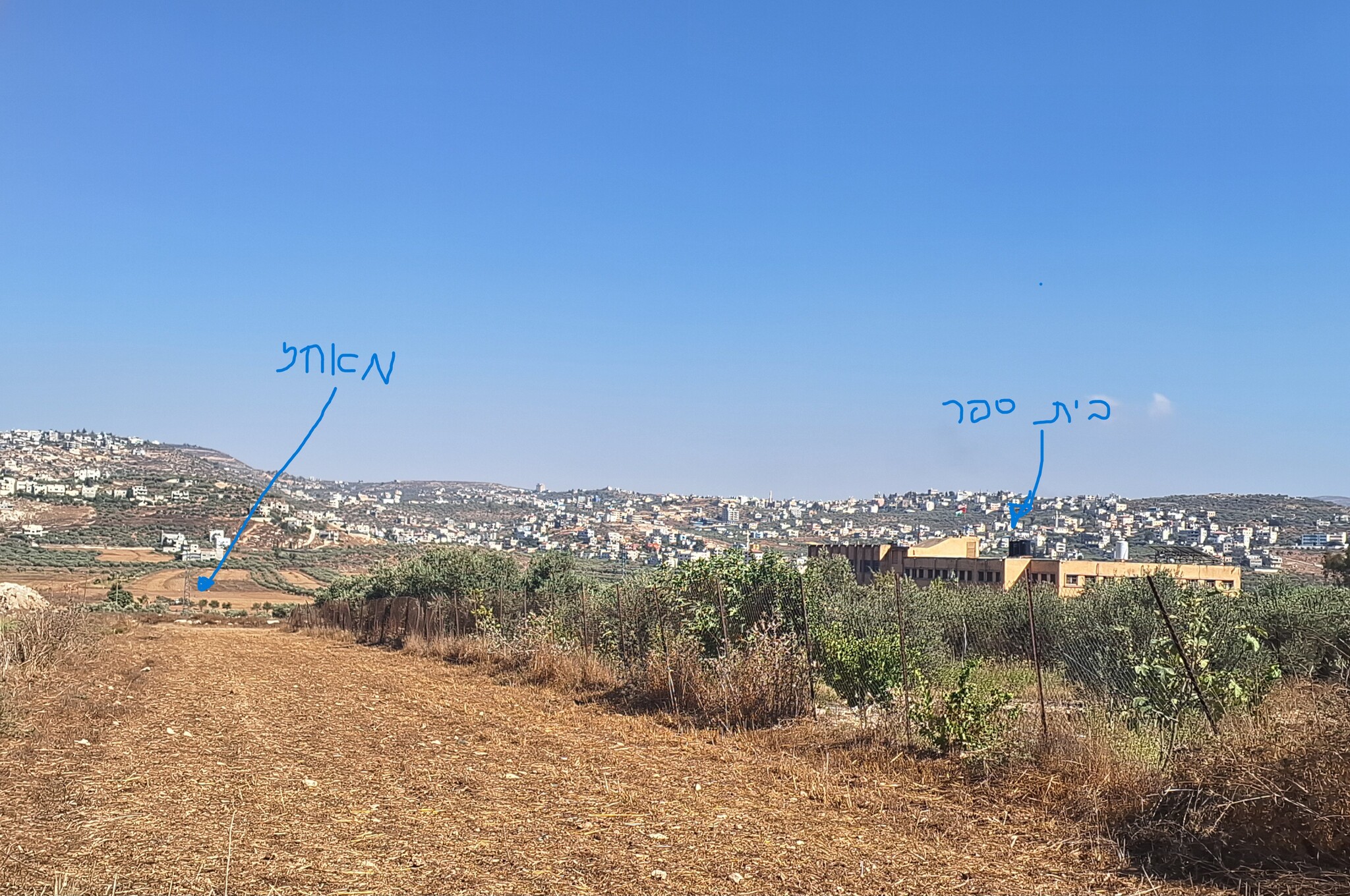 Ronit Dahan-RamatiAug-24-2026Huwara: The school on the outskirts of town and an outpost hidden among the trees
-
