
Biet Jala, Ezyon CP and DCL, El Khadr
Bethlehem and surroundings, Monday, 5.30.2005, MorningObservers: Haya A., Ada G., Makca A. (reporting) Christine (guest fro U.S.)Beit- Jalla – 7:25 : There are soldiers at the C.P. checking the drivers’ papers. Traffic is moving. Al-Khader – 7:30 : No soldiers and lots of traffic. A driver, who got a traffic report, can not go through the C.P. unless he shows a receipt, sign by the Cairo-Amman bank, showing that he paid the fine – only then his name will earased from the computer. Haya was busy delivering papers to the drivers telling them about the importance of keeping the receipt of paid fines. We request the help MachsomWatch women: How do we deal with the situation in which the soldiers at Bet-Jalla C.P. allow cab drivers to go through only if they have permit from Bethlehem or Bet Sahur DCL. A cab driver who lives in Wallaje, and has a permit given to him in Hebron will not be allowed to pass at the Biet Jala CP near his home.Can anybody help him? How?7:55 : from El-Hader we go south. There are no soldiers at Etzion intersection. 9:08 : Near Al-Haruv refugee camp there are no soldiers on the road, but opposite the agricultural collage we saw a military jeep. 9:30 : We went back to Etzion intersection on our way to the Ezyon D.C.O. Now there are 3 soldiers at the C.P. but only one cab is detained. Ezyon DCO – 9:40 : Here we always stay for hours. Only a few leave the windows with a renewed magnetic card and a permit to enter Israel. About 30 men and women were waiting here long hours, and many are asked to come back in a week, two weeks, a month, or more. One person told as that a clerk in bank Cairo-Amman told him that it would be better for him not to pay the fine at this bank because many months will go by until he will be cleared in the police computer. It is better to pay in a bank in Jerusalem. Haya told him that he can pay in Cairo-Amman bank too. Many leave disappointed with two words written on the report paper: G.S.S. rejected. This rejection is like an irremovable stain. Nobody wants to tell them the reason. A young cancer patient shows us that he got a permit to go to Assuta (Israeli hospital) for just one week, whereas he has to get radiations every week.
Al-Khader
See all reports for this place-
Al-Khadr served as transit from Bethlehem to Route 60. A dirt mound prevent vehicular traffic from and to Bethlehem from the west. A small market developed there. Taxi ranks were on both sides of the obstruction. It was replaced by a similar obstruction at Al Nashash which has recently been removed and thus the way from Bethlehem to Hebron through Route 60 is now free.
-
Hebron
See all reports for this place-
According to Wye Plantation Accords (1997), Hebron is divided in two: H1 is under Palestinian Authority control, H2 is under Israeli control. In Hebron there are 170,000 Palestinian citizens, 60,000 of them in H2. Between the two areas are permanent checkpoints, manned at all hours, preventing Palestinian movement between them and controlling passage of permit holders such as teachers and schoolchildren. Some 800 Jews live in Avraham Avinu Quarter and Tel Rumeida, on Givat HaAvot and in the wholesale market.
Checkpoints observed in H2:
- Bet Hameriva CP- manned with a pillbox
- Kapisha quarter CP (the northern side of Zion axis) - manned with a pillbox
- The 160 turn CP (the southern side of Zion axis) - manned with a pillbox
- Avraham Avinu quarter - watch station
- The pharmacy CP - checking inside a caravan with a magnometer
- Tarpat (1929) CP - checking inside a caravan with a magnometer
- Tel Rumeida CP - guarding station
- Beit Hadassah CP - guarding station
Three checkpoints around the Tomb of the Patriarchs
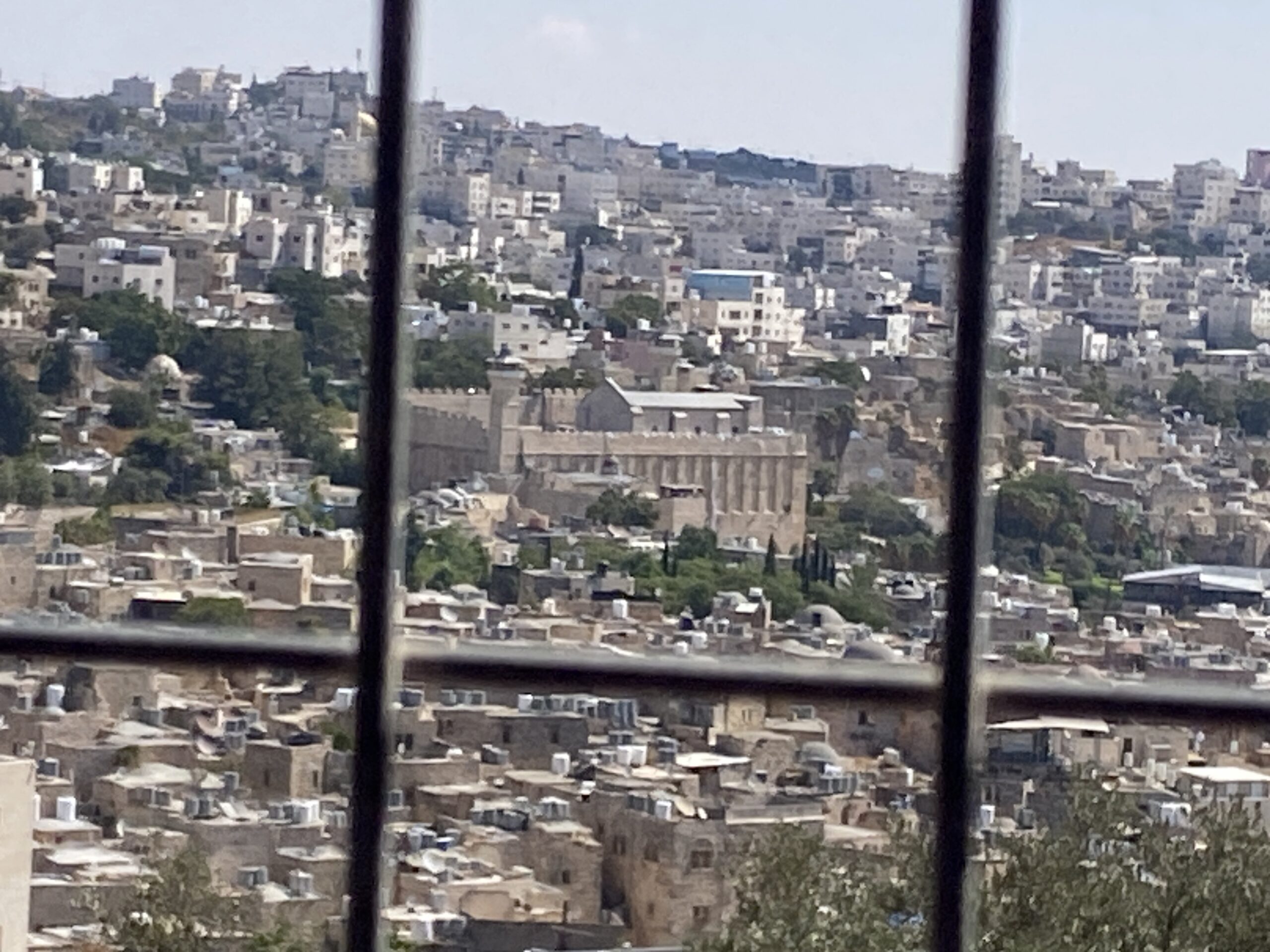 Yael ZoranSep-24-2026Hebron and the Cave of the Patriarchs from Beit Hashalom
-
