
Visit to Fassail, Jordan Valley, before Yom Kippur Eve
On the eve of Yom Kippur, Nurit and I decided to go to the Palestinian Jordan Valley,
to Fassail.
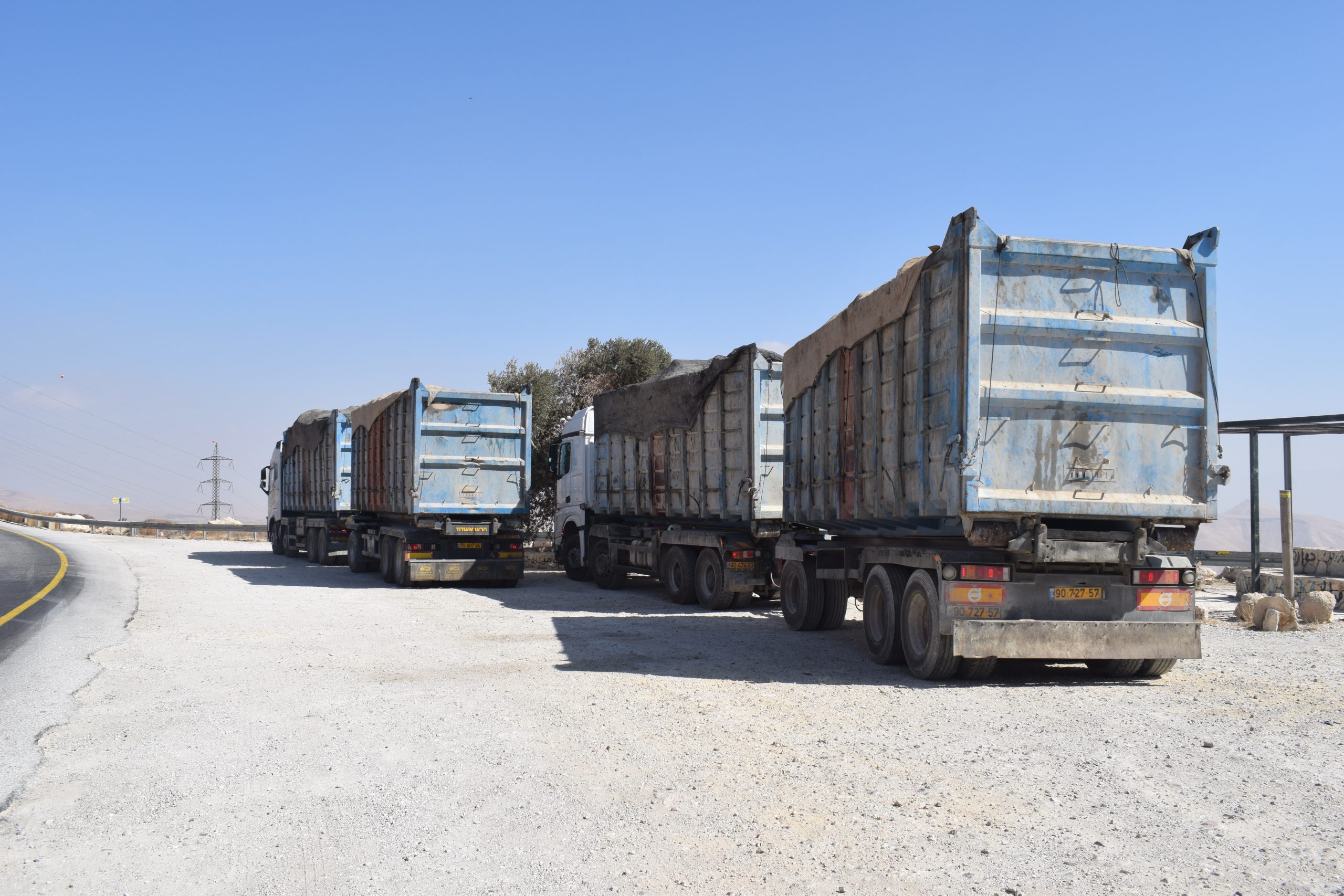
On our way we saw 4 truck, each towing two containers filled with garbage. Talking with the drivers – who stopped on the roadside at the beautiful lookout over the Jordan Valley and invited us to share their coffee – we understood that this garbage originates at the Neve Yaacov (settler) neighborhood of Greater Jerusalem. They carry to a dump called Tovlan, located 1.5 km north of Yafit settlement.
So now we all now that Israel is using the Palestinian Jordan Valley not only as a limitless firing zone, but also as an Israeli garbage dump.
At Fassail Wussta we have a Bedouin woman-friend – Hajar – whose home has already been demolished twice in the past six months. We have written in the past about her noble nature and wisdom. On our first visit, with Dafna, after the first demolition, we also met her husband Abu Zayed, who impressed us as an intelligent, dignified person. Several months ago he was killed in a road accident on the way from Jericho to Fassail.
I do not know exactly why we have become so attached to her. Yesterday, on the eve of Yom Kippur, we felt the need to visit her. It will not atone for the injustice she and her family suffer at the hand of our people. But remaining in touch with her relieves our feelings a bit. Apparently she awaited us, for she had prepared us little gifts – little embroidered purses, and gave us one for Dafna as well.
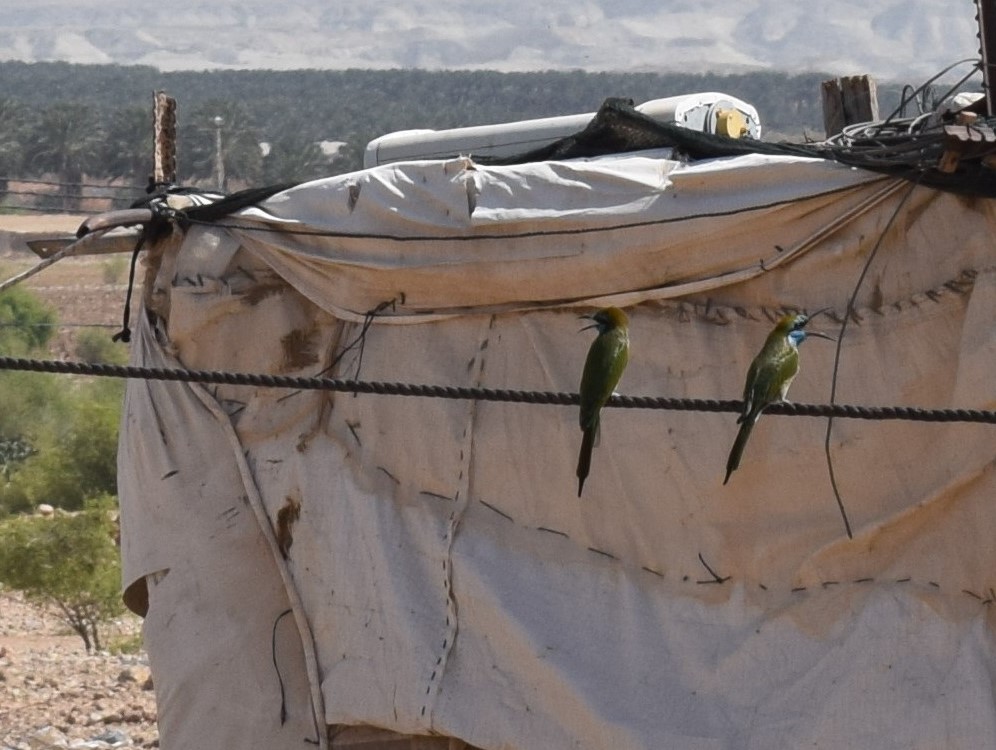
As we sat in the shade of the ficus tree, we saw three little birds (Merops orientalis), their color green and under their sharp beaks – blue. The birds showed off in fancy flight antics, and both Huda and Hajar were excited at the sight and said this was the first time such beautiful birds were seen there.
In our previous visit we had asked if she would like to have books to read in Arabic. She showed interest so we asked Itamar, who lives in Yafo, and he brought us Tintoriya – a novel that takes place in Cairo. We also brought a book with lovely illustrations, Bounjoun, written by our friend Rachel’s son and translated into Arabic. 11-year old Zakariya took the book as soon as he came home from school and sat down to read it.
Hajar and her daughter-in-law were glad with the book and promised to tell us its story the next time we come. We saw the children come back from school, all neat and tidy.
The area around the tents is also very tidy and apparently loving hands try to give this arid and demolished place the appearance of home.
We took our leave and promised to come back soon.