
A week to Ramadan 2023 and meanwhile quiet

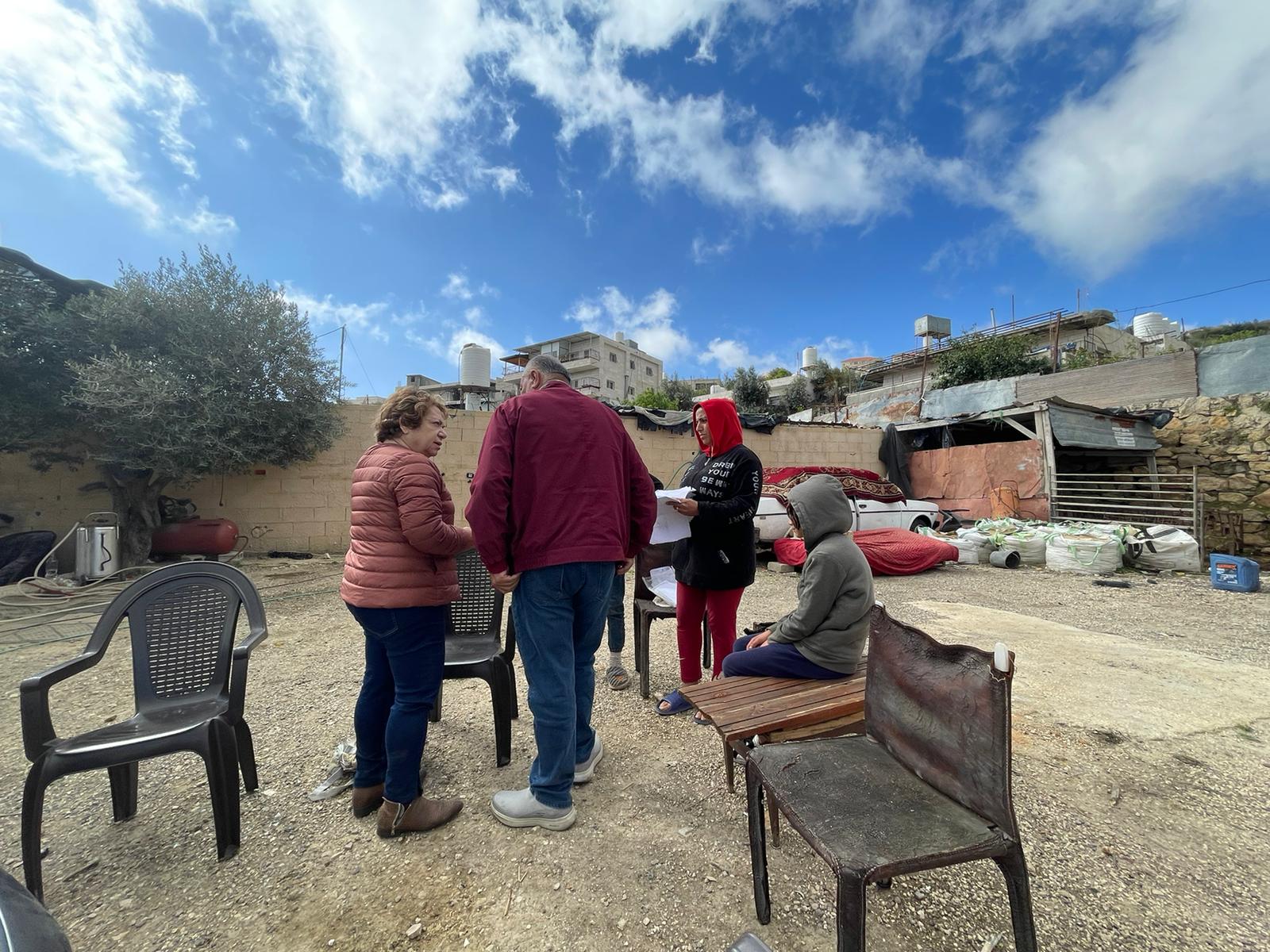

Shuafat refugee camp, the Olive checkpoint, visit to the Dadua family home near Al Khader,
It’s Ramadan week already. The situation at the checkpoints is quiet for now. Many entry permits are given for Temple Mount prayers and family visits. Everyone is waiting for the following Fridays, when more people come to prayers, and the tension rises for the Passover holiday on April 3rd. From all sides there is a rumour that the Jews are going to sacrifice a goat on the Temple Mount on the eve of Passover. Muslims are concerned and determined to protect Haram Al Sharif….
We also asked for dates for the meeting we arranged with Nafuz Dadua, at the family home threatened with demolition.
Shuafat refugee camp – the bus lot for students is active, but not full. Because of Ramadan and the Passover holiday, they study outside the camp only in Christian schools. We talk to the person in charge of transportation. Recently, one exit lane was dedicated for the benefit of the school buses, and the inspection is done only on the bus itself or not at all. They trust the ushers on behalf of the camp committee.
In the other buses, all the passengers get off and the IDs are checked one by one, then the passengers get back on.
In the wilderness camp on Ramadan day. Except for a grocery store or two, everything is closed. Garbage spilled from the full bins onto the pothole-scarred streets. Shame! As they say in demonstrations.
At the entrance to Shuafat camp and at the exit towards Anata, there are signs announcing the upgrading of the “Main Anatot Road”. I tried to find out what it meant. I did not find. We saw expansion works only on the road leading from the Anatot junction towards the Anatot settlement. We will continue to try and find out how this is related to the refugee camp (?). In an internet search I found another recent piece of news – that on 3.4, right before Passover, the road was approved that would connect the residents of Benjamin and Northern Samaria to Jerusalem via a road for Israelis only. The road will start from the Shaar Binyamin intersection, will pass through the sunken crossing at the Qalandiya checkpoint intended for Israelis only, and will connect to road 443 and the Begin Road leading to Jerusalem. A road without Palestinians and without traffic jams.
The Olive Checkpoint: The checkpoint is quite empty. The transition booths for Ramadan prayers and the signs are already in place. We will get there next week to check how the transition is this year.
Visiting the Dadua family: Last Wednesday, the day before the start of Ramadan, Kamal brought the Dadua family a donation of food and money from his extended family in Shuafat camp. Today we bring sweets and other things. In the meantime, we have made no progress in trying to recruit the English AMOS association for help regarding the demolition that is hovering over the family’s home (see previous report). We caught the association’s representative in Bethlehem in Germany, and he promised to call when he returns, but that he does not have a project planned to help with such issues this year. The donors from England have not responded to the email yet.
Nafoz and the two boys greet us in the yard outside the house, the girls are still sleeping – now is the Ramadan holiday, which was combined with the Al Khader school strike last month. We are talking about the situation of the father – Mohammad – who did not receive an entry permit and therefore cannot come to the Augusta Victoria Hospital on Mount Scopus for treatment. Nafuz says that he was in a hospital in Bethlehem, but was evacuated from there and is in a hospital belonging to the Palestinian Authority in Tuku’ (the Tekoah settlement was established next to it). Apparently, they don’t get serious treatments there. Everything else requires a lot of money. We take Muhammad’s details and will involve Hanna in the matter. We promise to visit again during Ramadan.
Checkpoint Shu'afat camp / Anata-Shu'afat (Jerusalem)
See all reports for this place-
The Shu’afat checkpoint is located in the northern part of East Jerusalem at the exit from the village of Anata and the Shu’afat refugee camp, which are located in the area annexed to Jerusalem in 1967. The refugee camp borders the Shu’afat neighborhood to the west, Pisgat Ze’ev to the north, the French Hill neighborhood to the south and the planned expansion of Ma’aleh Adumim to E-1 in the east. It was established in 1966 for 1948 refugees from the West Bank and was populated after the Six Day War by persons who had been expelled from the Jewish Quarter. Today its population comprises some 25,000 people holding blue ID cards and some 15,000 people with Palestinian ID cards. The camp lacks adequate infrastructure and services, and suffers from poverty, neglect and overcrowding. All its buildings are connected to the public electricity and water infrastructure, but not all are connected to the sewer system. The camp’s services are provided by UNRWA, except for those such as health clinics and transportation of pupils to schools in Jerusalem. In 2005, the Israeli High Court of Justice rejected a suit by the residents requesting that the route of the separation fence be drawn such that the camp would remain on the Israeli side, but conditioned its approval of the route on the establishment of a convenient and rapid crossing facility for the inhabitants of the neighborhood, most of whom are residents of Jerusalem.
A temporary checkpoint operated there until December, 2011. It was extremely congested during rush hours, and dangerous for pedestrians (especially children) because of inadequate safety provisions. The new checkpoint was inaugurated south of the old one, for public and private transportation and for pedestrians, intended solely for the residents of the camp – holders of blue ID cards, and those with Palestinian ID cards who possess appropriate permits. There are five vehicle inspection stations at the checkpoint, and two for pedestrians (one of which is currently closed) where scanners have been installed but are not yet operating. According to the army, representatives of government agencies will also be present to provide services to residents of the neighbourhood. The pedestrian lanes are very long, located far from the small parking lots, and accessible through only a single revolving gate.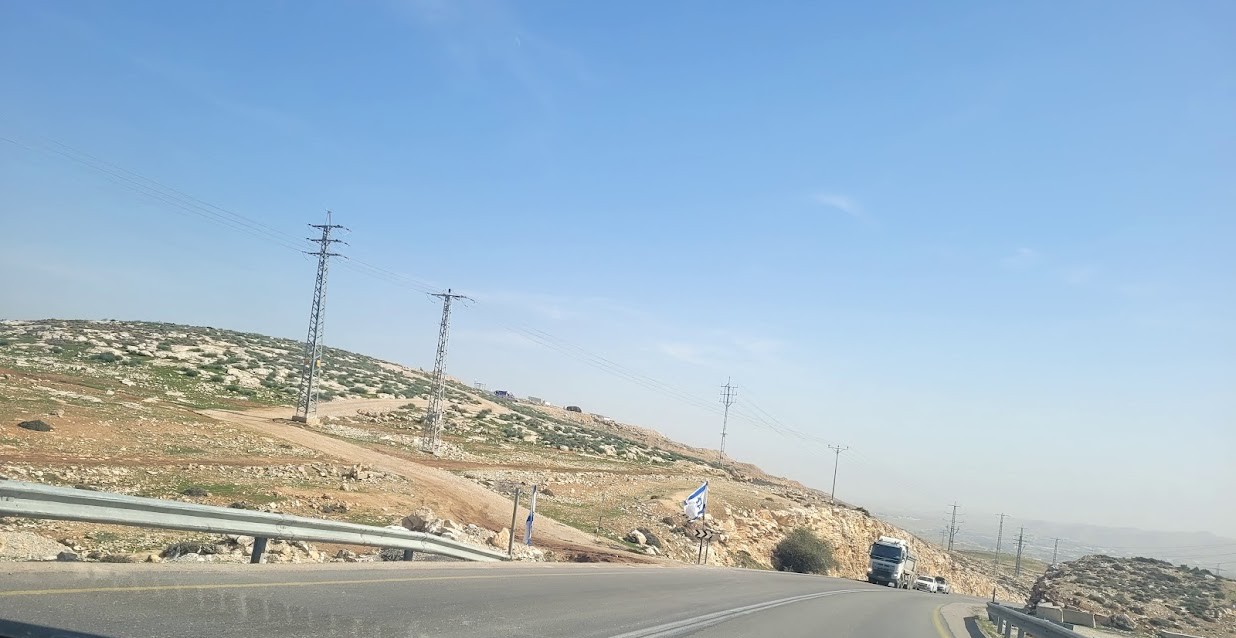 Anat TuegJan-25-2026Anata: A new outpost has been built south of the junction
-
Ras Abu Sbitan (Olive Terminal)
See all reports for this place-
A large checkpoint/crossing to the area of a-Tur, Abu Dis and the Old City; only for pedestrians. Located on Jerusalem’s municipal boundary.
One of the major crossings in Jerusalem’s central sector. It is located on the separation fence between the northern portion of the al-Ezariya neighborhood and the neighborhood of a-Tur and the rest of East Jerusalem. It is manned by Border Police soldiers and private security companies and operates 24 hours a day. Palestinians are forbidden to go through, other than permanent residents of East Jerusalem (holders of blue ID cards) and holders of work and commercial permits who are allowed through only on foot.
-
