
The terrible pogrom in Qawawis, southern Hebron Hills


Muhammad got a call this morning from Taleb from the small village of Qawawis, because settlers had sent their sheep into the area of the village without a shepherd. Taleb called the police and informed them and they sent a vehicle. In the meantime, the settlers arrived with ATVs and cars and claimed that their sheep had been stolen. There was a high-ranking police office in the car and he ordered the settlers to round up their sheep and take them out of the area.
When we got there, the police car was above the compound and the police said they were guarding the settlers. Apparently, the presence of the police somewhat eases tension. The men joined two women and the children and offered us tea and coffee in the guest room, and told us the story of the pogrom again. From time to time, Taleb’s son left the room and looked outside. Were the police still overlooking the village? The children aren’t yet back in school. The PA has postponed the start of the school year because it hasn’t yet found a way to pay the teachers.
A week ago, in broad daylight, 17 settlers entered the village, armed with batons, sticks, and stones; several more of them stood on the hill and watched at a distance.
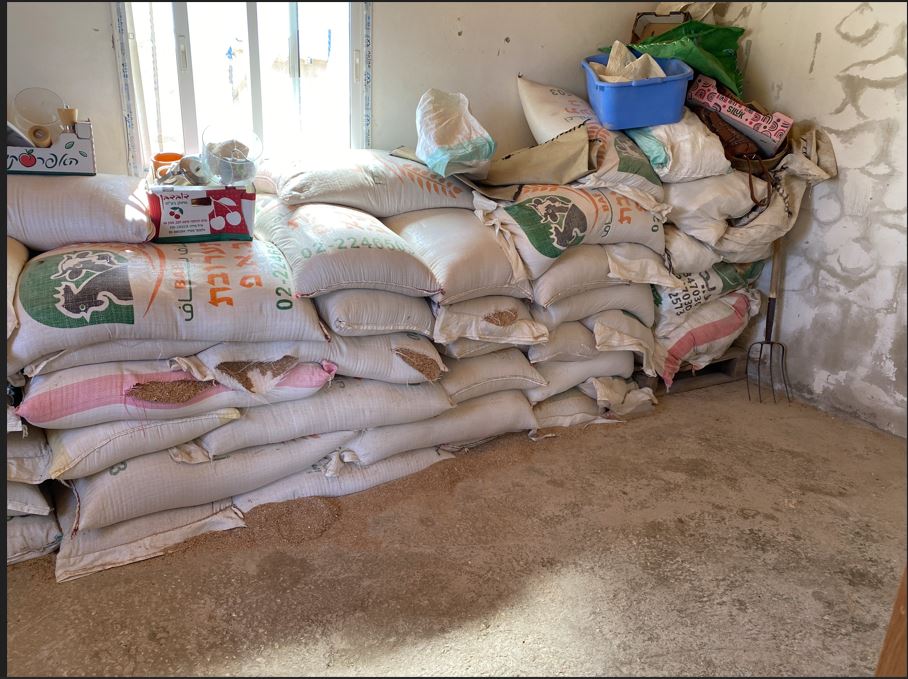
At the time, there were several overseas volunteers in the village. They had come by car and were staying as a “protective presence” to protect the residents (remaining overnight as well). They tried to confront the invading settlers, but they were beaten up even more aggressively than the Palestinian men. Within minutes, the settlers smashed the glass panes between the bars of the windows with stones, broke the security cameras, smashed the solar panels, beat the volunteers’ car with sticks and set it alight, smashed the glass windows of the tractor, and burst into every home, destroying whatever they could: They slashed open the sacks of fodder for the sheep and poultry and spilled it on the ground. They destroyed all the electric kitchen appliances, threw food on the floor, and mixed everything up.
During the pogrom, they forced all the women and children into the same kitchen, closed the door, and sprayed them with pepper gas through the window. They claim that one of the babies was suffocated to death. The overseas volunteers called ambulances, which took them to the hospital. One woman needed surgery and two had to have fractures fixed.
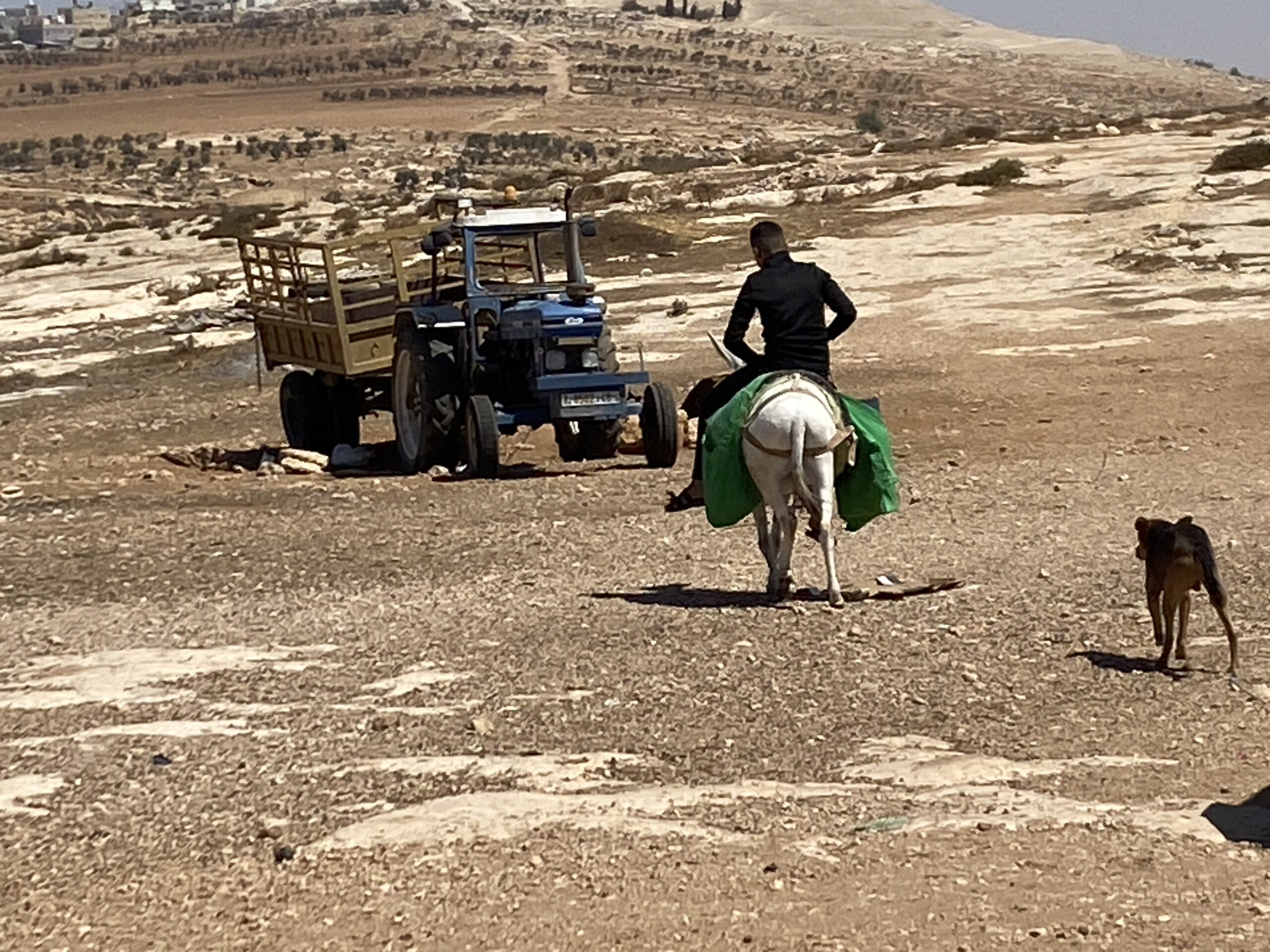
We went out of the guest room to examine the damage from the pogrom. In the meantime, it turned out that the police car had left its position above the village. The men wandered round the area in tense silence for fear that the thugs would come back. The young lad loaded saddlebags onto the donkey, loaded up the gas cylinder, and took advantage owadies temporary quiet to leave the village and go to Yatta via the somewhat concealed wadis. A moment before the hooligans arrived.
Taleb says that he’s considering finding a place for the women and children to sleep in Yatta, for fear of further harm. He complained again that no one comes to see him, that his story is not being heard. We promised that we would try to get more protective presence shifts to him, and to pass on the message. That’s all we can offer, apart from the clothes, blankets, and kitchen utensils that we brought him from Lehavim.
Location Description
South Hebron Hills
See all reports for this place-
South Hebron Hills
South Hebron Hills is a large area in the West Bank's southern part.
Yatta is a major city in this area: right in the border zone between the fertile region of Hebron and its surroundings and the desert of the Hebron Hills. Yatta has about 64,000 inhabitants.
The surrounding villages are called Masafer Yatta (Yatta's daughter villages). Their inhabitants subsist on livestock and agriculture. Agriculture is possible only in small plots, especially near streams. Most of the area consists of rocky terraces.Since the beginning of the 1980s, many settlements have been established on the agricultural land cultivated by the Palestinians in the South Hebron Hills region: Carmel, Maon, Susia, Masadot Yehuda, Othniel, and more. Since the settlements were established and Palestinians cultivation areas have been reduced; the residents of the South Hebron Hills have been suffering from harassment by the settlers. Attempts to evict and demolish houses have continued, along with withholding water and electricity. The military and police usually refrain from intervening in violent incidents between settlers and Palestinians do not enforce the law when it comes to the investigation of extensive violent Jewish settlers. The harassment in the South Hebron Hills includes attacking and attempting to burn residential tents, harassing dogs, harming herds, and preventing access to pastures.
There are several checkpoints in the South Hebron Hills, on Routes 317 and 60. In most of them, no military presence is apparent, but rather an array of pillboxes monitor the villages. Roadblocks are frequently set up according to the settlers and the army's needs. These are located at the Zif Junction, the Dura-al Fawwar crossing, and the Sheep Junction at the southern entrance to Hebron.
Updated April 2022
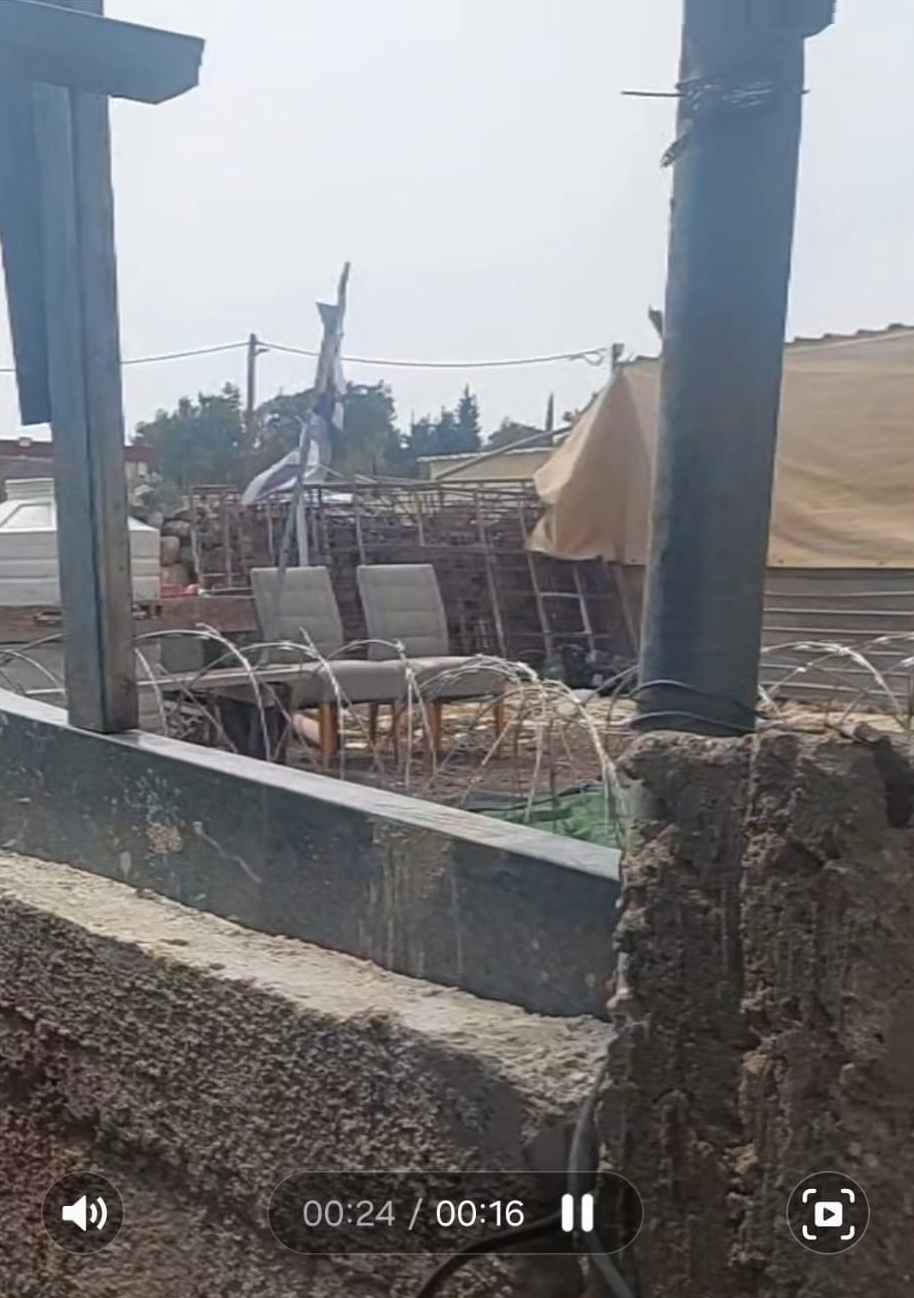 Michal TsadikOct-12-2026Umm al-Khair - Concertina wire and fences
-
