
דרום הר חברון, חברון, יום ג’ 17.4.12, בוקר
At 6:50 the Meitar Checkpoint is clear and the labourers have crossed to the israeli side.. they look tired and troubled.
Route 60
livelier than usual but no army presence is felt.
At K. Arba the guard waves us in without ado and soon we are in the usual, but unnatural, stillness of Hebron.
Hebron
At the Worshippers Alley a 'budke' – an enclosed guard post – has been set up, but it unstaffed. At the so called 160 curve all is quiet and we pass to the area opposite the cave of Patriarchs where the contested settler house is guarded behind police barricades. Opposite, a tent has been set up with the
slogan: We Paid, we bought, its ours!. At the pharmacy checkpoint a Border Policemen wanders over but does not accost us and notifies the guys at the settler's house that we are just wandering harmlessly around (in Hebrew it sounds both more insulting and more reassuring). For those not familiar with Hebron all these locations are within hailing distance of each other.
We 'wander' up Shuhada Street – there are new announcements declaring the injustice done to the Jews in the 'Oslo War', giving them a mere 3% of the city. Its always nice to encounter an alternative narrative.
At Beit Hadassah a youth of about 14 is detained but immediately resleased.
At the Tarpat Checkpoint all is quiet. At the top of the hill near the soldier's post at Tel Rumeida the soldiers accost us but in a very laid-back way. At the grocery store we encounter a middle aged gentleman coming from H1 on a motor bike, it transpsires that he is in charge of a clinic established by the TIPH which provides twice weekly medical services for the Palestinian residents of Tel Romeida. We forgo the ride up the hill past the Jewish cemetery where Anat Cohen's car peeps out from the ambush she has set for undesirables, as she must surely consider us. Discretion is the better part of valour!
Hebron
See all reports for this place-
According to Wye Plantation Accords (1997), Hebron is divided in two: H1 is under Palestinian Authority control, H2 is under Israeli control. In Hebron there are 170,000 Palestinian citizens, 60,000 of them in H2. Between the two areas are permanent checkpoints, manned at all hours, preventing Palestinian movement between them and controlling passage of permit holders such as teachers and schoolchildren. Some 800 Jews live in Avraham Avinu Quarter and Tel Rumeida, on Givat HaAvot and in the wholesale market.
Checkpoints observed in H2:
- Bet Hameriva CP- manned with a pillbox
- Kapisha quarter CP (the northern side of Zion axis) - manned with a pillbox
- The 160 turn CP (the southern side of Zion axis) - manned with a pillbox
- Avraham Avinu quarter - watch station
- The pharmacy CP - checking inside a caravan with a magnometer
- Tarpat (1929) CP - checking inside a caravan with a magnometer
- Tel Rumeida CP - guarding station
- Beit Hadassah CP - guarding station
Three checkpoints around the Tomb of the Patriarchs
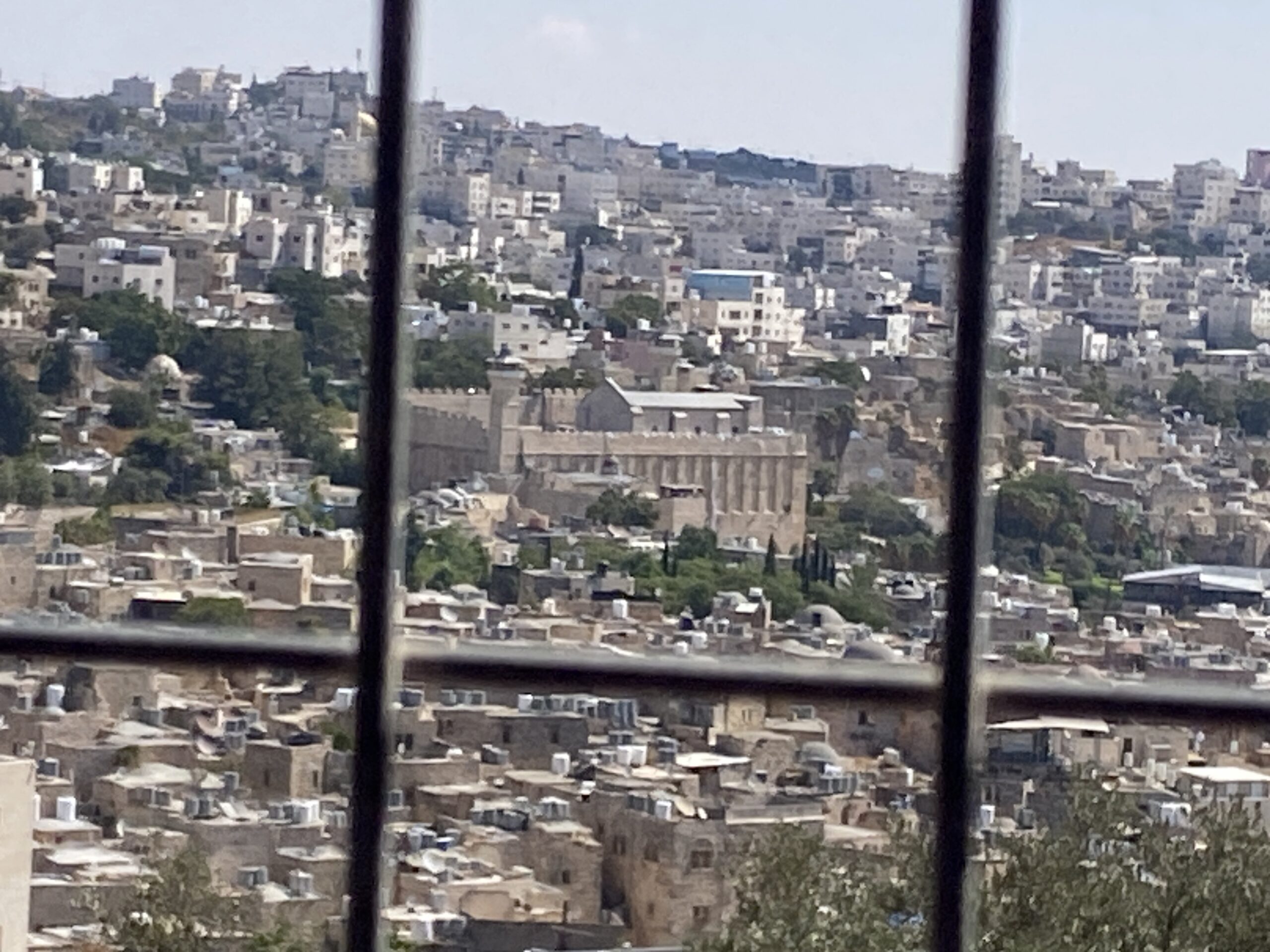 Yael ZoranSep-24-2026Hebron and the Cave of the Patriarchs from Beit Hashalom
-
South Hebron Hills
See all reports for this place-
South Hebron Hills
South Hebron Hills is a large area in the West Bank's southern part.
Yatta is a major city in this area: right in the border zone between the fertile region of Hebron and its surroundings and the desert of the Hebron Hills. Yatta has about 64,000 inhabitants.
The surrounding villages are called Masafer Yatta (Yatta's daughter villages). Their inhabitants subsist on livestock and agriculture. Agriculture is possible only in small plots, especially near streams. Most of the area consists of rocky terraces.Since the beginning of the 1980s, many settlements have been established on the agricultural land cultivated by the Palestinians in the South Hebron Hills region: Carmel, Maon, Susia, Masadot Yehuda, Othniel, and more. Since the settlements were established and Palestinians cultivation areas have been reduced; the residents of the South Hebron Hills have been suffering from harassment by the settlers. Attempts to evict and demolish houses have continued, along with withholding water and electricity. The military and police usually refrain from intervening in violent incidents between settlers and Palestinians do not enforce the law when it comes to the investigation of extensive violent Jewish settlers. The harassment in the South Hebron Hills includes attacking and attempting to burn residential tents, harassing dogs, harming herds, and preventing access to pastures.
There are several checkpoints in the South Hebron Hills, on Routes 317 and 60. In most of them, no military presence is apparent, but rather an array of pillboxes monitor the villages. Roadblocks are frequently set up according to the settlers and the army's needs. These are located at the Zif Junction, the Dura-al Fawwar crossing, and the Sheep Junction at the southern entrance to Hebron.
Updated April 2022
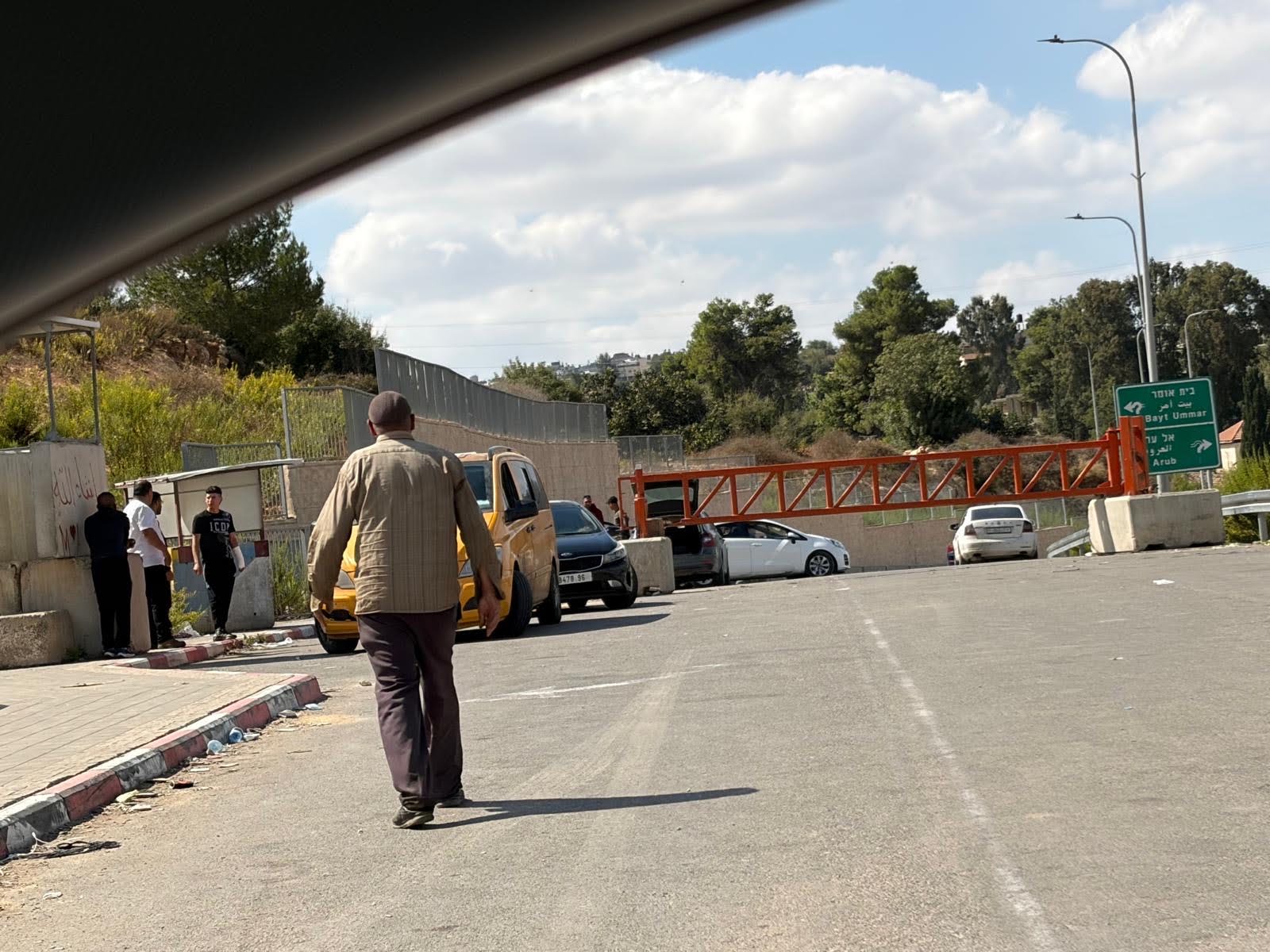 Natanya GinsburgOct-5-2026Beit Ummar - a red barrier to prevent Palestinians from entering or exiting the town
-
