
The settlers come with their herds all the time, at all hours of the day and night
We drove to Sha’ab al-Butum to the Yitzhak Jabarin family.
On the way, after the Meitar checkpoint, Muhammad recognizes a man who was carefully signalling as if he is asking for a ride. A brief inquiry confirms that he is not an illegal worker but a man who returned from a visit to the hospital and wants to get home. Normally, a visit to the hospital and returning home is not something that needs to be reported. But here, nothing is out of the ordinary.
And the man who lives near Fawwar, in normal times, and in a reformed country, would travel on Route 60 adjacent to his settlement by public transportation to the Augusta Victoria Hospital in Jerusalem. But there are no checkpoints or public transportation for a Palestinian living under Israeli rule all the way.
So, he left at 3 a.m. and hitchhiked and bussed to Jerusalem. At 6 a.m. he reached his brother, who is terminally ill with cancer. He stayed with him for two hours and set off for home. How? He got on a bus to Beer Sheva at 8:00, from Beersheba on the bus that goes to the southern Hebron Hills. He arrived at the checkpoint and then, when he passed, we stopped him at 11:00 so he could go home to his small settlement of Rihiyya, which is located at the foot of Beit Hagai settlement, opposite Qilqis.
His brother is in critical condition, completely in nursing care, but only he has received permission to visit him. Neither the man’s wife nor his parents. He has a permit for 3 months and he will have to do this every day.
For those who have difficulty understanding the strange route he took, imagine that you live 40 minutes away from the hospital, say in Tel Aviv, and need to feed a patient in Beer Sheva. So, you drive to Hadera and only from there to the hospital. Why? Because.
This morning he was lucky. He arrived home “quickly.” We continued.
At the Dura al-Fawwar junction, the entrances are closed on both sides. People, the elderly and children walk on foot through detours to get there. The entrance to Hebron at the foot of Beit Hagai settlement has continued to be closed since October 7.
At Beit Hagai, which is on the hill, there is a soldier in the post.
At the Sheep junction, both the entrance to Hebron and also from the right, on the way to Rihiyya, are closed. We turned right at the junction to Route 317.
At the Zif junction, the entrance to Yatta is open today.
We bought groceries for the Jabarin family at Nabil’s grocery store. It’s cheaper there. We bought for the Yitzhak Jabarin family compound, where about 20 people, women and children, live. Yitzhak went to consult with a lawyer in Qawawis regarding their struggle for their land against the settlers of Mitzpe Avigail, Mitzpe Yair and all those who have sprung up like mushrooms after the rain in the past year. His wife says that the settlers come with their herds all the time at all hours of the day and night and enter their land. But she emphasized that when they tell the settlers that they would call the police, they run away. Which means that this is a private initiative that is not being addressed, of course.
There is continuous harassment
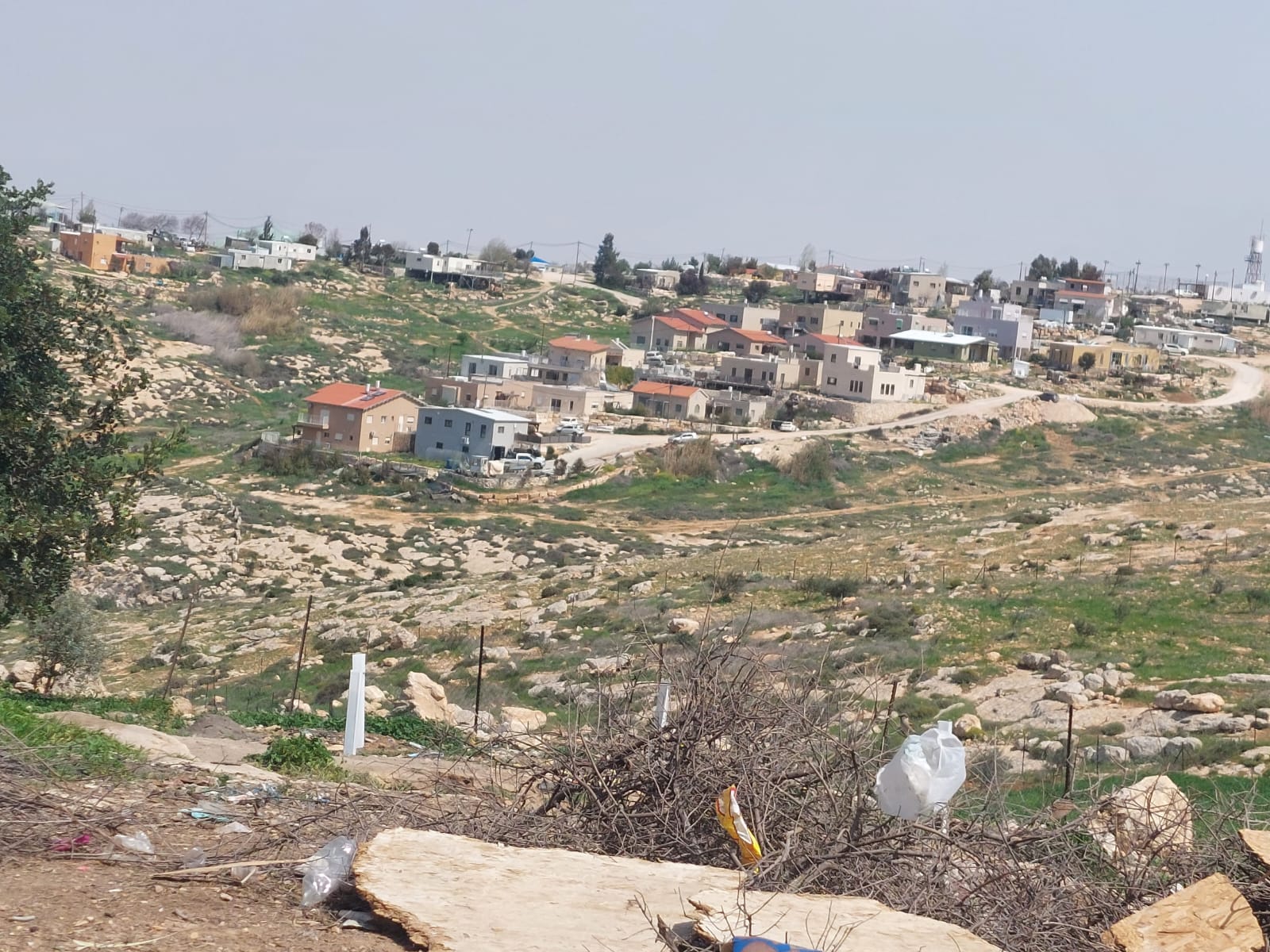
Location Description
Dura Al-Fawwar Junction
See all reports for this place-
Junction on Route 60: west - the town of El Dura, east - the Al Fawwar refugee camp. There is a manned pillbox at the junction. From time to time the army sets up flying checkpoints at the entrance to El Fawwar and Al Dura. Al-Fawwar is a large refugee camp (7,000 inhabitants in 2007) established in 1949 to accommodate Palestinian refugees from Be'er Sheva and Beit Jubrin and environs. There are many incidents of stone-throwing. In the vicinity of the pillbox there are excellent agricultural areas, Farmers set up stalls adjacent to the plots close to the road. In recent months the civil administration has set up dirt embankments thereby blocking access to the stalls, and making it impossible for the farmers to sell their vegetables. Updated April 2021, Michal T.
-
Hakvasim (sheep) Junction
See all reports for this place-
One of the roadblocks (earthworks, rocks, concrete blocks or iron gates) that prevent transit of vehicles to Route 60 in the southern West Bank and block the southern entrance to Hebron. A manned pillbox supervises the place.
-
Sha'ab al-Butum
See all reports for this place-
This is one of the small Palestinian communities in Masafer Yatta in the southern Hebron Hills, near the settlement of Mitzpe Avigail.
Since the outbreak of the October 7, 2023 war, settler violence against residents has escalated greatly, as in the entire Palestinian community. This violent conduct receives full backing from the state and full cooperation from the IDF. The goal is to make the lives of the Palestinian residents miserable and make them abandon and leave.
The population consists of mostly shepherds who peacefully seek to cultivate the land and graze their sheep, whom the settlers treat as a dangerous enemy. They prohibit them from any movement related to herding sheep and cultivating the land and harm everything: trampling crops, breaking olive trees, smuggling herds, scaring shepherds, conducting wild searches of houses, shouting, cursing and threatening - at all hours of the day. "We are Besieged, but will not move from our land," says Lila G. New settlements are springing up around them. At first it's a bus or a truck that turns into residential buildings, on top of which every week more residential buildings and animal sheds are added. With the open encouragement of the current government, Jewish terrorism is raising its head, with authority and permission. The settlers have received army uniforms and weapons, and no one is stopping them. The police, who are supposed to protect the Palestinians from the settlers' riots, sometimes respond to calls for help, but in practice they don't do much more than provide them with a report, and they are required to go and file a complaint in Kiryat Arba Settlemnt police station . Though the settlers' identities are known, they are !never arrested.
-
South Hebron Hills
See all reports for this place-
South Hebron Hills
South Hebron Hills is a large area in the West Bank's southern part.
Yatta is a major city in this area: right in the border zone between the fertile region of Hebron and its surroundings and the desert of the Hebron Hills. Yatta has about 64,000 inhabitants.
The surrounding villages are called Masafer Yatta (Yatta's daughter villages). Their inhabitants subsist on livestock and agriculture. Agriculture is possible only in small plots, especially near streams. Most of the area consists of rocky terraces.Since the beginning of the 1980s, many settlements have been established on the agricultural land cultivated by the Palestinians in the South Hebron Hills region: Carmel, Maon, Susia, Masadot Yehuda, Othniel, and more. Since the settlements were established and Palestinians cultivation areas have been reduced; the residents of the South Hebron Hills have been suffering from harassment by the settlers. Attempts to evict and demolish houses have continued, along with withholding water and electricity. The military and police usually refrain from intervening in violent incidents between settlers and Palestinians do not enforce the law when it comes to the investigation of extensive violent Jewish settlers. The harassment in the South Hebron Hills includes attacking and attempting to burn residential tents, harassing dogs, harming herds, and preventing access to pastures.
There are several checkpoints in the South Hebron Hills, on Routes 317 and 60. In most of them, no military presence is apparent, but rather an array of pillboxes monitor the villages. Roadblocks are frequently set up according to the settlers and the army's needs. These are located at the Zif Junction, the Dura-al Fawwar crossing, and the Sheep Junction at the southern entrance to Hebron.
Updated April 2022
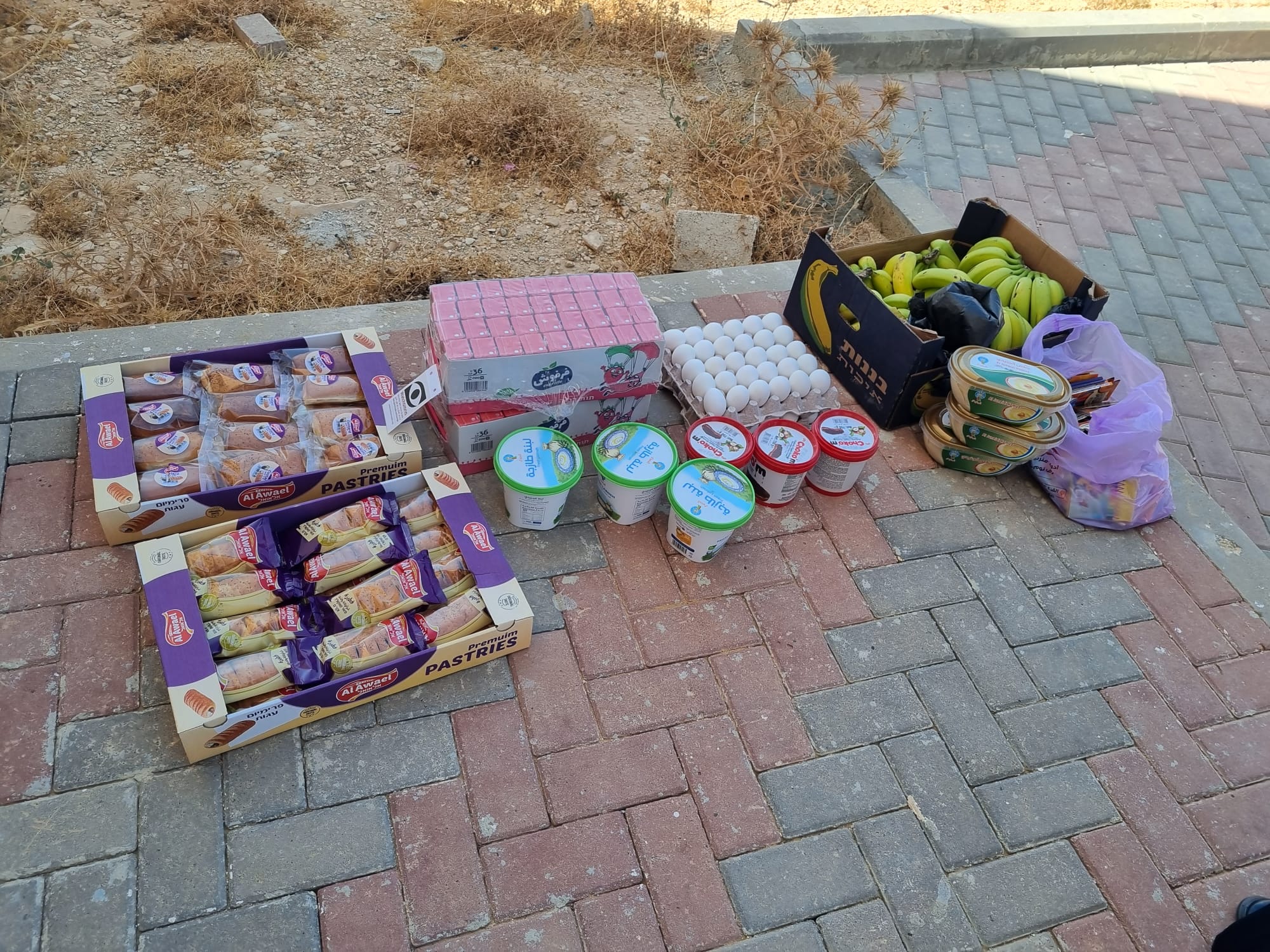 Muhammad D.Sep-27-2026Food items we brought to Huda's kindergarten in Khashem a-Daraj
-
Zif Junction
See all reports for this place-
Zif Junction located on the crossroads that directs towards Road 356 to Yata. Yata is the district city of the southern Hebron Mountains. Usually, this junction is open to traffic. The nearby pillbox is unmanned. But the army and police are present occasionally, sometimes setting up a checkpoint and sometimes detaining residents from the big city. Often, the Israeli policemen inspect vehicles and distribute driving reports to Palestinian vehicles. s
-
