
Expansion of the Negohot settlement prevents residents from reaching their homes in Qilqis
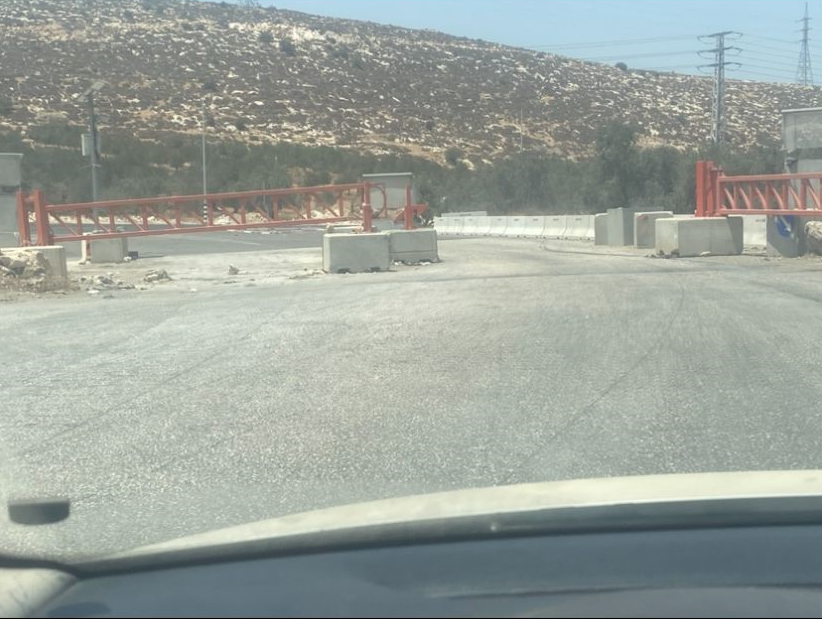

We crossed the Lachish crossing, formerly known as the Tarqumiya crossing, the crossing in the northwest of the Hebron Mountains. This is one of the main crossings between Judea and Samaria and Israel.
From Israel to the West Bank: mainly goods, fuel and essential products cross.
From the West Bank to Israel: Palestinian workers cross (mainly for work purposes) and certain goods.
There are few vehicles in the Palestinian parking lot today. On Sundays, about 800 workers leave for work in Israel at the Lachish checkpoint, while before the war, about 7,000 workers left on a normal day. On the rest of the week, only about 400 workers pass through the checkpoint daily.
Goods pass through the checkpoint without any problems.
However, the economic situation of the workers is very difficult, since most of them do not work and have no income.
In the industrial area of Tarkumiya, Mufida received 10,000 shekels from Rachel Afek. Mufida says she buys food for families who have nothing to eat. Each family receives a food carton, and the people thank Rachel and the team for the donation and assistance.
On Highway 35, all entrances are blocked and there are no fig sellers as there were before October 7, because the residents are afraid to stand on the side of the road and sell.
Rania rents a house in Dura because the expansion of Negohot settlement prevents her from reaching their home in Qilqis. The situation is difficult, and only her brother and their parents are there. The settlers are abusing them, and not even a human rights organization can come to protect them or report on what is happening.
Location Description
South Hebron Hills
See all reports for this place-
South Hebron Hills
South Hebron Hills is a large area in the West Bank's southern part.
Yatta is a major city in this area: right in the border zone between the fertile region of Hebron and its surroundings and the desert of the Hebron Hills. Yatta has about 64,000 inhabitants.
The surrounding villages are called Masafer Yatta (Yatta's daughter villages). Their inhabitants subsist on livestock and agriculture. Agriculture is possible only in small plots, especially near streams. Most of the area consists of rocky terraces.Since the beginning of the 1980s, many settlements have been established on the agricultural land cultivated by the Palestinians in the South Hebron Hills region: Carmel, Maon, Susia, Masadot Yehuda, Othniel, and more. Since the settlements were established and Palestinians cultivation areas have been reduced; the residents of the South Hebron Hills have been suffering from harassment by the settlers. Attempts to evict and demolish houses have continued, along with withholding water and electricity. The military and police usually refrain from intervening in violent incidents between settlers and Palestinians do not enforce the law when it comes to the investigation of extensive violent Jewish settlers. The harassment in the South Hebron Hills includes attacking and attempting to burn residential tents, harassing dogs, harming herds, and preventing access to pastures.
There are several checkpoints in the South Hebron Hills, on Routes 317 and 60. In most of them, no military presence is apparent, but rather an array of pillboxes monitor the villages. Roadblocks are frequently set up according to the settlers and the army's needs. These are located at the Zif Junction, the Dura-al Fawwar crossing, and the Sheep Junction at the southern entrance to Hebron.
Updated April 2022
 Michal TsadikJan-29-2026Umm al-Khair - a security risk for Carmel settlers
-
Tarqumiya CP
See all reports for this place-
The Tarqumiya Checkpoint is one of the largest and busiest checkpoints where people and goods cross into Israel. It is located on the Separation Barrier close to the Green Line, on Road 35 (connecting Beer Sheva and Hebron). It is run by the Israel Defense Ministry’s Crossings Administration with civilian secuirty companies running the day to day operations. The checkpoint is indeed open to vehicles in both directions 24/7, but Palestinians are prevented from crossing in vehicles, except in special cases. MachsomWatch activists visit the checkpoint as it opens at 3:45 am, in order to observe the daily passage of nearly 10,000 Palestinian workers. The workers arrive from throughout the Southern West Bank. Our activists report on the tremendous overcrowding at this checkpoint; they have observed young men climbing and scrambling on the fences and roofs of the ‘access cages’. This is how the work day begins for those who ‘build the land of Israel’. updated November 2019
-