
Violent attack by settler Amichai Shiloh at the edge of Sha'ab al-Butum
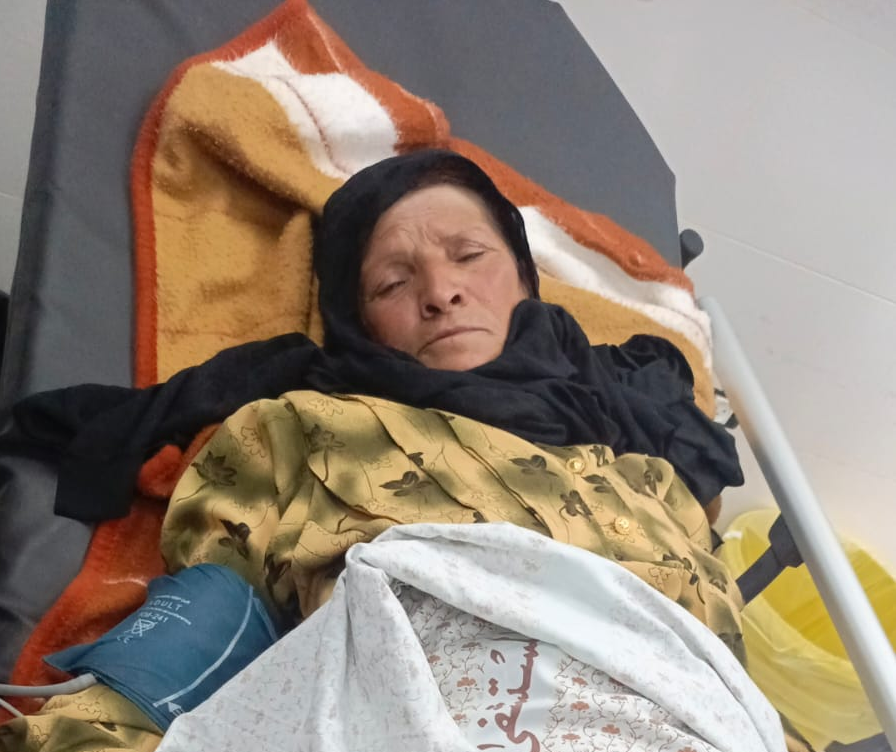
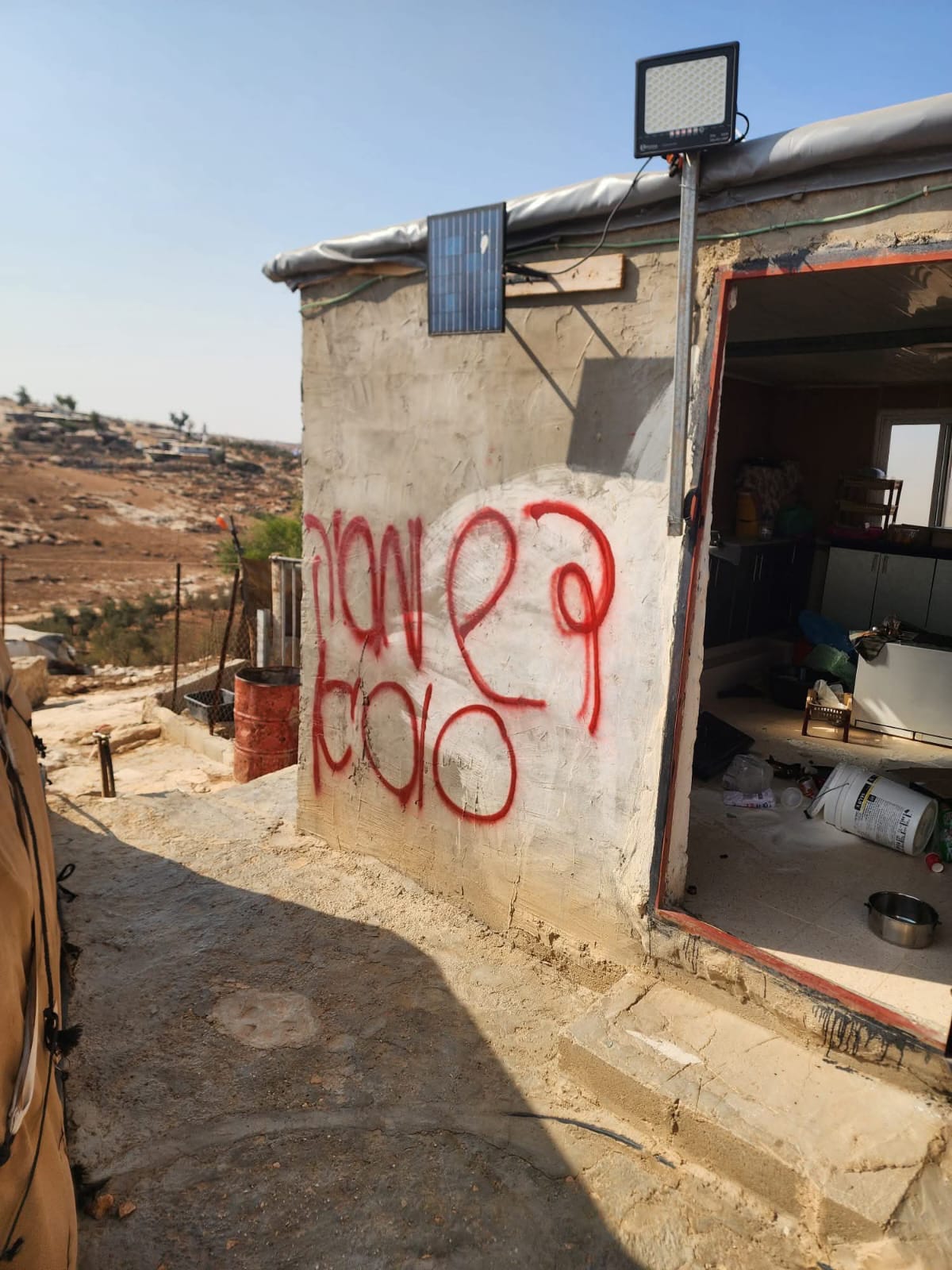
We travelled to the Najjar family in Sha’ab al-Butum. Last week, he came very upset to the Jabarin family and asked that we come because he wanted to tell us about their suffering from the settlers in recent months. We did go to him as well, and we also saw up close — and filmed — Amichai Shilo and his flock wandering around and approaching their plots. We also bought groceries for them and brought donations of clothes and shoes. Their stories, together with the photos we received from them, are truly shocking.
On the way to them, we surveyed the situation of the checkpoints at the entrances to the villages along Route 60. At the entrance to Dahariya, a new major and large checkpoint is being built, closer to the main road. Today there are many IDF vehicles everywhere. At the Dura–al-Fawwar junction, it is open on both sides but only after 10 a.m. Until then, soldiers patrol, come down from the pillbox, and monitor. The entrance to Hebron below Beit Haggai is closed. At Qilqis, both sides are closed. At the Sheep Junction, both sides are open. At the roundabout on Route 60 connecting to Route 356, there is increased army and police presence. The latter say they are enforcing traffic laws.
At the Zif Junction, the entrance to Yatta is open. We bought groceries at the small store and arrived for the first time at the Najjar family. Muhammad and Sabha — he is 75, she is 65 — live in another valley also called Sha’ab al-Butum, together with their son, his wife, and their four children.
They too describe frequent “visits” from settlers with their flock. They also say the settlers are always masked, even wearing gloves, but they come from the same place. I “had the privilege” of seeing such a visit up close and filmed it.
They describe an incident from five months ago, when 13–15 people came at midday, destroyed, broke, and damaged the house, and even spilled the sacks of food and bottles of oil. They left graffiti saying “Regards from Susiya”
“But two months ago, they came again. We ran to the wadi, they caught up with me,” says Mahmoud. “They beat me on the head and stomach. I lost consciousness. At the hospital they examined me, took x-rays, and kept me for 15 days, and afterward another 10 days at the home of Kaub, a family in Yatta.” Muhammad takes out a bag of medicines to show me what he is still taking since then.
Sabha describes an incident from five months ago: “They came at 11 in the morning, I was alone at home. Many settlers arrived, broke our stone fence with their feet, and threw stones. I ran to the wadi and fell. Neighbours came, and then — after breaking the solar panels — they broke windows, furniture, phones, the TV, and the refrigerator. They spilled the sugar and rice. After the big destruction, the settlers fled. The police arrived 40 minutes later and took fingerprints. They always come long after the settlers have escaped. They took me to the hospital. I was two days in the hospital. From the fear and the blows, my ears are still ringing to this day,” says Sabha. “The refrigerator doesn’t close now, and we tie the door with ropes.”
During the conversation, we see the settler approaching with his flock. They think he is from Avigayil. “Every day they come. Sometimes someone on an ATV comes again and again to try to destroy the fence that we keep repairing. They constantly come to disturb, to frighten, and to eat everything we grow.”
A phone call from Laila clarifies that it is the same Amichai Shilo who was at her place in the morning. Now he has arrived a few hundred meters away, at the Najjar family. There too, beyond the fence, the settlers repeatedly try to plough the land, destroy the fence, and continue telling the police that the land is theirs. “We are afraid to sleep at night. The volunteers come only twice a week to sleep here because there are not enough volunteers. This place is a bit isolated, and we don’t feel safe here, almost alone. We are afraid to sleep at night.” They repeat these words again and again.
The documents proving their ownership are in order, but the settlers continue to come.
I went to see the settler up close, and it turns out it is Amichai Shilo.
On the way back, we met Laila Jabarin as she was going to buy medicines in Yatta. She also tells about the incident we had been told about — when her husband called Muhammad about the injured Najjar, the police scolded him for calling instead of the injured man. Muhammad Jabarin answered: “He is injured and cannot speak.” “The police scold instead of helping us,” she says.
She added that she is returning from a women’s gathering. “We were about 30 at one of the neighbours’ homes. We gathered, made a shared breakfast, and spoke with a psychologist who came from A-Tuwani. We talked about the fears, the worries, and the problems.” When I asked what the psychologist said, she replied: “She encouraged us. She said we should continue to be strong. The occupation will end one day.
Location Description
Dura Al-Fawwar Junction
See all reports for this place-
Junction on Route 60: west - the town of El Dura, east - the Al Fawwar refugee camp. There is a manned pillbox at the junction. From time to time the army sets up flying checkpoints at the entrance to El Fawwar and Al Dura. Al-Fawwar is a large refugee camp (7,000 inhabitants in 2007) established in 1949 to accommodate Palestinian refugees from Be'er Sheva and Beit Jubrin and environs. There are many incidents of stone-throwing. In the vicinity of the pillbox there are excellent agricultural areas, Farmers set up stalls adjacent to the plots close to the road. In recent months the civil administration has set up dirt embankments thereby blocking access to the stalls, and making it impossible for the farmers to sell their vegetables. Updated April 2021, Michal T.
-
Hakvasim (sheep) Junction
See all reports for this place-
One of the roadblocks (earthworks, rocks, concrete blocks or iron gates) that prevent transit of vehicles to Route 60 in the southern West Bank and block the southern entrance to Hebron. A manned pillbox supervises the place.
-
Hebron
See all reports for this place-
According to Wye Plantation Accords (1997), Hebron is divided in two: H1 is under Palestinian Authority control, H2 is under Israeli control. In Hebron there are 170,000 Palestinian citizens, 60,000 of them in H2. Between the two areas are permanent checkpoints, manned at all hours, preventing Palestinian movement between them and controlling passage of permit holders such as teachers and schoolchildren. Some 800 Jews live in Avraham Avinu Quarter and Tel Rumeida, on Givat HaAvot and in the wholesale market.
Checkpoints observed in H2:
- Bet Hameriva CP- manned with a pillbox
- Kapisha quarter CP (the northern side of Zion axis) - manned with a pillbox
- The 160 turn CP (the southern side of Zion axis) - manned with a pillbox
- Avraham Avinu quarter - watch station
- The pharmacy CP - checking inside a caravan with a magnometer
- Tarpat (1929) CP - checking inside a caravan with a magnometer
- Tel Rumeida CP - guarding station
- Beit Hadassah CP - guarding station
Three checkpoints around the Tomb of the Patriarchs
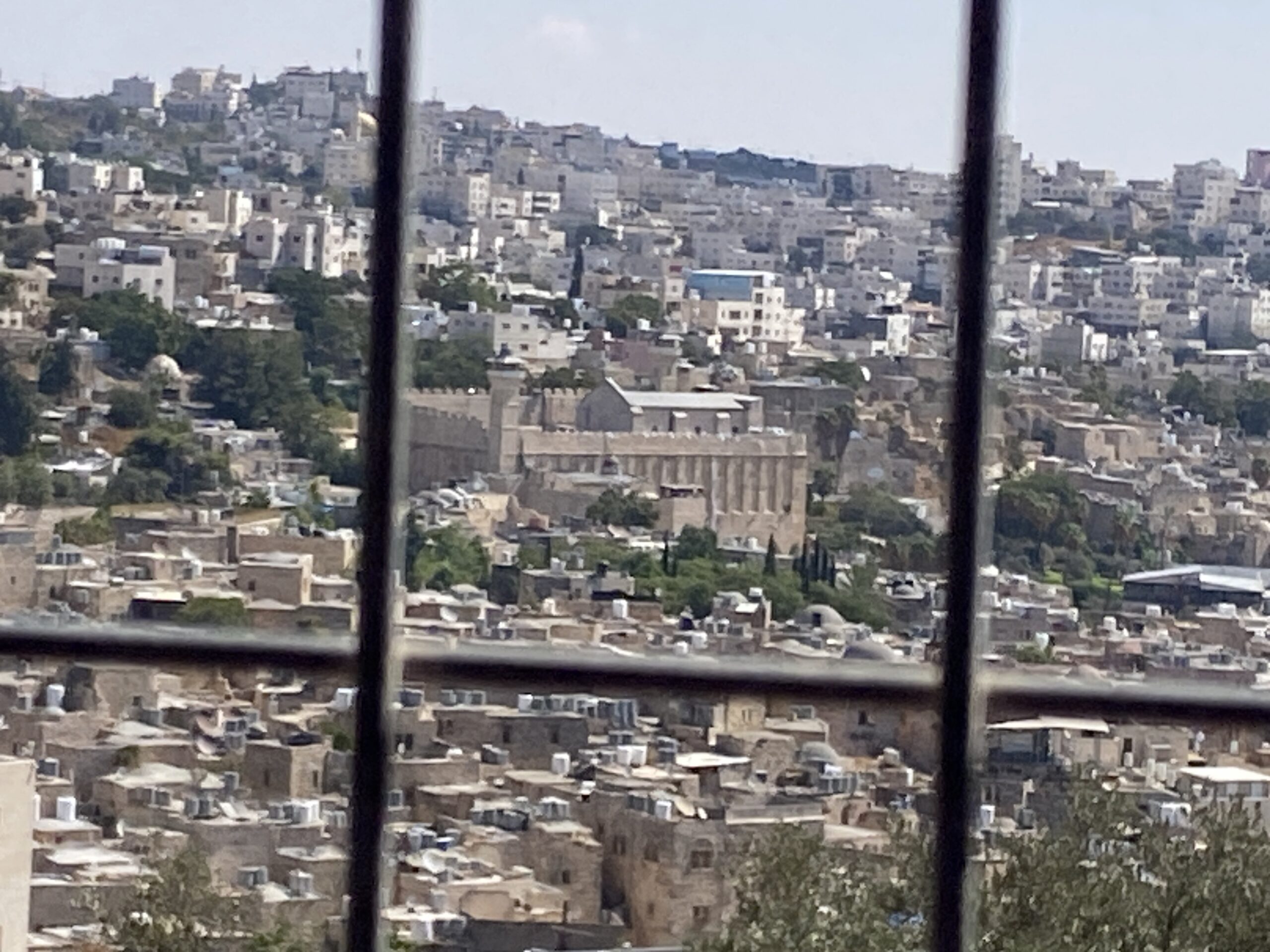 Yael ZoranSep-24-2026Hebron and the Cave of the Patriarchs from Beit Hashalom
-
Mesafer Yatta
See all reports for this place-
This is happening in Fire Area 918 in the South Hebron Hills
On the eve of Remembrance Day (the day before Israel Independence Day), 4th May, 2022, the Israeli High Court decided on the transfer and expulsion of residents from 8 Palestinian communities in the area of Masafar Yata in the South Hebron Hills. Residents of the villages have been living under the threat of demolition, evacuation and expropriation since the IDF issued evacuation orders in 1999 based on the 1980s proclamation of their area of residence as a firing zone for IDF drills. None of the nearby settlements were included in this zone. The Masafer Yata Palestinian villages retain a special lifestyle and ancient agricultural culture. They also posess a clear historical documentation that testifies to a Palestinian settlement in this area, generations before the establishment of Israel, long ago in the caves and at later times outside them.
Evacuating residents from the area means destroying these historic villages and leaving entire families (about 2,000 people, children, adults, and the elderly) homeless. This is contrary to international law.
In June 2022, a firing drill started, and life became harder.
-
South Hebron Hills
See all reports for this place-
South Hebron Hills
South Hebron Hills is a large area in the West Bank's southern part.
Yatta is a major city in this area: right in the border zone between the fertile region of Hebron and its surroundings and the desert of the Hebron Hills. Yatta has about 64,000 inhabitants.
The surrounding villages are called Masafer Yatta (Yatta's daughter villages). Their inhabitants subsist on livestock and agriculture. Agriculture is possible only in small plots, especially near streams. Most of the area consists of rocky terraces.Since the beginning of the 1980s, many settlements have been established on the agricultural land cultivated by the Palestinians in the South Hebron Hills region: Carmel, Maon, Susia, Masadot Yehuda, Othniel, and more. Since the settlements were established and Palestinians cultivation areas have been reduced; the residents of the South Hebron Hills have been suffering from harassment by the settlers. Attempts to evict and demolish houses have continued, along with withholding water and electricity. The military and police usually refrain from intervening in violent incidents between settlers and Palestinians do not enforce the law when it comes to the investigation of extensive violent Jewish settlers. The harassment in the South Hebron Hills includes attacking and attempting to burn residential tents, harassing dogs, harming herds, and preventing access to pastures.
There are several checkpoints in the South Hebron Hills, on Routes 317 and 60. In most of them, no military presence is apparent, but rather an array of pillboxes monitor the villages. Roadblocks are frequently set up according to the settlers and the army's needs. These are located at the Zif Junction, the Dura-al Fawwar crossing, and the Sheep Junction at the southern entrance to Hebron.
Updated April 2022
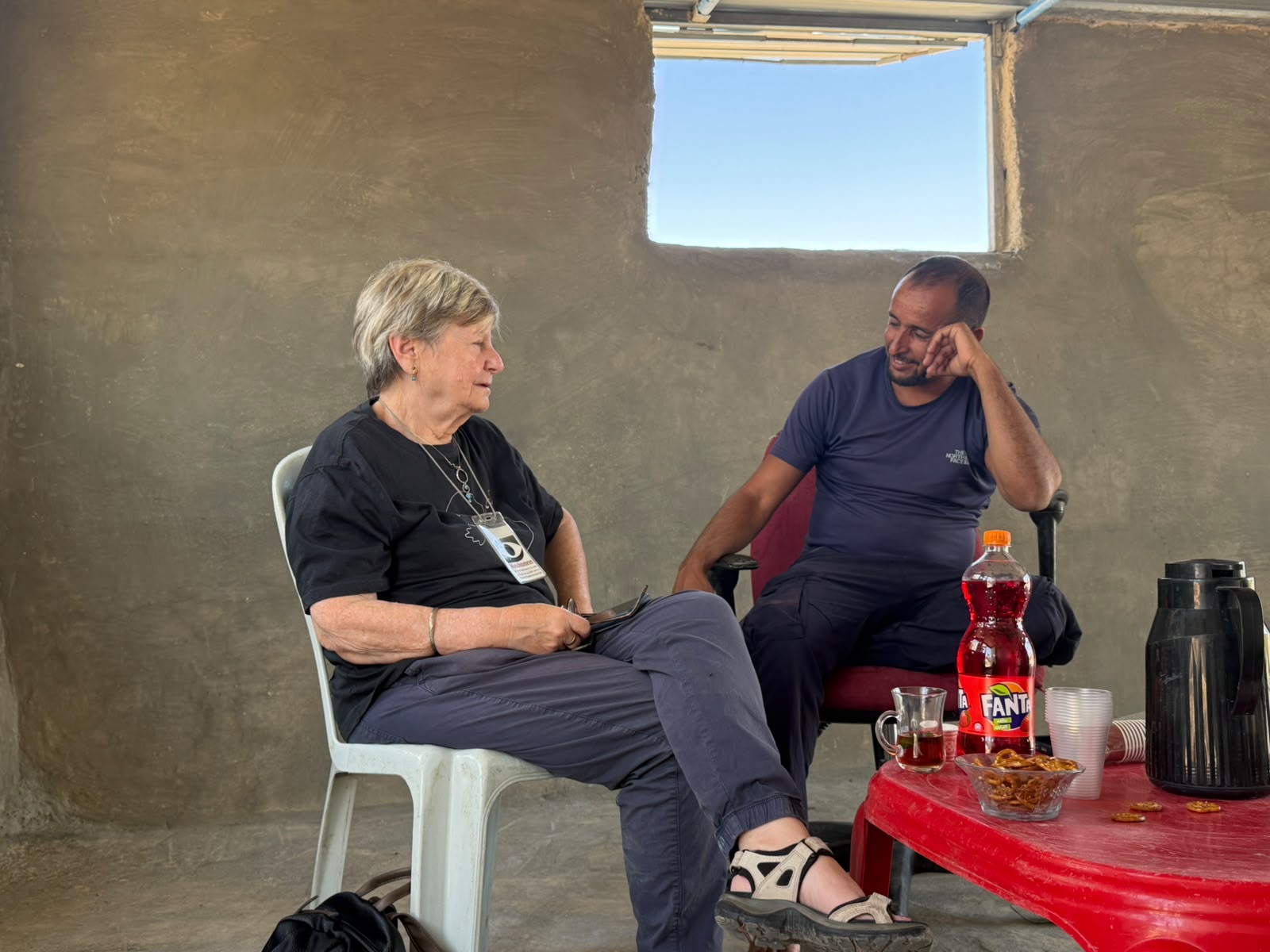 Muhammad D.Oct-10-2026Smadar with Najeh in Umm Qusa
-
Zif Junction
See all reports for this place-
Zif Junction located on the crossroads that directs towards Road 356 to Yata. Yata is the district city of the southern Hebron Mountains. Usually, this junction is open to traffic. The nearby pillbox is unmanned. But the army and police are present occasionally, sometimes setting up a checkpoint and sometimes detaining residents from the big city. Often, the Israeli policemen inspect vehicles and distribute driving reports to Palestinian vehicles. s
-
