
חברון, תרקומיא, יום ד’ 24.7.13, בוקר

Translator: Charles K.
We decided to go through the Tarqumiyya crossing, which was closer to our route. Because it was later in the morning, we knew we wouldn’t see the laborers going through, but we wanted to speak with Zion or with Dudi, who are in charge of what goes on there (this is certainly not our first attempt to have an influence). Since they weren’t here today, Alexi spoke to us. He was willing to listen patiently to what we had to say, replied that they operate in accordance with military orders to move all the laborers through by 07:00. A number of Palestinians witnessed the discussion; after Raya encouraged them to speak one of them, Nur, who has a carpentry shop in Tarqumiyya, spoke freely, saying that the people in charge here are fine, but most of the women staffing the booths behave badly, work slowly, are disrespectful (to say the least), derogatory and harass people crossing – they’re the problem. We suggested that staff should be better trained and supervised. We exchanged phone numbers with Nur in order to follow up.
Hebron
The Worshippers Route is closed at one end and open at the other.
We walked to ‘Abed’s shop, opposite the Cave of the Patriarchs, because a few days ago he’d telephoned Raya to complain that a new officer on site prevents tourists from passing his store, which hurts his business. He says the DCO officer (Avi Biton?) wants to help but the problem hasn’t yet been solved, and only a few tourists reach him.
A small group of people from various countries sit with a guide from Bethlehem.
As we were going through Tel Rumeida a military vehicle stopped, the lieutenant got out to find out who we were (ID card) and to talk: What are we doing, what’s our opinion about the soldiers here, what – given our experience – do we think can be improved… In short, it was refreshing to meet such an officer. May there be many more like him.
(It’s hard to believe, but on our way back the woman in the booth made do with our IDs and didn’t send us for additional inspection of the car’s contents, as they’ve done here in the past. Has something changed so quickly?)
Hebron
See all reports for this place-
According to Wye Plantation Accords (1997), Hebron is divided in two: H1 is under Palestinian Authority control, H2 is under Israeli control. In Hebron there are 170,000 Palestinian citizens, 60,000 of them in H2. Between the two areas are permanent checkpoints, manned at all hours, preventing Palestinian movement between them and controlling passage of permit holders such as teachers and schoolchildren. Some 800 Jews live in Avraham Avinu Quarter and Tel Rumeida, on Givat HaAvot and in the wholesale market.
Checkpoints observed in H2:
- Bet Hameriva CP- manned with a pillbox
- Kapisha quarter CP (the northern side of Zion axis) - manned with a pillbox
- The 160 turn CP (the southern side of Zion axis) - manned with a pillbox
- Avraham Avinu quarter - watch station
- The pharmacy CP - checking inside a caravan with a magnometer
- Tarpat (1929) CP - checking inside a caravan with a magnometer
- Tel Rumeida CP - guarding station
- Beit Hadassah CP - guarding station
Three checkpoints around the Tomb of the Patriarchs
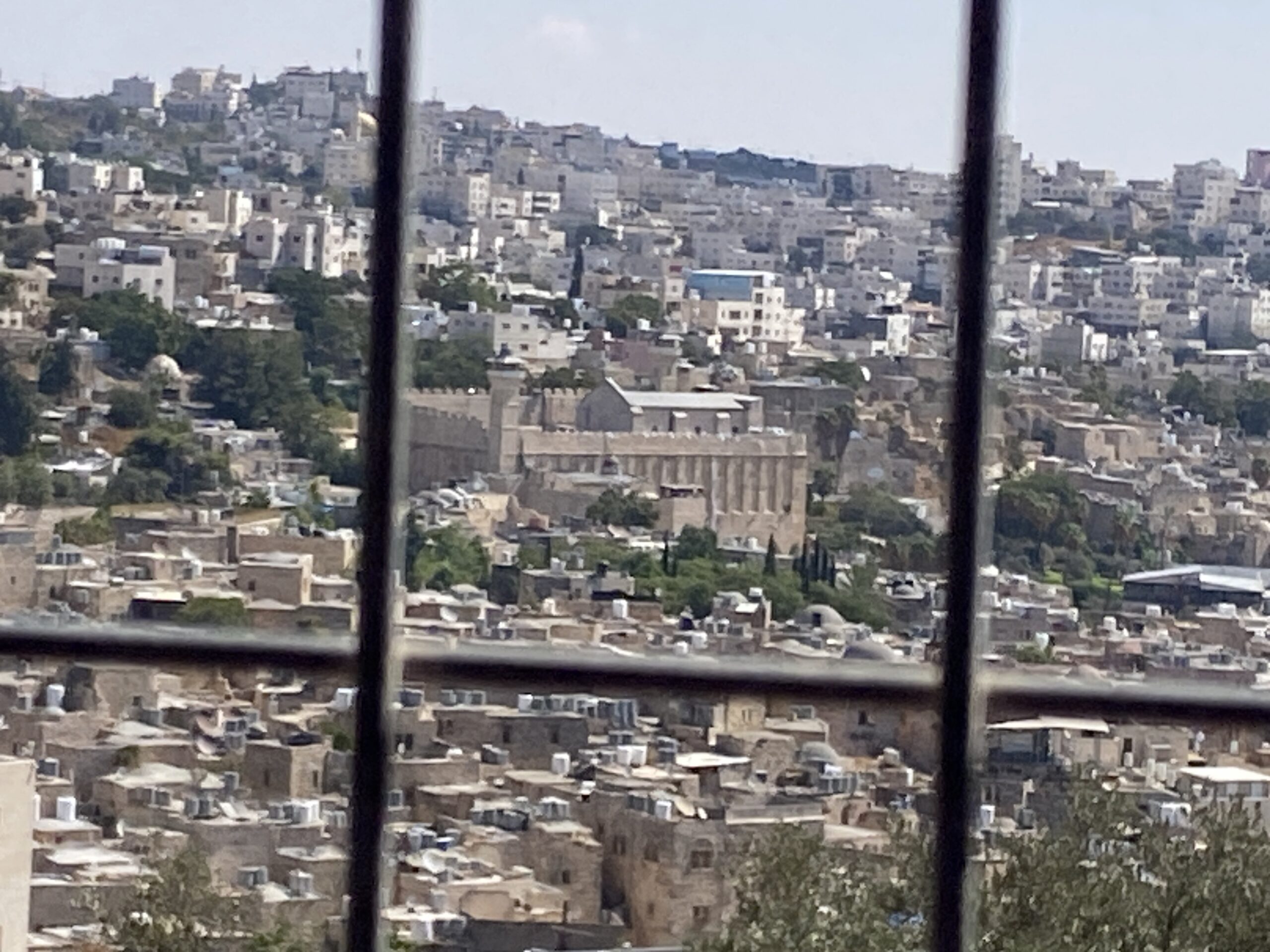 Yael ZoranSep-24-2026Hebron and the Cave of the Patriarchs from Beit Hashalom
-
Tarqumiya CP
See all reports for this place-
The Tarqumiya Checkpoint is one of the largest and busiest checkpoints where people and goods cross into Israel. It is located on the Separation Barrier close to the Green Line, on Road 35 (connecting Beer Sheva and Hebron). It is run by the Israel Defense Ministry’s Crossings Administration with civilian secuirty companies running the day to day operations. The checkpoint is indeed open to vehicles in both directions 24/7, but Palestinians are prevented from crossing in vehicles, except in special cases. MachsomWatch activists visit the checkpoint as it opens at 3:45 am, in order to observe the daily passage of nearly 10,000 Palestinian workers. The workers arrive from throughout the Southern West Bank. Our activists report on the tremendous overcrowding at this checkpoint; they have observed young men climbing and scrambling on the fences and roofs of the ‘access cages’. This is how the work day begins for those who ‘build the land of Israel’. updated November 2019
-
