
Distributing food to the Palestinian shepherding communities, Jordan Valley

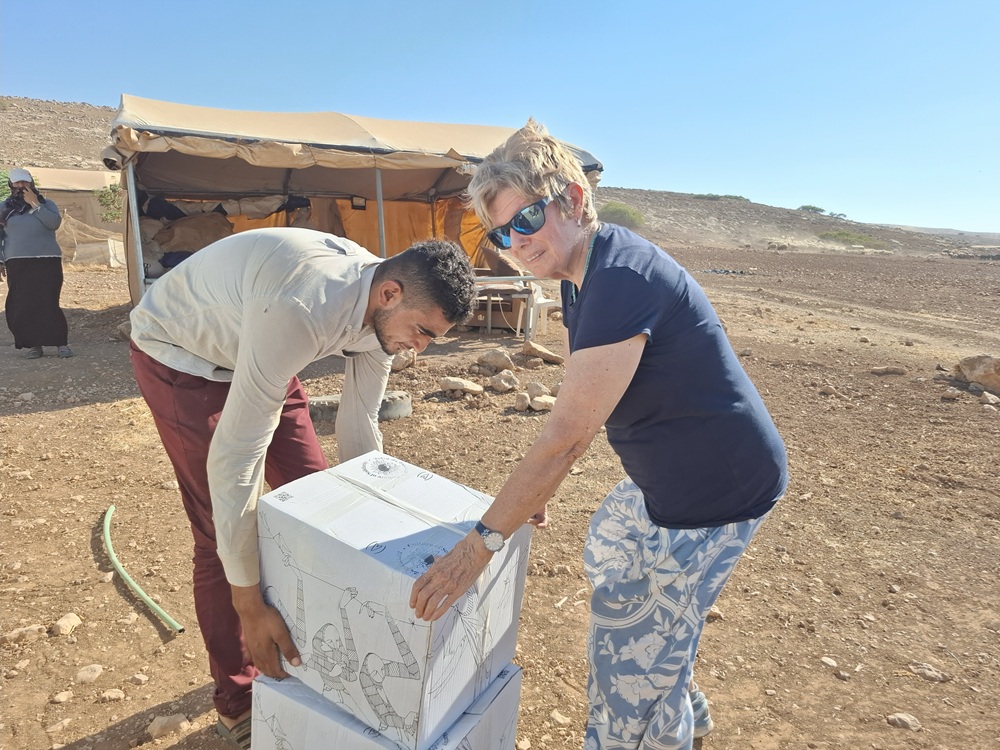
Due to a misunderstanding, the minibus bringing 30 packages of food left Jerusalem at 11 o’clock, while we were already waiting for it in the Jordan Valley at 10:30. In the meantime, we decided to act as protective presences in the communities along the road from Ein al Hilwa to the Tayasir checkpoint. We went up to El Burej, an old community living on a high hill overlooking the road. Plants climb over the tin roofs and add an attractive crown to the simple homes. A large tree provides shade over a large area at the center of the village and mats and mattresses are spread on the ground beneath it along with several chairs. The villagers usually sit here and look out over the area. At the highest point, Comet-ME workers were replacing an internet antenna after settlers broke the last one. Everything is done under pressure, for fear that the armed and violent settlers will see what’s going on and come to destroy the work.
Suddenly an ATV drove up from the main road and the villages began shouting at the workers to go into the houses quickly – quickly! We hear the sound of that awful fear, the terror that these villages live with, every hour of every day. The ATV drove round the village and left.
Meanwhile, we had to go down to the main road because there was no cellular reception and the internet hadn’t been reconnected. Without the internet, we couldn’t give the driver our location and the two cars that should have been distributing the food with us hadn’t arrived (one of them had been called to be a protective presence at El Farisiya).
We decided to store the packages for the time being at Zuba’a’s in Hamra, because we were sure no one would help themselves the packages without permission. We loaded up my car and brought a food package to every household in Ein el Hilwa, for the villagers and their adult children and their families. We also gave a package to Fatma, the divorcee who has been so badly burned that her arms are deformed. She lives alone and used to have a flock of goats and sheep. Settlers stole her sheep and after this unfortunate woman was harassed and beaten by the settlers, she sold her goats as well. She now lives alone next to her brother Fathi Dragma and is waiting to die. She told us that she’d received a demolition order from the Civil Administration. Everyone is tormenting this poor woman, who is barely surviving.
At Ein al Hilwa, we moved into the van belonging to Mahdi, who is responsible for the shepherding community on behalf of the PA, and distributed food to all the communities in six groups in Humsa. We kept the remaining packages until next week for the communities in the area of Beit Hassan, on the other side of the Biqa’ot checkpoint.
We ran into the Comet-ME workers again and drove with them to check whether there was internet reception in some places. They wanted to go home via Tayasir checkpoint, but discovered that the checkpoint was closed. We also noticed that we hadn’t seen a single Palestinian car on the road all day. Quite simply, the checkpoint had been closed all day. Sick people couldn’t get to the doctor and communities that had taken their sheep to the other side of the checkpoint for fear of the settlers were unable to get to them and tend to them.
Location Description
Jordan Valley
See all reports for this place-
Jordan Valley The Jordan Valley is the eastern strip of the West Bank. Its area consists of almost a third of the West Bank area. About 10,000 settlers live there, about 65,000 Palestinian residents in the villages and towns. In addition, about 15,000 are scattered in small shepherd communities. These communities are living in severe distress because of two types of harassment: the military declaring some of their living areas, as fire zones, evicting them for long hours from their residence to the scorching heat of the summer and the bitter cold of the winter. The other type is abuse by rioters who cling to the grazing areas of the shepherd communities, and the declared fire areas (without being deported). The many groundwaters in the Jordan Valley belong to Mekorot and are not available to Palestinians living in the Jordan Valley. The Palestinians bring water to their needs in high-cost followers.
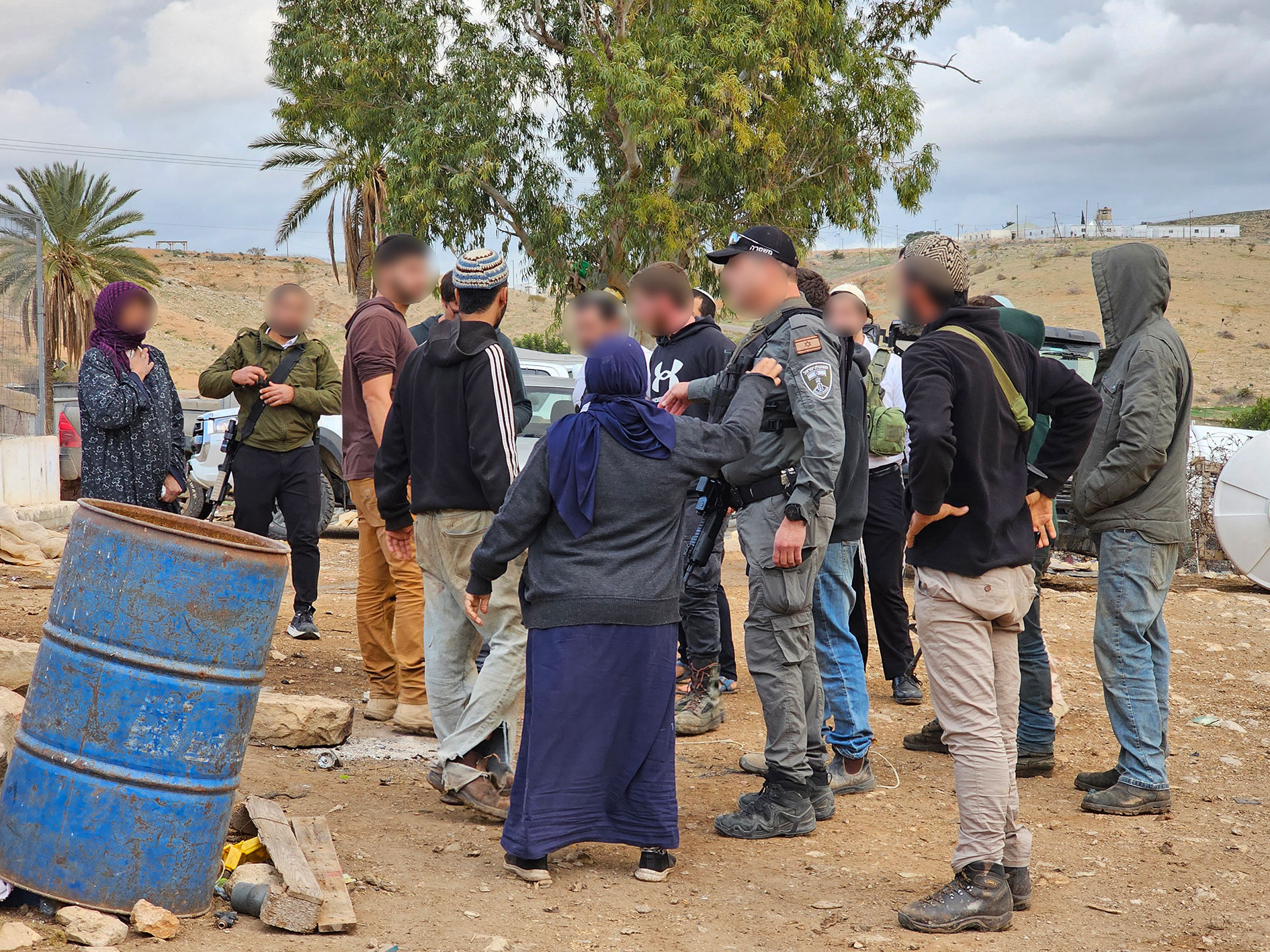 Sarah PostecDec-27-2026Hammam al-Malih: Border Guard and settlers in the compound
-