
Center West Bank: Settlers attack Palestinians in their villages even on Shabbat
We entered via Road 5. The house before Marda was still sporting the proud Messiah flag, with the miserable Israel flag rolled around its flagpole by the wind. This time, too, soldiers’ presence was doubtful. The road to Marda was open, as it was last week. The road to Zeita Jama’in has been closed for years.
The sign opposing the Oslo Accords a little before the Tapuach Junction is still in place: “Settling A and B Areas annul the Oslo Accords with one’s feet”. This week, too, stops at the Tapuach Junction bear the Messiah flags.
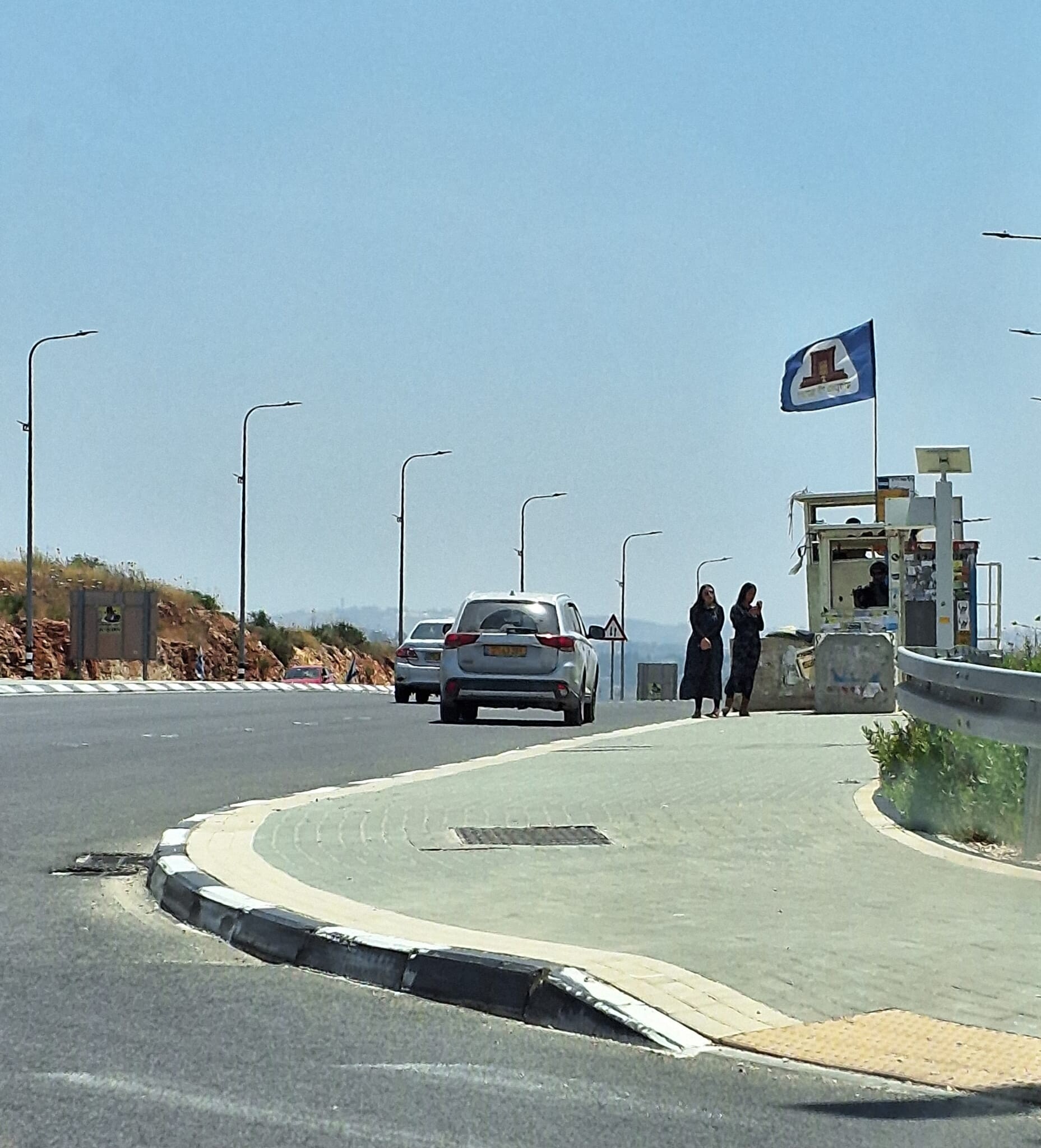
Arriving at Za’atara turnoff (just after the Tapuach Junction), we decided to enter Yatma village. We entered driving slowly, thinking we would find some open shop and ask the people there what was going on. Rather quickly, a vehicle that passed us up stopped and its passengers asked whether we needed help or were lost. Fathiya explained who we were and why we were there. They suggested we go to the local council, called up to make sure someone there could receive us, and then told us to follow them and led us to the local council. We were then warmly welcomed by the treasurer, Said Snobar, and another employee. The head of the council, Ahmad Snobar, was not there.
We heard from them that Yatma, like many other Palestinian villages in the Occupied Territories, suffers from on-going harassments by settlers from Rechelim, Evyatar and Tapuach settlement. They come down to the village at night, cut down olive trees, and harm fruit tree groves. The residents can hardly go down to their groves close to Evyatar, fearing that armed settlers would injure them. Thus, they have de-facto lost much of the village’s farmland.
Another problem is the expected confiscation of land belonging to Yatma, Yassouf and Louban a-Sharqiya. These villages are situated in the Wadi a-Sha’er area, near the Bedouins’ homes on the outskirts of Louban a-Sharqiya village (whom we visited 2-3 weeks ago), in favor of creating sewage pipes for the settlers . The villagers showed us an order signed by the DCO Water Officer.
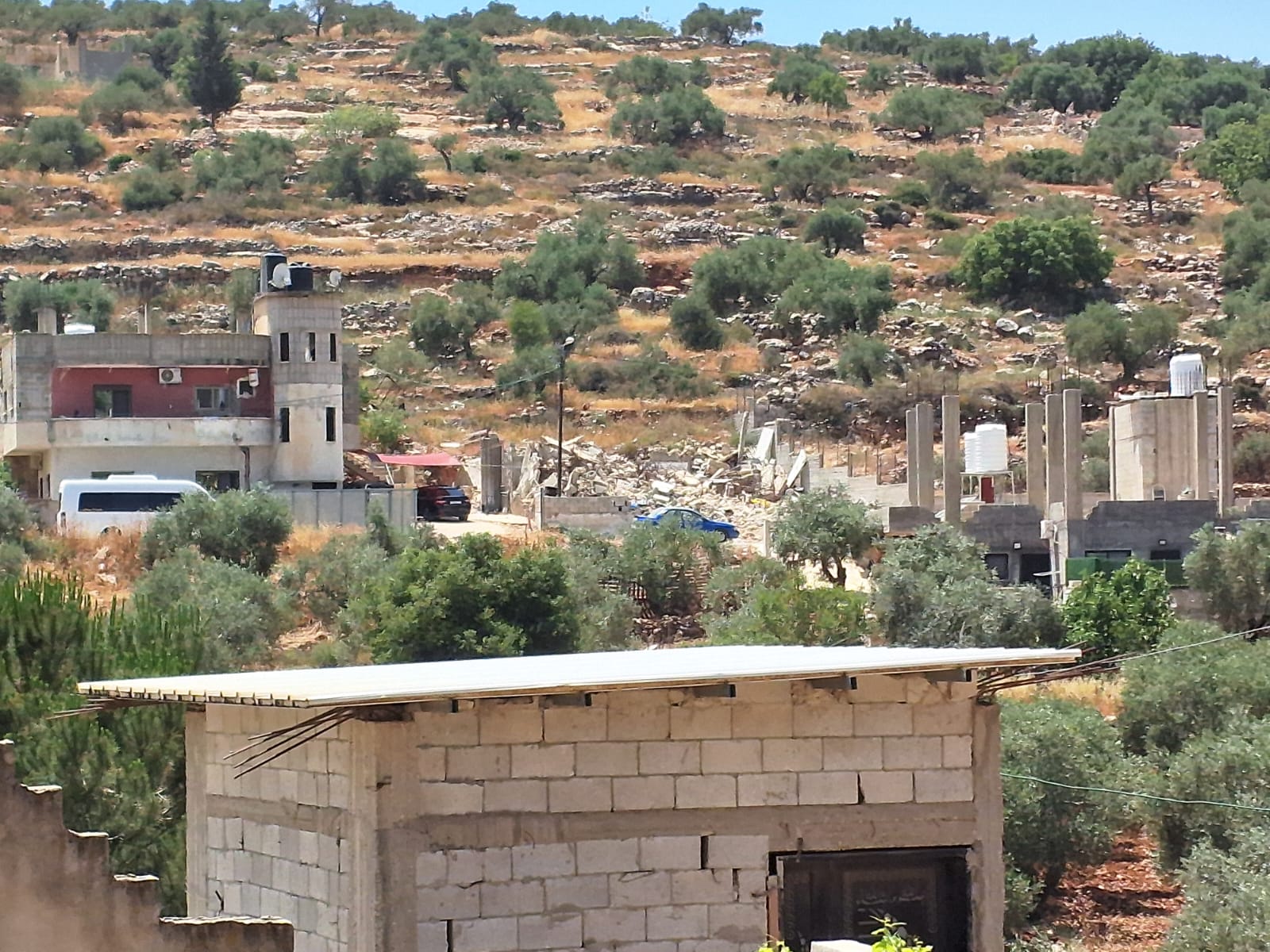
Some of Yatma land is situated inside Area C. Thus, villagers are not allowed to tend their fields or build there. From the council house window, we saw a house that was already demolished, and others under construction have been issued cessation-of-work orders.
On Saturday, June 6th, harsh scenes and news from Huwara and Einabus were publicized, where settler terrorists attacked Palestinians and stole sheep. We decided to go to Einabus and try to hear testimonies of Saturday’s events.
Einabus is entered through Huwara. We drove along Huwara’s main road and turned toward Einabus. Here too, we drove slowly and stopped by shops. Immediately the car was approached by residents who thought we had taken a wrong turn and offered to help. When we explained who we were, they said we should find someone in the shop from the family that had been attacked. They instructed us to park near the shop and the fellow took us in his car to the family home.
We were shown into the living room and welcomed by the women, young and old as well some children. We were immediately treated to coffee and soft drinks, and the women told us about Saturday’s incidents, and sent us photos and videos taken that day.
According to the family, dozens of Yitzhar settlers came to their home during the day.
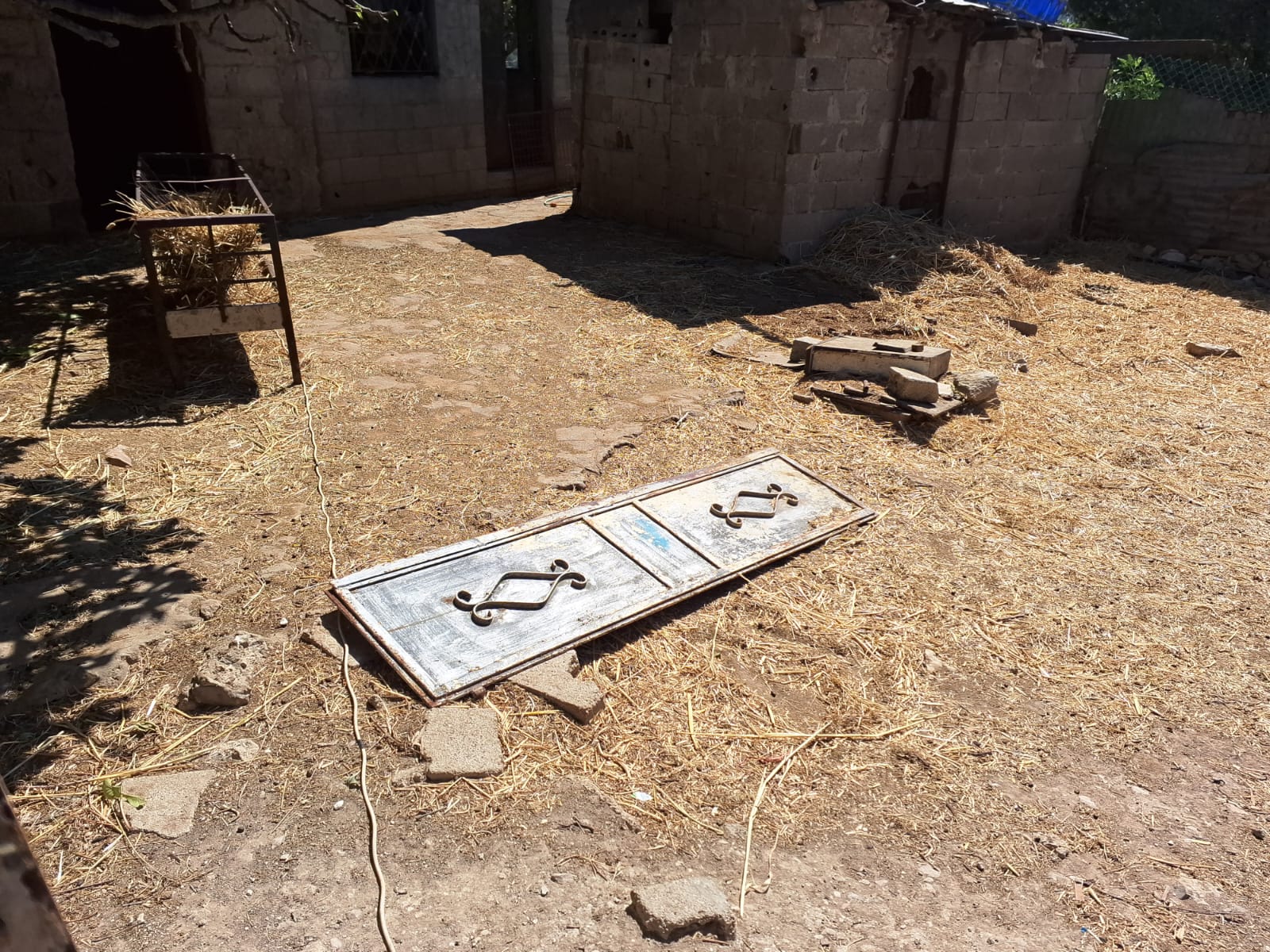
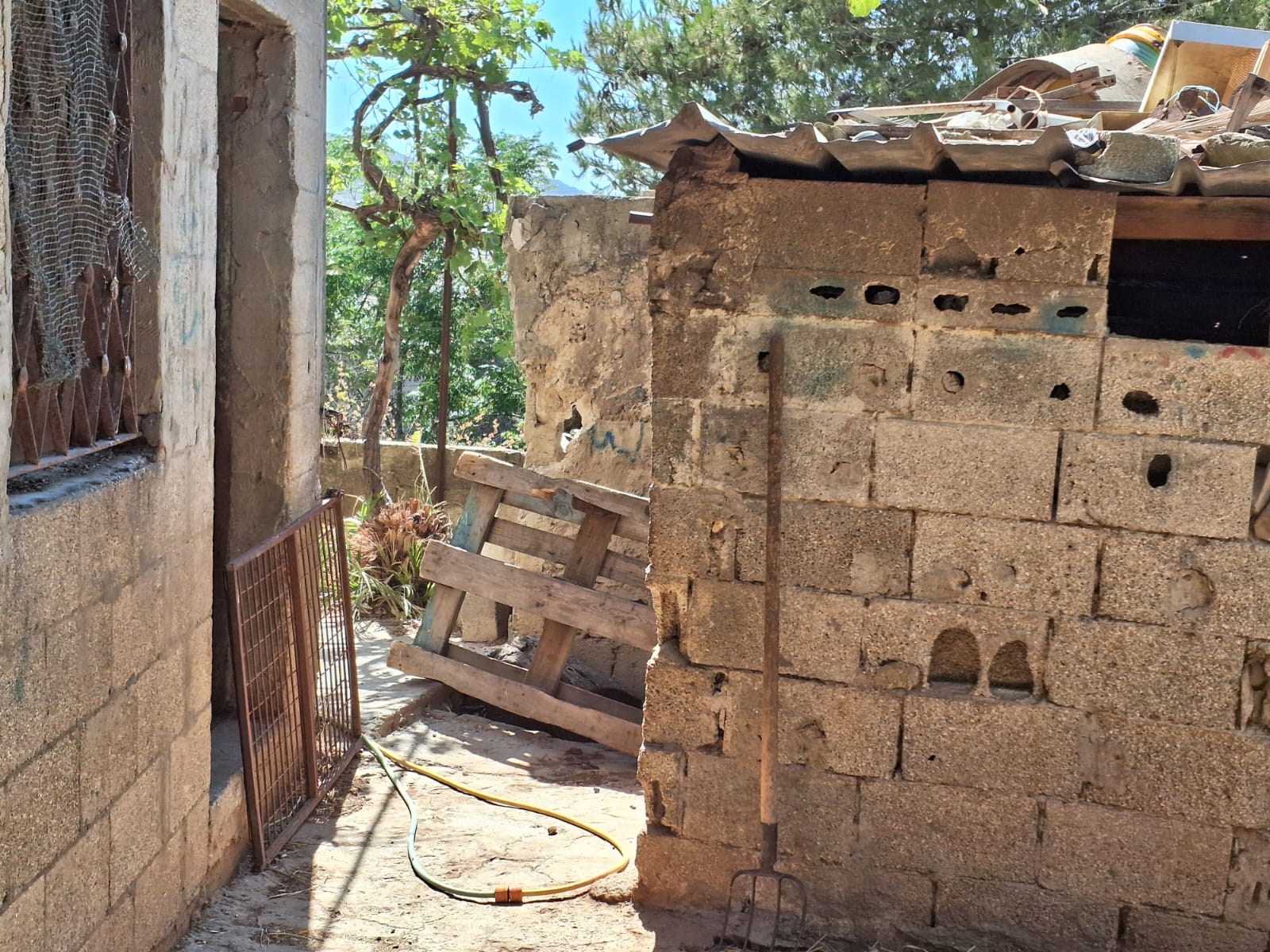
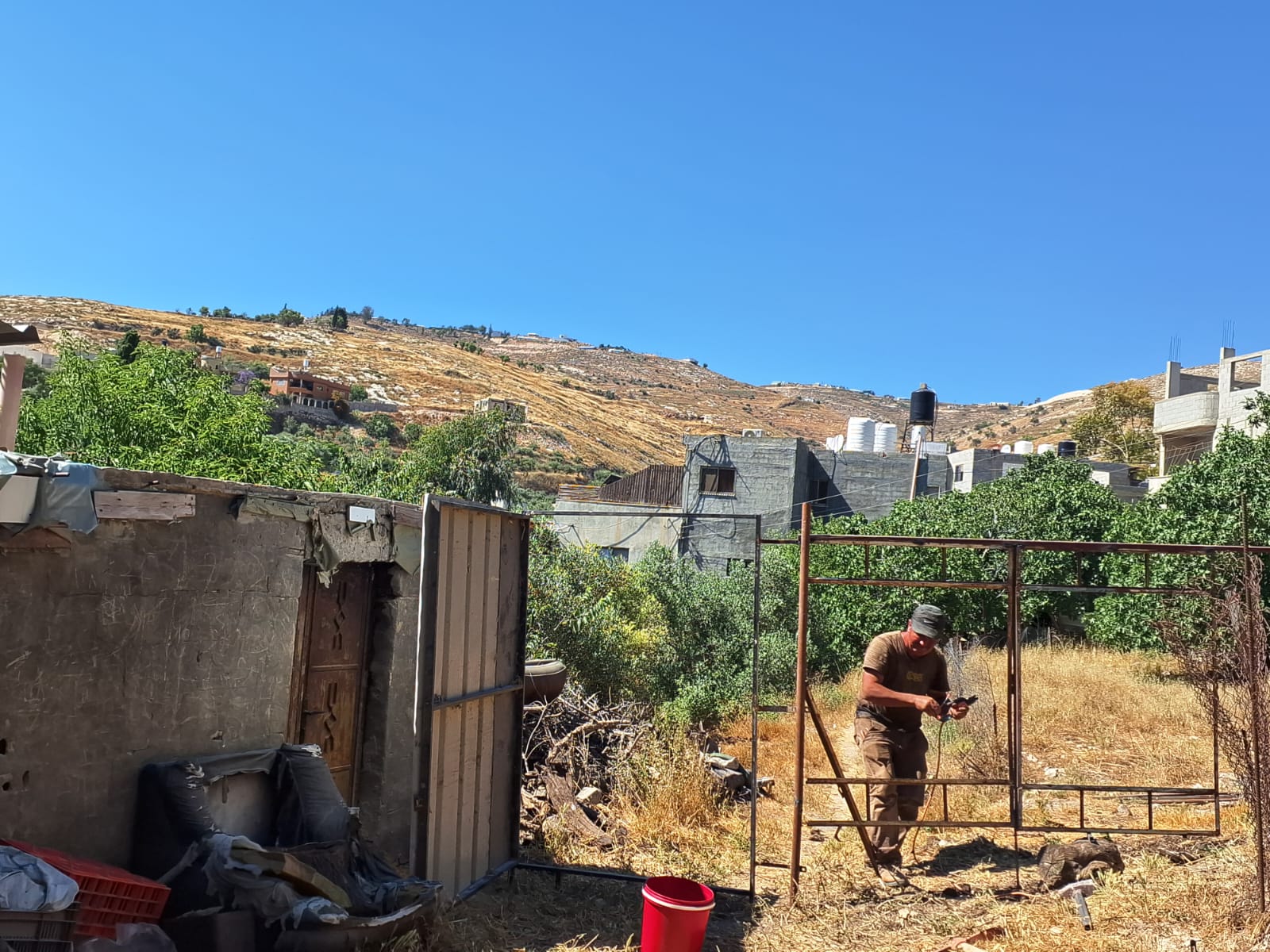
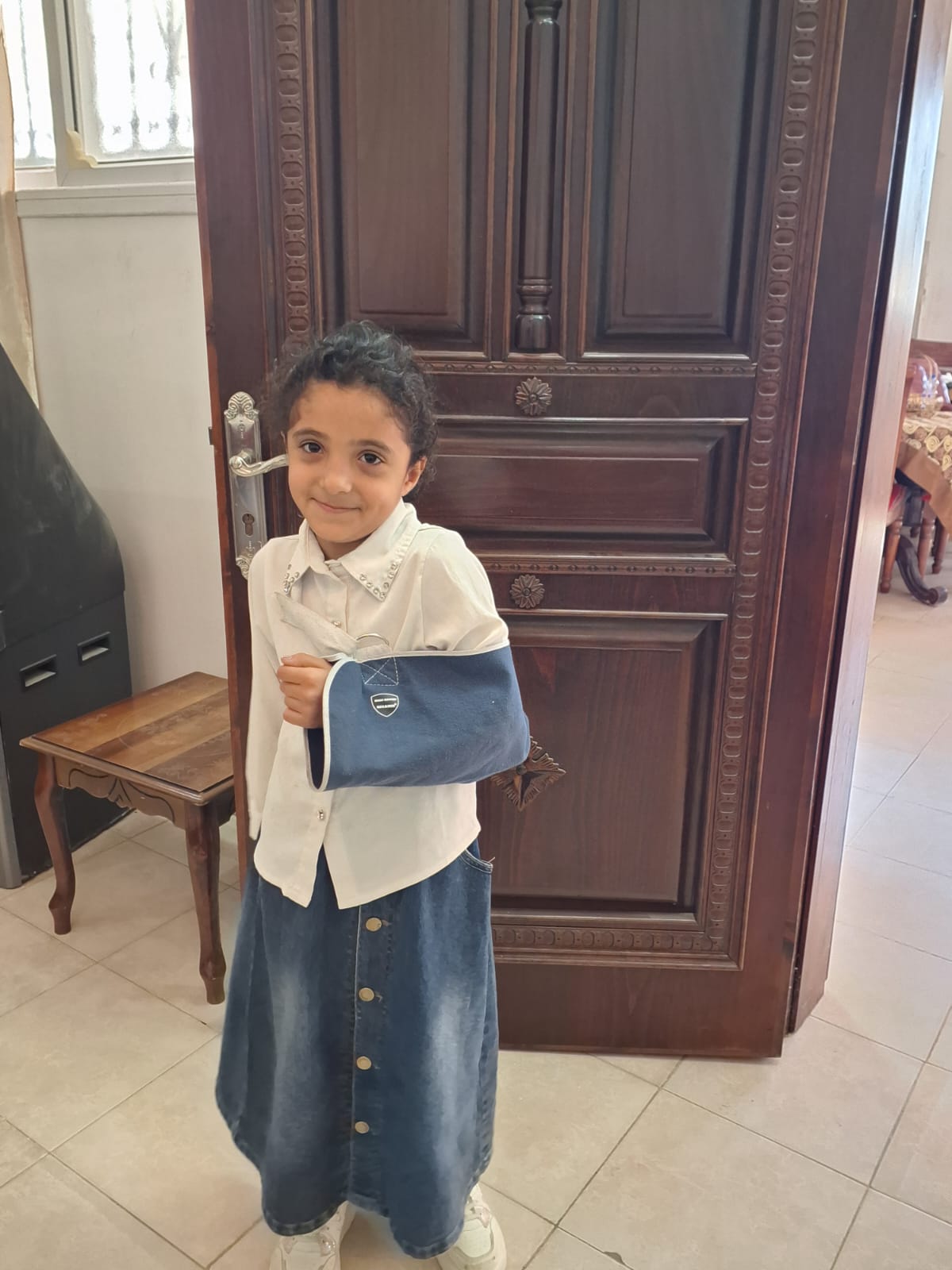
Some were armed, some masked, holding clubs. They broke the iron doors of the yard, and attacked a woman in her eighties, who has been suffering severe shoulder pain. They also attacked her elderly husband, her 8-year-old granddaughter (whose arm was fractured), and the two older sons who needed medical attention. One of them was attacked with a stick that had nails at its end, and was also wounded in his arm.
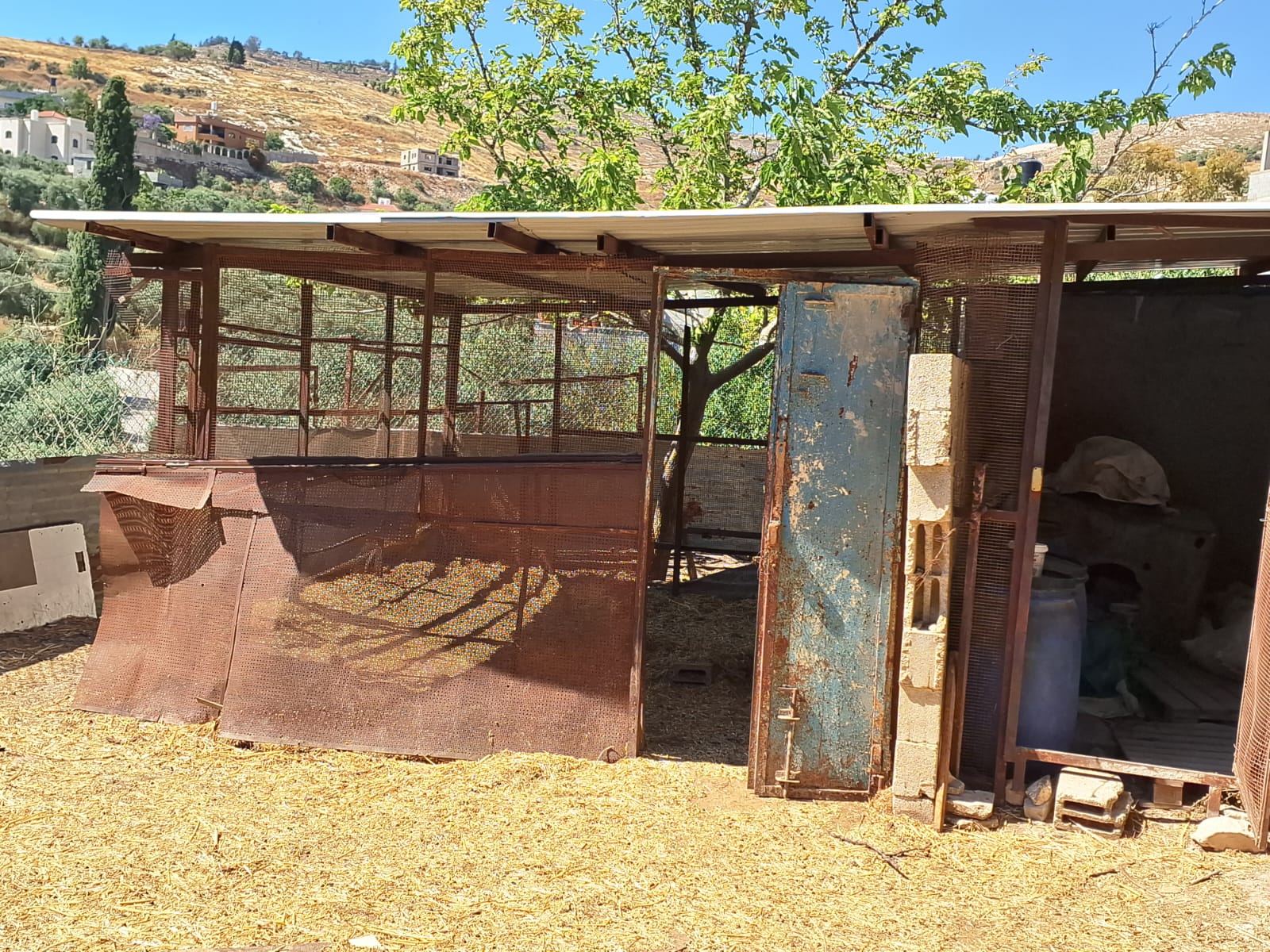
Then the settlers entered the sheep pen, sprayed about thirty sheep and stole them. According to the family, spraying was the settlers’ way of enabling themselves to claim later – to the police or DCO – that the sheep had been their own and the Palestinians were the ones to steal them. That they had only come to bring them back. In addition, they stole the sheep’s feed sacks, shot one sheep dead and stole the jeep of one of the sons.
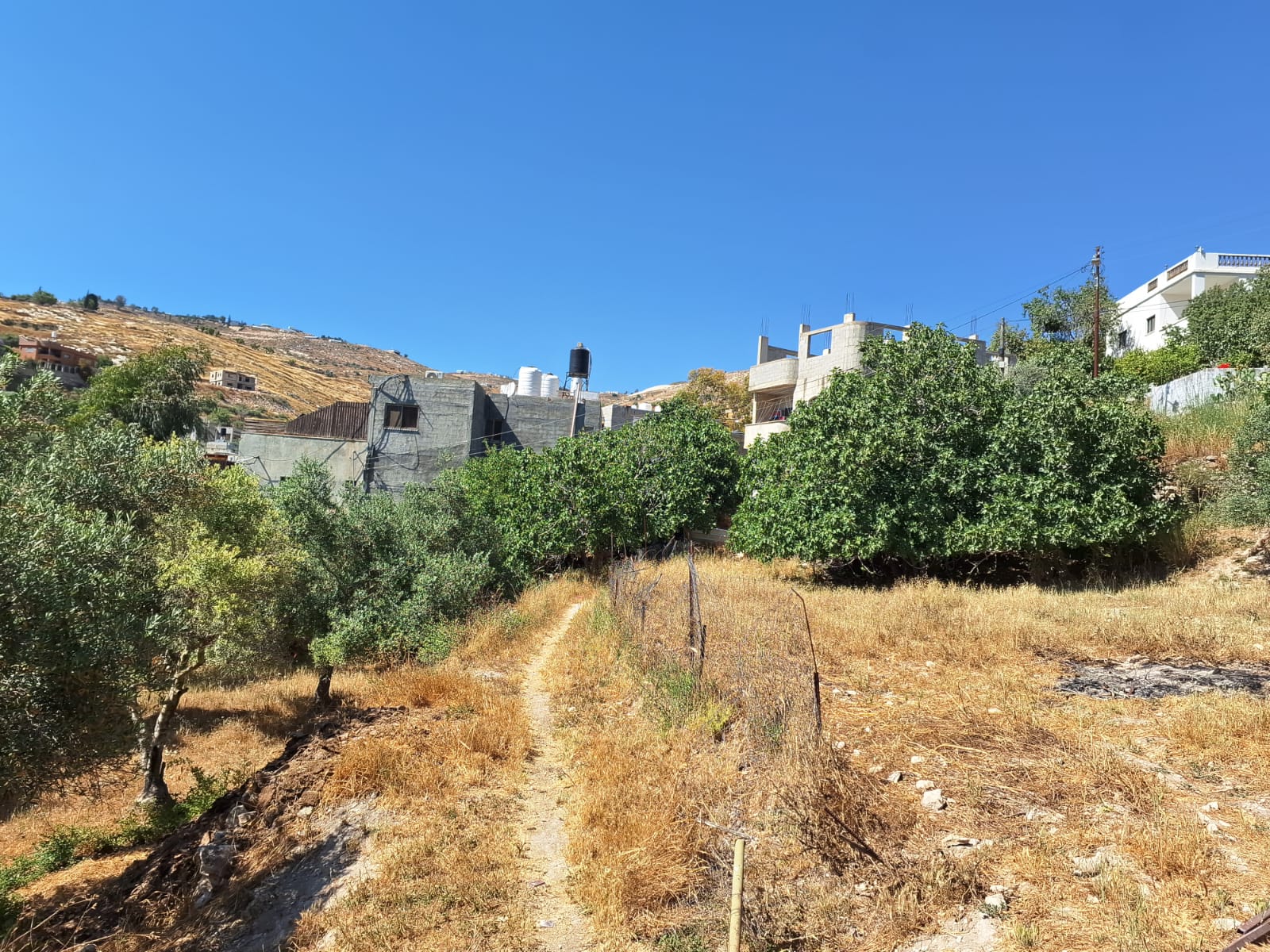
Youngsters from the village chased the settlers and managed to bring back some of the sheep. Later, soldiers arrived and prevented the youngsters from continuing to chase the settlers. The family’s small children are still very frightened. We went out to the yard with them and took photos.
We took leave of the family and were driven back to our car. There, from the main road of Einabus, we were shown a hill to the south of the village where another outpost was erected. The residents did not know its name, but settlers come down from it nearly every day and attack them. At the top of the hill, a flag is noticeable, but distance prevents knowing whether it is the Israel or the Temple flag.
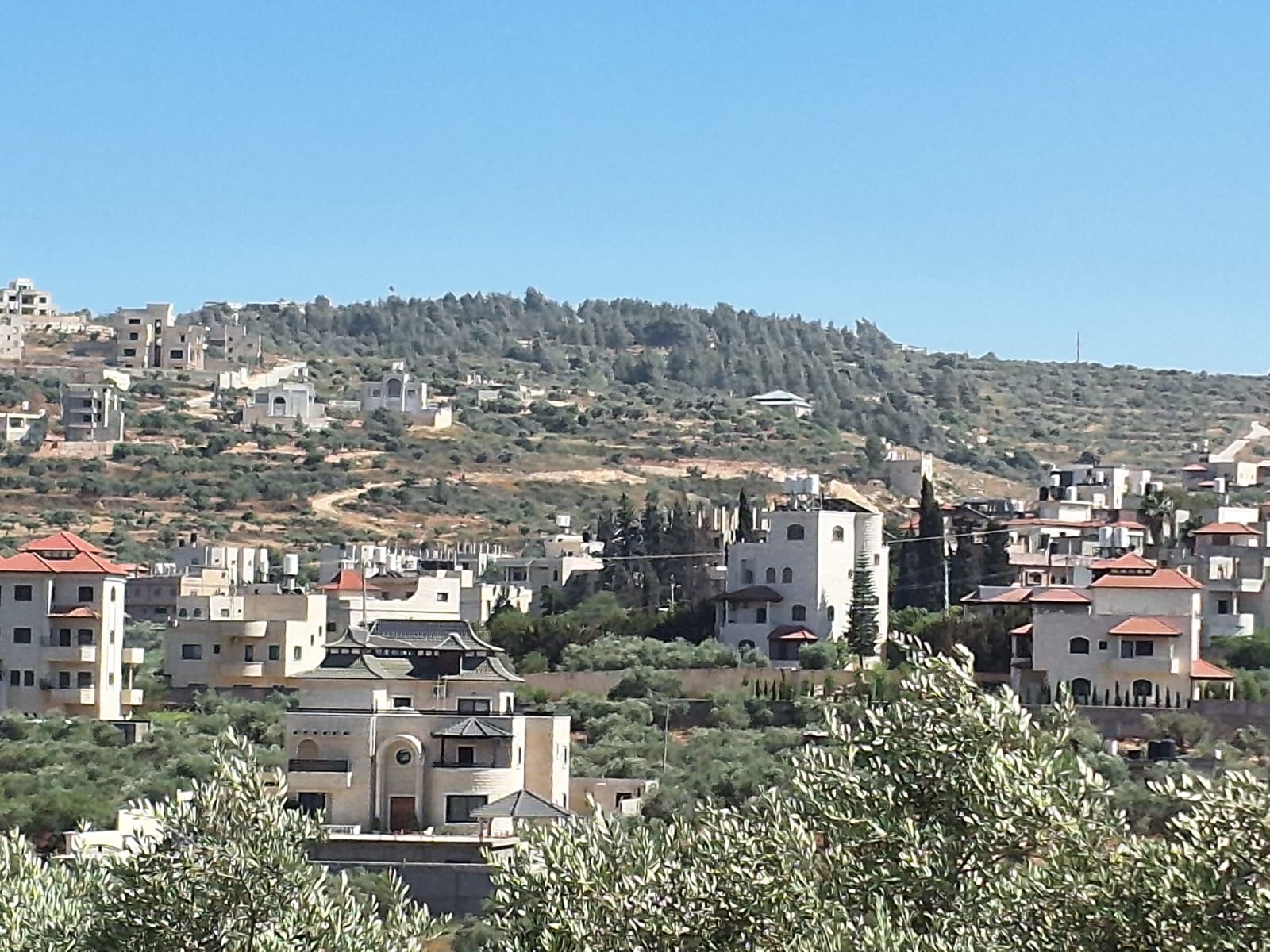
From there, we returned to Huwara, and continued toward the checkpoints on the roads leading to Nablus from Awarta and Beit Furik. Both were unmanned by soldiers, and traffic flowed.
Going to Burin, we stopped this time near a sign praising the settlers of Sanur, and took a photo.
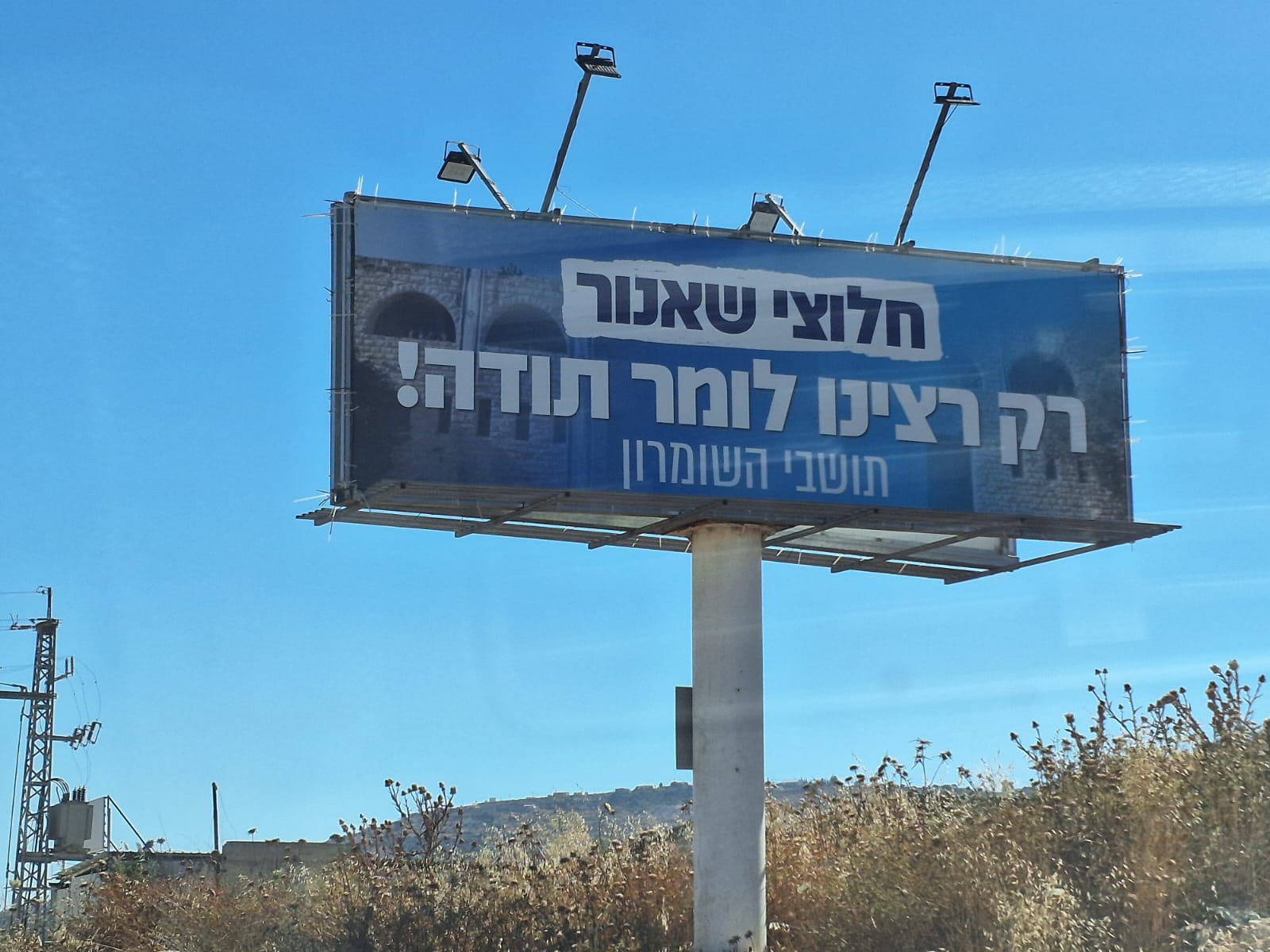
We drove to visit our friend Doha at Burin. She tells us that Burin has been in a dire situation even earlier. At times accompanied by soldiers, settlers walk around amid houses every day at every hour, attacking whoever comes their way.
Location Description
'Einabus
See all reports for this place-
'Einabus
A village in the Nablus district, west of Hawara, numbering about 3,000 people. 85% of the village's land in Area B, 15% in Area C. 114 dunams of its land were expropriated to establish the violent settlement of Yitzhar and its outposts. Due to the proximity and violence of the settlers sitting on the top of the mountain to invade the village lands, the inhabitants of Einabus regularly suffer from harassment by settlers throwing stones, smashing windows, cutting down olive groves, as well as arson of vehicles and fields. All these were intensified in the second decade of the 21st century.
-
Burin (Yitzhar)
See all reports for this place-
Burin (Yitzhar)
This is a Palestinian village in the Nablus governorate, a little south of Nablus, on the main road passing through the West Bank. The settlements: Yitzhar and Har Bracha, settled in locations that surrounded the village, placed fences so it is cut off the main road.
There are around 4000 inhabitants. Most of them are engaged in agriculture and pasture, although many graduates of the two secondary schools continue to study at the university. Academic positions are hardly available, they find work as builderd, or leave for the Gulf countries.
The village lands were appropriated several times for the establishment of Israeli settlements and military bases, and as a result, Burin's land and water resources dwindled. lSince 1982, more than 2,000 dunams of village land have been declared "state land" and then transferred to Har Bracha settlement.
Over the past few years and more so since 2017, the villagers have been terrorized by the residents of Yitzhar and Har Bracha, the Givat Ronen outpost and others. Despite the close proximity of soldiers to an IDF base close to one of the village's schools, residents are suffering from numerous stone-throwing events, vehicle and fire arson, also reported in the press.
In 2023, the prevention of the olive harvest in the village plot was more violent than ever. Soldiers and settlers walked with drawn weapons between the houses of the village and demanded that people stop harvesting in the village itself and in the private plots outside the village. The settlers from Yitzhar and Giv'at Roned raided the olive groves and stole crops. 300 olive trees belonging to the residents of Burin, near Yitzhar, were uprooted. The loss of livelihood from the olives causes long-term economic damage to the farmers' families, bringing them to the point of starvation.
(updated for November 2023)
-