
Qusra and Burin: Field Testimony on Roadblocks, Outposts, and the Shrinking Space for Living
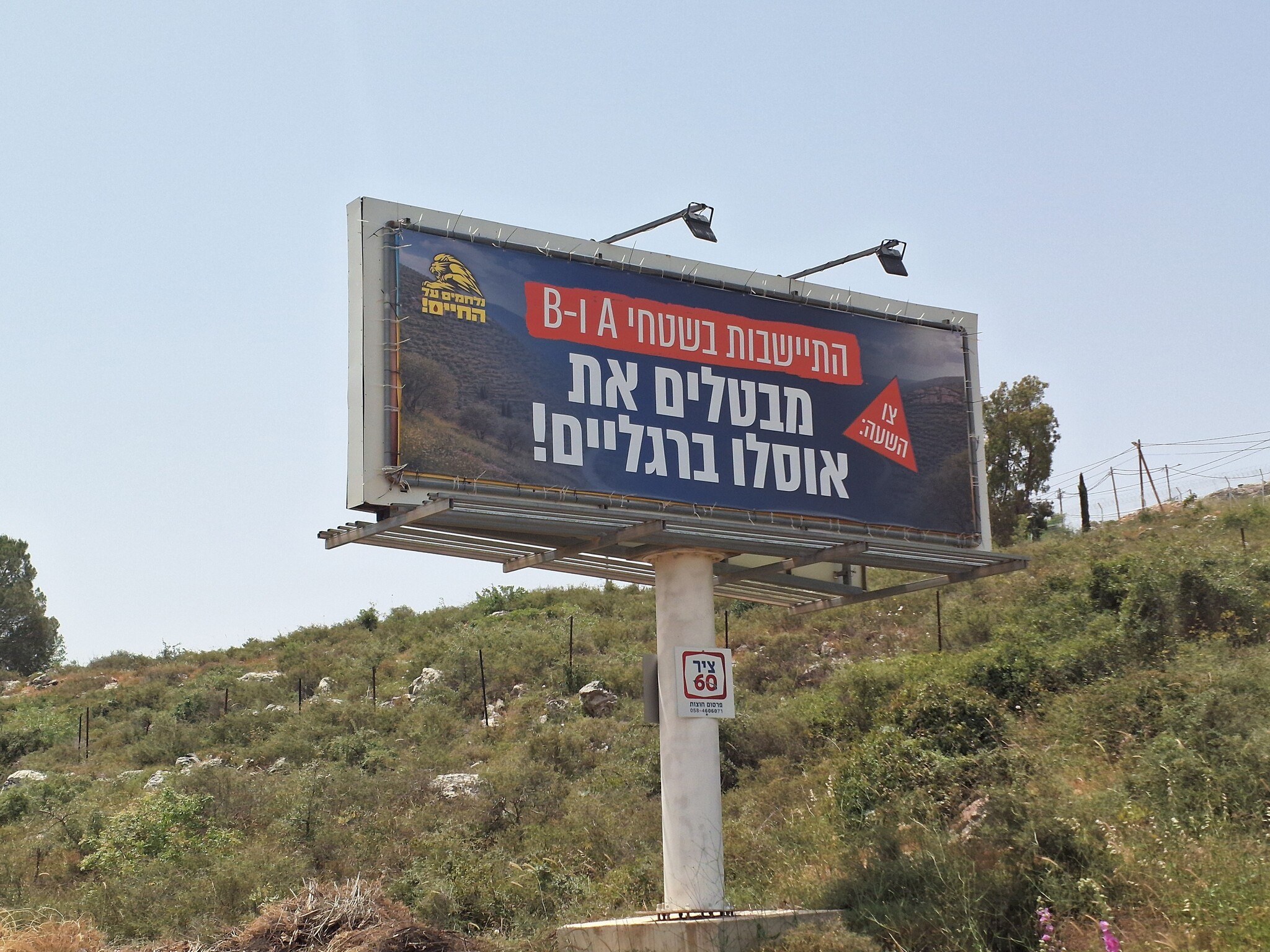
We entered the area via Road 5. On our way we saw soldiers at their posts in Gitai Junction as well as near the hitch-hikers station after the Ariel roundabout. At the house just before Marda village we still saw the Messiah flag waving proudly beside a measly, torn Israel flag, but no soldiers. The road to Marda was open. The road to Zeita Jama’in has been closed for years. A bit before reaching Tapuach (Za’atara) Junction we saw a sign saying “Feet Annul the Oslo Accords”. Yes, they are doing just that…
At Tapuach Junction, heading south (toward Road 60 South, in the direction of Yatma), we saw Messiah flags on bus stops, next to soldier posts.
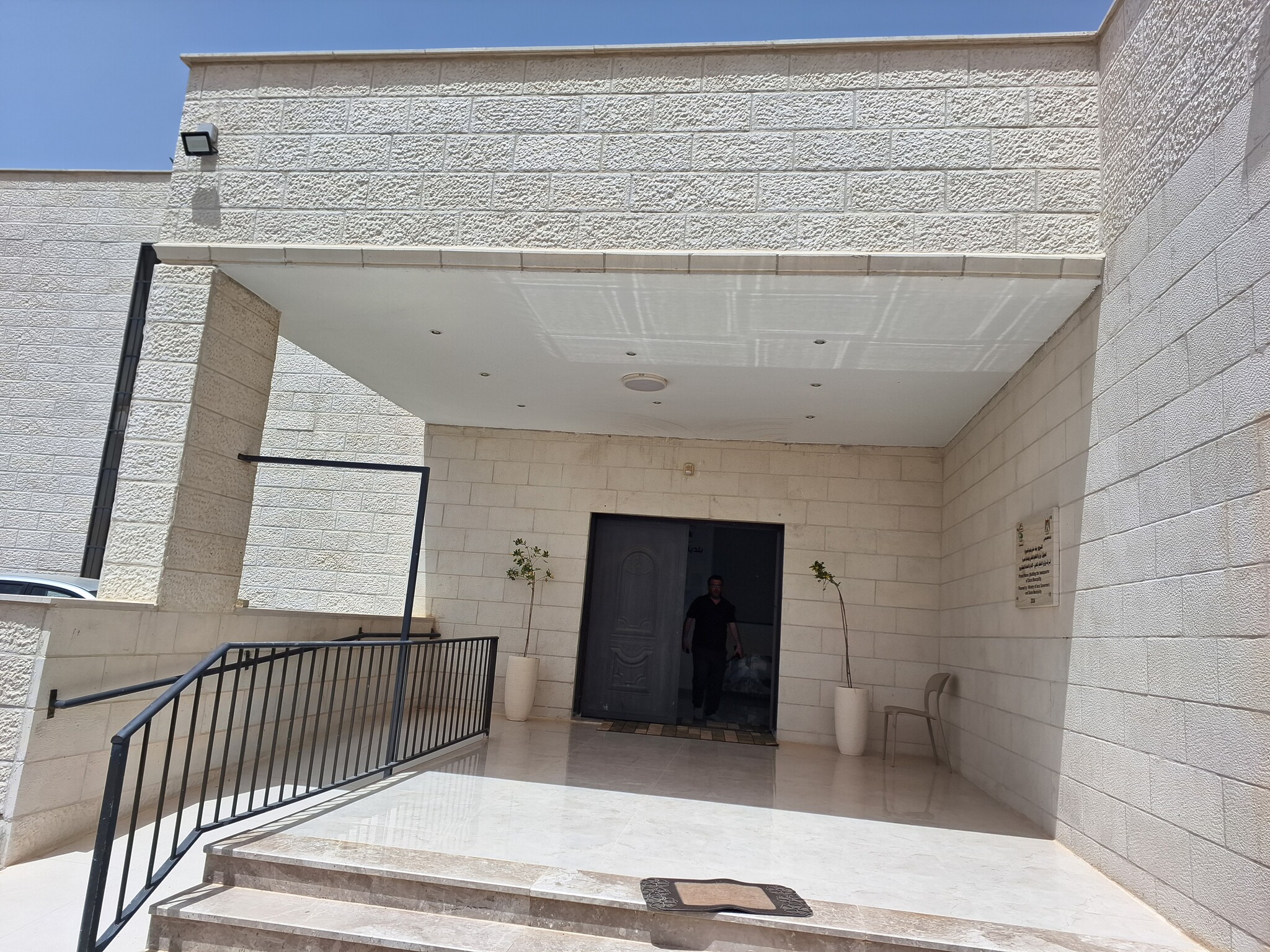
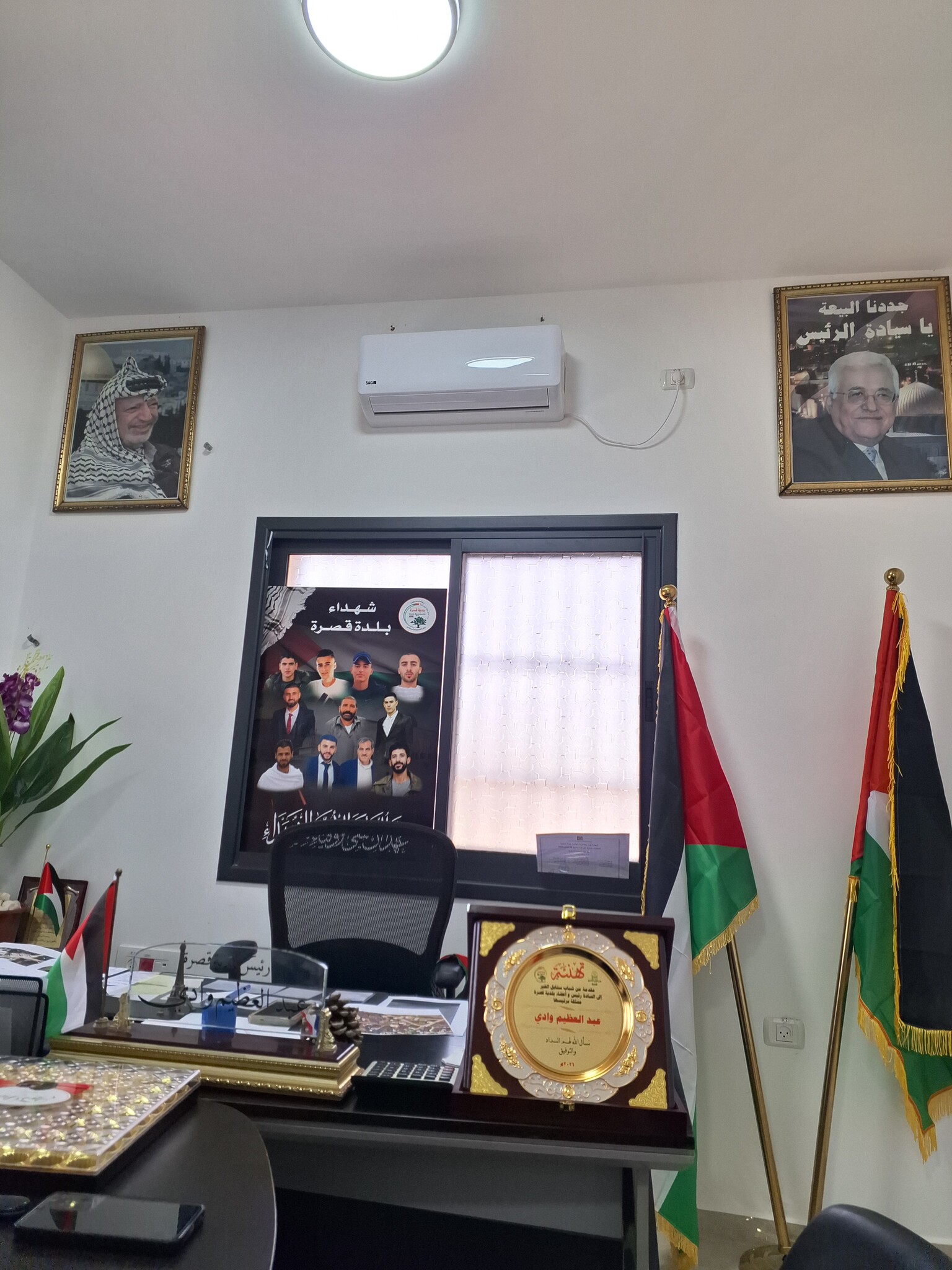
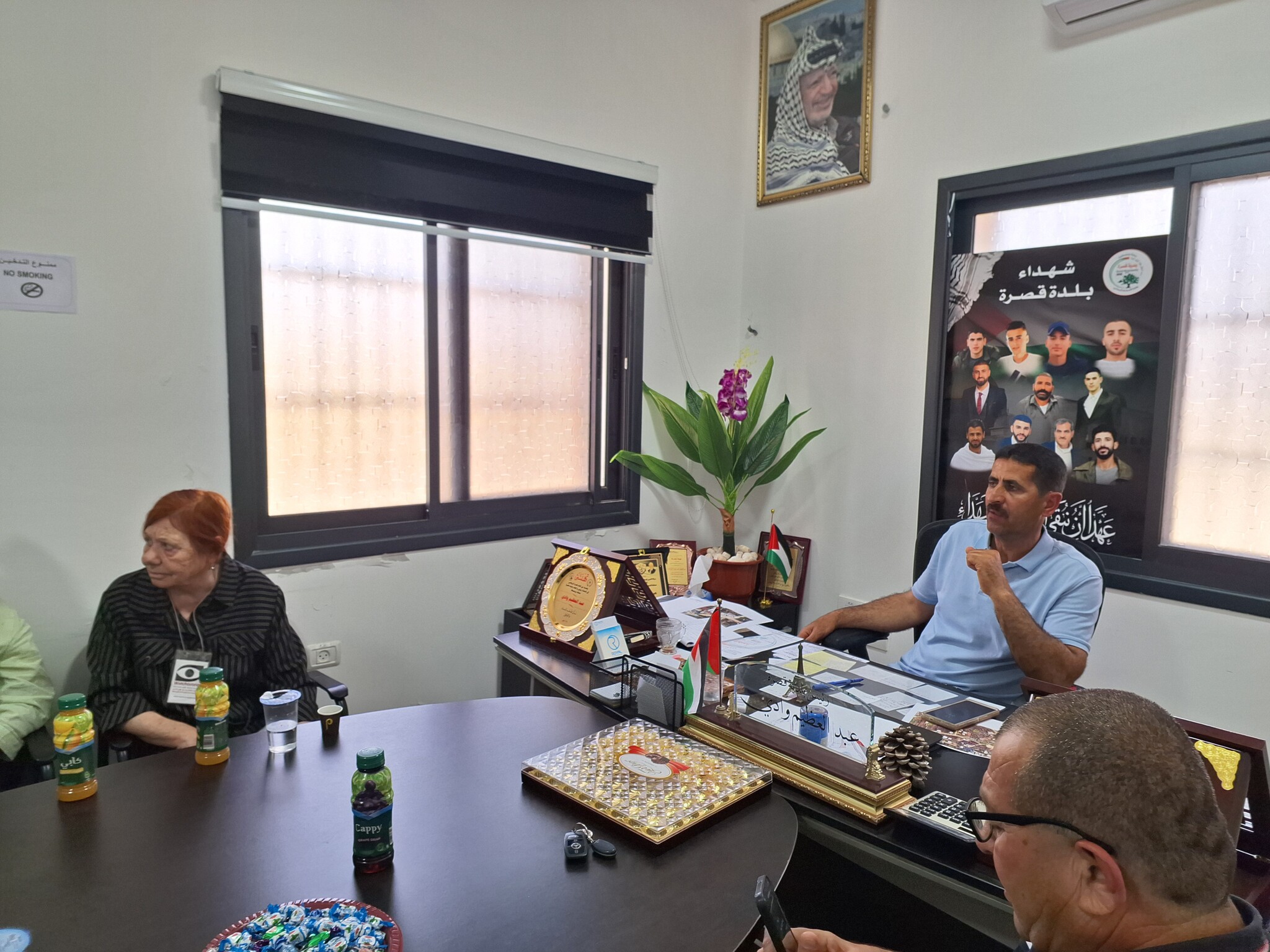
We entered Qusra via Jurish. Fathiya had set a meeting with the head of the local council, Abed Al Ghathim Wadi, and we met him at the council house. It is a new, nice-looking building, and his own room is quite impressive. There are portraits of Arafat and Abu Mazen on the wall, as well as a picture of the village’s shaheeds (martyrs).
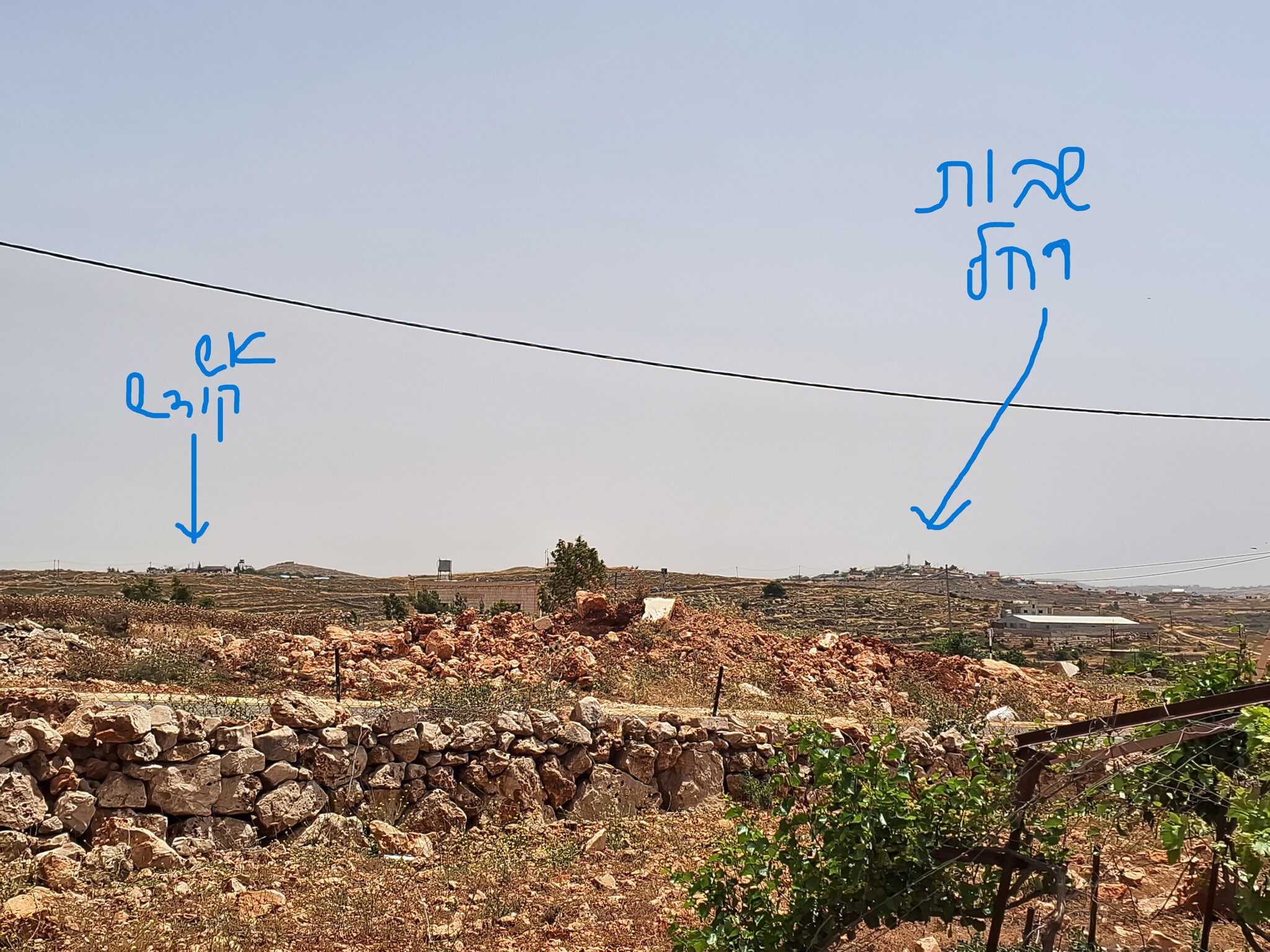
The conversation was joined by several residents. This is what we were told: Qusra is surrounded by five settlements and settlers’ outposts – Migdalim, Shevut Rachel, Ahiya, Adei Ad, and Esh Qodesh. They say that Esh Qodesh is the most violent. There are shacks on all the surrounding hills, flags and Stars of David, and from there the settlers come down to harass Qusra residents, especially on Saturdays.
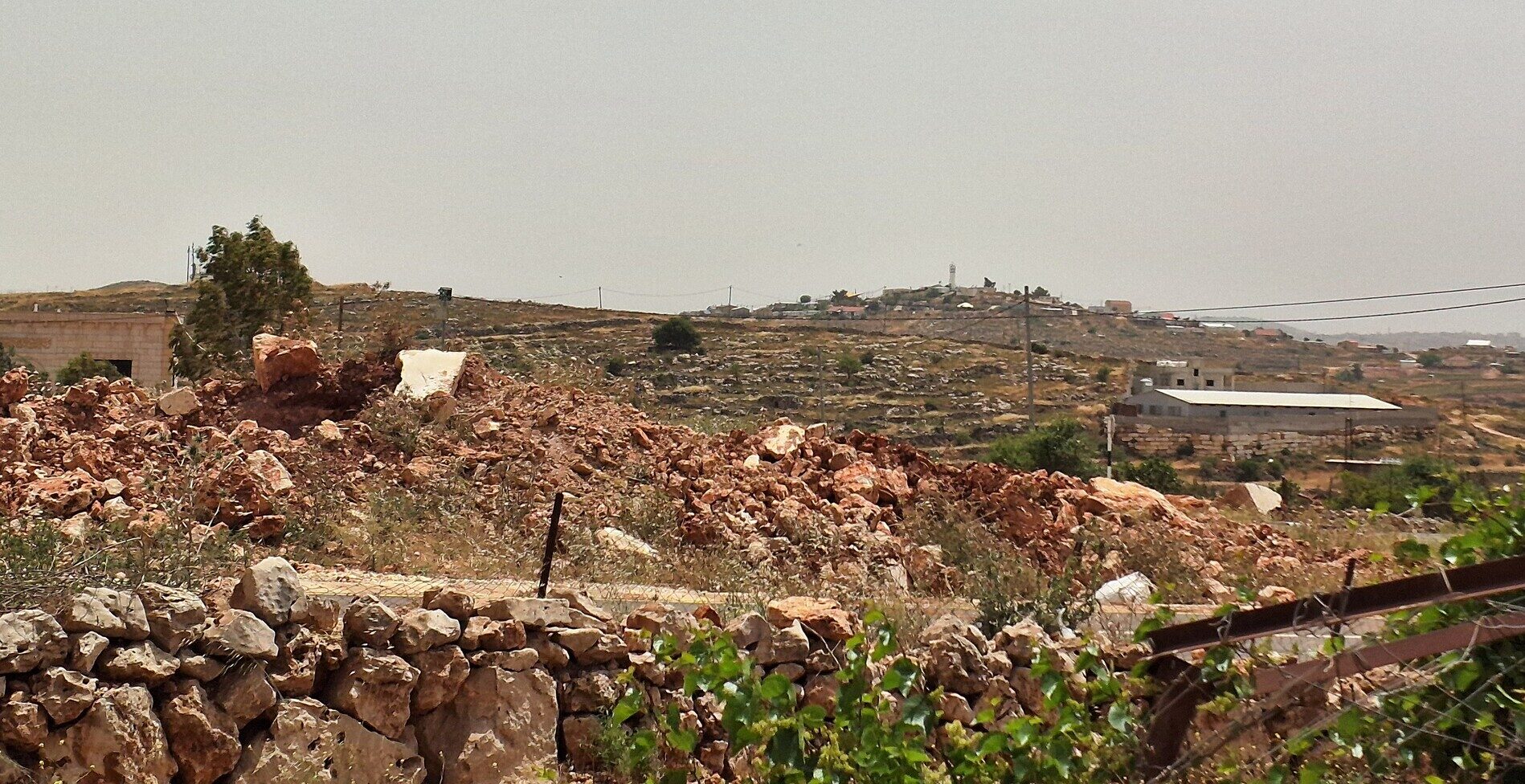
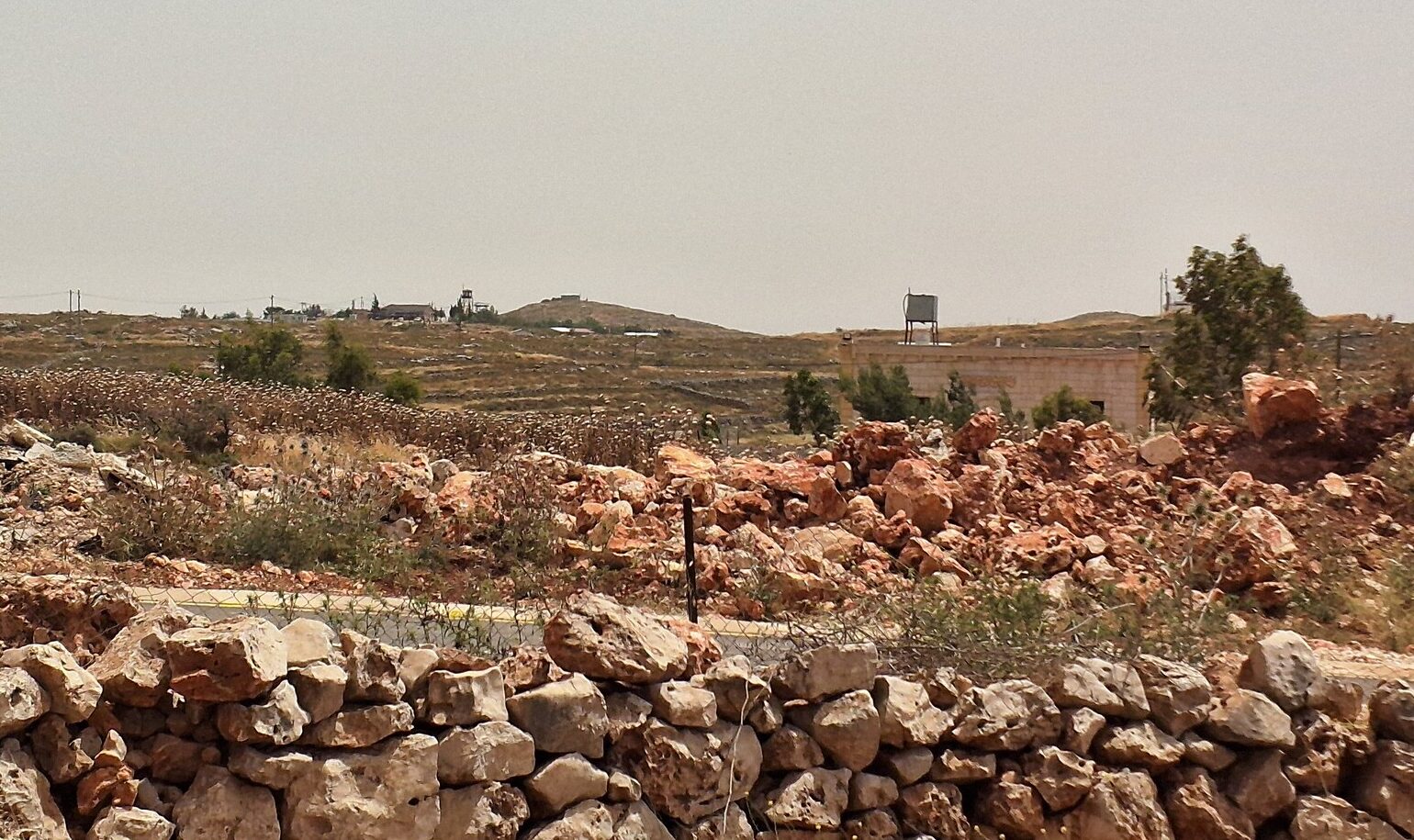
Qusra village is divided between Area B and Area C. Now the villagers are no longer permitted to enter Area C to tend their fields that were their source of livelihood. The head of the local council said that Qusra now has only 6,300 dunams out of its previous 27,000.
We were told that 6 of the martyrs in the picture were killed on a single day. Not one of the martyrs was a Hamas member, they were all Fatah and not at all terrorists.
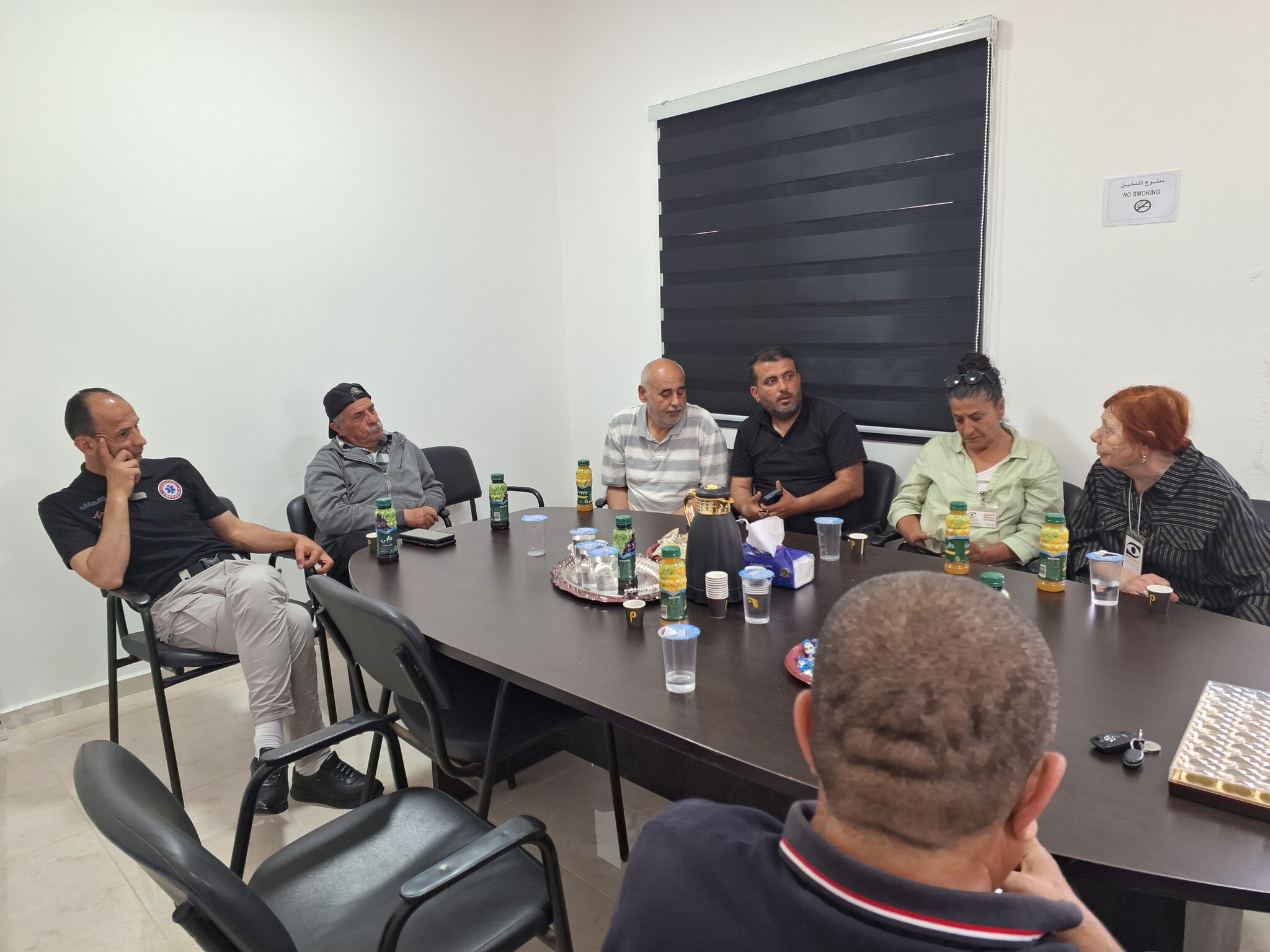
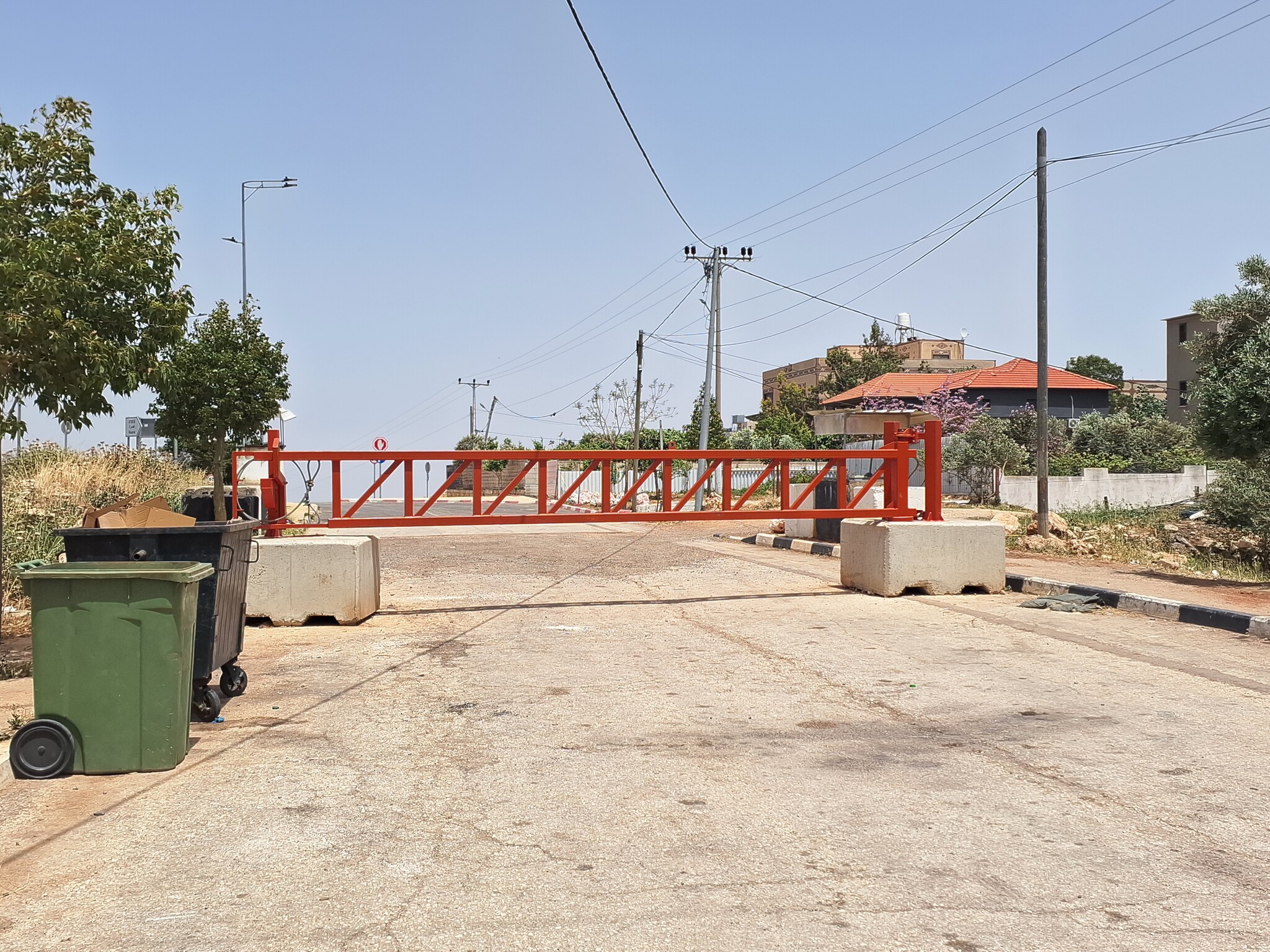
“Qusra is jailed”, that is how they define their situation. They say the settlers have a watchtower and when they see someone exiting his home, they immediately come down to pounce. The gate placed by the Israeli army at the main entrance to the village from Road 505, near Migdalim settlement, has been closed since October 7, 2023 and not opened at all. The residents are forced to drive a very long way to exit the village for errands, shopping or medical treatment. In urgent cases, a very ill person or a woman in labor, they have to go through the back-to-back procedure (one ambulance comes from inside Qusra to the closed gate and another awaits it outside the gate, the patient or woman have to be taken down from one ambulance and transferred to the other).
Then one of the residents took us on a tour and showed us Shevut Rachel and Esh Qodesh. We went to photograph the closed gate at the main entrance to the village. We were told that Migdalim settlers used to have good relations with Qusra residents, they would come to shop in the village. Since October 7th the gate is closed and they have stopped coming. The guardsman of Migdalim who used to have good relations with Qusra residents was replaced by a guardsman from Esh Qodesh. When we went down to take pictures, the villager with us got very stressed and asked us to hurry, fearing that guardsman would see us so we’d all get in trouble.
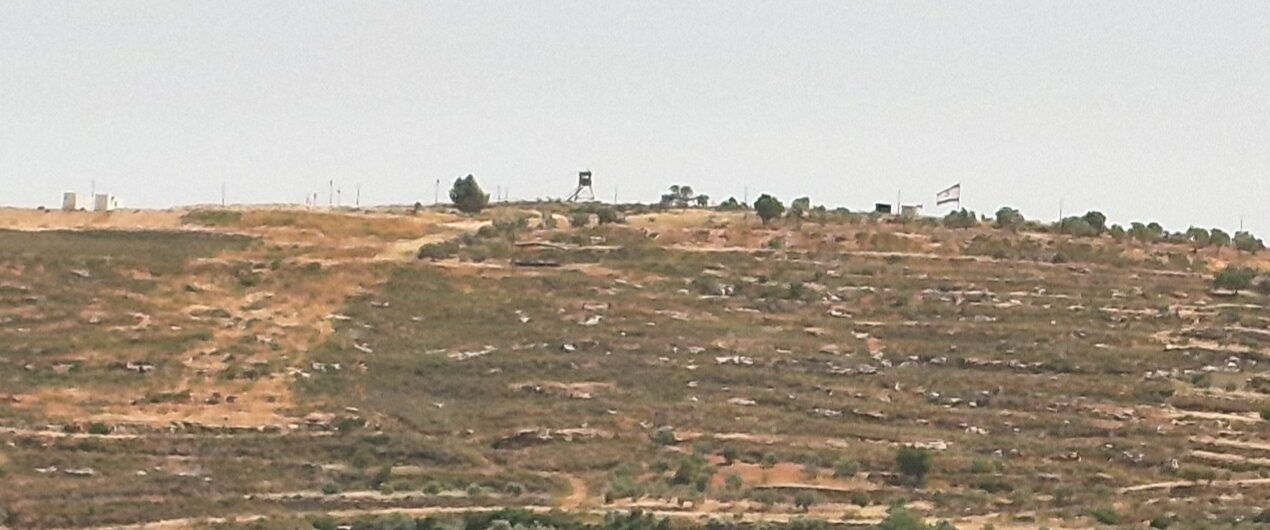
Anat took a picture of a hill sporting a flag heading toward Jurish. Then we both took a photo on the other side as well, the way from Jurish to Road 505.
Opposite Evyatar we saw a tent among the trees. At Tapuach Junction we saw the Temple flag over the bus stop. There were no soldiers posted at checkpoints on roads leading from Awarta and Beit Furik to Nablus, only in the watchtowers. As a result, there were no traffic jams, traffic was flowing. At the entrance to Itamar settlement were Messiah flags. The Junction post near the old checkpoint was manned by soldiers in posts near the hitch-hikers station.
At Burin, this morning, the gate was closed. The deputy principal of the Burin school, himself from Qusra and present in our visit to the council house, said that this morning he drove to work as usual, always the long way. Coming to Burin, he found the gate closed. He was therefore forced to return to Huwara, leave his car there, take a taxi to the Burin gate and walk a long way to the school itself.
We visited D., who said that earlier, settlers accompanied by soldiers came into Burin as usual and harassed people. They yelled at children and chased them. The Al Muraba’a checkpoint separating Burin and Nablus has been closed for several days now. A few days earlier, a new outpost was established near the checkpoint, several caravans on Burin and Madama lands. They said the settlers also took water and electricity from Madama.
Location Description
Burin (Yitzhar)
See all reports for this place-
Burin (Yitzhar)
This is a Palestinian village in the Nablus governorate, a little south of Nablus, on the main road passing through the West Bank. The settlements: Yitzhar and Har Bracha, settled in locations that surrounded the village, placed fences so it is cut off the main road.
There are around 4000 inhabitants. Most of them are engaged in agriculture and pasture, although many graduates of the two secondary schools continue to study at the university. Academic positions are hardly available, they find work as builderd, or leave for the Gulf countries.
The village lands were appropriated several times for the establishment of Israeli settlements and military bases, and as a result, Burin's land and water resources dwindled. lSince 1982, more than 2,000 dunams of village land have been declared "state land" and then transferred to Har Bracha settlement.
Over the past few years and more so since 2017, the villagers have been terrorized by the residents of Yitzhar and Har Bracha, the Givat Ronen outpost and others. Despite the close proximity of soldiers to an IDF base close to one of the village's schools, residents are suffering from numerous stone-throwing events, vehicle and fire arson, also reported in the press.
In 2023, the prevention of the olive harvest in the village plot was more violent than ever. Soldiers and settlers walked with drawn weapons between the houses of the village and demanded that people stop harvesting in the village itself and in the private plots outside the village. The settlers from Yitzhar and Giv'at Roned raided the olive groves and stole crops. 300 olive trees belonging to the residents of Burin, near Yitzhar, were uprooted. The loss of livelihood from the olives causes long-term economic damage to the farmers' families, bringing them to the point of starvation.
(updated for November 2023)
-
Qusra
See all reports for this place-
Qusra
This village is located in the Nablus district, about 28 kilometers south-east of the city. Its population numbers 4,310 as of 2007 (according to the Palestinian census). After the Oslo Accords, 50% - most of the village’s built-up area – was categorized Area B, and about 70 homes as well as the rest of its land are inside Area C.
In 1983, 177 dunams of the village lands were confiscated by Israel to build a ‘Nahal’ stronghold, turned civilian in 1985 and named Migdalim settler-colony, east of the village itself. To the north-east is a gas station and a leather plant, as well as a studio producing wood ware, all of which are a branch of the settler-colony. Dozens of additional farmland were confiscated from Qussra and Jaloud in order to erect the settler-colonies Esh Qodesh and Ahiya.
“The villagers point to the settler-colonists of Esh Qodesh as the source of their problem. Qussra villagers were forbidden to tend their lands located a kilometer away from the Esh Qodesh fence, and about 20 meters from the area declared military zone. What about the ‘legitimate’ plots? Their crops are regularly destroyed by the settler-colonists. Fires break out in wheat fields, olive trees are cut down, wells are destroyed – these have all become routine events. In spite of all of this, the head of the local council sees the Israeli army as the main source. He says that the settler-colonists could not have harassed the villagers without the army backing them up…”
(From a MW report, August 3, 2015)
In 2001, the Israeli army evacuated its intelligence base “Kida”. In 2003, the settler outpost Kida was established, a quick attempt was made to evict the newcomers, but they were eventually allowed to remain.
For further information: http://vprofile.arij.org/nablus/pdfs/vprofile/Qusra_vp_en.pdf
-