
Sha'ab al-Butum - Settler Amichai Shiloh walks with his sheep through the vegetable garden
We drove to the Jabarin family in Sha’ab al-Butum, also called Umm Darit. On the way, we first passed along Highway 60, and there I was reminded of the sentence from the Haggadah: “But the more they afflicted them, the more they multiplied and the more they spread out.” Because many of the brutal roadblocks pile dirt and stones at the entrances to villaes, they are opened again and again by the Palestinians, because the need for life is stronger than anything.
For example, the road to Simiya was opened by the Palestinians.
The gate to Dahariya is still closed and there are vehicles there and the back-to-back situation continues.
The gate to Abda is closed, but alternative roads are being paved by vehicles. Once again, it is clear that the authorities are “singing with two voices.”
Before turning onto the road to Negohot, the outpost on the right is manned by soldiers monitoring the road.
Further on this road to Negohot:
In the place where the Adorayim base used to be, there is construction of a new settlement by that name.
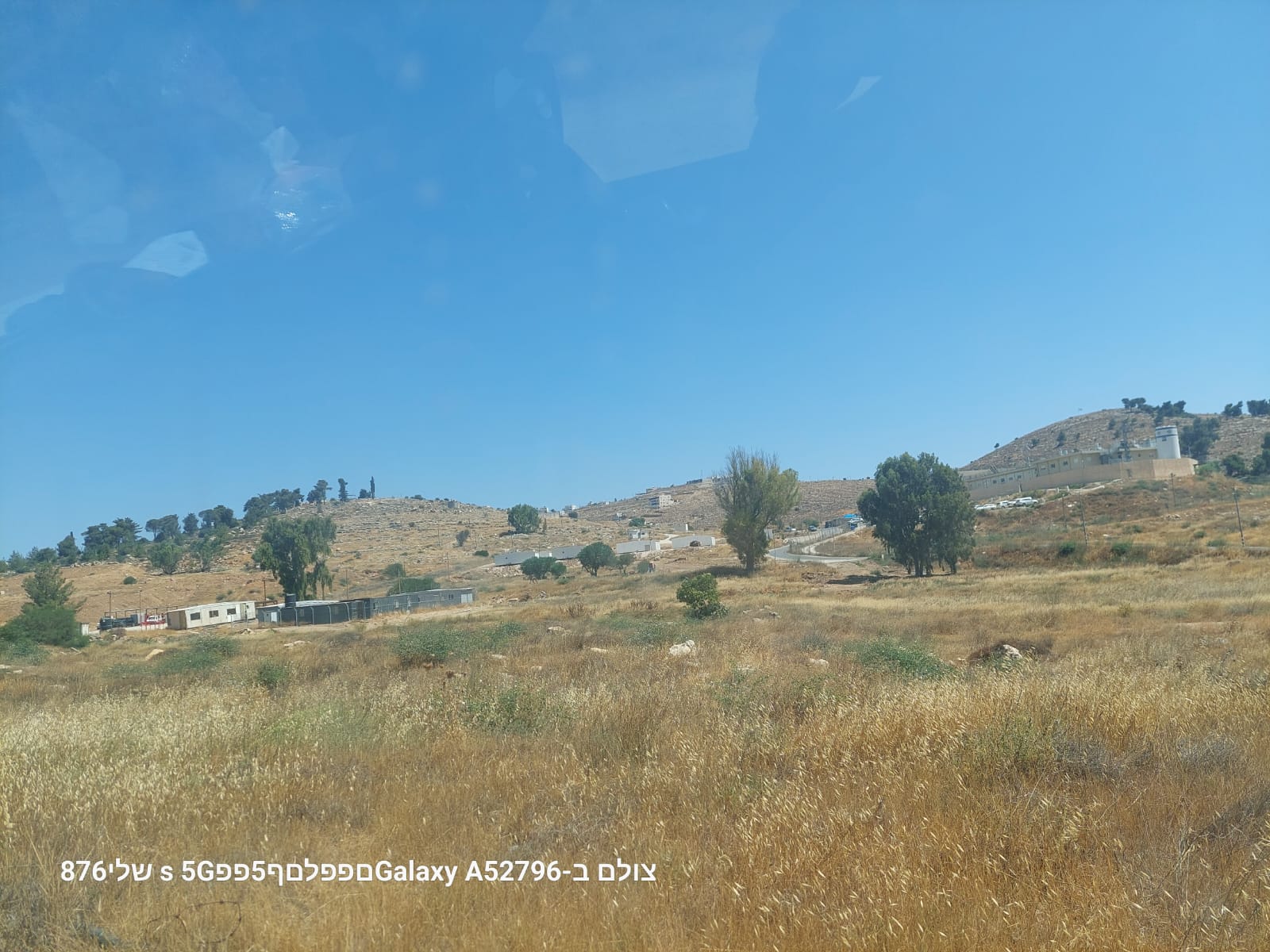
At the Dura-al-Fawwar junction, Dura is closed, al-Fawwar is open, with soldiers stopping and checking cars.
At the Beit Hagai junction, the entrance to Hebron is closed, but at Beit Hagai, overlooking the road, there is an outpost with soldiers.
At the entrances to Qilqis and Rahiya, both gates are closed. There also the system is back-to-back and there are many pedestrians.
At the Sheep Junction, the entrance to Hebron is open, on the side of the entrance to Yatta, it is closed.
We turned onto Route 317. We drove to the Zif junction to the grocery store to buy groceries for the extended Jabarin family in Sha’ab al-Butum. From there, the entrance to Yatta is open.
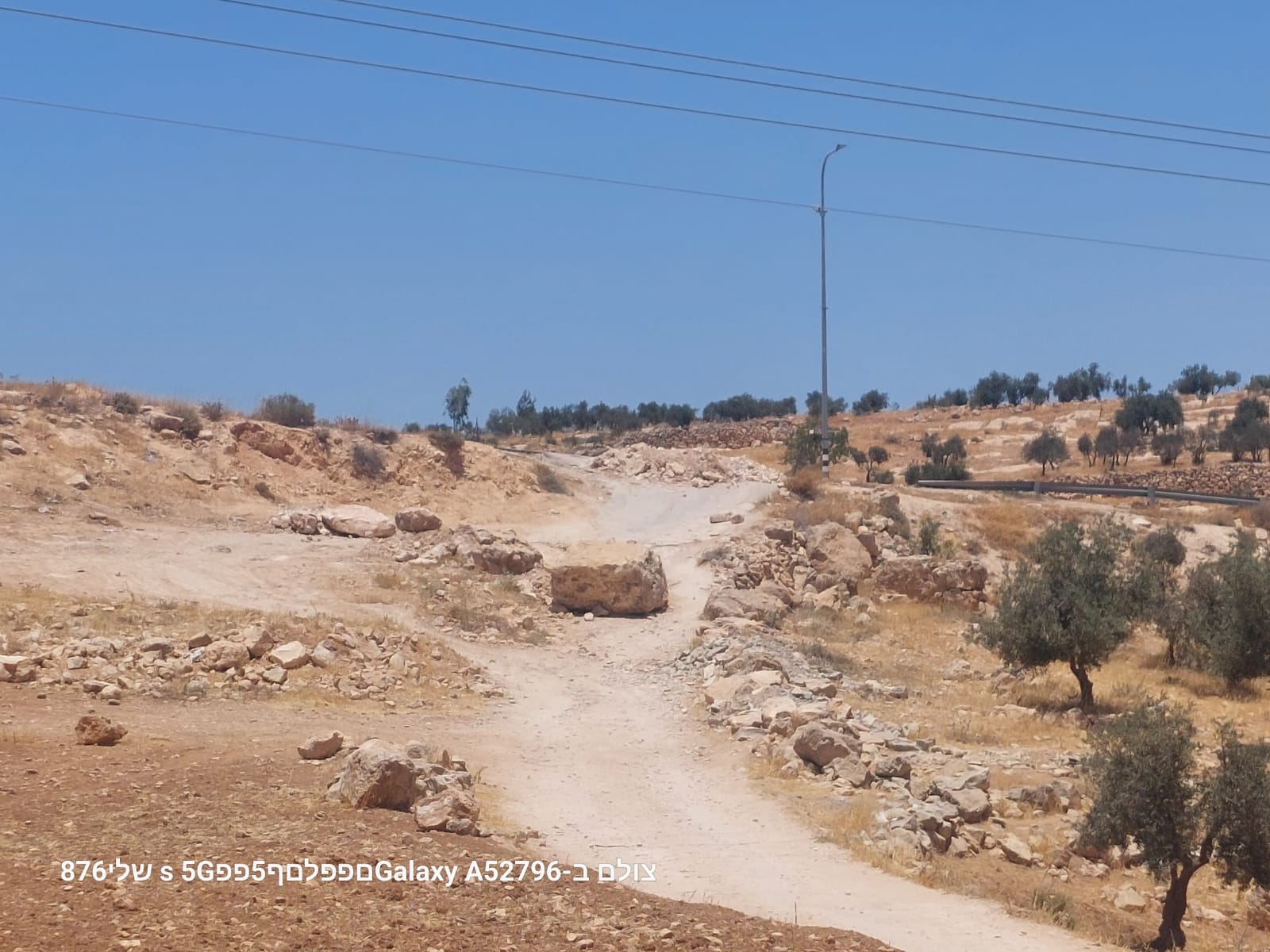

Muhammad Jabarin again speaks about the behaviour of settler Amichai Shilo and his boys The settlers are not far from him in trailers. Every afternoon, on his return with his flock Shilo passes through their vegetable garden plot and allows his sheep to trample and eat as part of the route back from the pasture to their residence.
A tractor from Avigayil also passes through their land twice a day.
According to him, the settlers constantly tell them: Eventually we will get you out of here and they also curse us in Arabic, says Leila.
“The army?” I ask. They come and do nothing. The police? Yes, two weeks ago they came and told the settlers to leave, but they come back because they know that nothing will be done to them.
“The day before yesterday,” he says, “the army came and told the volunteers to leave because they need to do a search. So, they put the volunteers in a room, locked them up and guarded them until the soldiers left.”
They said: “We know that the settlers are not allowed to come to you,” but in practice they are guarding the settlers. The good policemen say: “File a complaint.”
And those, on the side of the settlers, look at the papers and say they are fake. When daughter Farah tried to take a picture of the settler, one of them came with a stick and tried to hit her.
Nevertheless, we received some photos in which we see a boy with a herd passing through their land.
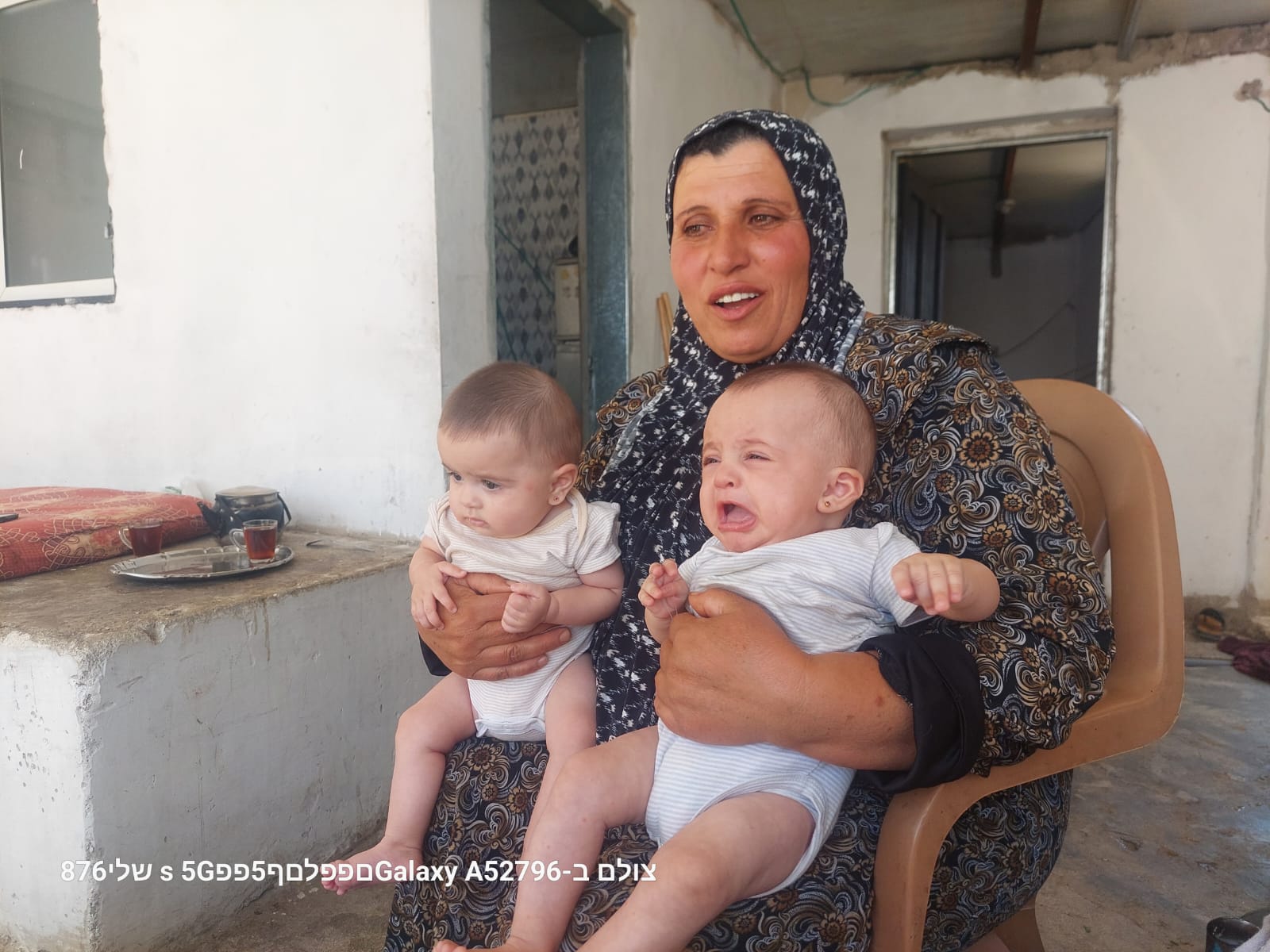
There are two sweet 4-month-old twin babies there, Saja and Doha, and Balqis, the mother, is already pregnant again.
What kind of childhood, what kind of future awaits the next generation there?
On the way back, Muhammad, with his hawk eyes, notices a child from the Yusuf Najjar family, the neighbour, who always waits for us because there is also a bag of sweets for the children there when we don’t come to visit them, and he knows it. He runs to us and gets some for all the neighbouring children too. That kind of childhood, sweets among the ruins and threats.
Location Description
Dura Al-Fawwar Junction
See all reports for this place-
Junction on Route 60: west - the town of El Dura, east - the Al Fawwar refugee camp. There is a manned pillbox at the junction. From time to time the army sets up flying checkpoints at the entrance to El Fawwar and Al Dura. Al-Fawwar is a large refugee camp (7,000 inhabitants in 2007) established in 1949 to accommodate Palestinian refugees from Be'er Sheva and Beit Jubrin and environs. There are many incidents of stone-throwing. In the vicinity of the pillbox there are excellent agricultural areas, Farmers set up stalls adjacent to the plots close to the road. In recent months the civil administration has set up dirt embankments thereby blocking access to the stalls, and making it impossible for the farmers to sell their vegetables. Updated April 2021, Michal T.
-
Hakvasim (sheep) Junction
See all reports for this place-
One of the roadblocks (earthworks, rocks, concrete blocks or iron gates) that prevent transit of vehicles to Route 60 in the southern West Bank and block the southern entrance to Hebron. A manned pillbox supervises the place.
-
Sha'ab al-Butum
See all reports for this place-
This is one of the small Palestinian communities in Masafer Yatta in the southern Hebron Hills, near the settlement of Mitzpe Avigail.
Since the outbreak of the October 7, 2023 war, settler violence against residents has escalated greatly, as in the entire Palestinian community. This violent conduct receives full backing from the state and full cooperation from the IDF. The goal is to make the lives of the Palestinian residents miserable and make them abandon and leave.
The population consists of mostly shepherds who peacefully seek to cultivate the land and graze their sheep, whom the settlers treat as a dangerous enemy. They prohibit them from any movement related to herding sheep and cultivating the land and harm everything: trampling crops, breaking olive trees, smuggling herds, scaring shepherds, conducting wild searches of houses, shouting, cursing and threatening - at all hours of the day. "We are Besieged, but will not move from our land," says Lila G. New settlements are springing up around them. At first it's a bus or a truck that turns into residential buildings, on top of which every week more residential buildings and animal sheds are added. With the open encouragement of the current government, Jewish terrorism is raising its head, with authority and permission. The settlers have received army uniforms and weapons, and no one is stopping them. The police, who are supposed to protect the Palestinians from the settlers' riots, sometimes respond to calls for help, but in practice they don't do much more than provide them with a report, and they are required to go and file a complaint in Kiryat Arba Settlemnt police station . Though the settlers' identities are known, they are !never arrested.
-
South Hebron Hills
See all reports for this place-
South Hebron Hills
South Hebron Hills is a large area in the West Bank's southern part.
Yatta is a major city in this area: right in the border zone between the fertile region of Hebron and its surroundings and the desert of the Hebron Hills. Yatta has about 64,000 inhabitants.
The surrounding villages are called Masafer Yatta (Yatta's daughter villages). Their inhabitants subsist on livestock and agriculture. Agriculture is possible only in small plots, especially near streams. Most of the area consists of rocky terraces.Since the beginning of the 1980s, many settlements have been established on the agricultural land cultivated by the Palestinians in the South Hebron Hills region: Carmel, Maon, Susia, Masadot Yehuda, Othniel, and more. Since the settlements were established and Palestinians cultivation areas have been reduced; the residents of the South Hebron Hills have been suffering from harassment by the settlers. Attempts to evict and demolish houses have continued, along with withholding water and electricity. The military and police usually refrain from intervening in violent incidents between settlers and Palestinians do not enforce the law when it comes to the investigation of extensive violent Jewish settlers. The harassment in the South Hebron Hills includes attacking and attempting to burn residential tents, harassing dogs, harming herds, and preventing access to pastures.
There are several checkpoints in the South Hebron Hills, on Routes 317 and 60. In most of them, no military presence is apparent, but rather an array of pillboxes monitor the villages. Roadblocks are frequently set up according to the settlers and the army's needs. These are located at the Zif Junction, the Dura-al Fawwar crossing, and the Sheep Junction at the southern entrance to Hebron.
Updated April 2022
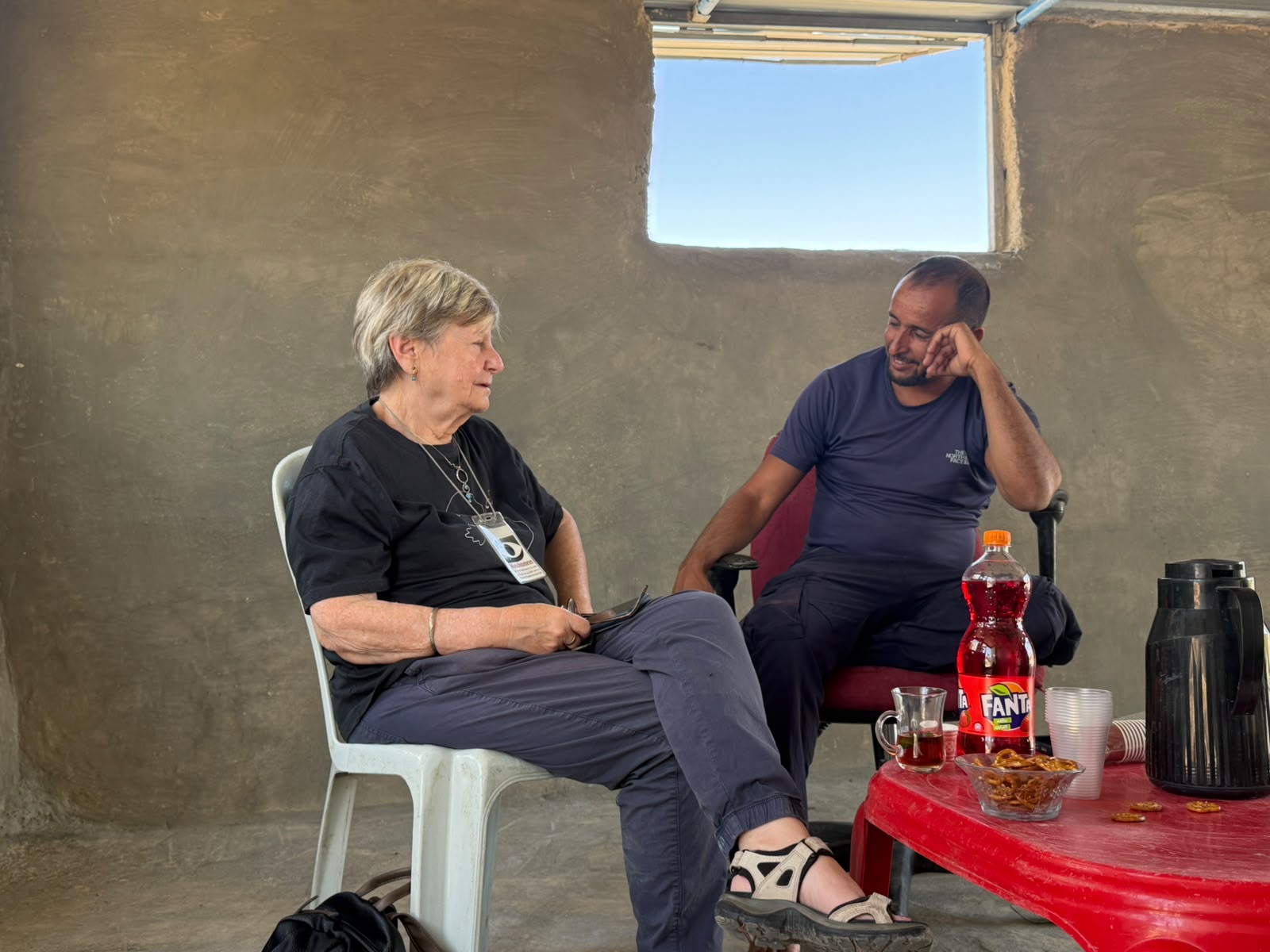 Muhammad D.Oct-10-2026Smadar with Najeh in Umm Qusa
-
Zif Junction
See all reports for this place-
Zif Junction located on the crossroads that directs towards Road 356 to Yata. Yata is the district city of the southern Hebron Mountains. Usually, this junction is open to traffic. The nearby pillbox is unmanned. But the army and police are present occasionally, sometimes setting up a checkpoint and sometimes detaining residents from the big city. Often, the Israeli policemen inspect vehicles and distribute driving reports to Palestinian vehicles. s
-
