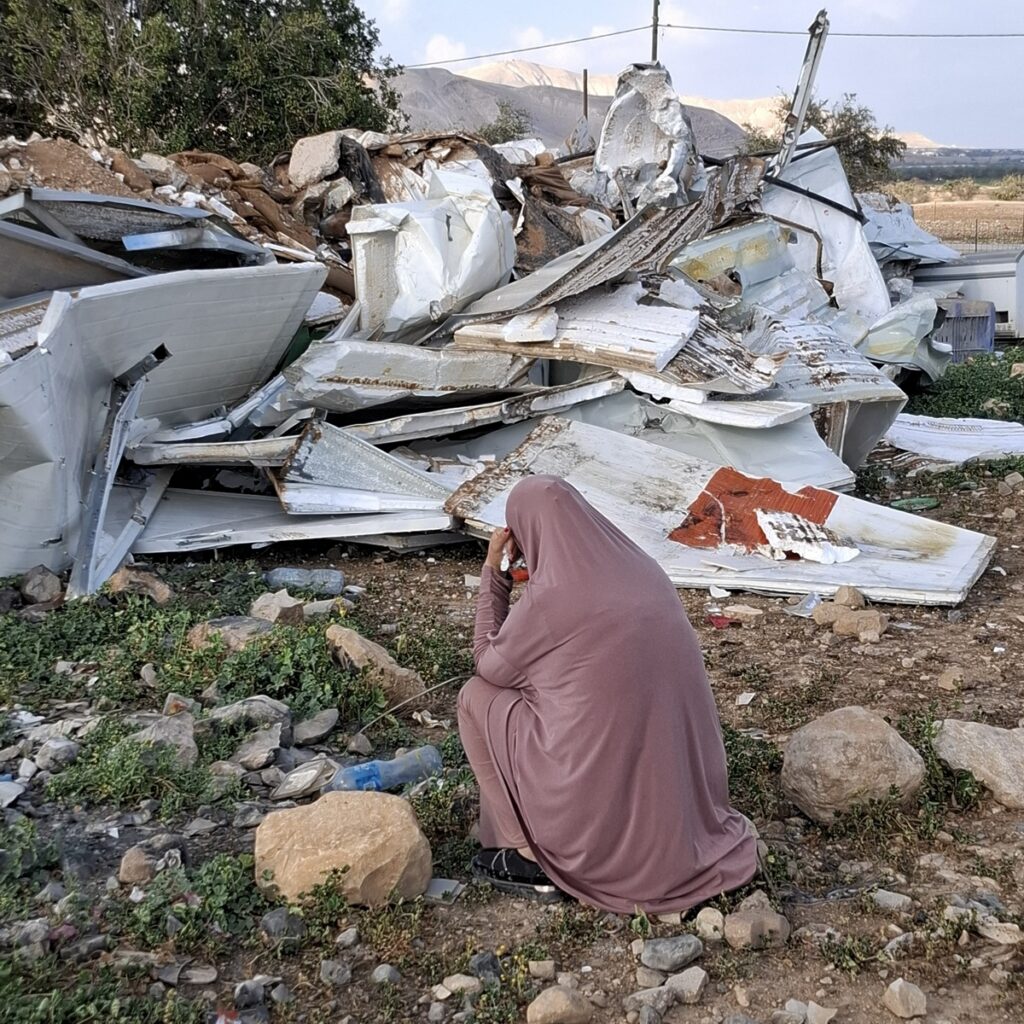
2020 – welcome?


Omer and I left the Paz gas station at Hagor at 6:45 a.m. and drove directly to the Palestinian Jordan Valley, to al-Farisiyah. On the previous evening Omer had spoken with H. and T. who said they were not going out to graze today. A. from Faresiya did want to go and was glad to be accompanied by Omer. At Faresiya we meet Sharon who came with a car filled with bags of clothes and toys. Sharon gives out many bags to families living in the encampments and their joy is obvious. We have tea and coffee, and wait for A. to get organized to take the flock out.
The climb up the hill above al-Farisiyah is steep and I manage it with the aid of my walking stick and at times, Sharon’s strong hand. What fills me with delight is the knowledge that even if I am proceeding slowly, I’ll be able to reach anywhere… A. and his son on donkeyback (one black, the other white) hop around among the sheep scattered over the hills around us. We sit on one of the hilltops and watch the sheep and donkeys. No Jewish settler-colonist in sight, although Tzuri lives on the range right opposite us and has already ordered A. not to cross the wadi several times, for that is “his ground”… A. lights up a small campfire and boils some water in a small pot, making sweet tea. He then offers us a large flatbread with some cooked cauliflower. I am always moved by the fact that in spite of their poverty they are always offering to share whatever they have with us. The Palestinians’ gift of hospitality is a real value.
Around 12:30 Omer runs over to tell A. we’re off, and A. says he will stay until later. His son also comes back with us, on donkeyback. The climb down is very steep and I am stepping very slowly in order not to skid on the gravel and slip down the slope.
From Faresiya we headed straight to Ras Al Ahmar. The track is muddy but Omer and Sharon managed it well. Alan and Ruwaida’s tent contained their whole family. We promised to come again next week and bring Ruwaida the medication she cannot get in Tamoun.
From there, on to the Jiftlik. We visited the Kaabana family, to whom Sharon brought many pairs of shoes, all sizes, as well as clothes. They are always glad to see us, but there Omer sits separately, not with us in the tent. Some more requests about the lawyer who is working on getting the insurance money owed to them, and we took off home at 4 p.m.
Jordan Valley
See all reports for this place-
Jordan Valley The Jordan Valley is the eastern strip of the West Bank. Its area consists of almost a third of the West Bank area. About 10,000 settlers live there, about 65,000 Palestinian residents in the villages and towns. In addition, about 15,000 are scattered in small shepherd communities. These communities are living in severe distress because of two types of harassment: the military declaring some of their living areas, as fire zones, evicting them for long hours from their residence to the scorching heat of the summer and the bitter cold of the winter. The other type is abuse by rioters who cling to the grazing areas of the shepherd communities, and the declared fire areas (without being deported). The many groundwaters in the Jordan Valley belong to Mekorot and are not available to Palestinians living in the Jordan Valley. The Palestinians bring water to their needs in high-cost followers.
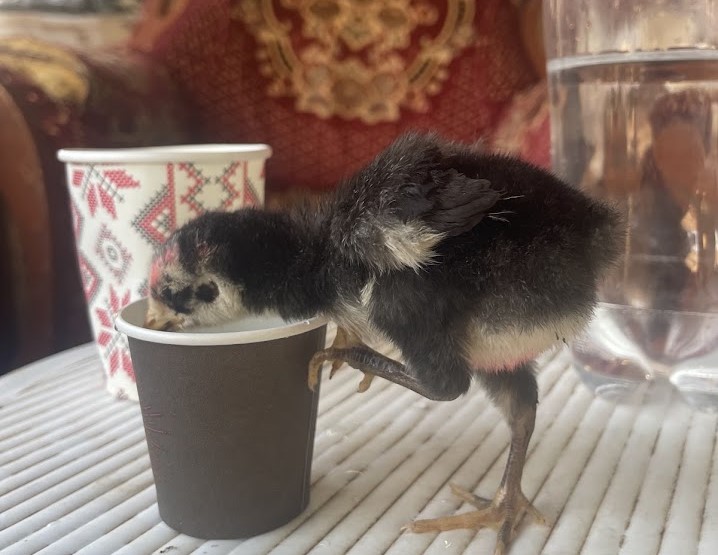 Rachel AfekAug-20-2026Samra. Baby Chick
-