
Translator: Charles K.
* In the report for 3.6.12 we described a new practice in which fines are imposed on Bedouin who bring water wagons for their flocks to the grazing lands. Sometimes fines are also imposed due to the tractors the shepherds use. The reason for the fines is that all the areas in the northern JordanValley(except, of course, for the settlements) are designated as firing ranges, entry to which is prohibited. Last time we heard about four people who’d been fined. It turns out the practice is spreading. This time we were told of six people (one of whom has been fined a second time). The fines amount to several thousand shekels. The Bedouin are the poorest people in the occupied territories. They live in tents without running water or electricity. They pay a shocking price for water. They make a living producing cheese and some meat from their sheep. They won’t be able to survive for long if they keep getting fined. Whoever decided on this new practice wants to get rid of them. The cruelest deeds are done bureaucratically. And there’s no one to talk to. It’s all legal.
* A conversation with some people about how people who are weak, discriminated against and exploited survive under a hostile regime.
11:05 Za’tara checkpoint (Tapuach junction)
No inspections.
11:20 Ma’leh Efrayim
No soldiers, nor when we returned.
They’ve begun cultivating two fields in the large area between Gitit and Mechora which were cultivated last year by a settler from Na’ama; there was also a packing house. The packing house is now deserted.
11:40 Hamra checkpoint
Very little traffic.
The shed on the east side of the checkpoint that had been intended as a waiting area has been boarded up and is apparently used as a storeroom.
A visit to a tent encampment near Maskiyot.
M. was fined NIS3000 last month because of a water wagon in one of the grazing areas, all of which have been designated as firing ranges. He was again issued a similar summons. The trial date hasn’t yet been set, and he doesn’t know how high the fine will be this time. It will probably be similar to the previous one. A few months ago he was fined NIS1000 because his flock crossed the road.
M., like most of the Bedouin in the area, makes a bare living from raising sheep, but without adequate pasture for them. All the area north of the Hamra checkpoint, except for the settlements, have been designated as firing ranges to which entry is prohibited. M. also has two sick daughters (one is paralyzed in her lower body, the second is epileptic). He pays for all the medical expenses – treatments, medications, hospital visits. A few days ago a scorpion stung his son. He was sent to an Israeli hospital and hospitalized for one day. It cost M. NIS2,400 which he had to pay himself, of course. There’s no health insurance in the occupied territories. He lives in Area C, where Israelis responsible for the population’s welfare. But he’s not Jewish. A settler wouldn’t have had to pay for medical treatment out of his own pocket – he’s got health insurance from Israel.
Where will M. get the money to pay these fines? Especially now that they’re becoming routine.
We heard about five other people who’d received similar notices from the Civil Administration’s Central Supervisory Unit on May 23rdand 24th, for “bringing a water wagon into firing range 901 without a permit.” We have their names. There’s also a phone number: 02-9704656. We called but no one answered.
13:45 Tayasir checkpoint
Light traffic. But a car coming from the west still had to wait 15 minutes before being called to be inspected, because the soldiers inspect cars from one direction at a time, and sometimes more than one car, so those coming the other way must wait, often a long time. There was also a shift change which delayed the inspections for a few minutes. Pedestrian inspections take longer, 5-10 minutes per person.
A visit to a tent encampment near Maskiyot
There were a few men (only men join the “serious” discussions; the women listen at a distance); we talked about the difficult situation, including the fines. One of the younger men understood the army’s need for training areas so it warns the shepherds away from their grazing land. But recently they’ve been fining a man cultivating land he owns. He also lives on that land.
The general feeling was that they try to avoid confronting the army and the settlers, even when they’ve suffered an obvious injustice. They’re deterred from filing a complaint with the police, in part so as not to annoy the army or the settlers, and also because they don’t believe the police will defend them. They’re right about that.
They live under apartheid. When a Palestinian breaks the law (even if it’s a harsh law) he’s immediately arrested, his property is confiscated, he’s punished. When settlers from Maskiyot stole one of their cows or horses and they called the police, the best outcome was that the stolen property was returned but the thieves were never punished. As a daughter of the Jewish people which had been a weak and persecuted minority, I can understand their approach.
16:15 Za’tara checkpoint – Tapuach junction.
Nothing unusual. A soldier climbs up into the guard tower in the plaza and comes back down. A Border Police jeep arrives, remains for a few minutes and drives off. Vehicles coming from Huwwara aren’t inspected.
Half a kilometer before the Ariel junction a “community policing” vehicle parked on the narrow shoulder almost blocks the road. We’ve run into “community policing” vehicles a few times in this area. What’s their function?
Hamra (Beqaot)
See all reports for this place-
One of the Jordan Rift Valley checkpoints that prevent direct transit between the West Bank and the Jordan Valley, in addition to Tayasir Checkpoint. Located next to Hamra settlement, on Route 57 and the Allon Road.
Read about the peple of the Jordan Valley and the quiet transfer happening there.
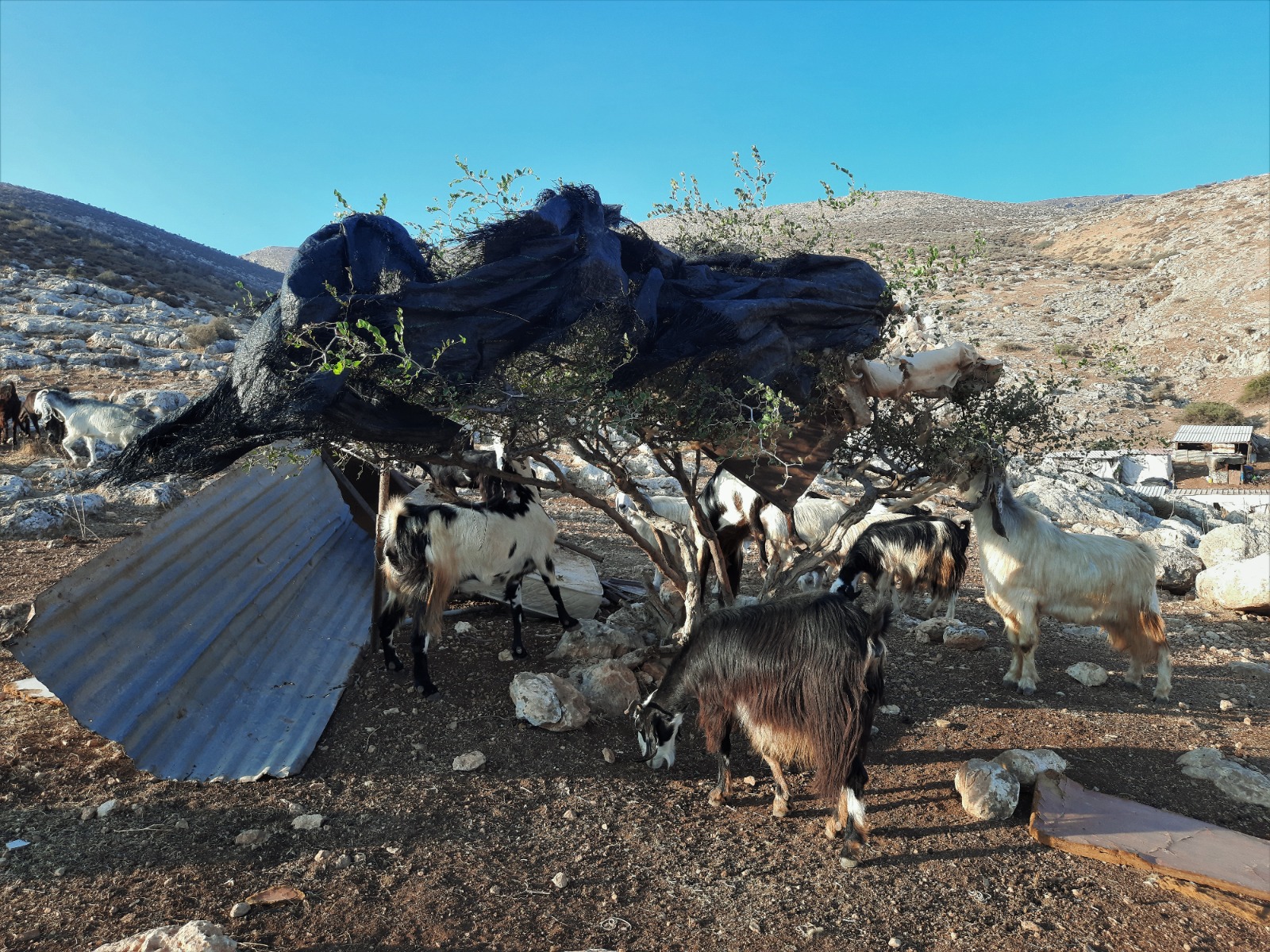 Shahar ShilohNov-3-2021Ein Shibli: grazing begins close to home
-
Tayasir CP
See all reports for this place-
Located on road 5799, It is one of the checkpoints control the passage between the northern West Bank and the Jordan Valley. For a long time, it stood empty and open, with only a sign next to it warning against entering Area A. It was adjacent to an old military camp - now everything is neglected. How much money was invested here, and how much brainwashing was done to the soldiers of Netzah Yehuda and Kfir.
Today, it is very difficult to pass there. Many delays. Often, teachers from Tubas are not allowed to pass into the Valley to villages like Ein al-Bida where the local schools are located, and there are no classes. There are additional days when the checkpoint is closed. In general, there is a wait there of about two to four hours to go towards the Valley and also to return. Many times the Palestinians are forced to use the Hamra checkpoint, which also leads into Tubas and the West Bank, but there is also a huge queue there and a long wait.
Following a deadly attack on soldiers at the nearby base in February 2025, the checkpoint was completely closed for the time being. (Updated March 2025)
-
Za'tara (Tapuah)
See all reports for this place-
Za'tara (Tapuah) Za'tara is an internal checkpoint in the heart of the West Bank, at the intersection of Road 60 and Road 505 (Trans-Samaria), east of the Tapuah settlement. This checkpoint is the "border" marked by the IDF between the north and south of the West Bank, in accordance with the policy of separation between the two parts of the West Bank that has been in place since December 2005. At the Za'tara checkpoint, there are separate routes for Israelis and Palestinians. In the route for Israelis, there are no inspections and the route for Palestinians inspects. The queue lengthens and shortens suits. The checkpoint is open 24 hours a day. The checkpoint is partially staffed and the people who pass through it are checked at random.
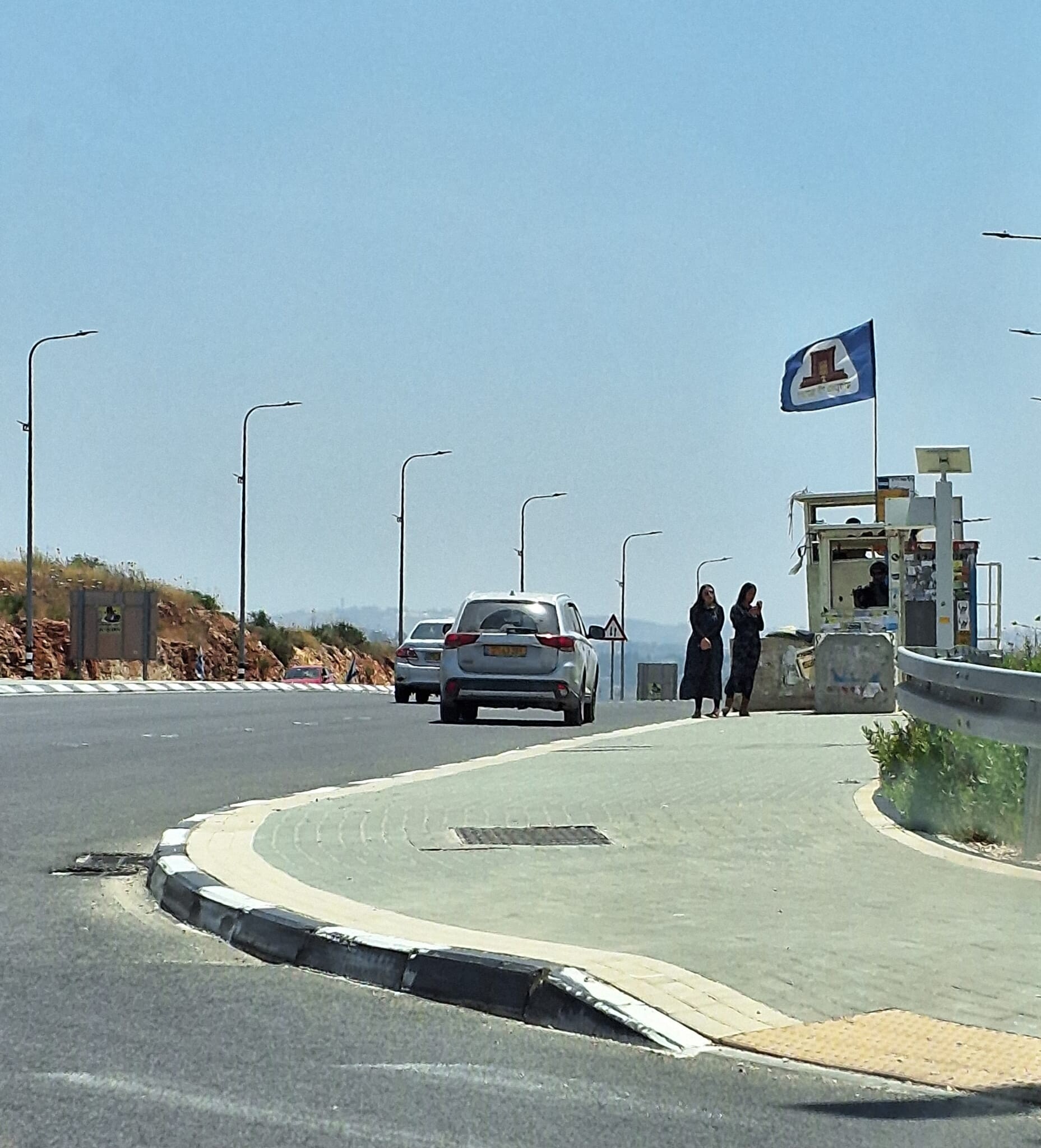 Ronit Dahan-RamatiJun-9-2026Za'atara (Tapuach Junction). The Temple Flag Above a Station
-
