
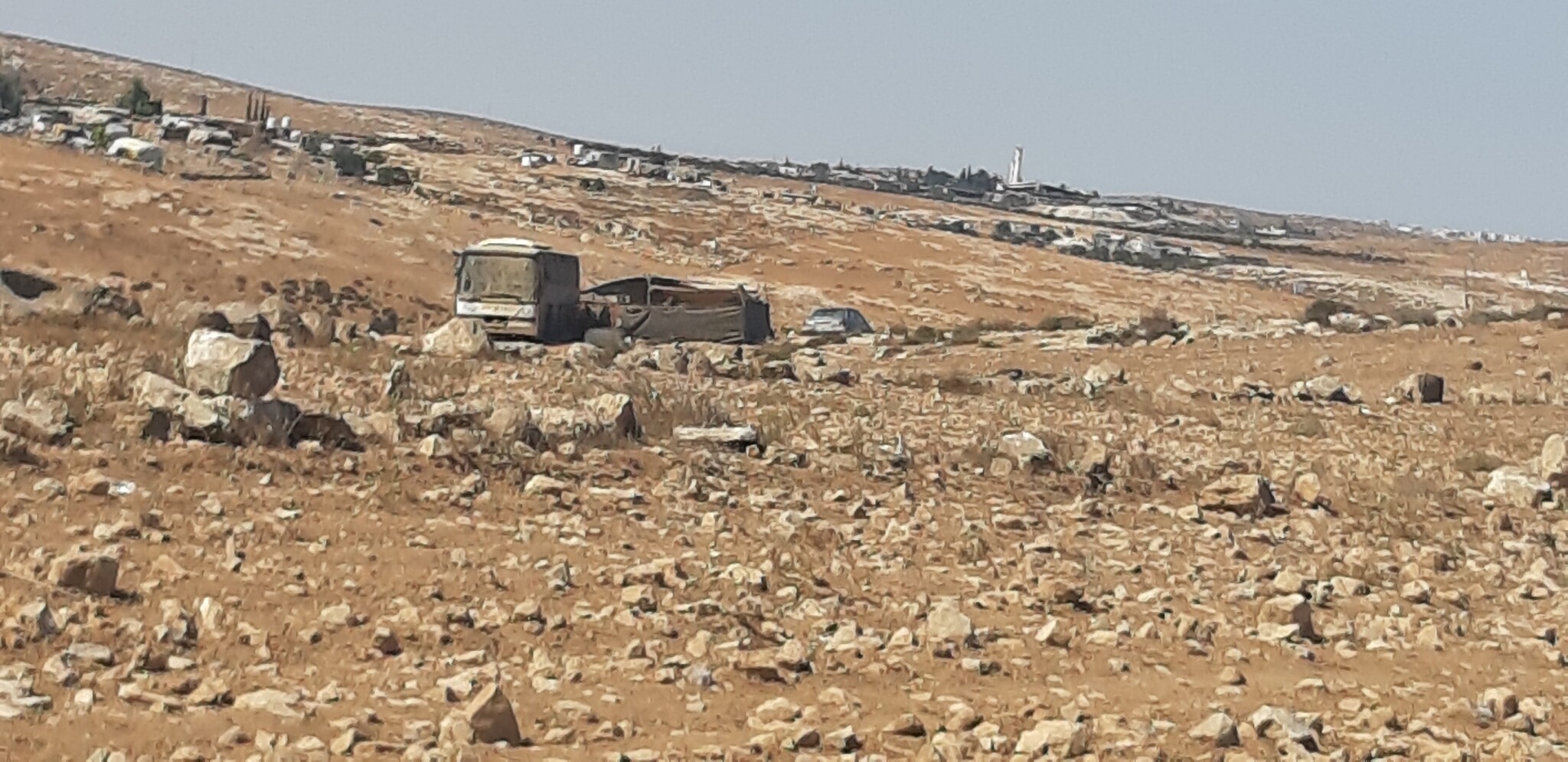
A new illegal outpost which looks as an agricultural farm in the South Hebron Hills
Meitar checkpoint: as if everything was routine. Suddenly, two illegal workers, surrounded by Border Police fighters and a woman soldier with a drawn weapon, who had been caught there and taken back across the fence … which is again open … We have already said that the town of Chelm…
We drove to Umm Fakra to Fadel Hamamda and his family: they live, like their neighbors from a-Rakiz, and Sh’ab al-Buttum, in the hills between Havat Maon, Mitzpe Abigail and Mitzpe Yair, the illegal outposts which receive security, infrastructure and everything needed for their growth from a country which tells the world that they are not extending the settlements and is engaged in ethnic cleansing. Fadel tells of a new settler who lives not far from him and who today, two hours earlier, had come with his dogs which they set on his flock. For the past two weeks, the settlers from Havat Maon in the southeast have been joining the people of the Mitzpe Yair in the northwest. They come with masked faces, sometimes on foot and sometimes in a vehicle. They come to frighten the Palestinians. He does not have a camera so he cannot show this. This is in addition to the demolition order that the white building we were sitting in has received. He is being treated by the organization St Yves, which is legally protecting him, and in the meamtime the trial cate is constantly postponed, so at the moment there are no demolitions.
Then we went to see the settler from a safe distance (his name is not yet known). So the method is such that you first build a shed with sheep, then a caravan, this time a bus that has been converted into a home. I wonder when, if at all, they will be thrown out. There we saw them walking around and we heard the sheep bleating. But we did not come close. They are very violent, we were told. We need to follow up on this.
On the way back I photographed the Avigail spring, where the settlers make sure only they bathe in. From the outside it’s a cave. I did not go into itand I saw only a little moisture.
And we also saw Mitzpe Asa’el. All the new caravans that were on poles, are now covered with concrete and cement and have the look of permanent homes.
A concrete mixer rose on the road leading to Mitzpe Abigail. It is clear for what purpose.
South Hebron Hills – we have to watch what is happening.
Meitar checkpoint / Sansana
See all reports for this place-
Meitar Checkpoint / Sansana The checkpoint is located on the Green Line and serves as a border crossing between Israel and the West Bank. It is managed by the Border Crossing Authority of the Defense Ministry. It is comprised of sections for the transfer of goods as well as a vehicle checkpoint (intended for holders of blue identity cards, foreign nationals or diplomats and international organizations). Passing of Palestinians is prohibited, except for those with entry permits to Israel. Palestinians are permitted to cross on foot only. The crossing has a DCO / DCL / DCL / DCL (District Coordination Office), a customs unit, supervision, and a police unit. In the last year, a breach has been opened in the fence, not far from the crossing. This breach is known to all, including the army. There does not appear to be any interest in blocking it, probably as it permits needed Palestinian workers without the bureaucratic permits to get to work in Israel. Food stalls and a parking area economy have been created, but incidents of violent abuse by border police have also been recorded. Updated April 2022
-
South Hebron Hills
See all reports for this place-
South Hebron Hills
South Hebron Hills is a large area in the West Bank's southern part.
Yatta is a major city in this area: right in the border zone between the fertile region of Hebron and its surroundings and the desert of the Hebron Hills. Yatta has about 64,000 inhabitants.
The surrounding villages are called Masafer Yatta (Yatta's daughter villages). Their inhabitants subsist on livestock and agriculture. Agriculture is possible only in small plots, especially near streams. Most of the area consists of rocky terraces.Since the beginning of the 1980s, many settlements have been established on the agricultural land cultivated by the Palestinians in the South Hebron Hills region: Carmel, Maon, Susia, Masadot Yehuda, Othniel, and more. Since the settlements were established and Palestinians cultivation areas have been reduced; the residents of the South Hebron Hills have been suffering from harassment by the settlers. Attempts to evict and demolish houses have continued, along with withholding water and electricity. The military and police usually refrain from intervening in violent incidents between settlers and Palestinians do not enforce the law when it comes to the investigation of extensive violent Jewish settlers. The harassment in the South Hebron Hills includes attacking and attempting to burn residential tents, harassing dogs, harming herds, and preventing access to pastures.
There are several checkpoints in the South Hebron Hills, on Routes 317 and 60. In most of them, no military presence is apparent, but rather an array of pillboxes monitor the villages. Roadblocks are frequently set up according to the settlers and the army's needs. These are located at the Zif Junction, the Dura-al Fawwar crossing, and the Sheep Junction at the southern entrance to Hebron.
Updated April 2022
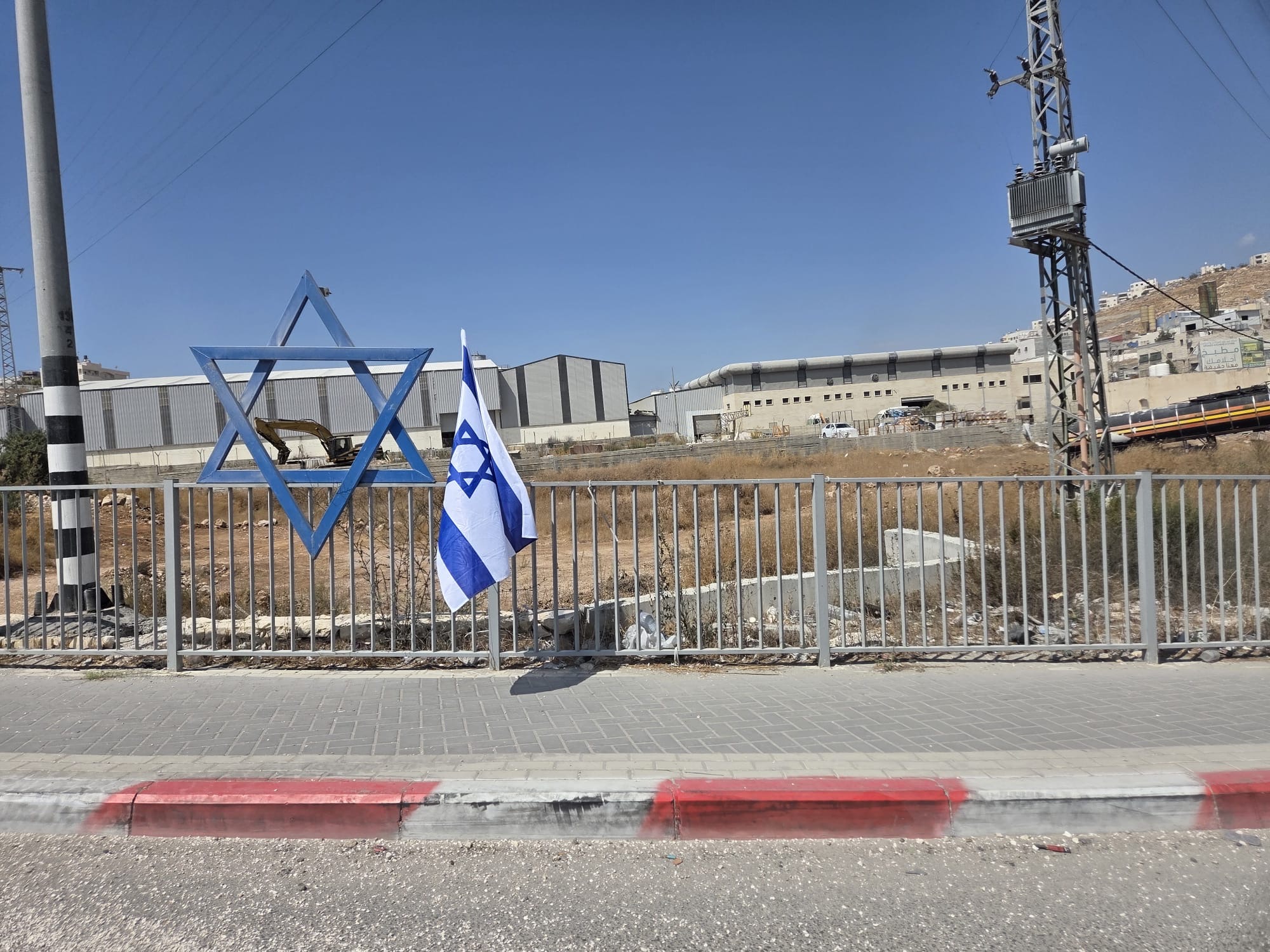 Timna OrevSep-24-2026Replacing flags on Highway 6
-
