
A-Tawani: Settlers and the army mistreat the local people
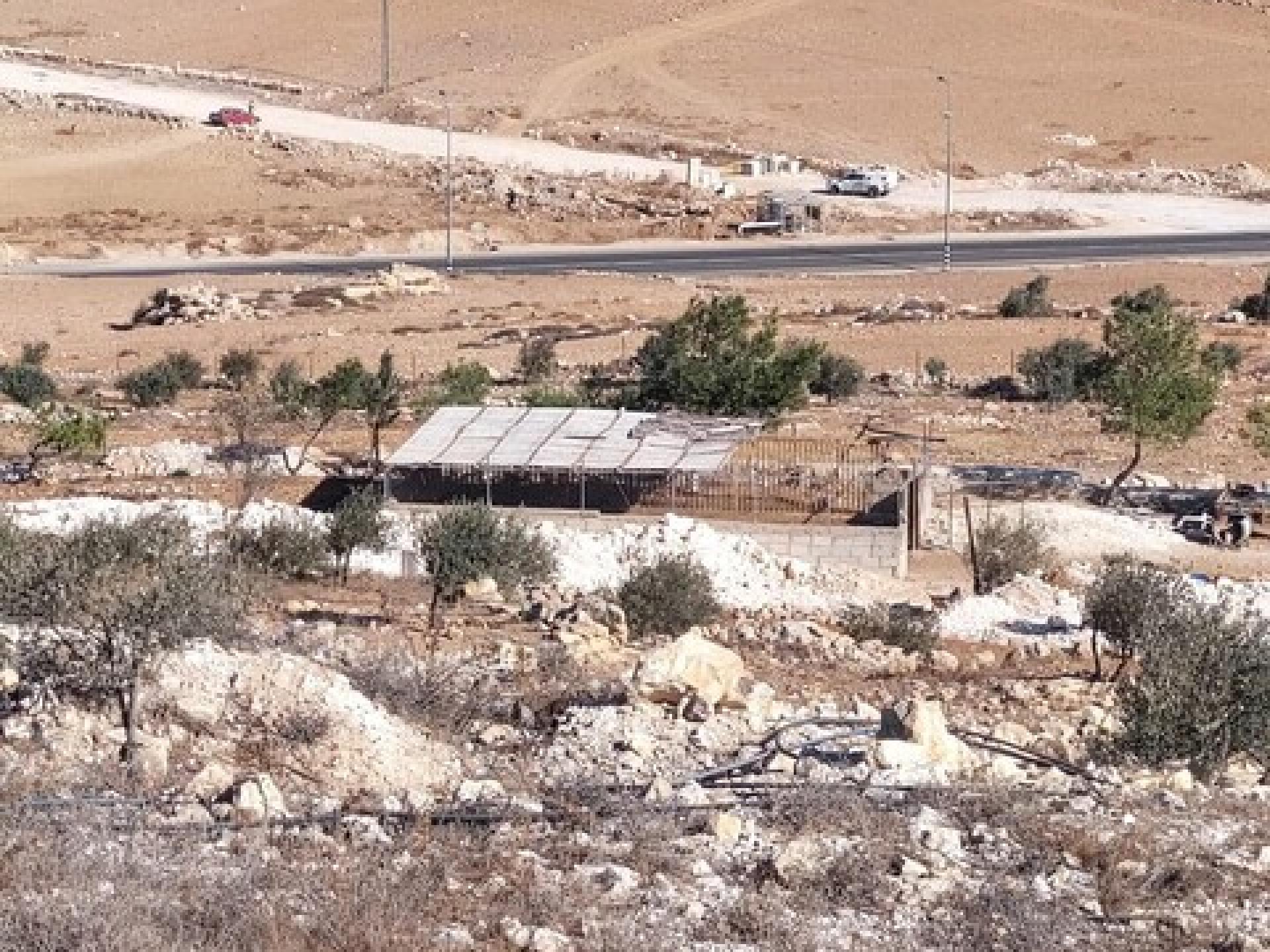
Meitar checkpoint: Almost completely deserted. A few trucks enter the checkpoint and there is very little traffic on the road.
It’s the period of Jewish holidays so the Palestinians are under curfew. People leaving and entering the villages are also being inspected. At the entrances, mainly in the morning and afternoon, soldiers/settlers stop cars, confiscate and break things, and disappear with the car keys for a few hours. That’s the daily practice.
We came to see Nasser from at-Tuwani. This is the list of abuses they have recently been subjected to:
In the first picture, a teacher who came by car to pick up his wife, is stopped at the entrance to at-Tuwani. They broke it and gave him a flat tire. He came to us for a meeting. A neighbor told us that he began to burn his garbage because they hardly ever collect it. The military security coordinator from Havat Maon saw what he was doing and called the army. Burning is forbidden. Why? Because it is!
Beside the school in the village, there’s a storage room that was being tidied up and renovated. It’s legal! The settlers photographed the activity and called the army. The army came and arrested three of the workers. They bound them and blindfolded them and took them to their base in Susiya. It was night when they came home.
Two weeks later, same story. The settlers once again stop the workers and confiscate equipment. When the officer is asked why, after all the Palestinians haven’t broken the law, he replies “It’s my job!” Is it? They were released, once again without their equipment. They were given a document confirming that the equipment taken will be returned later. The soldiers don’t usually get involved, but the officer is evidently a settler.
About a week ago, in the middle of the day, five donkeys were stolen from the village. Young men from the village went after them, but the army stopped them and told them they would make sure that the donkeys were returned to them. The young men returned to the village. They don’t want trouble. Until now the donkeys haven’t been returned. Until now, the donkeys are at Havat Maon.
:
…
A-Tuwani
See all reports for this place-
A-Tuwani
The locals came to a-Tuwani during the 20th century from the village of Yatta. They settled in abandoned ruins, utilizing the arable land, pastures for grazing sheep and the abundance of natural caves for habitation. The residents who settled in the caves came from families who could not purchase land for houses in the mother villages, as well as shepherds who did not have enough land to graze. They were joined by clan members who quarreled with other families in the mother locality.
Some of the residents today live in concrete buildings built above the caves. In the area of the village are several water cisterns and an ancient water well called 'Ein a-Tuwani. Local residents are forced to buy water in containers and transport them through many road blocks to the village. With the help of international organizations, an electrical system was installed in the village. In the late 90s of the 20tTh century, an elementary school was established in the serving several small villages in the area.
In 2004, MachsomWatch began visiting and reporting from the Khirbet Tuwani cave village, which suffers badly from the settlers of nearby outposts, and especially from the extremist Ma'on outpost. . The settlers contaminate cisterns, poison the flocks and uproot trees.Particularly notable is the harassment of children from the surrounding villages on their way to school in a-Tuwani, so much so that military escort of children is required to separate them from the attackers (this was arranged following an initiative of the organization's members). In the past year, the escort has been without the vital presence of overseas volunteers.
Near a-Tuwani there are several families who have returned to the caves due to the incessant demolitions of the civil administration (as there is a total construction ban in all of area C). Destroyed are not only residential and agricultural buildings, but also water pipes, machinery. Even water cisterns are clogged up. a-Tuwani residents have created an association for non-violent demolition protests, but in the past year the army’s harsh harassment and settler violence have intensified and escalated. The incident of the small generator confiscation, which left a young man paralyzed, is one of many examples - any legitimate protection of property rights leads to violence and even shootings by the army and the civil administration.
Updated April 2022
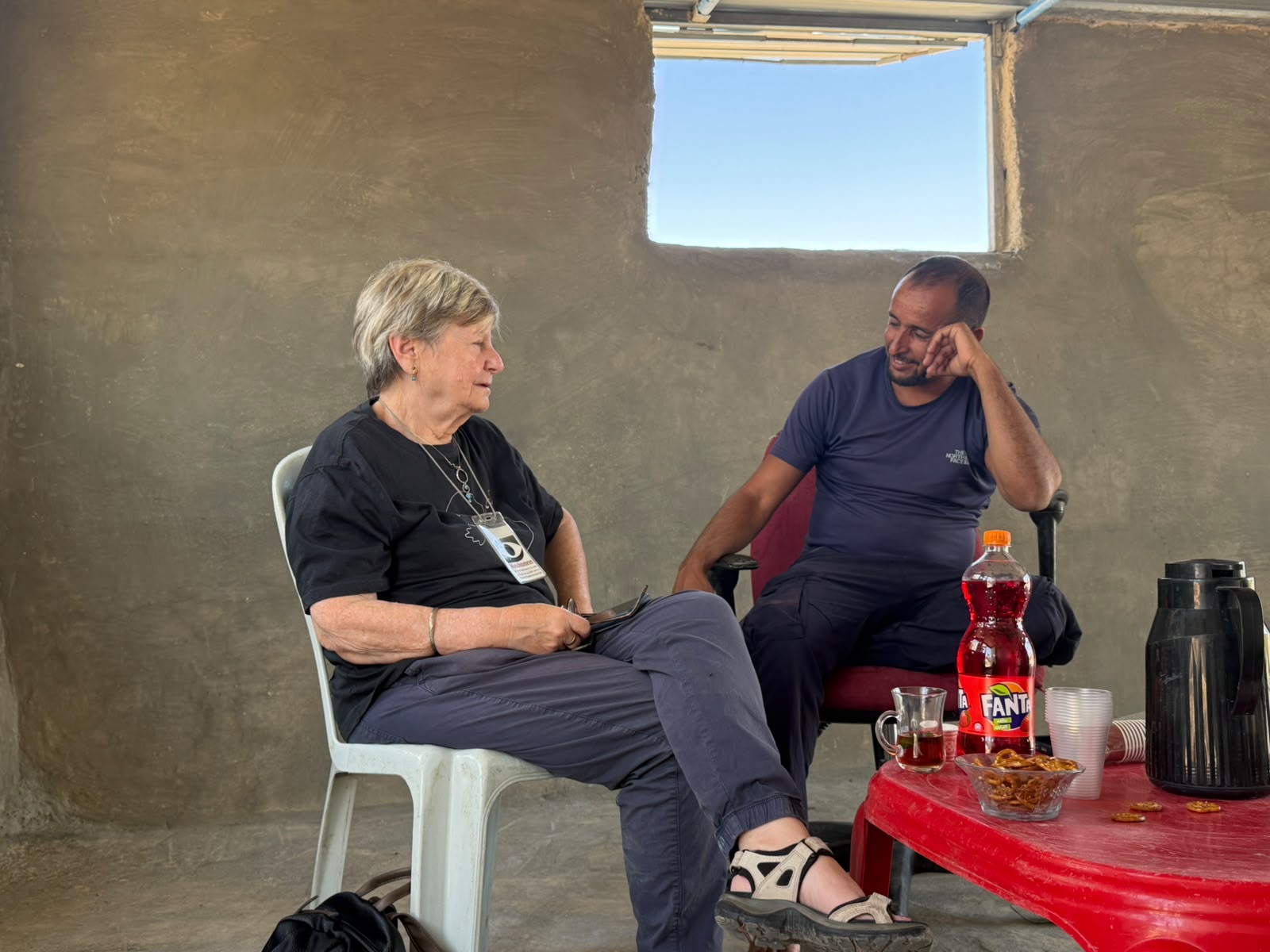 Muhammad D.Oct-10-2026Smadar with Najeh in Umm Qusa
-
