
A visit to Mufaqara

At the beginning of Route 60 along the fence, empty of cars. (Police ban). Beyond Gate 11, several vehicles.
We turned onto Road 317. Before Zanuta on the left, 2 JNF bulldozers are working to prepare the area.
It is sowing season so on either side of the road a tractor is seen every few miles. A farmer plowing his land. The road is empty of vehicles and everything looks pastoral (of course it only seems so).
Near Mneizel are several plots planted with olive trees.
The destination was a visit to Fadel and Hadra.
Before descending to the right towards their house in the village, in front of Abigail, Fadel Hadera and their son sat and next to them a donkey with a simple plow next to it. It turns out that they plow some pieces of land belonging to them to sow barley. A few meters away on the hill, a shed and next to it a large loudspeaker, soldiers and officers, uniformed policemen and civilians. An officer with the rank of major calls Fadel and demands that he not cultivate a small plot, falsely claiming that it is not his territory. I wonder how he knows. Just to clarify, these are strips of land, it’s not really a large area. We could not understand what this gathering meant, but within half an hour, convoys of vehicles arrived, including a jeep that we identified as a government minister. Later, we understood from the evening news that it was Omer Bar-Lev, the Minister of Internal Security. It was reported that the police commissioner was also present at the meeting. The meeting was also joined by a young couple of settlers, with their infant son.
We dropped off big bags at Padel’s house with clothes, games, shoes, toys
South Hebron Hills
See all reports for this place-
South Hebron Hills
South Hebron Hills is a large area in the West Bank's southern part.
Yatta is a major city in this area: right in the border zone between the fertile region of Hebron and its surroundings and the desert of the Hebron Hills. Yatta has about 64,000 inhabitants.
The surrounding villages are called Masafer Yatta (Yatta's daughter villages). Their inhabitants subsist on livestock and agriculture. Agriculture is possible only in small plots, especially near streams. Most of the area consists of rocky terraces.Since the beginning of the 1980s, many settlements have been established on the agricultural land cultivated by the Palestinians in the South Hebron Hills region: Carmel, Maon, Susia, Masadot Yehuda, Othniel, and more. Since the settlements were established and Palestinians cultivation areas have been reduced; the residents of the South Hebron Hills have been suffering from harassment by the settlers. Attempts to evict and demolish houses have continued, along with withholding water and electricity. The military and police usually refrain from intervening in violent incidents between settlers and Palestinians do not enforce the law when it comes to the investigation of extensive violent Jewish settlers. The harassment in the South Hebron Hills includes attacking and attempting to burn residential tents, harassing dogs, harming herds, and preventing access to pastures.
There are several checkpoints in the South Hebron Hills, on Routes 317 and 60. In most of them, no military presence is apparent, but rather an array of pillboxes monitor the villages. Roadblocks are frequently set up according to the settlers and the army's needs. These are located at the Zif Junction, the Dura-al Fawwar crossing, and the Sheep Junction at the southern entrance to Hebron.
Updated April 2022
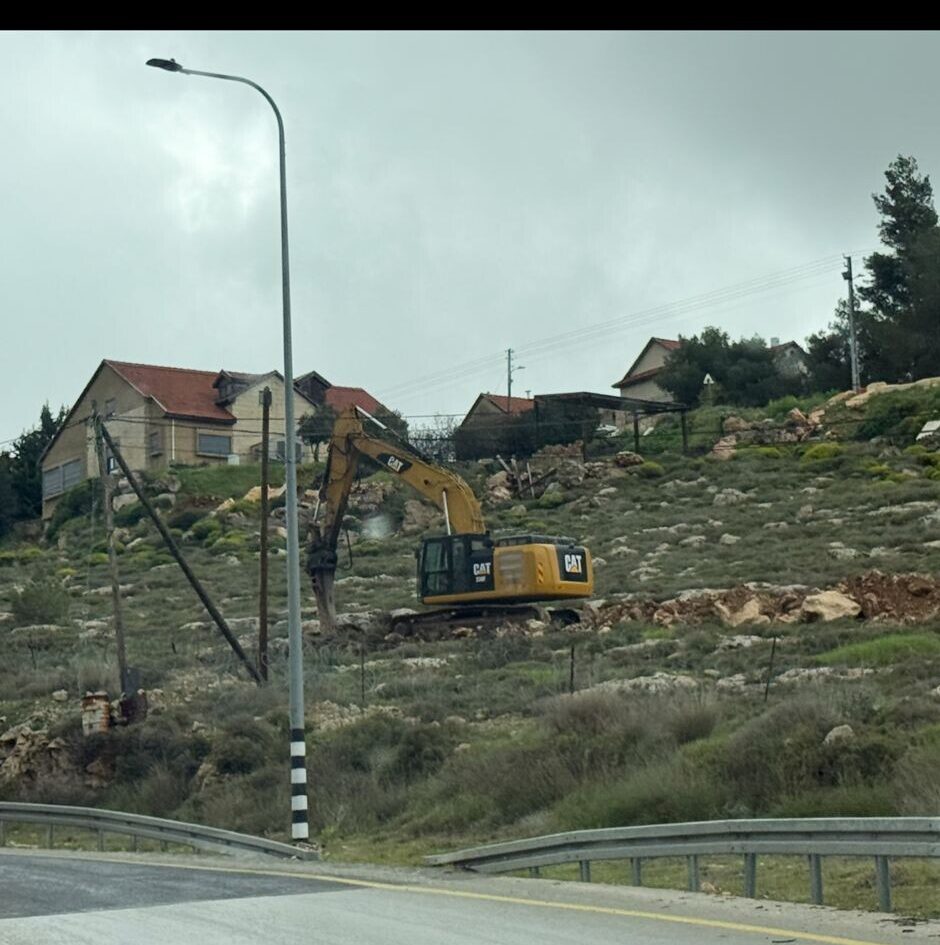 MuhammadFeb-24-2026South Hebron Hill, Beit Hagai: Paving an internal security road
-