Abu Dis, Container (Wadi Nar), Ras Abu Sbitan (Olive Terminal), Sheikh Saed, Thu 16.4.09, Morning

6:15 Sheikh Saed
Normal traffic, without incidents.
Zeitim Crossing
From the outside all appears to be flowing unimpeded. We went in and returned through the checkpoint. We found that only lane #1 was operating and a queue was forming. Lane #3, which serves the children in the morning, was closed even though the closure does not include school-children.
A call to A., the checkpoint commander, and within minutes lane #2 and then #3 opened. The lines diminished, and when we crossed there was only a handful of peope in lanes #1 and #2. Lane #3 was full of pupils as is normal in the morning hours.
A worker tried his luck: a chef in one of the restaurants in town, he tried to persuade that his work is necessary, but to no avail, and his day's labour was lost.
The light above the turnstile still does not match the reality of its opening, and when the green light is on and people try to push the locked turnstile, confusion and embarrassment ensue.
Traffic flows without incidents. We met Abdullah, resident of Sawahara, who took us on a tour near old Kedar. In proficient Hebrew he explained the extent to which the route of the wall which will surround Ma'aleh Adomim as well as old and new Kedar will mean the expropriation of much land, including his family's. The planned route turns eastward south of new Kedar, and then somewhere in the Judean desert it will turn north in order to include Ma'aleh Adomim.
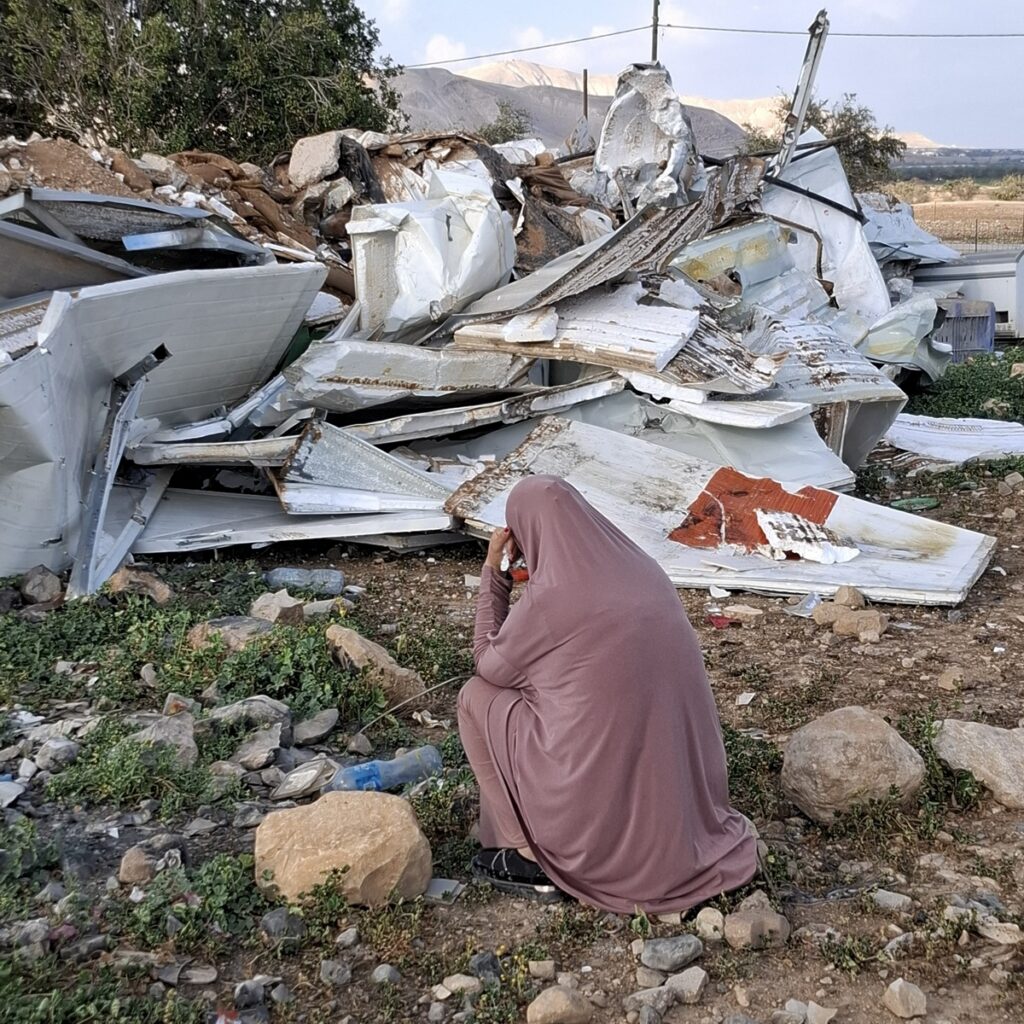
Close to the road leading to old Kedar there is a concrete building with small shelters for livestock. The family living there grow a few vegetables and tend their livestock. For water they depend on the grace of heaven and a cistern which fills up when it rains. When they tried to build a home for one of the daughters, the administration demolished it, and the ruins still stand there. This was in the late 80's. The building they use today was probably built in Jordanian times which is why it was spared demolition. The future wall will surround them entirely.
.
Abu Dis / Lazarus gate (formerly The Wicket)
See all reports for this place-
Abu Dis / Lazarus Checkpoint/Gate (east of the former “wicket”)
Construction of the wall in the Abu Dis area blocked all the gaps that allowed people to cross from al-Ezariya to the neighbourhoods of Abu Dis and Ras al 'Amud that are located within Jerusalem’s municipal boundary. The Lazarus checkpoint is a gate in the wall adjacent to the Lazarus Monastery. Until 2011 it had a door for pilgrims to al-Ezariya and for the monastery’s kindergarten pupils from al-Ezariya. The crossing is currently closed, but the site has infrastructure for conducting inspections.
-
Container (Wadi Nar)
See all reports for this place-
Wadi Nar Checkpoint ("Container", "The Kiosk") - a barrier for vehicles in Area B that is regularly manned - east of Abu Dis between Sawahra A Sharqiya and Bethlehem and its daughters. Controls Palestinian movement between the north and south West-Bank. Includes driving routes, access roads, spikes, traffic lights and signs. There is no pedestrian crossing. Open 24 hours a day with random checks enhanced on security alerts. The checkpoint is in Palestinian territory, allowing for separation between the north and the south Palestinian areas when necessary.
In 2015, the leading road from Azaria to Bethlehem was renovated, as well as the steep and narrow ascent to the Wadi Nar checkpoint, which was dangerously travelled in both directions! The temporary checkpoint was renovated and expanded, and pedestrian traffic was banned. From 2016, traffic travelling from the south bank to Azaria was directed to a one-way road near the Southern Keydar Jewish settlement.
Machsomwatch shifts visit this far-fetched checkpoint only occasionally.
(updated to July 2019)
-
Ras Abu Sbitan (Olive Terminal)
See all reports for this place-
A large checkpoint/crossing to the area of a-Tur, Abu Dis and the Old City; only for pedestrians. Located on Jerusalem’s municipal boundary.
One of the major crossings in Jerusalem’s central sector. It is located on the separation fence between the northern portion of the al-Ezariya neighborhood and the neighborhood of a-Tur and the rest of East Jerusalem. It is manned by Border Police soldiers and private security companies and operates 24 hours a day. Palestinians are forbidden to go through, other than permanent residents of East Jerusalem (holders of blue ID cards) and holders of work and commercial permits who are allowed through only on foot.
-
Sheikh Sa'ed
See all reports for this place-
A checkpoint limited to pedestrians, located on Jerusalem’s municipal boundary.
The checkpoint sits on the separation fence at the entrance to Sheikh Sa’ad, dividing it from its neighbourhood of Jabel Mukkabar. It’s manned by Border Police soldiers and private security companies and operates 24 hours a day. Palestinians are forbidden to go through, other than residents of Jabel Mukkabar or Sheikh Sa'ad who have permits. Both groups are permitted through only on foot. Residents of East Jerusalem who don’t live in Jabel Mukkabar are also allowed to cross to Sheikh Sa’ad, but not in the opposite direction; they must return through the Sawahira ash Sharqiya checkpoint.
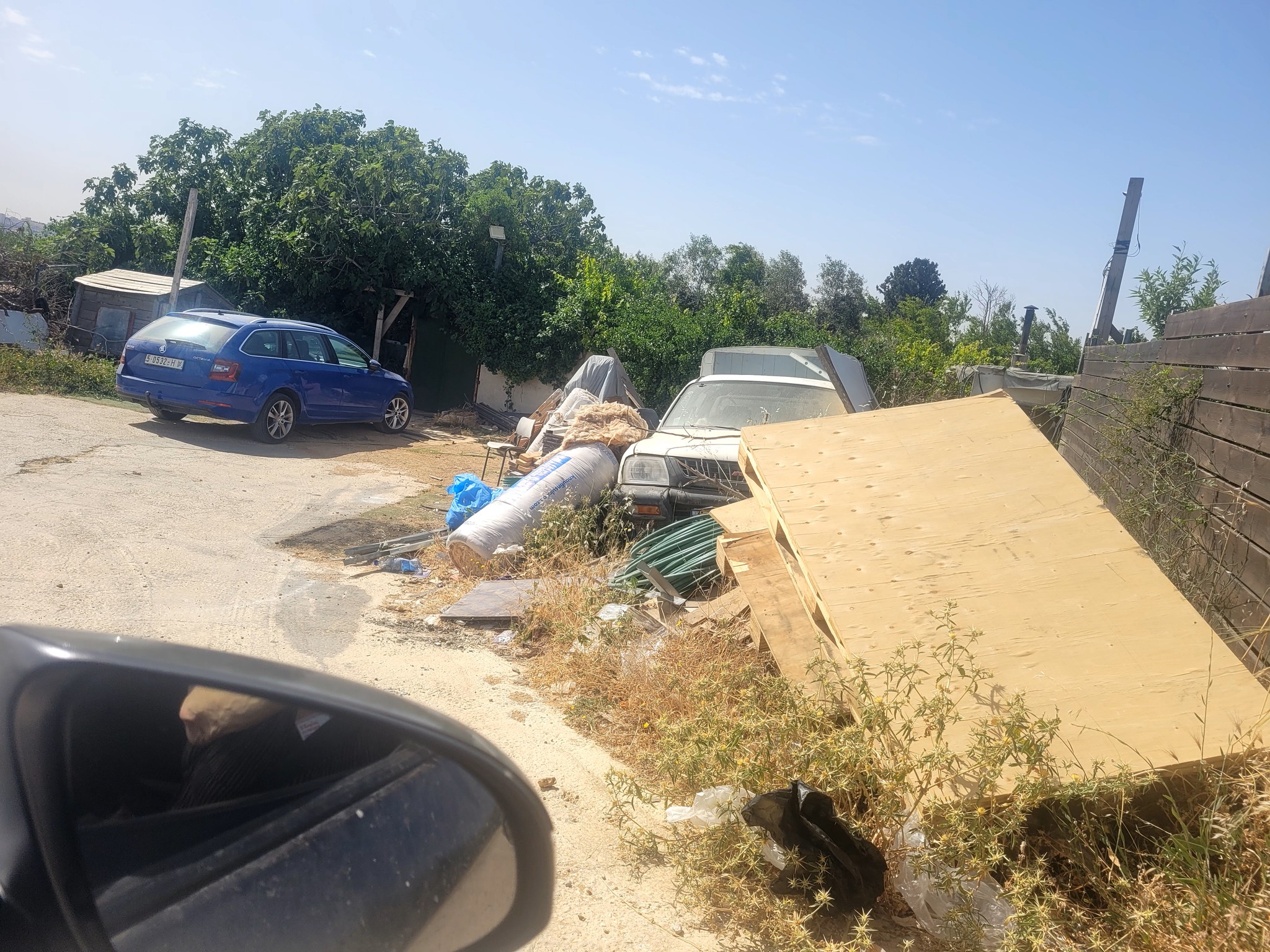 Anat TuegMay-20-2026Nabi Samwil. This is what living conditions look like in an enclave village without building or renovation permits
-