
Back to reports search page

Abu Dis, Container (Wadi Nar), Ras Abu Sbitan (Olive Terminal), Sheikh Saed, Thu 17.7.08, Morning

Tags: Detainees
Observers: Yehudith S., Michaela R. (reporting)
Jul-17-2008
| Morning


6:30 Sheikh Sad

 
A line of about  twenty persons, labourers, up the hill.  One by one they approach, show their documents, open their bags of provisions carefully, answer a series of questions and listen attentively to the words the guard — who has something to say to each of them, as well as having plenty of time and is in no hurry to go anywhere. He doesn't "notice" the urgency of those crossing, their contained impatience.  All is slow, there's plenty of time.  An average of 1-3 per minute cross.

 
Those crossing give precedence to the few women who arrive.
Towards 7:00 the line is gone.
Yehudith asked one of the military policemen when the checkpoint opens, and he replied that it's open round the clock.  The big rush is after prayers at 5:00, and continues until 9:00.  He explained the need to be humane: "The same people cross every morning and we know them, and must act humanely."  Suddenly a voice on the walkie-talkie inquires: "Who are these women?  Don't talk to them."  That was the end of the conversation.

 
The Pishpash

Hushed and empty. One man crosses.

7:25 Zeitim Crossing

Sparse traffic.  We didn't linger, and hurried to Wadi Nar, as a consequence of the harsh reports from this week.

7:45 Wadi Nar


Even before getting near we saw 2 buses, 2 cars and taxi detained.  A young man was taken away to somewhere.
We parked near the houses east of the checkpoint.  2 military policemen approach us one of them A. introduces himself as commander of the c.p. and begins a speech on the practices and particularly the prohibitions of "his" c.p.  Mostly he emphasized that people were forbidden to leave their cars.  To our inquiry why they should be confined to their cars in the heavy heat he replied that although he is humane, there's no alternative, it is necessary to prevent trouble "balagan" at the checkpoint.

 
He inquired about joining machsom-watch, but withdrew his interest when he found out that a sex-change would be required.
When we got close to the checkpoint we saw that a large number of people were outside their cars and standing in the shade of a bus.

 
A soldier came out of the booth with a large package of documents in his hands.  First he shouts and not a word can be understood, but the long-suffering folk return to their cars obediently.  Then the ritual of returning documents takes place — they are handed to a carefully chosen representative by the man in power.  A few minutes of sorting out and matching man and document, and the happy ones continue on their way, whilst the disappointed continue to wait.

 
A detained fellow remained stranded at the c.p. after the bus on which he had come continued on its way to Allenby Bridge.  He was not released for the duration of our stay there, and all we could gather from the soldiers was that he would not be released and they were waiting for someone to come and take him away.

 
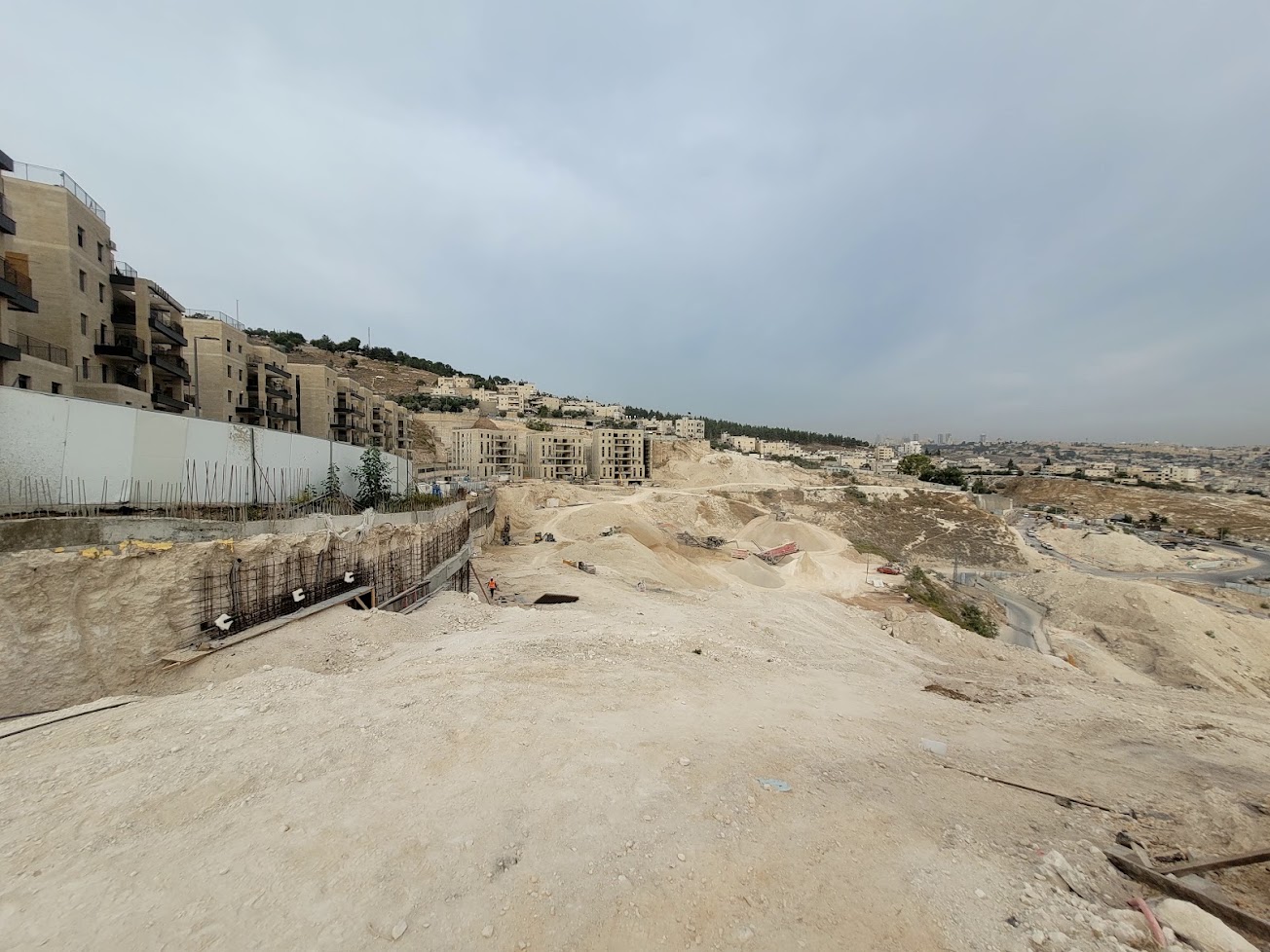
Earthworks are in progress in the c.p. area, clouds of dust make it difficult to breathe.  We were thrown back to the checkpoint's early days when the Container still stood on the corner of the road.

 
More cars are released, others detained.  Someone, A.,  who introduces himself as a senior commander of the c.p. tels us that a "hot" alert has just been received, and requires that we stand where he can see us.  For our security, of course.  Nothing at all in the work of the c.p. changes.  Interestingly, in recent weeks such alerts arrive precisly during our presence at the c.p.  A problem of credibility?

 
A. asks who we are, and in reply to our inquiry as to why there should be a checkpoint here at all he recommends we drive in the direction of Bethlehem to see the Palestinian c.p. at the entrance to Obadiya — and then we will realize how humane the Wadi Nar c.p. is.  Thereafter we were given a comparative account of the hierarchies of humaneness in Chechnya, Afghanistan, Egypt and Gaza-Hamas — compared to them, we are a democracy and our presence at the checkpoints is an evidence of that; and it's an excellent thing, he says, that there are checks.  The work going on at the checkpoint is intended to improve it, and it will eventually be like the checkpoint on Road 443.

  • Abu Dis / Lazarus gate (formerly The Wicket)

    See all reports for this place
    •  

      Abu Dis / Lazarus Checkpoint/Gate (east of the former “wicket”)

      Construction of the wall in the Abu Dis area blocked all the gaps that allowed people to cross from al-Ezariya to the neighbourhoods of Abu Dis and Ras al 'Amud that are located within Jerusalem’s municipal boundary. The Lazarus checkpoint is a gate in the wall adjacent to the Lazarus Monastery. Until 2011 it had a door for pilgrims to al-Ezariya and for the monastery’s kindergarten pupils from al-Ezariya. The crossing is currently closed, but the site has infrastructure for conducting inspections.

  • Container (Wadi Nar)

    See all reports for this place
    •  Wadi Nar Checkpoint ("Container", "The Kiosk") - a barrier for vehicles in Area B that is regularly manned - east of Abu Dis between Sawahra A Sharqiya and Bethlehem and its daughters. Controls Palestinian movement between the north and south West-Bank. Includes driving routes, access roads, spikes, traffic lights and signs. There is no pedestrian crossing. Open 24 hours a day with random checks enhanced on security alerts. The checkpoint is in Palestinian territory, allowing for separation between the north and the south Palestinian areas when necessary.

      In 2015, the leading road from Azaria to Bethlehem was renovated, as well as the steep and narrow ascent to the Wadi Nar checkpoint, which was dangerously travelled in both directions! The temporary checkpoint was renovated and expanded, and pedestrian traffic was banned. From 2016, traffic travelling from the south bank to Azaria was directed to a one-way road near the Southern Keydar Jewish settlement.

      Machsomwatch shifts visit this far-fetched checkpoint only occasionally.

      (updated to July 2019)


  • Ras Abu Sbitan (Olive Terminal)

    See all reports for this place
    • A large checkpoint/crossing to the area of a-Tur, Abu Dis and the Old City; only for pedestrians. Located on Jerusalem’s municipal boundary.

      One of the major crossings in Jerusalem’s central sector. It is located on the separation fence between the northern portion of the al-Ezariya neighborhood and the neighborhood of a-Tur and the rest of East Jerusalem. It is manned by Border Police soldiers and private security companies and operates 24 hours a day. Palestinians are forbidden to go through, other than permanent residents of East Jerusalem (holders of blue ID cards) and holders of work and commercial permits who are allowed through only on foot.

  • Sheikh Sa'ed

    See all reports for this place
    • A checkpoint limited to pedestrians, located on Jerusalem’s municipal boundary.

      The checkpoint sits on the separation fence at the entrance to Sheikh Sa’ad, dividing it from its neighbourhood of Jabel Mukkabar. It’s manned by Border Police soldiers and private security companies and operates 24 hours a day. Palestinians are forbidden to go through, other than residents of Jabel Mukkabar or Sheikh Sa'ad who have permits. Both groups are permitted through only on foot. Residents of East Jerusalem who don’t live in Jabel Mukkabar are also allowed to cross to Sheikh Sa’ad, but not in the opposite direction; they must return through the Sawahira ash Sharqiya checkpoint.
      ירושלים, שער שכם: קהל ממהר לתפילה
      Avital C
      Feb-27-2026
      Jerusalem, Damascus Gate: Crowd rushing to prayer
Donate
