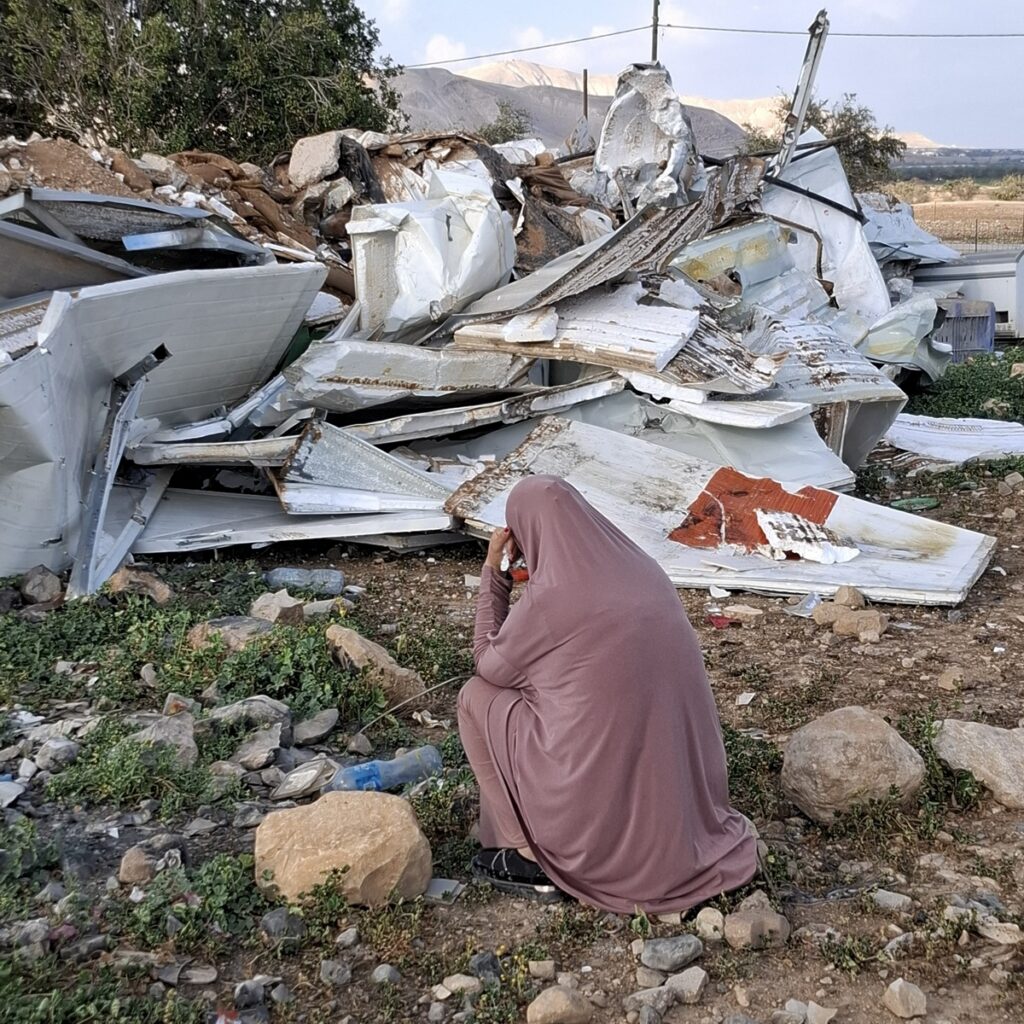
Abu Dis, Container (Wadi Nar), Ras Abu Sbitan (Olive Terminal), Sheikh Saed, Thu 9.7.09, Morning

6:30 Sheikh Saed
Tranquil; few crossing
While we were there, a man whose documents were checked crossed into the monastery yard to work on one of the bulldozers parked there. The yard is in ruins, looking like a construction site. Where is the church???
Zeitim Crossing
Wadi Nar
As we got out of the car and headed for the checkpoint we saw a young man escorted by two soldiers to the
detention cubicle. Four of his friends, all young men, stood in a line next to their car, facing the "wall", i.e. the cliff rising from the checkpoint to the pillbox. The car was open, including bonnet and trunk. After a while, the detained man returned and all five waited in the car for their documents to be returned.
Another commercial vehicle arriving from the south was thoroughly checked. All the cardboard boxes were opened, and once in a while the soldier/policeman would point to a certain box and require the man to tear the wrapping. The contents of a large kitbag, mostly personal belongings, were spilled onto the asphalt. The soldiers would point to an article by kicking it lightly and demanding that it be shown close up. Bottles were opened to be sniffed by the soldiers.
Subsequently we saw another two young men directed to the detention shelter, and an elderly man ordered to stand while the vehicle was checked. He watched the soldiers rummaging through the car, but was then ordered to turn around and face the cliff. What does a man feel, watching the soldiers rummaging through his personal belongings — and then prevented from seeing whether anything is taken or damaged?
The checks and delays took place in both directions.
Kedar — construction is very advanced, half the hill is now levelled, and supporting walls demarcate plots.
Az-Za'ayyem
If it had crossed our minds that the harsh scenes in Wadi Nar were due to some alert, the peaceful Az-Za'ayyem checkpoint (which serves as the entrance to Jerusalem) eliminated that possibility. We saw no detentions, or any other undue checks beyond the routine.
Abu Dis / Lazarus gate (formerly The Wicket)
See all reports for this place-
Abu Dis / Lazarus Checkpoint/Gate (east of the former “wicket”)
Construction of the wall in the Abu Dis area blocked all the gaps that allowed people to cross from al-Ezariya to the neighbourhoods of Abu Dis and Ras al 'Amud that are located within Jerusalem’s municipal boundary. The Lazarus checkpoint is a gate in the wall adjacent to the Lazarus Monastery. Until 2011 it had a door for pilgrims to al-Ezariya and for the monastery’s kindergarten pupils from al-Ezariya. The crossing is currently closed, but the site has infrastructure for conducting inspections.
-
Container (Wadi Nar)
See all reports for this place-
Wadi Nar Checkpoint ("Container", "The Kiosk") - a barrier for vehicles in Area B that is regularly manned - east of Abu Dis between Sawahra A Sharqiya and Bethlehem and its daughters. Controls Palestinian movement between the north and south West-Bank. Includes driving routes, access roads, spikes, traffic lights and signs. There is no pedestrian crossing. Open 24 hours a day with random checks enhanced on security alerts. The checkpoint is in Palestinian territory, allowing for separation between the north and the south Palestinian areas when necessary.
In 2015, the leading road from Azaria to Bethlehem was renovated, as well as the steep and narrow ascent to the Wadi Nar checkpoint, which was dangerously travelled in both directions! The temporary checkpoint was renovated and expanded, and pedestrian traffic was banned. From 2016, traffic travelling from the south bank to Azaria was directed to a one-way road near the Southern Keydar Jewish settlement.
Machsomwatch shifts visit this far-fetched checkpoint only occasionally.
(updated to July 2019)
-
Ras Abu Sbitan (Olive Terminal)
See all reports for this place-
A large checkpoint/crossing to the area of a-Tur, Abu Dis and the Old City; only for pedestrians. Located on Jerusalem’s municipal boundary.
One of the major crossings in Jerusalem’s central sector. It is located on the separation fence between the northern portion of the al-Ezariya neighborhood and the neighborhood of a-Tur and the rest of East Jerusalem. It is manned by Border Police soldiers and private security companies and operates 24 hours a day. Palestinians are forbidden to go through, other than permanent residents of East Jerusalem (holders of blue ID cards) and holders of work and commercial permits who are allowed through only on foot.
-
Sheikh Sa'ed
See all reports for this place-
A checkpoint limited to pedestrians, located on Jerusalem’s municipal boundary.
The checkpoint sits on the separation fence at the entrance to Sheikh Sa’ad, dividing it from its neighbourhood of Jabel Mukkabar. It’s manned by Border Police soldiers and private security companies and operates 24 hours a day. Palestinians are forbidden to go through, other than residents of Jabel Mukkabar or Sheikh Sa'ad who have permits. Both groups are permitted through only on foot. Residents of East Jerusalem who don’t live in Jabel Mukkabar are also allowed to cross to Sheikh Sa’ad, but not in the opposite direction; they must return through the Sawahira ash Sharqiya checkpoint.
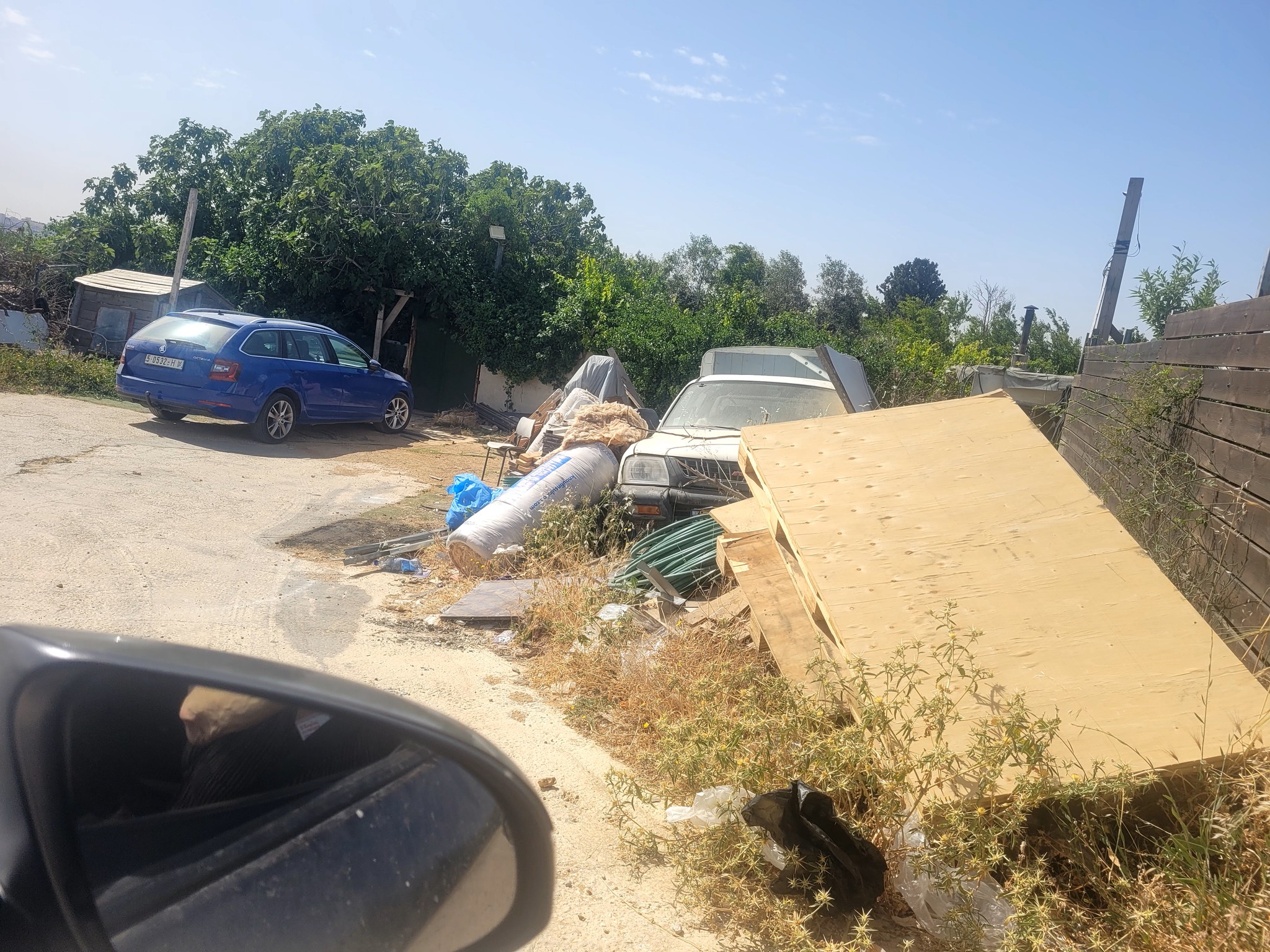 Anat TuegMay-20-2026Nabi Samwil. This is what living conditions look like in an enclave village without building or renovation permits
-