
Abu Dis, Container (Wadi Nar), Sheikh Saed, Mon 9.2.09, Afternoon
.
Sheikh Saed, 14:00-17:30
The road towards Sheikh Saed in jebel Mukabr is getting worse and dirtier
every time, despite the fact that it is one of the neighborhoods of
Jerusalem and its residents pay taxes. The piles of garbage along the fence
around Sheikh Saed are also growing. Here these heaps demonstrate the
terrible absurdity of the lives of residents that have been cut off from
their origin. Next to those heaps of rubbish the roads of Jebel Mukabr look
like the fulfillment of a dream.
The Border Police soldiers at the CP at the entrance let us go in, after we informed
them that we always do. However they didn’t let us out of their eyes. On the ‘square’ at the entrance dozens
of cars are parked and a group of youngsters who have nothing to do. As
usual we went over to talk to them. We inquired why there were so many cars
and were told that they belong to people who have work permits and bought
them for a small amount of money (2,000 NIS) from people who do not work and
are stuck within the compound. The cars, which of course have no license,
serve their owners to get from their home to the CP, where they remain all
day until their owners take them back home in the evening.
The cynicism and discouragement also increase all the time. The young men who smoke
constantly are not interested in doing anything; they cannot work and have
no hope for the future. At some point in the past when we used to visit this
place, we sometimes spotted a spark of hope in the eyes of these
youngsters – it has been put out altogether.
We continued to the Container CP. When we got closer we admired the
asphalted junction with its clear markings on the roads pointing to the four
directions. Two cabs on their way north were held up for about twenty
minutes until the papers of their passengers were checked.
The traffic towards Bethlehem flowed smoothly. The only dramatic event occurred with a bus which was held up on its way South. The documents of al its passengers
were collected for investigation. After about half an hour the Id’s were
returned, but five young men were taken off the bus opposite the checking
booth. There one of the soldiers instructed them to stand about a meter
apart from each other with their backs towards the booth. Each one of them
was asked separately to enter the booth, but we didn’t know what happened
there, because we had been moved far away from where we might overhear a
conversation. Only after all the youngsters had completed the procedure
were they allowed to return to the bus, which was able to continue about an
hour after it had been stopped. We were sure that the men had been caught as
‘illegals’ and had been told to sign the usual papers.
When we returned to our car the soldier who had been inside the booth checking the documents
approached us and asked politely what the purpose of our work was and
seemed to understand the explanations. We asked him about the young men
who had been held up and he told us that they had not been ‘illegal’, but
that the security had required inviting them for an interview; so the
soldier had to provide them with the proper invitations. Just like that, a
bus was stopped randomly in the middle of its trip and some of its
passengers are singled out; what for…..?
Abu Dis / Lazarus gate (formerly The Wicket)
See all reports for this place-
Abu Dis / Lazarus Checkpoint/Gate (east of the former “wicket”)
Construction of the wall in the Abu Dis area blocked all the gaps that allowed people to cross from al-Ezariya to the neighbourhoods of Abu Dis and Ras al 'Amud that are located within Jerusalem’s municipal boundary. The Lazarus checkpoint is a gate in the wall adjacent to the Lazarus Monastery. Until 2011 it had a door for pilgrims to al-Ezariya and for the monastery’s kindergarten pupils from al-Ezariya. The crossing is currently closed, but the site has infrastructure for conducting inspections.
-
Container (Wadi Nar)
See all reports for this place-
Wadi Nar Checkpoint ("Container", "The Kiosk") - a barrier for vehicles in Area B that is regularly manned - east of Abu Dis between Sawahra A Sharqiya and Bethlehem and its daughters. Controls Palestinian movement between the north and south West-Bank. Includes driving routes, access roads, spikes, traffic lights and signs. There is no pedestrian crossing. Open 24 hours a day with random checks enhanced on security alerts. The checkpoint is in Palestinian territory, allowing for separation between the north and the south Palestinian areas when necessary.
In 2015, the leading road from Azaria to Bethlehem was renovated, as well as the steep and narrow ascent to the Wadi Nar checkpoint, which was dangerously travelled in both directions! The temporary checkpoint was renovated and expanded, and pedestrian traffic was banned. From 2016, traffic travelling from the south bank to Azaria was directed to a one-way road near the Southern Keydar Jewish settlement.
Machsomwatch shifts visit this far-fetched checkpoint only occasionally.
(updated to July 2019)
-
Sheikh Sa'ed
See all reports for this place-
A checkpoint limited to pedestrians, located on Jerusalem’s municipal boundary.
The checkpoint sits on the separation fence at the entrance to Sheikh Sa’ad, dividing it from its neighbourhood of Jabel Mukkabar. It’s manned by Border Police soldiers and private security companies and operates 24 hours a day. Palestinians are forbidden to go through, other than residents of Jabel Mukkabar or Sheikh Sa'ad who have permits. Both groups are permitted through only on foot. Residents of East Jerusalem who don’t live in Jabel Mukkabar are also allowed to cross to Sheikh Sa’ad, but not in the opposite direction; they must return through the Sawahira ash Sharqiya checkpoint.
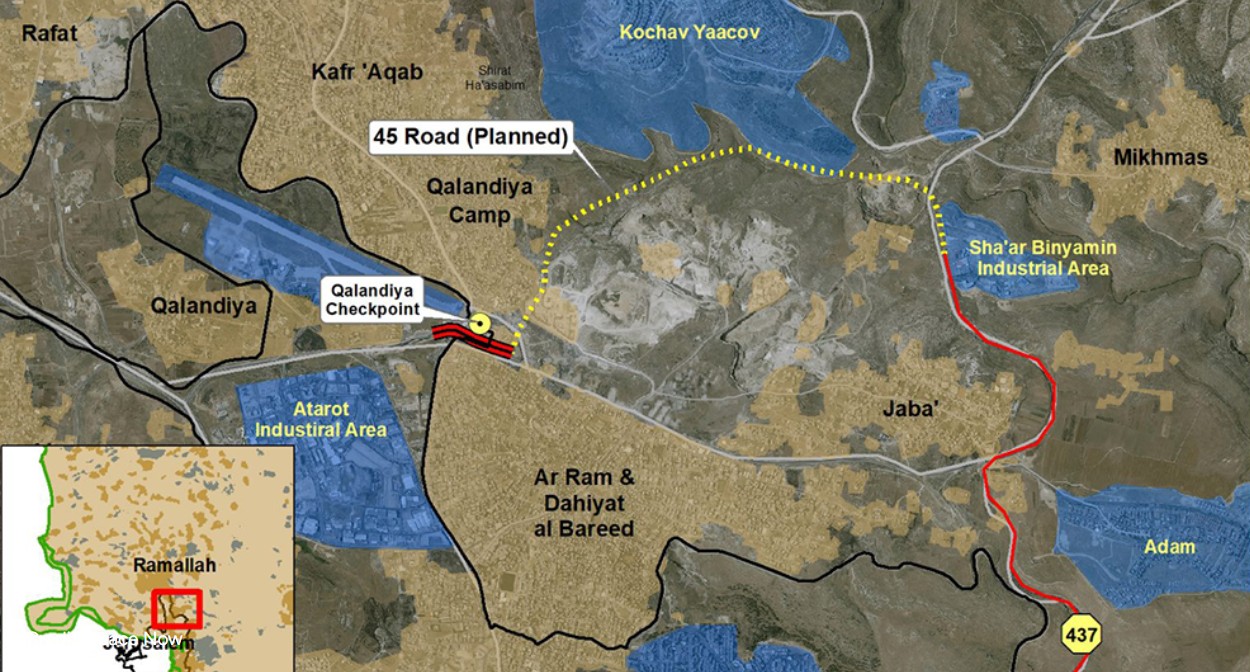 Anat TuegSep-9-2026Road 45. For Israelis only, from Road 60 near Kochav Ya'akov to the Qalandiya underpass
-
